



What Is Toy Battery Life Design?

Toy battery life design is the set of decisions that decide how long an audio toy plays on one set of cells or one charge, how long it stays awake after the last interaction, how quietly it sleeps in between, and what it does when the cells run down. It is not a battery size. It is a budget: the cell is the number everybody quotes, and the load is the number nobody writes down, and the load is made of the amplifier, the speaker, the controller's idle current and whatever the unit keeps listening for while it appears to be doing nothing. On an NFC story machine that last item decides whether a unit arrives on a retail shelf months later still able to play.
Most programmes meet toy battery life design late, as a line on a quotation that says "rechargeable" or "3 x AAA", and discover in month two that the line had already fixed four things nobody had decided: how long a listening session lasts, whether the unit can be demonstrated on a shelf, which transport documentation the shipment travels under, and what a child hears in the last hour before the cells die. Read toy battery life design as a calendar of decisions rather than a number on a spec sheet and the expensive ones all land in the first three weeks, while changing them is still a printed file rather than new steel.
There is a documentation edge as well. Which battery, transport and product-safety route your destination market expects for the cell you choose should be confirmed with your own laboratory, notified body or carrier against the current text. We are a manufacturer, not a certifying body: we build to the requirements you bring us and document what we built. As an OEM/ODM manufacturer founded in 2010, running the story machine line on NFC and RFID triggering with onboard storage from 4GB to 16GB, we spec toy battery life design on the first file, where it costs nothing, rather than on the first production report, where it costs a season.
How Do You Spec a Toy Battery Life Design Brief?

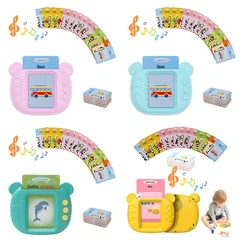
An NFC story machine works in three moves: a card or a figure is presented to the reader, the controller resolves the tag and selects the track, and the amplifier drives the speaker until the track ends or the unit decides nobody is there any more. Every hour of claimed play time lives inside those three moves, and that is the practical shape of toy battery life design: not a cell, but a set of loads you can name, measure and then cut. The seven functions below describe what the machine does in a child's hands; the five steps after them describe how one gets built.
How the NFC Story Machine Works: Functions in Detail
Function 1 - Card and figure triggering: RFID or NFC cards, or accompanying figures, trigger playback with no screen, no network session and no app. The trigger-to-audio window is a spec line you set and then measure on the sample, because a unit that hesitates after the tap reads as broken to a four-year-old.
Function 2 - Onboard library and update path: 4GB to 16GB of onboard storage carries the story set, and the library is refreshed over USB or SD rather than over the air. Content updates therefore never touch the power budget, the radio documentation or the compliance file.
Function 3 - Power architecture: the unit runs either on AAA dry cells or on a rechargeable lithium pack. The choice moves carton, manual, transport file and price band together, and in toy battery life design it is the one decision that cannot be reversed after the board is laid out.
Function 4 - Amplifier and speaker load: the amplifier is the largest single drain in the machine. Volume steps, speaker choice and the distortion ceiling you accept at peak level are energy decisions wearing an audio costume, and they are set on the same drawing as the rear cavity.
Function 5 - Idle, sleep and auto shut-off: idle timeout, sleep current and wake source are three separate lines, and the third one decides whether a unit can still wake on a card after a long stretch in a warehouse or a shipping container.
Function 6 - Low-battery behaviour: a prompt tone, a gradual volume roll-off or a hard cut. Whichever you pick, the unit must not clip, because a story that turns harsh in the last hour produces the review that says the speaker is poor rather than the review that says the cells are flat.
Function 7 - Languages and session content: native-speaker narration in six languages (English, Chinese, Spanish, Arabic, French and Japanese) rides on the same board and the same storage, so a new language changes the content file and the SKU without changing the energy budget at all.
Once those functions are agreed, building an NFC story machine to a stated runtime runs in five steps. Each closes a decision and each has a published turnaround.
Step A → Write the usage session before the cell: how many minutes one sitting lasts, how many sittings between charges or cell changes, and whether a shelf demonstration is expected. Everything downstream is dimensioned from this, including the cell. Output: STP files in 3 days.
Step B → Choose the cell and the compartment together: AAA dry cells or a rechargeable lithium pack, compartment geometry, contacts, cover and screw torque. The compartment is a tooling part, so the power decision is a tooling decision, and it is the last point at which it is free. Output: 3D sample in 3 days.
Step C → Put the runtime behaviour into the programme white paper: idle timeout, auto shut-off, sleep current, low-battery behaviour, volume ceiling, language set and age grade are approved before steel is cut. A behaviour that exists as a document can be approved; one that exists as a meeting consensus cannot. Output: programme white paper in 3 days.
Step D → Measure runtime on the PCBA sample: amplifier, speaker, controller sleep current and cell choice are frozen into one board and the play-time figure is measured rather than estimated. The unit you measure is the unit you produce, and it is also the unit that goes to the laboratory. Output: PCBA sample in 5 days.
Step E → Cut the mould and run production: an exclusive mould takes 30 days and mass production a further 30 from mould approval. Those two blocks are why Steps A to D matter: a runtime decision found in month two costs new steel, the same decision found in week one costs a printed file. That is the whole argument for treating toy battery life design as early work rather than late verification.
Key Features of Toy Battery Life Design

1. Runtime Is a Budget, Not a Battery Size
Feature: on an NFC story machine the drain is split across the amplifier, the speaker, the controller's idle current and the card-detection circuit, and each one is a line you can specify.
Advantage: a machine specified this way can be tuned after the first sample, with sleep current down and session length up, without changing the cell or the tooling.
Benefit: you can defend a price point and a play-time claim on the same board, which is the difference between a listing that converts and one that comes back with "battery dies fast" in the review text.
Evidence: runtime is measured on the PCBA sample in 5 days, and the production run is held to AQL 1.0 with 100% functional testing.
2. Auto Shut-Off Is a Positioning Decision
Feature: idle timeout and automatic shut-off are firmware lines that cost nothing to set and a great deal to change after tooling.
Advantage: setting the timeout to the length of a real listening session, rather than to a generic default, states what the product is for and stops a parent meeting a flat unit at the wrong moment.
Benefit: fewer "stopped working" returns, which are the most expensive return type in this category because the machine is usually fine and still gets refunded.
Evidence: the behaviour is written into the programme white paper in 3 days and approved as a document before steel is cut.
3. Standby Current Decides Shelf Life
Feature: sleep current and wake source are two separate spec lines, and only the second one is visible to a customer.
Advantage: a unit that sleeps low enough arrives on a shelf, in a warehouse or in a container months later still able to play on the cells fitted at the factory.
Benefit: for a retail buyer this is the difference between a shelf that demonstrates and a shelf that apologises. Trial units that play sell the second order, and toy battery life design is what makes them play.
4. Dry Cell or Lithium Is a Channel Decision
Feature: the board accepts either AAA dry cells or a rechargeable lithium pack, and the compartment is tooled for the one you choose.
Advantage: dry cells keep the unit out of battery transport documentation and let a retailer shelf it with cells fitted; a rechargeable pack lifts perceived value and suits a gift or licensed programme.
Benefit: two SKUs off one board lets you sell the same machine into a value channel and a premium channel without a second tooling spend or a second compliance run.
Evidence: our compliance file is held current for ISO9001, BSCI, SEDEX, CE (EN71), FCC, RoHS, UKCA and CPSIA; which transport route applies to your cell should be confirmed with your own carrier and laboratory.


5. Low-Battery Behaviour Is a Returns Decision
Feature: prompt tone, gradual roll-off or hard cut at end of discharge - one of the three, chosen deliberately.
Advantage: rolling the level down before cut-off keeps the amplifier out of clipping, so the narration stays clean to the end instead of turning harsh in the last hour.
Benefit: end-of-discharge behaviour is where most "poor sound quality" complaints actually originate, and fixing it on a firmware line is far cheaper than answering it in a review section.
6. Runtime and Content Length Are One Spec Line
Feature: 4GB to 16GB of onboard storage, six-language narration and a USB or SD update path, all on a board that is frozen once.
Advantage: the listening offer can grow - more stories, more languages, seasonal packs - without touching the power budget, the board or the mould.
Benefit: second-season revenue comes from content rather than tooling, so a reorder conversation is a content conversation and the margin on the second season looks nothing like the first.
Evidence: we release 10 new products a year, and OEM and ODM each run at roughly half of the business, so content-led reorders are a normal way to work rather than an exception.
B2B Applications: Where Toy Battery Life Design Pays Off

The same runtime question means six different things to six buyers, and that is where toy battery life design stops being engineering and becomes a commercial argument. Here is how each channel should read it, and what to ask for.
1. Brand owners - if you are building a differentiated screen-free audio product from zero, the runtime claim is part of the product promise, not a footnote. Ask for the session definition first, then the cell, then the shell; an NFC story machine specified in that order can carry a play-time claim on the front of the box that a generic build cannot.
2. Large supermarkets and chain retailers - the question is documentation and shelf behaviour. We hold ISO9001, BSCI and SEDEX audits, CE (EN71) covering EN71-1, EN71-2 and EN71-3, EN 62115, FCC Part 15, RoHS, UKCA and CPSIA with the children's product certificate route, and we inspect to AQL 1.0 with 100% functional testing. Ask additionally for the sleep-current figure and a shelf-demonstrable build, because a trial unit that plays on the cells fitted at the factory is what converts a buyer into a second order.
3. B2B importers and distributors - you want a standard SKU that replenishes fast and does not generate correspondence. Capacity runs at 20,000+ units a day from a 5,000 m2 facility, and we have shipped to 120+ countries and regions, so the power documentation for your market is usually a file we already hold rather than a project we start.
4. Marketplace and online sellers - the cell choice changes what a parcel can ship as, what the listing may claim and how the carton is packed. A dry-cell build keeps the paperwork light; a lithium build supports a higher price band. Decide before the board, because the compartment is steel, and a compartment change after tooling is a second mould programme.
5. IP licensors and character owners - a rechargeable pack and a series of story cards give you a collectable structure: the hardware is bought once and the content keeps selling. Runtime matters here because a figure-triggered machine gets handled more, and a unit that is flat on arrival fails at the exact moment a child is most excited.
6. Education institutions and kindergarten chains - several sessions a day across a classroom changes the maths: the cost of cells over a term is a budget line for the purchaser, so a rechargeable build or a low sleep-current dry-cell build wins on total cost rather than on unit price. Ask for the runtime figure measured on the sample, not a typical value.
OEM/ODM Customization Services for NFC Story Machines

Product Design Customization
The shell is modelled outward from the board, the speaker cavity and the battery compartment rather than drawn for looks and filled afterwards. That order is what keeps a runtime claim achievable.
• STP files in 3 days and a 3D printed sample in 3 days, so the compartment is a decision you can hold.
• Exclusive mould in 30 days, mass production 30 days from mould approval.
• ABS non-toxic plastic shell, with card slot, figure dock, speaker grille and compartment cover tooled as one part family.
• 3 structural and design engineers, 4 electronic engineers and 2 graphic designers on the programme.
Everything below hangs off this: a compartment drawn late is a compartment that costs steel.
Hardware Customization
Hardware is where toy battery life design stops being a discussion and becomes a bill of materials.
• Power: AAA dry cells or a rechargeable lithium pack, compartment geometry, contacts, cover and screw torque.
• Audio: amplifier ceiling, speaker choice and rear cavity volume tuned together, since all three are the same load.
• Trigger: RFID or NFC cards, or accompanying figures, with the detection window specified and measured.
• Storage: 4GB to 16GB onboard, with USB or SD as the update path rather than a radio.
Software & Audio Content Customization
Runtime behaviour is firmware, and firmware is written once and approved once. We put it in the white paper so it can be signed off rather than remembered.
• Idle timeout, automatic shut-off, sleep current and wake source written as spec lines before tooling.
• Low-battery behaviour: prompt tone, gradual roll-off or hard cut, chosen rather than inherited.
• Story library and voice persona, including licensed character voices, produced by our AI content creator and audio team.
• Native-speaker narration in six languages - English, Chinese, Spanish, Arabic, French and Japanese - on one board.
The white paper lands in 3 days, and it is the document that makes every later argument short.
Packaging & Compliance Customization
The cell you choose changes the carton, the manual and the shipment file, so packaging is developed alongside the board rather than after it.
• Shelf display carton and window placement, with the card slot visible so the interaction is demonstrated in the packaging.
• Barcode or UPC, multi-language manuals, age grading and traceability code, all checked before the plates are made.
• Drop testing on the packed unit, because a compartment cover that opens in transit is a safety question, not a cosmetic one.
• Documentation pack issued with the shipment so your goods-in team can check the carton against the file.
• Which battery, transport and product-safety route your market expects should be confirmed with your own laboratory, notified body or carrier against the current text; we build to what you bring us and document what we built.

Why Choose XINDITAI as Your NFC Story Machine Partner
Factory-Direct Manufacturing
A runtime claim is only as good as the sample it was measured on, and that work happens on our floor rather than in a trading office. Founded in 2010, we run a 5,000 m2 facility with our own mould shop and ten injection machines, so the battery compartment you approve is the compartment we cut, and toy battery life design stays a manufacturing question rather than a correspondence one.
• 20,000+ units a day of capacity, with OEM and ODM each at roughly half of the business.
• In-house mould shop: 30 days to an exclusive mould, 30 days from approval to mass production.
• Engineering on site: 3 structural and design engineers, 4 electronic engineers, 2 quality engineers, 1 AI content creator, 2 graphic designers and 10 QC.
• Published turnarounds: STP in 3 days, 3D sample in 3 days, programme white paper in 3 days, PCBA sample in 5 days.
Global Export Experience
We have shipped to 120+ countries and regions and built more than 1,000,000 units, so the power and transport questions that slow a first-time importer down are usually ones we have answered in a file already.
• Compliance file held current: ISO9001, BSCI, SEDEX, CE (EN71), FCC, RoHS, UKCA, CPSIA.
• AQL 1.0 inspection and 100% functional testing, with the audio path and the trigger path checked on the same station.
• 10 new products a year, and the story machine line built on NFC, RFID, touch and voice-recognition work integrated since 2022.
• 7x24 sales response while your season is live, and a documentation pack issued with every shipment.

Frequently Asked Questions About Toy Battery Life Design
Q1: What is the MOQ for an NFC story machine built to our own runtime spec?
MOQ depends on the route. A platform build on an existing shell with a new library, new languages and a new compartment cover carries the lowest threshold, because most of the tooling exists. An exclusive mould carries a higher one, since the steel has to be amortised. Tell us your channel and first-season volume and we will quote both routes side by side, with the runtime figure attached to each.
Q2: What documentation does a supermarket buyer ask for?
Expect the social-compliance file before the product file: BSCI and SEDEX audits, with ISO9001 on the quality side. On the product side, hold CE (EN71) covering EN71-1, EN71-2 and EN71-3, EN 62115 for the electric drive, FCC Part 15 where a radio or oscillator is present, RoHS and UKCA, and CPSIA with the children's product certificate route for the US. Add AQL 1.0 inspection and 100% functional testing, and for a battery-led product add the cell documentation your market asks for, confirmed with your own laboratory or notified body against the current text.
Q3: Does the machine need a network connection or an app?
No. An NFC story machine is screen-free and plays from onboard storage: a card or a figure triggers the track, and the library is refreshed over USB or SD. There is no camera, no account and no network session, which removes the privacy conversation entirely and keeps toy battery life design simple, because nothing is drawing current in the background while the unit looks idle.
Q4: How long does a custom runtime programme take?
The published turnarounds are 3 days for STP files, 3 days for a 3D printed sample, 3 days for the programme white paper, 5 days for a PCBA sample, 30 days for an exclusive mould and 30 days from mould approval to mass production. The runtime decision belongs in the first four, because after the mould is cut it is steel.
Q5: Can we have our own mould and our own packaging?
Yes, and for a battery-led product we recommend it. An exclusive mould covers the shell, the card slot and the battery compartment cover, so the power architecture is yours alone. Packaging is developed alongside: shelf display carton, window placement that shows the interaction, barcode or UPC, multi-language manuals and a traceability code, all drop-tested before the plates are made.
Q6: What happens if units fail after delivery?
Warranty terms are fixed in the purchase contract rather than in a brochure, so they are written for your programme rather than quoted generically. On the production side, AQL 1.0 and 100% functional testing keep the failure rate at the factory, with the audio path and the trigger path checked on the same station. Our sales team runs 7x24 while your season is live, and we issue a documentation pack with the shipment so your goods-in team can check the carton against the file.
Future Trends in Toy Battery Life Design
1. Session length replaces capacity as the spec language - buyers who still negotiate milliamp-hours will keep discovering that the number on the cell did not decide anything. The ranges that perform are the ones where sitting length, sittings between charges and idle timeout were written first, because that is the language a parent reads on a box.
2. One mould, two power BOMs - the same shell sold into a value channel on dry cells and into a gift or licensed channel on a rechargeable pack is now a normal structure rather than a compromise. It costs one tooling programme and earns two price bands, and it only works if the compartment was designed for both on the first file.
3. Runtime sampling enters the inspection plan - AQL 1.0 and 100% functional testing already catch dead units; the next step is sampling discharge behaviour on the line, so a drift in sleep current shows up as a production finding rather than as a season of reviews saying the battery dies fast.
4. Content and runtime are priced together - with 4GB to 16GB onboard and six-language narration on a frozen board, the second season is sold in listening hours rather than in features. Expect toy battery life design and content planning to end up in the same meeting, because they are the same line on the same budget.
Conclusion: Start Your NFC Story Machine Project Today
Toy battery life design is not the number on the cell; it is the order in which you decide. Session length first, then cell architecture, then compartment, then the firmware behaviour that makes the claim true in a child's hands rather than on a quotation. Reverse that order and every correction costs steel. Keep it and the same board carries a value SKU and a premium SKU, a first season and a content-led second season, with the compliance file already written.
We are an OEM/ODM manufacturer founded in 2010, with a 5,000 m2 facility, our own mould shop and ten injection machines, 20,000+ units a day of capacity and shipments to 120+ countries and regions. Send us your channel, your first-season volume and the listening session you want the machine to serve, and we will come back with STP files in 3 days, a 3D sample in 3 days, a programme white paper in 3 days and a PCBA sample in 5, with the runtime measured on it rather than promised about it.
Contact Us
Contact: Zoey
WhatsApp: +86 13342950150
Email: xdt06@dtdianzi.com
Company: SHENZHEN XINDITAI ELECTRONIC CO., LTD | Website: www.kidsoundbook.com