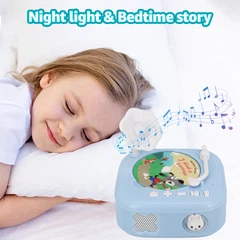
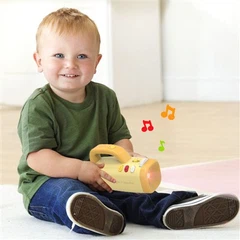
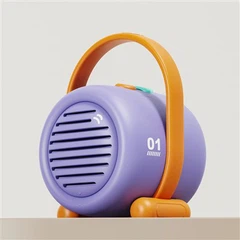
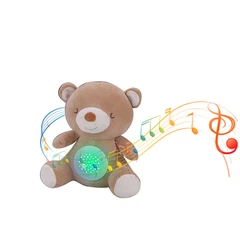
What Is Toy Audio Localization?

Toy audio localization is the work of making a talking toy speak your market's language - not by translating a leaflet at the end, but by recording, editing, naming and version-controlling the audio files that live inside the product. It has three parts: casting native narrators, writing scripts that survive translation without breaking timing or register, and keeping every language build traceable so that the file in the box matches the language printed on the carton. Treated early, a toy audio localization programme costs studio days. Treated late, it costs a re-flash, a re-print and possibly part of a test programme over again, because the audio sits inside the firmware and the firmware is part of what you submit for review. That is why toy audio localization belongs on the specification next to memory size, board cost and printed language set, rather than in the marketing folder. We are an OEM/ODM manufacturer of electronic and voice-enabled learning toys established in 2010, and we plan the language build at the same time as the board build: native voice-over in English, Chinese, Spanish, Arabic, French and Japanese, with the storage budget sized to whatever combination you intend to ship this year. Which label, manual and instruction-language requirements apply in your destination should be confirmed with your own local authority or notified body.
How Does Toy Audio Localization Work Inside an OEM/ODM Project?

Almost every expensive localization story we see has the same shape: the language list was decided after the tooling, so a second market meant a second project. The five dimensions below are the order we recommend, each paired with the lead time we commit to, because the calendar is where a toy audio localization decision actually turns into money.
Dimension A → Freeze the language list before you freeze the script: the number of languages decides how many card slots, how much memory and how many printed variants exist, and those are geometry questions before they are content questions. A script written for one market often has to be rewritten for four, because idioms, reading level and answer length change once a second language enters the room. We issue the STP file within 3 days of a signed brief, which is the first point at which card count, shell size and interface language can be judged together in one toy audio localization brief instead of discovered later.
Dimension B → Write the language table into the firmware document: which language boots by default, how a user switches, what happens when a file is missing, and how the unit behaves if a market variant is shipped into another territory. These are firmware decisions with review consequences, so they belong on paper. We deliver the program white paper in 3 days, and it is the cheapest page in any toy audio localization project - one page prevents a re-flash of an already certified configuration.
Dimension C → Size storage to the language count, not to the first market: voice narration consumes far more space than text ever does, and adding a fifth language to a board specified for two is a memory change, not a file copy. Specify the whole year's language plan against the 4GB–16GB range available on our platforms. Our electronics team returns a working PCBA sample in 5 days, early enough to change the memory part before anything is committed to steel. Storage is the one line of a toy audio localization quotation that never gets cheaper later.
Dimension D → Judge the voice in the shell, not in the studio: narration recorded beautifully still disappoints through a grille that is too small, a plush lining that absorbs the top end, or a cavity tuned for music rather than speech. Pace, warmth and intelligibility are acoustic properties of the finished product. We produce a 3D-printed mock-up in 3 days so that speaker porting, fabric transparency and grille geometry are checked against the actual tracks that will ship - this is also the right moment to fix the recording brief for pace and register.
Dimension E → Freeze content version before cutting steel: a dedicated mold takes 30 days and mass production follows 30 days after sample sign-off. Changing audio after that is possible; changing audio while the carton artwork, barcode and instruction set are already printed is where mistakes happen. Give every language build a version number at sign-off, and let that number travel onto the carton label and the flash file, so that a toy audio localization revision can never quietly arrive in the wrong box.
Six Checkpoints When Specifying Toy Audio Localization

1. Script Before Casting - Talking Flash Cards
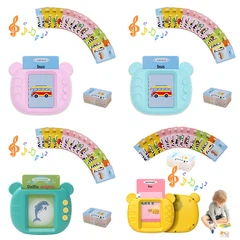
Feature: card-triggered local playback with no network required, 138 preloaded cards across 6+ themes, native voice-over in English, Chinese, Spanish, Arabic, French and Japanese, optional pinyin display, 200+ card capacity and 400gsm laminated card stock.
Advantage: because every trigger carries one word or one short phrase, the recording script is naturally short and versionable, so a second language is a second take of the same script rather than a rewrite of the product. The language lives mostly in the audio file and the printed card face, not in the housing.
Benefit: one hardware platform can serve two or three territories with different printed card packs, which keeps your inventory risk on paper rather than on electronics, and the refill card pack is the highest-margin repeat item in this category - no tooling, no electronic content, no new test cycle.
Evidence: 138 preloaded cards with 200+ capacity, 400gsm laminated waterproof cards, six languages with native narrators, 4GB–16GB storage, and a typical small footprint around 25 x 18 x 3 cm that suits both classroom packs and retail shelves.
2. One Platform, Several Language SKUs - AI Interactive Toy
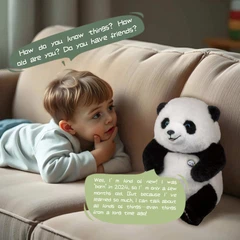
Feature: LLM-driven dialogue with a custom persona, multi-language dialogue combining speech recognition and speech synthesis, available in plush, robot and desktop forms, with no camera in the standard configuration.
Advantage: the language travels in the dialogue layer rather than in thousands of recorded strings, so expanding into another territory is closer to a persona and voice-selection decision than to a new recording campaign. Short branded prompts can still be recorded by human narrators where your brand guardian insists on it.
Benefit: you can test two markets against one tooling investment and rebalance the mix inside the season instead of committing steel twice. It also compresses your second-market calendar: a language addition becomes a re-flash rather than another 30 days of mould making.
Evidence: LLM-driven dialogue with custom persona, multi-language speech recognition and synthesis, no camera in the standard configuration, supported by 4 electronics engineers and 1 dedicated AI content creator in-house.
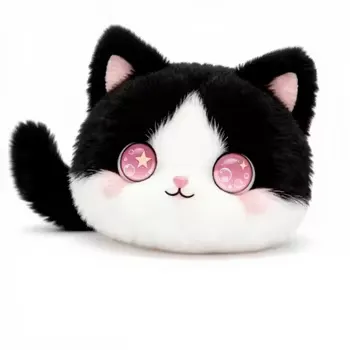
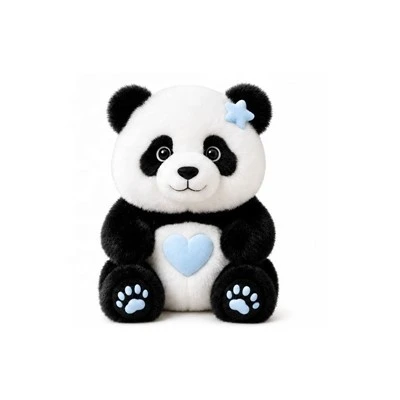
3. Persona Consistency Across Languages - AI Plush Toy
Feature: LED expression eyes and moving parts such as a tail convey emotion without words, supported by a comfort and calm-down content library, no camera, and push-to-talk wake-up.
Advantage: the non-verbal layer already travels, so a language change does not force every reaction sound to be re-recorded. What does need discipline is the persona sheet - tone, pacing, formality, how the character addresses the listener - because without it the same character sounds like four different products in four territories.
Benefit: a consistent persona protects your review scores in every marketplace, and because part of the emotional feedback is wordless the recording budget for a new language stays smaller than buyers expect. We position this line around comfort, companionship and a calm-down routine, and we do not claim therapeutic outcomes.
Evidence: LED expression eyes and moving parts, no camera, push-to-talk wake-up, documented persona and pacing sheet, and factory certifications covering ISO9001, BSCI, SEDEX, CE (EN71), FCC, RoHS, UKCA and CPSIA.
4. Version-Controlled Story Library - Kids Story Player
Feature: a screen-free audio player triggered by RFID/NFC card or plush figure, whose content library can be refreshed by USB or SD card, with custom IP character voices available.
Advantage: content version is separated from hardware version, so refreshing a story set does not reopen the certified hardware configuration. Key functions include:
• library update by USB or SD without changing the certified board;
• card or figure trigger that keeps the interface language-free for young learners;
• 4GB–16GB storage planned per language rather than per market;
• custom character voices recorded to your own script.
Advantage (continued): because the update path is designed in, a later language addition is a file operation with a version number, not a hardware change.
Benefit: updates become a margin line instead of a cost line, and the expensive failure mode - songs in one language inside a carton printed for another - disappears when language code and content version are burned into the flash and mirrored on the outer label.
Evidence: screen-free RFID/NFC trigger, USB and SD content update, 4GB–16GB storage, 10 new products developed per year, AQL 1.0 inspection with 100% functional testing before packing.


5. Localize the Content Media, Not the Electronics - Children's Projector Toy
Feature: wall projection with synchronised audio, replaceable content discs or cartridges, adjustable focus and brightness, sharing the Timer Clocker System platform with our story player and night light.
Advantage: the language sits on the replaceable media, so the shell, optics and board stay identical across markets. A toy audio localization decision here is a content-pack decision, and content packs carry no tooling, no electronic content and no new electrical safety review - confirm the resulting scope with your own laboratory before you assume it.
Benefit: this is the lowest-risk route into a smaller language market, because you can test demand with a few hundred localised packs before committing to a full production run. Sharing one timer platform across the bedtime family also means one electronic content family, one spare-part stock and one after-sales procedure.
Evidence: replaceable content discs and cartridges, shared Timer Clocker System with the story player and night light, adjustable focus and brightness, 10 injection moulding machines in our own tooling workshop.
6. Wordless Libraries Still Need Localized Print - White Noise Night Light
Feature: night light and white noise in one unit, with adjustable colour temperature, brightness, volume and timer, and a customisable sound library of rain, waves, heartbeat and lullaby tracks.
Advantage: most of this library carries no speech at all, so the sound assets can be reused across territories and only voice prompts need re-recording - or can be replaced by a chime so that no prompt needs narration in every market.
Benefit: it becomes the cheapest product to take into a new language, which matters for a small language where a full narration campaign could never pay back. The residual risk moves entirely to print, so the instruction language set should be specified in the same purchase order as the audio.
Evidence: customisable sound library with rain, ocean, heartbeat and lullaby options, timer-based shut-off behaviour, raw materials compliant with RoHS and CPSIA, and AQL 1.0 with 100% functional testing on every unit.
B2B Applications: Where Toy Audio Localization Changes the Buying Decision

The same recording budget buys very different things in different channels, so it is worth deciding what you are actually paying for. Below is how six buyer types should frame a toy audio localization brief, and which product line we would point them to first.
1. Brand owners and toy brands - you are buying an asset, not a service, so ask who owns the master recordings and whether the persona sheet is handed over at the end. Start with the AI Interactive Toy or the AI Plush Toy, where the persona is the product and the voice is the part a competitor cannot copy in one season.
2. Large supermarkets and chain retail - here localisation is a documentation exercise as much as a recording one, because the buyer needs the file before anything is discussed. We supply against BSCI and SEDEX social audit requirements, ISO9001 quality management, CE (EN71) covering EN71-1, EN71-2 and EN71-3, EN 62115 for electric toys, FCC Part 15 where a radio feature is present, RoHS, UKCA, and CPSIA with the supporting Children's Product Certificate documentation, plus AQL 1.0 inspection and 100% functional testing. The Talking Flash Cards line suits this channel best: strong shelf demonstration, multi-language card packs and one hardware platform across territories.
3. B2B importers and distributors - you want standard SKUs and repetition rather than new development. Combine the Kids Story Player and the White Noise Night Light with a toy audio localization strategy: the same certified hardware, a localised content build for each territory, and replenishment from a 20,000+ unit daily capacity across exports to 120+ countries and regions.
4. Amazon and marketplace sellers - your risk is the gap between the listing copy and what the customer hears, because a language mismatch produces exactly the kind of review that a new listing cannot survive. Children's Projector Toy and Talking Flash Cards are the two lines where a localised content pack and compact retail packaging keep fulfilment costs and return rates down; ask us to burn the language code into the firmware so that the unit can be verified before it ships.
5. Education chains and language programmes - accent accuracy is the product here, since a mispronounced word in a teaching toy is a refund reason rather than a minor flaw. The Talking Flash Cards bilingual build with optional pinyin, delivered as class sets with replacement card packs across six themes, is built for this. Ask for the narrator credentials and a listening pass by a native teacher before sign-off.
6. IP licensors and the gift channel - the voice usually belongs partly to the licensor, so the approval step belongs in your schedule rather than at the end of it. The Interactive Plush Toy carries recorded character lines at a promotional price point with no camera and no network dependency, while the Children's Phonograph Toy with its story record Value Pack gives you a localisable, nostalgia-led gift SKU that needs neither an account nor an app.
OEM/ODM Customization Services for Localized Audio Toys

Product Design Customization
Localisation touches geometry more than buyers expect: the grille, the plush lining behind a speaker, and the space a second card set has to occupy are all decided here.
• Original housing design for AI Interactive Toy, AI Plush Toy, Talking Flash Cards, Kids Story Player, Children's Projector Toy, Interactive Plush Toy and White Noise Night Light;
• 3 structural and industrial designers in-house, with an STP file inside 3 days of a signed brief;
• 3D-printed mock-up in 3 days for acoustic checking of speaker porting and fabric transparency;
• Shared platform strategy so one enclosure carries several language SKUs;
• Replaceable-content geometries such as card slots, disc bays and cartridge doors.
Every shell we draw assumes more than one language will be sold from it, which costs nothing early and saves a second tooling programme later.
Hardware Customization
The audio decisions that cannot be changed cheaply all live on the board, so this module is where the language list stops being a wish and becomes a constraint.
• Storage specified across the 4GB–16GB range against your full-year language plan;
• Speaker, amplifier and cavity matched to speech rather than music;
• AAA dry-cell or rechargeable lithium power options, with the configuration frozen before submission;
• 4 electronics engineers in-house and a working PCBA sample in 5 days;
• RFID, NFC, touch and colour recognition triggers available on the Flashcard, Story Machine and Projector platforms.
Software & Audio Content Customization
This is the heart of a toy audio localization project: scripts, narrators, versions and the firmware table that ties them together.
• Native-narrator recording in English, Chinese, Spanish, Arabic, French and Japanese, plus additional languages on request;
• Script localisation for reading level, pacing and register rather than word-for-word translation;
• Persona sheet and pacing sheet so one character sounds the same in every territory;
• Program white paper in 3 days documenting default language, switching behaviour, missing-file behaviour and fallback;
• Language code and content version burned into the firmware so field returns and re-flashes are identifiable;
• LLM-driven dialogue with custom persona where you specify a conversational feature, with no camera in the standard configuration.
All content is delivered as named, versioned assets, so your own team can commission the next market without starting from zero.
Packaging & Compliance Customization
The last link in localized audio is the printed set, and it is where most shipping mistakes originate.
• Two graphic designers producing carton artwork, labels and manuals matched to each language build;
• Barcode and UPC artwork, plus a language and content-version label mirrored from the firmware;
• Multi-language or market-specific instruction booklets - confirm required instruction languages with your local authority;
• Retail-ready shelf packaging and compact mailer cartons for marketplace fulfilment;
• Documentation pack referencing CE (EN71), EN 62115 where applicable, FCC Part 15 where a radio is fitted, RoHS, UKCA and CPSIA with CPC supporting files;
• Inspection to AQL 1.0 with 100% functional testing, so the audio you approved is the audio that ships.
All raw materials are RoHS and CPSIA compliant, and we build to the requirements you bring us rather than guessing what your market demands.

Why Choose XINDITAI as Your Localized Audio Toy Partner
Factory-Direct Manufacturing
Localization is only cheap if the people who make decisions about memory, tooling and acoustics work for the factory rather than for an agent. At XINDITAI the electronics team, the tooling workshop and the content team sit inside one 5,000 square metre facility established in 2010, which is why a toy audio localization change can be quoted in days instead of months.
• Founded in 2010, with over 1,000,000 units manufactured and 20,000+ customers served;
• 10 injection moulding machines in our own tooling workshop, plus 10 dedicated QC staff;
• 20,000+ units daily capacity, so a localized version can be repeated rather than redeveloped;
• OEM and ODM each account for roughly half of our business, which keeps us fluent in both briefs.
Global Export Experience
A toy audio localization plan is ultimately a multi-country shipping plan, and experience with borders matters as much as experience with microphones. We ship to 120+ countries and regions, maintain ISO9001, BSCI, SEDEX, CE (EN71), FCC, RoHS, UKCA and CPSIA certifications, and provide 7x24 sales response with a 12-month warranty and spare-part kits.
• 100+ manufacturing partners across our two decades of PCBA and audio module work;
• 2 quality engineers running AQL 1.0 inspection and 100% functional testing on every unit;
• 2 graphic designers handling multi-language artwork, barcodes and shelf-ready packaging;
• Technologies integrated since 2022 include NFC, RFID, touch sensing, voice recognition and colour recognition.

Frequently Asked Questions About Toy Audio Localization
Q1: What is the MOQ for a localized language version?
A language addition is priced as a content build plus a production run, so the MOQ follows the product line rather than the recording. Tell us the languages and the target quantity at the same time and we will quote both the script, casting and QA listening work and the unit price in one document, including the memory size needed for the full set.
Q2: Which compliance documents can you supply for a supermarket listing?
We supply a documentation pack referencing BSCI and SEDEX social audit requirements, ISO9001 quality management, CE (EN71) including EN71-1, EN71-2 and EN71-3, EN 62115 for electric toys, FCC Part 15 where a radio feature is fitted, RoHS, UKCA, and CPSIA with the supporting Children's Product Certificate files, plus AQL 1.0 inspection records and 100% functional test results. We do not claim certifications we do not hold, and we build to the requirements you bring us.
Q3: Does the LLM-driven toy send my customer's audio anywhere?
Standard configurations have no camera and use push-to-talk wake-up, so nothing is captured continuously. Where you specify an LLM-driven conversational feature, we map the data path on one page covering collection, processing location, retention and deletion, and recommend that you confirm whether any recording leaves the device with your own counsel before you file for a marketplace listing.
Q4: How long does a localized version add to my schedule?
The content work runs in parallel with the hardware work rather than after it: STP in 3 days, 3D-printed mock-up in 3 days, program white paper in 3 days, PCBA sample in 5 days, dedicated mould in 30 days and mass production 30 days after sample sign-off. If you decide the language list before the toy audio localization script is frozen, the addition costs almost no calendar time at all.
Q5: Can I reuse the same housing for two language versions?
In most cases yes, and it is the most economical way to enter a neighbouring market: one enclosure and one board, with a localised content build, different card or disc media, and market-specific artwork. We recommend keeping the language code printed on the outer label so warehouse, store and customer all see the same thing.
Q6: What happens after delivery if a batch ships with the wrong language?
This is exactly why we burn language code and content version into the firmware and mirror both on the carton, so a mismatch is caught at goods-in rather than by a customer. Where a verified production fault arises, we provide a 12-month warranty, spare-part kits and 7x24 sales response, and 2 in-house quality engineers handle the claim.
Future Trends in Localized Audio Toys
1. The language list becomes a line item in the brief - buyers increasingly name their territories before the first drawing rather than after the first container, which turns toy audio localization from a change order into a specification. Expect suppliers to quote memory, storage and print together with the unit price.
2. Storage and content versioning move onto the selling page - capacity, USB or SD update paths and named content versions stop being engineering detail and start being listing copy, because parents and teachers ask whether new content can be added. Lines like the Kids Story Player and Children's Projector Toy are built for this.
3. Synthetic voices enter, human narrators stay - generated speech becomes acceptable for short prompts and large libraries, while story narration and brand characters keep human casting for pacing and warmth. Plan now for the right to re-record later, and record your persona sheet so a toy audio localization swap does not change the character.
4. Refill content becomes the margin line - as hardware prices compress across AI plush, AI interactive toys and bedtime players, the repeat purchase moves to card packs, disc sets and downloadable library updates: no tooling, no electronic content and no new approval cycle. Toy audio localization is what makes that refill catalogue sell in more than one country.
Conclusion: Plan Your Toy Audio Localization Before You Plan Your Tooling
Toy audio localization is not a finishing touch applied to a finished product; it is a decision about memory size, script length, recording budget, carton artwork and the version number that ties them together. Made in the first two weeks, it is a few thousand dollars of studio time and a slightly larger memory part. Made after tooling, it is a re-flash, a re-print and sometimes a repeat of part of a review programme. The products that absorb this best are the ones where the language lives outside the board: Talking Flash Cards with localised card packs, Kids Story Player with USB or SD library updates, Children's Projector Toy with replaceable content discs, and the White Noise Night Light with a largely wordless sound library. The ones that absorb it most expensively are exactly the ones nobody plans for.
Tell us how many languages you intend to sell in the next twelve months, not just the next shipment, and we will size the storage, write the language table into the program white paper, cast native narrators with a persona sheet, and hand you named and versioned assets you can carry into the following market. STP in 3 days, 3D mock-up in 3 days, program white paper in 3 days, PCBA sample in 5 days, dedicated mould in 30 days, mass production in 30 days - and a build whose audio you can verify before it leaves the factory.
Contact Us
Contact: Zoey
WhatsApp: +86 13342950150
Email: xdt06@dtdianzi.com
Company: SHENZHEN XINDITAI ELECTRONIC CO., LTD | Website: www.kidsoundbook.com