

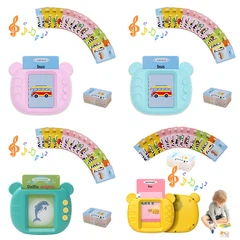
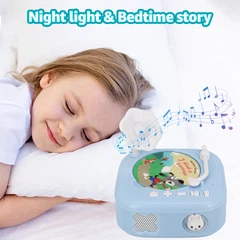


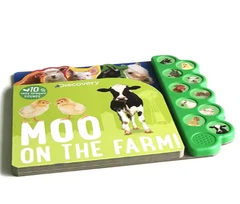
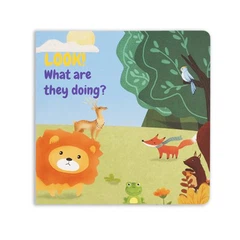
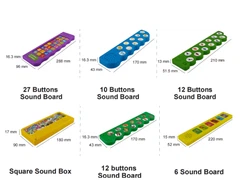
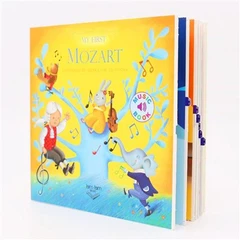
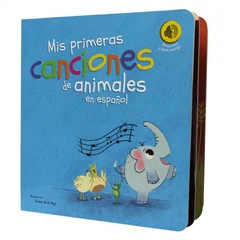
The journey of human development finds its most crucial phase in the first three years, when 85% of brain architecture forms through sensory experiences and interactive play. Early learning toys serve as essential tools in this neurological construction process, offering far more than entertainment-they act as neural architects shaping cognitive frameworks and emotional resilience. Modern research reveals that infants exposed to high-quality educational toys demonstrate accelerated developmental trajectories, with measurable advantages persisting through adolescence.

Cognitive Foundations Through Structured Play
Sensory Stimulation and Neural Pathways
Emerging neuroscience demonstrates that sensory-rich toys actively shape neural pathways during critical developmental windows. A landmark 2024 Stanford study found infants process visual information 40% faster when exposed to high-contrast educational mobiles, while textured sensory balls enhance tactile discrimination by stimulating over 15,000 nerve endings per square centimeter in developing fingertips. These tools don't merely entertain-they systematically build the hardware of cognition.
Progressive Cognitive Challenges
The progression from basic sensory exploration to complex problem-solving follows predictable patterns that quality toys can amplify. Nesting cups introduced around 12 months, for instance, challenge spatial reasoning skills that form the basis for later mathematical understanding. By 18 months, simple wooden puzzles activate prefrontal cortex regions associated with logical thinking, laying the groundwork for executive function skills essential in adulthood.
| Cognitive Development Timeline | |
|---|---|
| Age Range | Key Cognitive Milestones |
| 0-6 months | Develops object permanence through peek-a-boo toys |
| 6-12 months | Begins cause-and-effect understanding with push-button toys |
| 12-18 months | Solves simple problems (e.g., shape matching) |
| 18-24 months | Engages in symbolic play (pretending blocks are food) |
Motor Skill Development: From Reflex to Precision
Gross Motor Milestones
Physical interaction with educational toys transforms random movements into coordinated actions. During the initial months, push-pull toys convert unsteady steps into purposeful locomotion while activity gyms turn reflexive kicks into controlled leg movements. Research indicates that infants using walker alternatives show 30% fewer balance issues when beginning independent walking.
Fine Motor Refinement
As infants mature, stacking rings demands increasingly precise hand-eye coordination, with successful tower construction requiring error margins under 2 millimeters remarkable feat of neuromuscular control for tiny hands. Pegboard play at 18 months typically improves pincer grasp accuracy by 62%, according to pediatric occupational therapy data. These seemingly simple activities build the dexterity needed for future writing, tool use, and self-care skills.
Emotional Intelligence and Social Cognition
Self-Regulation Laboratories
Contrary to popular assumption, social development begins in solitary play. Educational toys serve as emotional laboratories where infants experiment with cause-and-effect relationships. A timer-equipped cause-and-effect toy teaches patience through delayed gratification, while realistic baby dolls foster empathy as toddlers practice caregiving behaviors.
Social Negotiation Skills
Shared musical instruments become social negotiation tools, with turn-taking patterns emerging naturally through collaborative play. Recent studies using emotion-recognition software reveal that children regularly engaging with emotional literacy toys demonstrate 35% better facial expression interpretation by age four, skills crucial for healthy peer relationships.
Language Acquisition: Beyond Words
Auditory Processing Foundations
The auditory landscape created by educational toys shapes linguistic development in profound ways. MIT's 2025 longitudinal study demonstrated that infants exposed to tempo-varying musical toys develop superior phonological awareness, directly correlating with advanced reading abilities in elementary school.
Dialogic Play Expansion
Parent-toddler interactions around toys prove equally vital. A caregiver asking "What color is this block?" during play sessions stimulates descriptive language development, while questions like "Where should the circle go?" encourage spatial vocabulary growth. These exchanges increase verbal output by 400% compared to non-guided play.
Nurturing Creativity Through Open Exploration
Cognitive Flexibility Builders
The shift from structured to open-ended play marks a crucial developmental transition. Research shows that children using non-prescriptive toys like building blocks demonstrate 45% higher creativity scores. These materials serve as idea incubators-a set of wooden arches might become a bridge, tunnel, or abstract sculpture within minutes.
Productive Failure Principles
Modern educational philosophy emphasizes "productive failure" through toy design. Shape sorters with multiple solution paths teach adaptive problem-solving, while art materials encouraging experimental color mixing foster risk-taking. This approach develops growth mindsets early, with children displaying 50% greater persistence when facing academic challenges.
Selecting Developmentally Appropriate Tools
Stage-Aligned Toy Selection
Choosing effective educational toys requires understanding developmental milestones. The sensorimotor stage (0-2 years) demands toys supporting sensory exploration, such as textured books with crinkly pages or sound-producing puzzles. As symbolic thinking emerges (2-4 years), pretend play kits allow abstract representation.
| Safety & Sustainability Matrix | |
|---|---|
| Consideration | Best Practices |
| Material Safety | Phthalate-free plastics/natural woods |
| Choking Prevention | All parts >3cm diameter for under-3s |
| Durability | Survives 50+ pounds of pressure |
| Eco-Impact | Biodegradable cornstarch-based materials |
The Future Landscape of Learning Toys
Technology Integration Trends
Technological integration brings both promise and challenges. AI-enhanced stuffed animals now adapt responses to children's skill levels, while AR-enabled building sets project holographic guides for complex constructions. Biofeedback toys monitoring pulse help children recognize stress signals-an emerging frontier in emotional regulation training.
Balancing Digital and Physical
However, the 2025 Tokyo Declaration on Childhood cautions against over-reliance on digital enhancements. Leading developmental psychologists advocate balanced approaches where technology supplements rather than replaces tactile experiences, fundamental to neural development.
Implementing Effective Play Strategies
Environment Design Principles
Maximizing toy benefits requires intentional environmental design. Many families adopt weekly toy rotations (5-7 items) to maintain engagement strategy shown to increase focused play duration by 70%. Zoned play areas separate active and quiet activities, helping children develop self-regulation.
Milestone Tracking Through Play
Parental involvement remains the ultimate multiplier. Just 20 minutes daily of focused play strengthens neural connections through responsive interaction. Tracking developmental milestones through play achievements provides concrete indicators of progress while celebrating small victories.
In this era of accelerated technological change, early learning toys endure as humanity's most effective developmental technology. They translate abstract cognitive processes into tangible experiences, helping each child construct their understanding of the world, one block, puzzle, and pretend play scenario at a time. As neuroscience continues unraveling the mysteries of early brain development, the humble educational toy stands reaffirmed as essential equipment for launching young minds into their fullest potential.