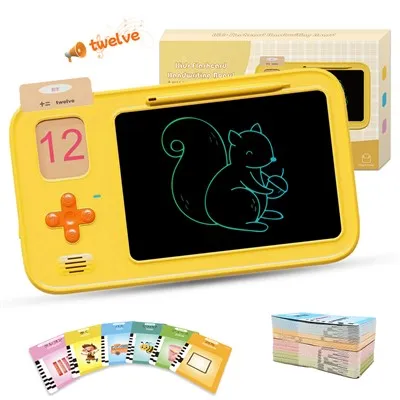
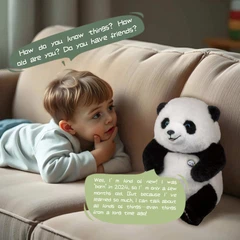
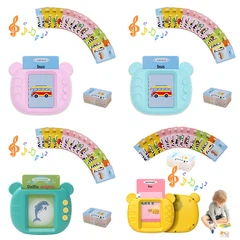
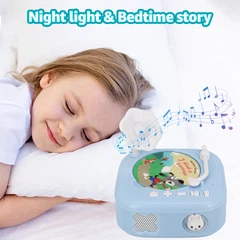



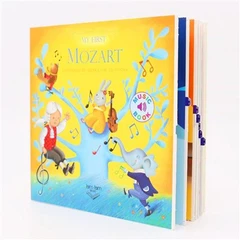

There was a time when a set of building blocks or a doll could encapsulate the imagination of our entire childhood. But today, toys are quietly undergoing a revolution driven by Artificial Intelligence (AI). The next generation of toys will no longer be inanimate objects; they will be intelligent companions capable of thinking, learning, and growing.
1. Moving Beyond "Static": The Limitations of Traditional Toys and AI's Solution
Traditional toys are inherently static and predictable. The form of a set of building blocks is fixed; a doll's dialogue is limited to a few pre-set phrases. A child's imagination is boundless, but the toy itself has a ceiling.
The introduction of AI shatters this ceiling. It endows toys with a dynamic, evolving "brain." The core characteristic of next-generation toys will shift from "what it is" to "what it can do and what it can become."
2. AI-Driven Next-Generation Toys: Three Core Forms
AI is not merely about adding a tablet to a toy; it fundamentally reconstructs the mode of interaction between the toy and the child.
1. Ultimate Personalization: "A One-of-a-Kind Companion"
AI can learn and understand each child's unique personality, preferences, and learning pace through continuous interaction.
Adaptive Difficulty: An AI educational robot can automatically adjust the difficulty of questions based on the child's answer accuracy, always providing a challenge that is "within reach but requires effort."
Interest-Driven: If the AI detects a child's particular interest in dinosaurs, it will proactively generate more stories, puzzles, and knowledge about dinosaurs, making the learning process fun.
Form Customization: In virtual worlds or through AR technology, the appearance, voice, and even personality of an AI companion can be customized according to the child's preferences.
2. Infinite Narrative Generation: "AI Storyteller That Never Repeats"
Leveraging generative AI (like large language models), toys can create endless storylines and dialogue content.
Interactive Stories: The child can become the director of the story. Telling the AI, "Make the knight meet a talking dragon," will cause the story to develop along that branch.
Upgraded Role-Playing: Playing house with a smart doll, the child receives new dialogue responses and plot developments every time, as if the doll has its own "thoughts," making the play experience never repetitive.
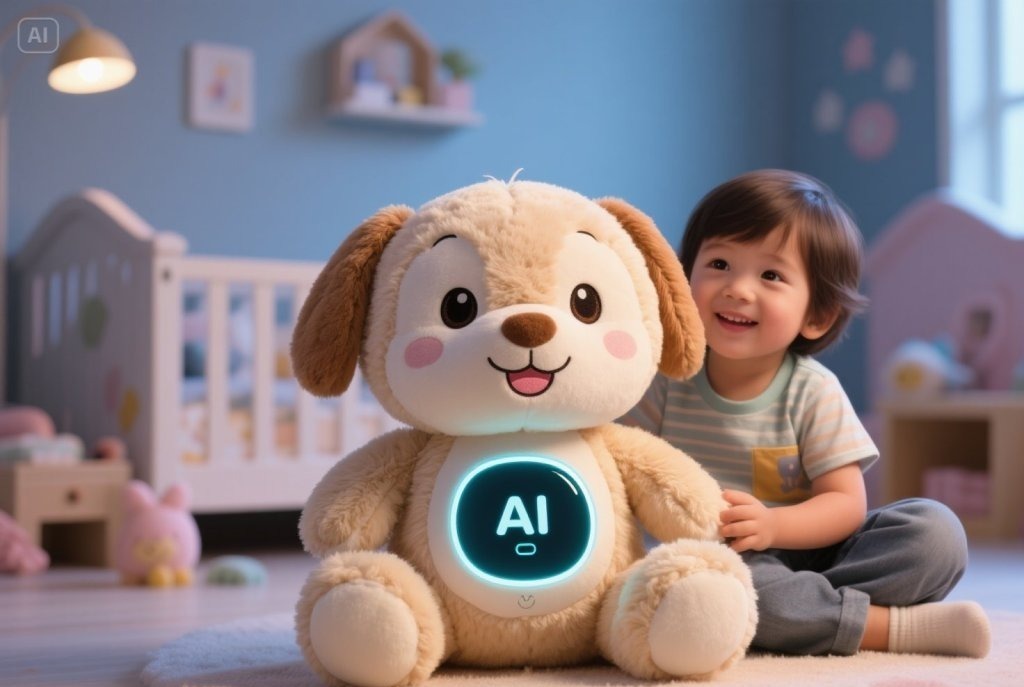
3. Emotional Interaction and Companionship: "An Emotional Partner That Truly Understands You"
Using Natural Language Processing (NLP) and affective computing, AI toys can recognize a child's emotional state and respond accordingly.
Emotion Perception: If a child sounds down, the AI toy might ask, "You seem a bit unhappy. Would you like to hear a joke or an adventure story?"
Proactive Care: It can remember previous conversations, asking a week later, for example, "Did that science experiment you mentioned last time work out?", establishing a continuous emotional connection.
Social Skills Coach: AI can simulate social scenarios, helping children practice how to make friends or resolve conflicts, fostering social skills in a safe environment.

3. Reshaping the Industry Chain: How AI is Disrupting the Toy Industry Landscape
AI is not only changing the products but also profoundly transforming the entire industry.
Product Design: Shifting from "hardware-first" to "software and service-driven." The value of a toy is no longer limited to its physical materials but lies increasingly in the underlying AI algorithms and continuously updated content services. This will attract cross-border entry from tech companies.
Business Models: The one-time sale model may evolve into a "hardware + subscription service" model. Users pay for continuously updated story libraries, learning courses, etc., generating long-term revenue.
Competitive Barriers: While traditional toy makers compete on IP and distribution channels, the core competitiveness in the AI toy era is technology, data, and algorithms. Small companies could rise rapidly based on an innovative AI application.
Safety and Education: The role of toys is expanding from "entertainment tools" to "educational partners." AI makes the true integration of "edutainment" possible, providing personalized initiation and education for children.
4. Coexisting Opportunities and Challenges: Issues the Industry Must Consider
Along with great potential, AI toys bring new challenges:
Privacy and Data Security: Toys constantly collect children's voice and behavioral data. Ensuring this data is stored and used securely is a bottom-line issue the industry must address.
Digital Addiction and Social Isolation: Will toys that are too intelligent and engaging cause children to become overly immersed in virtual interaction, neglecting real-world social activities and outdoor play?
Ethics and Bias: Are the decisions made by AI algorithms fair? Could the values and worldviews they impart to children contain hidden biases?
The Digital Divide: High technology often means high cost. Could this exacerbate educational inequality?

Conclusion: From Toy to Partner, the Future is Here
The form of the next generation of toys will be that of a personalized, generative, and emotional AI partner. It is no longer a passive object waiting for commands but an "ally" capable of active participation and co-creation. This AI-led transformation is upgrading toys from simple pastimes to key roles in shaping the next generation's imagination, creativity, and emotional development.
For toy manufacturers, parents, and society at large, the key lies in how to embrace its infinite potential while prudently establishing boundaries for safety and ethics, collectively guiding the toy industry towards a smarter, healthier, and more caring future.