


In the vibrant tapestry of childhood, play is far more than amusement-it's a profound neurological workout 🧠💥. Educational toys transform ordinary play into dynamic learning laboratories where curiosity fuels discovery. As children stack blocks or solve puzzles, they're not just entertained-they're building cognitive frameworks that will support lifelong learning.
Parents observing this magical process often ponder: "What makes these toys so uniquely powerful?" The answer lies at the intersection of developmental psychology and neuroscience, where play becomes the universal language of growth.
Learning Through Play: Where Joy Meets Development
Children absorb knowledge like sponges 💧, constructing understanding through tactile experiences. Educational toys create immersive environments where trial-and-error becomes the teacher. When a toddler fits shapes into corresponding holes or builds a wobbling tower, they're not just playing-they're conducting physics experiments ⚖️. This hands-on exploration ignites intrinsic motivation, transforming "I have to learn" into "I want to discover!"-a mindset that echoes through adulthood.
The magic happens when frustration meets triumph: that glorious moment when scattered puzzle pieces snap into a complete picture 🧩✨. These micro-victories release dopamine, wiring young brains to associate effort with reward. Unlike passive screen time, educational toys demand physical interaction-turning, twisting, and manipulating objects develop proprioception while strengthening neural pathways.
Cognitive Architects: Building Young Minds Block by Block
Every puzzle solved and structure engineered strengthens cognitive muscles 💪🧠. Consider construction toys: as children balance blocks to prevent collapse, they're unconsciously mastering Newtonian physics while developing spatial intelligence. Research shows that preschoolers regularly engaged with building toys demonstrate 23% stronger spatial reasoning, a predictor of future STEM aptitude.
Memory games transform recall into sport 🏆🧠, expanding working memory capacity. Strategy-based games like junior chess cultivate executive function, teaching delayed gratification as children plan three moves. Even simple sorting toys lay foundations for mathematical thinking by introducing classification and pattern recognition-the bedrock of algebraic reasoning.
The open-ended nature of quality educational toys sparks divergent thinking. A set of magnetic tiles might become a castle 🏰, a spaceship 🚀, or an abstract sculpture-each iteration reinforcing neural plasticity. This freedom to imagine, dismantle, and reinvent cultivates the innovative mindset our future demands.
Language Laboratories: Where Play Finds Its Voice
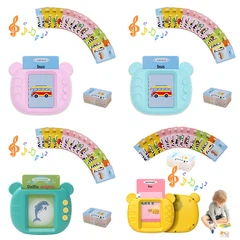
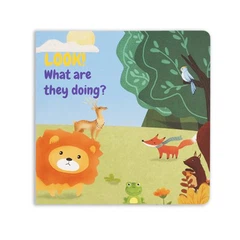
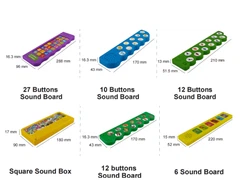
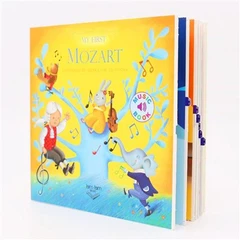
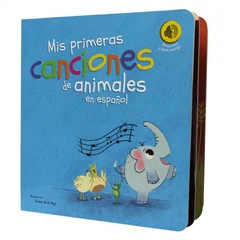
Educational toys transform abstract vocabulary into tangible concepts 🌈🗣️. Picture flashcards with textured elements allow children to "feel" the woolly lamb while learning its name, activating multiple sensory cortices simultaneously. Interactive storybooks with sound buttons don't just narrate tales-they demonstrate cause-and-effect while expanding linguistic range.
Dramatic play kits become language accelerators 🎭💬. When children role-play shopkeepers or veterinarians, they naturally adopt profession-specific vocabulary ("stethoscope," "transaction," "prescription"). This contextual learning proves far more effective than rote memorization-studies show children retain 70% more vocabulary when learned through play scenarios versus flashcards alone.
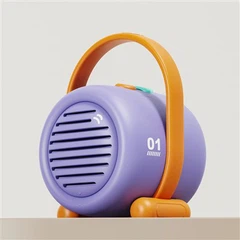
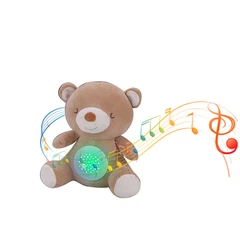
Musical toys 🎹🎶 deserve special mention. Rhythm instruments teach syllabication through beats, while melody-making toys build auditory discrimination-the foundation for phonetic awareness. The left brain-right brain integration during musical play creates superhighways for language processing.
Social Engineers: Playgrounds for Emotional Intelligence
Group play with educational toys becomes a masterclass in human dynamics 🤝❤️. Cooperative games where children build communal structures teach subtle negotiation skills-"If I hold this pillar, can you add the roof?" These interactions develop the theory of mind as kids recognize peers' perspectives.
Board games with shared resources (limited building materials, communal scorekeeping) instill gracious competition. The enforced turn-taking in games like "The Friendship Garden" builds impulse control while demonstrating that fairness ensures everyone's enjoyment. After all, a game where one player monopolizes pieces quickly ends-a powerful lesson in social sustainability.
Emotion dolls with interchangeable facial expressions 😊😢😠 become mirrors for self-discovery. As children assign feelings to characters ("The dino is sad because his plant snack is gone"), they develop emotional literacy. This symbolic play allows safe exploration of complex feelings-a child might process vaccination anxiety through doctor role-play long before articulating it verbally.
STEM Igniters: Launchpads for Tomorrow's Innovators
Educational toys demystify complex concepts through tangible exploration 🔭⚙️. Simple gear sets demonstrate mechanical advantage visually-when small gears spin large ones, children witness physics in action. Circuit-building kits with safe magnetic connectors transform abstract electricity into glowing lights and buzzing motors, revealing the "magic" behind everyday technology.
Coding toys like programmable robots 🦾🤖 introduce computational thinking without screens. As children arrange command tiles to navigate mazes, they're learning sequencing, debugging (when the robot crashes), and conditional logic ("IF at wall, THEN turn"). This concrete foundation makes abstract coding concepts comprehensible years before formal computer science education.
Chemistry sets designed for young scientists 🧪🔍 turn kitchens into laboratories. When baking soda rockets launch because of vinegar reactions, stoichiometry becomes exhilarating rather than intimidating. These visceral "aha!" moments create positive STEM associations during critical developmental windows.
Confidence Forges: Where Challenges Become Triumphs
The carefully calibrated difficulty in educational toys builds resilience through achievable challenges 💯🏅. Unlike passive entertainment, quality toys provide just-enough frustration to foster growth without causing shutdown. When a child finally balances all blocks in "The Architect's Challenge," the victory isn't given-it's earned through strategic iteration.
This growth mindset development is neurological: each solved problem strengthens myelin sheaths around neural pathways, making future problem-solving more efficient. Children learn that confusion isn't failure but the first step toward mastery-a lesson that transfers to academic struggles later.
Open-ended toys particularly empower timid learners. There's no "wrong" way to arrange loose parts like Magna-Tiles or sensory beads. This freedom builds creative courage, as children internalize that their unique solutions have value regardless of convention.
Bonding Catalysts: Play as Connection Currency
Educational toys create collaborative micro-worlds where parent-child relationships deepen 👨👧❤️. Building marble runs together requires synchronized communication-"Tilt that funnel left! Now!"-transforming directives into playful cooperation. Unlike passive movie watching, joint problem-solving creates shared neural activation patterns-literally syncing brains during play.
Themed play kits become conversation springboards 🗣️🌱. While playing "Archaeology Dig," parents can naturally discuss history and geology. These organic discussions prove more memorable than lectures-research indicates children recall 40% more factual content learned during play versus direct instruction.
For time-pressed parents, toy-facilitated play offers guilt-free bonding. Fifteen minutes of focused block-building with phones away creates a deeper connection than hours of distracted coexistence. The toys provide scaffolding for meaningful interaction when parents feel unsure how to "just play."
Xinditai: Architects of Inspired Learning
Leading this educational revolution is Xinditai-a pioneer in transforming developmental science into tangible tools 🚀🧸. Their research-backed approach ensures each toy addresses specific cognitive milestones. The "Sensory Explorer" line, for instance, features graduated textures calibrated to develop tactile discrimination in infants, while their "Junior Robotics" kits introduce algorithmic thinking through physical play.
What sets Xinditai apart is its commitment to inclusive design. Their emotion-regulation toys feature diverse skin tones and ability representations, while STEM kits include girl-empowering narratives ("Meet Zara the Zoologist!"). This intentional diversity ensures all children see themselves as capable learners.
Their innovation extends beyond products to play advocacy. Xinditai's free online resources teach parents to maximize toy-based learning, like transforming bath time into physics lessons with floating/sinking experiments. This holistic approach recognizes that toys are merely tools; it's the engaged human interaction that sparks true development.
The Enduring Legacy of Play
As we reflect on generations of educational toys-from Victorian era building blocks to today's AI-powered learning companions-their core purpose remains unchanged: transforming abstract knowledge into graspable truth ✨📚. The blocks that taught our grandparents balance now teach our children coding logic through programmable robotics. Yet the magic persists-that spark when a child's "Why?" becomes "I know!"
Looking forward, emerging technologies promise even more personalized learning journeys. Augmented reality toys will overlay DNA models onto physical double-helix puzzles, while haptic feedback gloves could let children "feel" geometric theorems. But amidst these advances, the fundamental truth endures: play remains childhood's most powerful epistemology.
The next time you witness a child's intense focus as they connect circuit tiles or negotiate toy-sharing terms, recognize the profound neuro-construction underway 🧱🧠. Those plastic gears are forging cognitive frameworks. Those dollhouse negotiations are wiring social intelligence. That triumphant block tower? It's not just play-it's the architecture of our collective future.