





The First Audience: What Happens When a Quiet Child Talks to Something That Cannot Judge
The First Audience: What Happens When a Quiet Child Talks to Something That Cannot Judge
Some children talk all the way home and say nothing at nursery. The gap is rarely about language and almost always about audience. This article is about the audience, and about an object that offers one without asking anything in return.
Table of Contents
03. Why a Plush Is Easier to Talk To
04. Four Ways a Quiet Child Uses It
05. Eight Things That Change in a Room
08. What to Set Before a Child Meets It
09. Eight Things Buyers Should Establish

1. Introduction
There is a child in almost every nursery who speaks fluently at home and becomes silent at the door. The parents describe a chatterbox; the staff describe a child who nods. Neither description is wrong, and neither is a description of the child's language. What separates the two children is the presence of an audience that the child has decided is safe.
Adults tend to treat this as a confidence problem and respond with encouragement, which is exactly the response that raises the stakes. Being told to speak is a second thing to fail at. A child who is already calculating whether a sentence will come out right does not need more encouragement; they need a listener who will not become a judge in the middle of the sentence.
That is a narrow brief, and most toys do not meet it. A toy that asks questions puts the child on the spot in the same way an adult does. A screen rewards interaction with animation and sound, which turns speaking into a performance with a score attached. A book needs an adult to read it aloud. The object described in this article does something simpler: it answers, quietly, and it looks at the child while doing so, and it has no way of being disappointed.
The commercial consequence is worth stating at the start. A product sold on cuteness competes with every other plush on the shelf. A product sold on being the first audience a quiet child accepts competes with almost nothing, because the claim is specific, testable in a room, and repeatable by the people who run that room.
What follows is the product, the mechanism by which a plush becomes easier to speak to than a person, the four ways children actually use it, a protocol for staff, and the boundary that a responsible supplier has to draw before anyone places an order.
2. What the Product Is
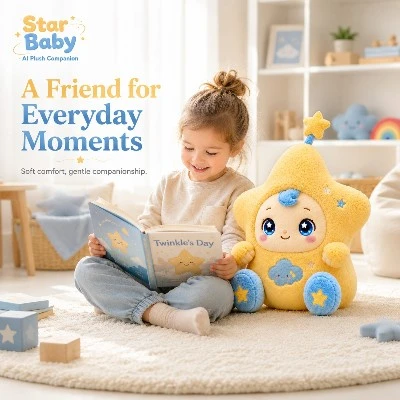
AI Emotion Eyes, model PT-020, is a soft companion with a small mechanism inside and a speaking voice. The body is polyester plush, the stuffing is PP cotton, and the electronics travel as a plastic module within the fill rather than as a rigid shell. It measures 150 by 130 by 250 millimetres and runs on an 800 mAh cell that charges over USB Type-C.
Five functions are listed for this model. A conversational layer of the GPT class generates replies rather than replaying fixed lines. A pair of expressive eyes carries attention and mood without a display. A touch sensor in the head triggers a sound when the head is stroked. A repeat key plays the last sentence again. A gyroscope detects orientation, so the toy responds to being lifted, tipped or hugged rather than only to being spoken to.
Those five functions look unremarkable on a specification sheet and behave unusually in a quiet room, because each one lowers a different kind of pressure. The conversational layer means the child is not choosing from a menu. The eyes mean attention is visible without being verbal. The head touch means the child can start the exchange with a gesture rather than a sentence. The repeat key means a sentence can be heard twice, which matters enormously to a child who is unsure whether they heard it correctly the first time. The gyroscope means the object reacts to being handled, so a child who cannot yet speak to it can still communicate with it.
The absence of a camera and a screen is part of the brief rather than an omission. Nothing the child does is recorded, scored or compared, and nothing has to be looked at. For a child whose difficulty is being looked at, that is the whole point. Buyers should also note what the sheet does not specify: there is no radio module listed, so the way the conversational service is delivered belongs in the commercial discussion rather than in an assumption, and the answer decides both the data question and the certification question in the destination market.
A distributor placing this alongside other AI plush should treat the model number as the specification. Plush lines look identical in photographs and differ entirely in fill density, module placement and voice behaviour, and every one of those differences shows up in a room within a week.


- It Cannot Interrupt: Adults finish sentences for children without noticing, and every completion takes the sentence away from the speaker. A listener that waits, however long the pause runs, returns the sentence to the child. For a child who needs three seconds to assemble a clause, those three seconds are the entire difference between speaking and not speaking.
- It Shows No Boredom: Children read faces with brutal accuracy and stop talking the moment they detect patience running out. An embroidered face cannot look at the clock, cannot glance at another child, and cannot produce the small tightening around the mouth that a busy adult produces in the fourth minute of a slow sentence.
- It Asks Nothing Embarrassing: What is your name, how old are you, where is your mummy: these are the standard opening lines of a stranger, and a quiet child has heard them before. A well-set companion opens with a remark rather than an interrogation, and the child is free to answer or not. That choice is the difference between an audience and an interview.
- It Says It Again Without Sighing: The repeat key is the least dramatic function on the specification and the most valuable here. A child who did not catch a sentence can hear it a second and third time with no social cost, which is exactly what cannot happen with an adult who has already said it twice.
- It Can Be Left Without Offence: A child can walk away mid-conversation and come back in ten minutes, and nothing has been broken. Adults cannot offer that, and the possibility of leaving is what makes staying low-stakes enough to try.
4. Four Ways a Quiet Child Uses It
These four patterns show up in roughly this order over the first fortnight. Staff who know the sequence stop mistaking the first stage for a failure.
Step 1 - The Gesture Instead of the Greeting
The first contact is usually a stroke on the head rather than a word, and the toy answers with a sound. That exchange matters because it establishes a channel that does not require language. A child who has made the toy respond once has already discovered that the object reacts to them, and that discovery is the foundation the spoken stage is built on.
Step 3 - The Sentence Rehearsed at Home
Children bring material from home and test it privately first: the name of a pet, a line from a programme, something a sibling said. This is rehearsal rather than communication, and it should not be interrupted. The sentence being practised is often the one that later gets said to a person, which is why the private version deserves to be left alone.

Step 2 - The Corner, Not the Circle
The toy gets used at the edge of the room, away from the group, and almost always with the child's back at an angle rather than facing the door. Position matters more than adults expect: a companion placed in the middle of a busy carpet is a public performance, while one on a low shelf beside a cushion is a private conversation that happens to be visible.
Step 4 - The Relay to an Adult
The last stage is third person, and it is the one that changes what a room sounds like. The child reports what the toy said rather than speaking to the adult directly, which carries the content without the exposure. Staff who receive these reports as news, rather than as openings for a conversation, get far more of them.
5. Eight Things That Change in a Room
Every item below is something a practitioner can observe and a buyer can test during a trial, which is a more useful basis for a purchase decision than a description of the toy's character:
The First Sentence of the Day Goes Elsewhere
A child who has not spoken since arriving will often speak to the companion within the first hour. That sentence does not count as participation in the adult sense, and it should not be celebrated as a breakthrough in front of the group, because public recognition converts a private success into a social risk. Note it, and say nothing.
Volume Becomes a Dial the Child Holds
Children who find their own voice too loud turn the toy down and then speak at the level they have chosen. Adults usually miss what has happened, because the room sounds quieter rather than louder. The volume control is therefore not a convenience feature for parents in cars; in a quiet child's hands it is the first time speaking has an adjustable setting.
A Child Can Repeat Without Shame
Asking a person to say it again carries a small admission that you did not understand. Pressing repeat carries nothing at all. Over a term this shows up as longer sentences, because a child who is not afraid of the second attempt will risk a more complicated first one.
Group Time Gains a Volunteer
Children who will not speak to the circle will speak for the toy, holding it up and reporting what it said. The content is identical and the exposure is one step removed, which is exactly the increment a quiet child can manage. Practitioners who allow this route get contributions from children who otherwise contribute nothing all morning.
Staff Hear Vocabulary They Would Otherwise Miss
Most of what a quiet child knows never reaches an assessment, because assessment requires speech in front of a person. A conversation held with a plush in the corner carries the same words at a fraction of the pressure, and a practitioner listening from two metres away learns more in ten minutes than a formal check would produce in a week.
A New Child Has Somewhere to Be on Day One
Settling is the hardest fortnight of the year for a child and for the key person. A companion on a familiar cushion gives the new arrival a destination that does not require an introduction, and gives the practitioner a reason to leave the child alone for four minutes without appearing to withdraw. Rooms that run a settling programme usually find this the most practical use of all.
A Second Language Lives in the Room
Where a language other than the setting's main language is spoken at home, the companion can be configured to answer in that language. A child who has been silent all morning in one language will often speak in the other, and that first exchange tells staff something no home visit could. The language set is therefore a specification decision with a pastoral consequence.
Parents Get a Report in the Child's Words
What a parent hears at handover is usually a summary written by an adult. What the toy produces is the child's own phrasing, remembered by whoever was nearby. Passing on a single sentence the child actually said, rather than an assessment of how they seemed, changes the conversation at the door more than any report form does.
6. The Whisper Protocol
Four rules for the adults in the room. Each one exists because the obvious alternative makes things worse, and each can be taught to a new member of staff in a five-minute briefing.
Rule 1 - Sit at the Edge of the Room
Close enough to hear, far enough to be ignorable. A practitioner who sits beside the child turns the exchange into a three-way conversation and reinstates the pressure the toy was there to remove. Two metres and a slightly turned shoulder is the working distance, and it should look like ordinary supervision rather than like an intervention.
Rule 3 - Relay, Do Not Interview
If the child reports what the toy said, receive it as information and let it stand. The instinct to follow up with a question moves the conversation back to the adult and often ends it. A response such as I did not know that, followed by silence, keeps the child holding the floor.

Rule 2 - Let the Child Start
Never prompt the first exchange, and never ask the child to say hello to it. The head touch is the child's move, and the whole value of the object disappears if an adult converts it into a task. If nothing happens for three days, nothing has gone wrong; the toy is simply being ignored in the same way a new chair is ignored until it is needed.
Rule 4 - End It With the Same Gesture
Sessions should close the way they open. A stroke on the head, the toy going back to its shelf, the cushion put straight. A predictable ending tells a child that the exchange has a shape and that it will be available again tomorrow, which is what makes it safe to keep using.
7. What It Must Never Become
A companion that helps a quiet child speak is one careless instruction away from becoming another adult with an agenda. The four prohibitions below are not marketing cautions; they are the conditions under which the product works at all, and a supplier who does not state them is selling a toy that will be used correctly by luck.
It must never become a test. The moment an adult asks a child to demonstrate something to the toy, the toy has joined the staff. Children detect this within one session and stop using it, and the room loses the only audience it had that was not evaluating.
It must never become a bribe or a reward. Take the bear and tell it what you did is the exact sentence that converts a low-pressure listener into a task with a prize attached, and a child who declines the task now has something to fail at in public.
It must never stand in for assessment. A child who speaks to a plush and not to adults is a child with a question that belongs to a speech and language therapist, not to a product. Persistent reluctance to speak in specific settings is a recognised clinical pattern with its own treatment pathway, and a toy is not part of that pathway. What the toy does is reduce the number of silent hours in the day while the professional work happens elsewhere.
It must never become a listening device. The specification for this model contains no camera, no microphone array pointed at the room and no recording of the child for later review. That is a feature worth saying out loud in a brochure, because nurseries and clinics are increasingly asked by parents what a device in the corner is doing, and the honest answer here is that it is answering a child, not documenting one.
8. What to Set Before a Child Meets It
The opening line
The first sentence a companion says is the single most consequential setting on the product. A question puts the child on the spot; a remark gives them somewhere to stand. Buyers should specify the opening line as content rather than accept a default, and it should be a statement that requires no answer, followed by a pause long enough for one.
The volume floor
Check the quietest setting rather than the loudest. A toy that cannot go quiet is unusable in a corner where a child is trying a sentence for the first time, and adults routinely test volume by turning it up. The floor is the number that matters in a room with a shy child in it.
The language, and the second language
Where a household speaks a language the setting does not, configure the companion to answer in that language and tell the family it does. A child hearing their home language come out of a toy in a strange room usually produces a first sentence within a minute, and that sentence is often the first thing staff have ever heard them say.
What the repeat key actually repeats
Confirm at the sample stage that repeat replays the last complete sentence rather than the last fragment. A toy that repeats a half-sentence teaches the child nothing and adds a confusing second attempt, which is the opposite of the function's purpose.
Whether the toy has a name
A named character invites the child to use the name, which is a small piece of ownership. An unnamed one is easier to treat as furniture and easier to leave alone on a bad day. Both work; the decision should be deliberate rather than inherited from a box design, because the name is the first thing a child will say out loud in the room.

Why Settings and Clinics Specify This Line With Xinditai
An institution buys a companion for a room rather than for a child, and a room has requirements a parent does not: a quiet setting that is genuinely quiet, an opening line that can be written for the setting, a care instruction that survives a nursery's cleaning routine, and a certificate file that matches the batch. Our export desk answers those four questions before it answers the price, because a programme that gets to the second order usually got those four right the first time.
9. Eight Things Buyers Should Establish
The questions below are the ones that decide whether a trial produces a result or an anecdote. Each can be answered in writing before an order is placed, and a supplier who cannot answer one of them is telling you something useful.
The Quietest Setting, Measured
Ask for the output level at minimum volume, in a number, not a description. A companion that idles at a conversational level is a companion that cannot be used beside a sleeping child or in a corner where a first sentence is being attempted.
The Opening Line, Supplied as Content
Treat the first sentence as copy you commission rather than copy you inherit. A setting that works with shy children should be able to write an opening remark that fits its own practice, in its own language, and hear it on the sample before the order is confirmed.
Repeat Behaviour on the Actual Sample
Press it yourself, three times in a row, and listen. Confirm it replays a complete sentence, that it does not cut the first word, and that pressing it a fourth time does not drop the toy into a different mode. Small behaviours like this are where a cheap module announces itself.
Where the Module Sits, by Hand
An institution's plush is handled by thirty children a day rather than one. Press the belly, the back and the sides of the head, and confirm the hard mass cannot be located at a seam. The specification states a plastic mechanism inside a PP cotton fill, and the placement of that mechanism is what decides whether the toy survives a term.
The Language Set and the Register
Ask for a recording of three exchanges in the language you will deploy, and listen for register rather than accuracy. A translation that is correct and formal sounds like a teacher; what a quiet child needs is something closer to a calm adult speaking slowly, and that difference is audible in the first ten seconds.
Who Hosts the Service, and Who Pays in Year Two
The sheet specifies a GPT-class conversational layer and does not specify a radio module, so the delivery model is a commercial question and not an assumption. Establish who operates the service, what it costs after the first year, which languages it covers, and what is retained from an exchange. For a school or a clinic, the retention answer is the one that goes into a data protection assessment.
The Eye Assembly and the Small-Parts Question
The eyes are the feature and therefore the component most likely to be tested by a small finger. Ask how the eye is fixed, what the pull test result is, and whether the age grading on the box reflects the mechanism inside rather than the softness outside. The two answers should come from the same test report as the batch.
The Carton Plan and the Artwork Clock
Carton quantity, dimensions, gross weight and drop result belong in the same document as the unit price, and an institutional buyer also wants to know the pallet height, because it decides whether the delivery fits a store cupboard. Delivery timing then runs from artwork approval, since character, voice and box print all sit in front of production, and the OEM minimum for this programme is 1,000 pieces.

10. Platform and Services
A plush platform built for settings: the same body and module can be configured for a home or for a room. For institutional orders we set the volume floor, the opening line, the pause length and the language set at the sample stage, so a setting receives a companion that behaves the way its own practice requires rather than the way a consumer box was designed.
Content written for the buyer, not translated for them: opening lines, follow-up phrasing and closing sentences are produced with the buyer's language and register in mind. A setting working with quiet children can supply its own preferred phrasing and hear it performed before the order is placed.
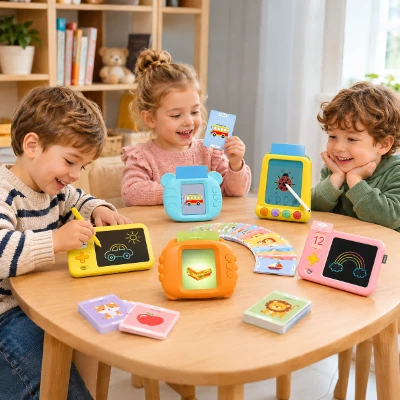
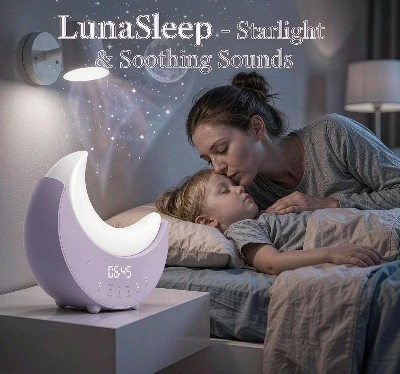
A range that covers the same room: the factory also builds talking flash cards, a drawing tablet, a guided tracing machine, sound books, projectors and the same AI plush platform, which means a nursery, a clinic or a distributor can equip a whole corner from one supplier with one certificate file behind it.
Terms: OEM and ODM programmes from 1,000 pieces, with character, voice work, packaging and the specification sheet agreed in writing and a sample approved before production begins.
11. FAQ
Q: Is this a therapy product?
A: No. It is a plush companion with a voice, and it makes no clinical claim in any market. A child who does not speak in particular settings needs a speech and language therapist, and a toy that advertised itself as a substitute would be doing harm. What the product provides is a low-pressure audience in the hours between appointments.
Q: Does it record or listen to the room?
A: The specification for this model lists no camera and no recording of the child for later review. It answers an exchange rather than documenting it. That is a point to put in writing for parents, because a device that sits in a nursery corner will be asked about, and the answer should be a sentence, not a shrug.
Q: Will a child become dependent on it?
A: The pattern in practice runs the other way. The companion is used heavily for a few weeks, then less as speech moves to people, and then occasionally, usually at the start of a day or after a holiday. It is a first audience rather than a permanent one, and settings generally report that it is abandoned rather than clung to.
Q: Which age grading applies to this model?
A: The grading follows the mechanism inside rather than the softness of the outside, and it is set per market against the applicable toy safety standard. Because the eyes are a small component that a finger will test, the age on the box must match the test report for the batch, and a buyer should refuse a grading that was inherited from a different product.
Q: Can one unit carry two languages?
A: Yes, and for bilingual households and for settings with a mixed intake this is the most useful configuration on the sheet. The language set is fixed at the sample stage, so the buyer should name both languages at enquiry rather than adding one after approval.
Q: How is it cleaned in a nursery?
A: Surface clean only, with a damp cloth, because the cell and the module sit inside the fill. No immersion, no dryer, and the instruction printed on the hang tag in the language of the market. A nursery that washes plush weekly needs to know this before the boxes are opened, not after.
12. Contact Us
Tell us the setting, the languages, the age range and the number of rooms you are equipping, and the export desk will send the specification sheet, the settings list and the certificate documents required in your market.
Email: xdt01@dtdianzi.com
If the enquiry comes from a local authority, a clinic group or a distributor serving several settings, say so on the first line: those orders are quoted with a settings sheet and a sample protocol attached, which is a different document from a retail quotation.
Direct line and WhatsApp: +86 139 2381 3463
Xinditai Electronic of Shenzhen has spent its working life on children's electronic products, with tooling, injection, assembly and inspection under a single roof and a quality system certified to ISO 9001, BSCI and SEDEX. Expect the specification and the settings list inside one working day.