









Introduction
The fusion of artificial intelligence with traditional playthings has ushered in an era where toys are no longer static objects but dynamic partners in childhood development. By combining machine learning, natural language processing, and sensory technologies, modern AI-enhanced toys create personalized experiences that adapt to individual learning curves and emotional needs. This transformation is reshaping not only how children play but also how they acquire cognitive skills and form emotional connections.
AI-Driven Toy Categories Reshaping the Market
Educational Companions with Adaptive Learning
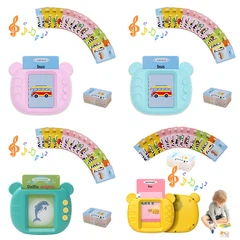
Contemporary educational toys like CogniBot and MathMaster Pro exemplify how machine learning algorithms revolutionize learning. These devices analyze a child's response patterns through continuous interaction, automatically adjusting challenge levels. When a 7-year-old demonstrates difficulty with multiplication tables, the system might introduce visual fraction pies or interactive number games to reinforce foundational concepts. A 2024 Stanford study revealed that children using such AI-driven tools showed a 34% improvement in mathematical problem-solving speed compared to peers relying on conventional methods. Beyond academic support, these toys employ natural language processing to function as round-the-clock tutors, capable of explaining scientific concepts or correcting grammar errors in real-time conversations. Parental feedback indicates a significant shift in engagement patterns, with 68% reporting their children voluntarily spend over 20 minutes daily on educational interactions with these devices, often preferring them to passive video consumption.
Emotionally Intelligent Interactive Dolls
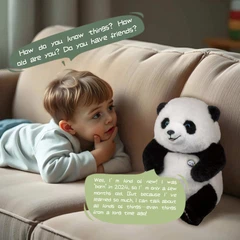
Pioneering products like EmoBear and SmartPal represent a breakthrough in emotional AI applications for childhood development. Equipped with micro-cameras and advanced sentiment analysis algorithms, these dolls detect subtle facial micro-expressions-a slight frown during a math puzzle or widened eyes during storytelling. The voice recognition system goes beyond word recognition, analyzing tonal variations to assess emotional states. If a child's voice trembles while recounting a school incident, the doll might respond with comforting phrases like, "That sounds tough. Want to talk about it?" or suggest calming activities. The Toy Safety Institute's 2025 report highlighted their therapeutic potential, showing 41% of child psychologists now prescribe such toys to help socially anxious children practice conversational skills in stress-free environments. Some models even connect to parental apps, providing insights into a child's emotional well-being through mood trend analyses.
Autonomous Robotic Playmates
Robotic companions like RoboBuddy X3 demonstrate how computer vision and reinforcement learning create immersive physical play experiences. Using LiDAR sensors and spatial mapping, these robots navigate living spaces to design obstacle courses or initiate games of hide-and-seek. During collaborative play sessions, they learn to predict a child's preferences-if a user frequently chooses dinosaur-themed adventures, the robot might start suggesting fossil excavation simulations. Field tests revealed fascinating social dynamics: 72% of children aged 6–9 introduced their robotic playmates to friends as "my buddy" rather than referring to them as devices, indicating unprecedented levels of human-machine bonding. Advanced models now incorporate choreography algorithms, enabling synchronized dance routines that adapt to a child's movement capabilities.
Ethical Challenges in AI Toy Development
Privacy Concerns and Data Security
The always-listening nature of AI toys raises significant privacy questions. Many devices continuously collect voice samples, geolocation data, and interaction logs-information that could reveal family routines or home layouts. A 2024 audit by the SafePlay Alliance exposed vulnerabilities in 23% of tested products, including unencrypted video streams from toy cameras. In response, the European Union implemented the Child Data Protection Act (2025), requiring manufacturers to implement military-grade encryption and periodic security audits. Some companies now offer "data nutrition labels" detailing exactly what information toys collect and how it's processed.
Algorithmic Bias in Child Development
MIT's 2023 longitudinal study uncovered subtle biases in language-learning toys, where career suggestion algorithms disproportionately associated nursing with female characters and engineering with males. To combat this, developers are employing adversarial neural networks that actively identify and neutralize stereotypes during AI training. New evaluation frameworks assess toys across 12 bias dimensions, from racial representation to body positivity messaging.
Future Directions for AI in Play
Hyper-Personalization Through Biometrics
Next-generation prototypes integrate wearable biometric sensors with plush toys, enabling real-time adaptation to physiological signals. A teddy bear might detect increased heart rate variability during reading time and switch from adventure stories to calming nature narratives. Experimental models under development can even analyze sweat biomarkers to gauge stress levels, potentially helping identify learning disabilities early.
Cross-Device Ecosystem Integration
The future envisions AI toys as central hubs in smart ecosystems. A child's robotic companion could coordinate with home security systems to create augmented reality treasure hunts using room layouts, or sync with kitchen appliances to turn recipe-following into math practice. Manufacturers are exploring blockchain-based toy-to-toy communication, allowing characters from different brands to interact cohesively in imaginative play scenarios.
Conclusion
As AI becomes deeply embedded in play culture, it creates a symbiotic relationship where toys evolve alongside their users. These intelligent systems don't merely entertain-they observe, adapt, and grow, offering bespoke experiences that traditional toys could never achieve. While challenges around data ethics and algorithmic transparency persist, the sector's commitment to responsible innovation suggests a future where AI-enhanced play becomes a powerful ally in nurturing emotionally resilient, creatively confident generations. The true revolution lies not in replacing teddy bears with robots, but in reimagining how every stuffed animal, building block, or doll can become a window into personalized learning and emotional growth.


