










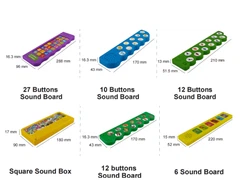



Recording mechanisms, often referred to as "recording cores" or "recording modules," form the backbone of audio capture and playback systems across diverse industries. From vintage cassette players to modern digital voice assistants, these integrated units have evolved significantly over the decades. This article explores the technical foundations, historical progression, and contemporary applications of recording mechanisms, shedding light on their indispensable role in shaping how we interact with sound.
Understanding Recording Mechanisms
A recording mechanism is an integrated assembly of components designed to capture, process, and store audio signals. Unlike standalone devices, these modules combine essential functionalities-such as sound input, signal conversion, and storage-into a compact, purpose-driven unit. Their design varies widely depending on the era and application, but their core objective remains consistent: to preserve audio in a retrievable format.
Historical Development
The journey of recording mechanisms began with analog systems. Early phonographs used mechanical components to etch sound waves onto wax cylinders, while magnetic tape mechanisms later revolutionized audio storage with their portability and reusability. The transition to digital technology in the late 20th century marked a paradigm shift, replacing physical media with binary data stored on chips or cloud servers. Today, advancements in microelectronics and software integration have further miniaturized these modules, enabling their use in everything from toys to industrial equipment.
Core Components of Recording Mechanisms
Magnetic Tape Mechanisms
Magnetic tape-based systems dominated the audio industry for much of the 20th century. These mechanisms relied on a combination of motors, magnetic heads, and precision-engineered tape paths to record and play back audio. The cassette tape, introduced in the 1960s, became a cultural icon due to its affordability and ease of use. Inside these devices, a rotating capstan and pinch roller ensured consistent tape speed, while erase and record heads magnetically aligned particles on the tape to encode sound. Despite their obsolescence in mainstream consumer electronics, tape mechanisms remain relevant in niche applications like archival storage and retro audio enthusiasts' collections.
Digital Recording Modules
Modern digital recording mechanisms leverage microprocessors, analog-to-digital converters (ADCs), and non-volatile memory to achieve high-fidelity audio capture. Unlike their analog predecessors, these modules convert sound waves into binary data, enabling lossless storage and editing. Key innovations include noise reduction algorithms, multi-track recording capabilities, and USB interfaces for direct file transfers. For instance, portable voice recorders used in journalism or legal settings often incorporate such modules, offering hours of recording time and instant playback through integrated speakers or headphones.
Specialized Recording Modules
Beyond conventional audio devices, specialized recording mechanisms cater to unique use cases. Music greeting cards, for example, embed ultra-compact modules with pre-recorded melodies or user-customizable voice messages. These systems prioritize simplicity, often featuring single-button operation and low-power consumption to extend battery life. Similarly, educational toys employ ruggedized recording modules to withstand frequent use by children, combining durability with intuitive controls.

Applications Across Industries
Consumer Electronics
In consumer electronics, recording mechanisms enable features like voice memos, hands-free dictation, and interactive voice responses. Smart speakers and voice assistants, such as Amazon Echo or Google Nest, rely on advanced microphone arrays and cloud-based storage to process user commands. Meanwhile, wearable devices like smartwatches integrate miniature recording modules for real-time voice transcription, enhancing productivity for professionals on the go.
Creative and Gift Products
The creative industry has embraced recording mechanisms to deliver personalized experiences. Customizable music boxes, for instance, allow users to record heartfelt messages or original compositions, transforming ordinary gifts into sentimental keepsakes. Promotional items like talking keychains or branded USB drives with voice recording capabilities also leverage these modules to engage customers innovatively.
Professional and Educational Tools
In professional settings, recording mechanisms serve critical roles in data collection and analysis. Medical dictation devices use noise-canceling microphones and encrypted storage to ensure patient confidentiality. Educational institutions deploy voice recorders in language labs to help students practice pronunciation, while researchers utilize high-sensitivity modules to capture environmental sounds for ecological studies.
Modern Advancements and Trends
User-Centric Design
Contemporary recording mechanisms prioritize accessibility. Many modules now feature plug-and-play functionality, eliminating the need for specialized software. USB-C interfaces and Bluetooth connectivity enable seamless integration with smartphones and computers, while touch-sensitive controls simplify operation for non-technical users.
Integration with IoT and AI
The rise of the Internet of Things (IoT) and artificial intelligence (AI) has expanded the capabilities of recording mechanisms. Smart home systems use voice recognition algorithms to distinguish between users, while industrial sensors employ audio analytics to detect machinery malfunctions. These advancements highlight the growing convergence of hardware and software in audio technology.
Sustainability Considerations
As environmental concerns gain prominence, manufacturers are exploring eco-friendly materials and energy-efficient designs. Solar-powered recording modules, for instance, are being tested for outdoor applications like wildlife monitoring. Additionally, modular architectures allow for component upgrades rather than full replacements, reducing electronic waste.
Conclusion
From analog tape decks to AI-driven voice assistants, recording mechanisms have continually adapted to meet evolving technological and societal needs. Their versatility ensures relevance across industries, bridging the gap between creativity, functionality, and innovation. As miniaturization and smart technologies advance, these modules will likely become even more pervasive, embedding themselves into the fabric of daily life while preserving the timeless human desire to capture and share sound.


