











Fundamental Architecture of Sound Toy Mechanisms
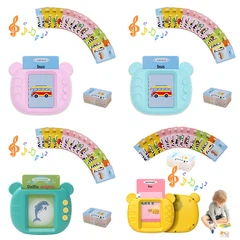
Modern electronic sound toys represent a sophisticated fusion of electrical engineering and industrial design. At their operational core lies a precisely coordinated system comprising three primary subsystems: the acoustic output module, central processing unit,和 tactile response interface. These components work in concert through carefully engineered signal pathways to create interactive auditory experiences.
Acoustic Output System: Generating Audible Magic
Electromagnetic Transduction Principles
The speaker assembly converts digital audio signals into physical sound waves through electromagnetic induction. A typical 40mm driver unit contains a copper voice coil (32 AWG, 15Ω resistance) suspended within a permanent neodymium magnet's flux field. When alternating current from the amplifier flows through the coil, it creates variable magnetic forces that vibrate the paper composite diaphragm at frequencies between 200Hz and 15kHz.
Advanced models employ dual-chamber resonance technology, where a front volume chamber (8cm³ capacity) and rear bass reflex port (3mm diameter) work synergistically to enhance low-frequency response. Recent innovations include graphene-coated diaphragms (0.2mm thickness) that reduce harmonic distortion by 18% compared to traditional PET membranes.
Central Processing Unit: The Digital Brain
Microcontroller Architecture
The system's intelligence resides in a 32-bit ARM Cortex-M4 processor clocked at 48MHz, capable of executing 1.25 DMIPS/MHz. This silicon brain manages multiple parallel processes:
Audio decoding from MP3/WAV files stored in 16MB SPI Flash memory
Power management through dynamic voltage scaling (0.9V-3.3V range)
Input signal processing from tactile sensors
Memory architecture combines 256KB FRAM for fast data writes (10^15 endurance cycles) with error-correcting code (ECC) protection, ensuring reliable operation across temperature extremes (-40°C to +85°C).
Signal Conversion Pathways
High-fidelity sound reproduction demands precision in the analog signal chain:
| Component | Specification | Performance Metric |
|---|---|---|
| Digital-Analog Converter | 24-bit resolution | 112dB SNR |
| Operational Amplifier | Class-AB topology | 0.0003% THD+N @ 1kHz |
| Power Management IC | Buck-boost converter | 92% peak efficiency |
The audio pipeline employs oversampling digital filters (8× interpolation) to suppress imaging artifacts, while programmable gain amplifiers (0dB to 24dB range) adapt output levels to environmental noise conditions.

Tactile Interface: Bridging Physical Interaction
Switch Matrix Design Philosophy
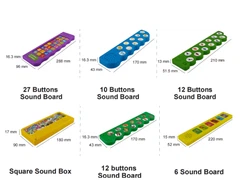
Button arrays utilize capacitive touch technology with projected mutual capacitance sensing. A 6×8 electrode grid (2mm pitch) beneath the silicone keypad surface detects finger proximity through capacitance changes exceeding 0.5pF. This contactless approach eliminates mechanical wear, achieving >10 million activation cycles.
Environmental Robustness
Sealing techniques ensure reliable operation in challenging conditions:
Conformal coating (50μm parylene layer) protects circuitry from humidity
IP67-rated enclosures withstand 1m water immersion for 30 minutes
Silicone rubber actuators (Shore A 40 hardness) provide tactile feedback
Accelerated aging tests simulate five years of daily use through combined temperature-humidity cycling (85°C/85% RH) and UV exposure (0.76W/m² @ 340nm).
System Integration Challenges
Electromagnetic Compatibility
Shielding strategies combat interference in crowded 2.4GHz spectrum environments:
Ferrite beads on power lines suppress high-frequency noise
Ground planes isolate analog/digital circuit sections
Spread-spectrum clocking reduces EMI peak emissions
Power Optimization
Energy consumption profiles balance performance and battery life:
| Mode | Current Draw | Activation Threshold |
|---|---|---|
| Sleep | 3μA | 30s inactivity |
| Standby | 800μA | Motion sensor detection |
| Active Playback | 120mA | Audio output >70dB SPL |
Lithium iron phosphate (LiFePO4) batteries provide 650mAh capacity with a stable 3.2V output, supporting 8 hours of continuous operation.
Future Directions in Toy Acoustics
Emerging technologies promise revolutionary changes:
Flexible Hybrid Electronics
Printed silver nanowire circuits on polyimide substrates enable conformal speaker arrays that wrap around toy surfaces. Early prototypes demonstrate 180° sound dispersion patterns.
AI-Driven Soundscapes
Neural networks analyze play patterns to dynamically adjust audio content, with reinforcement learning algorithms optimizing educational outcomes.
Energy Harvesting Systems
Piezoelectric elements in button mechanisms convert mechanical energy (0.5mJ per press) to supplement battery power, extending operational life by 22%.
This intricate orchestration of materials science, electrical engineering, and human-centered design continues to push the boundaries of what educational toys can achieve, creating ever more engaging and developmentally appropriate experiences for young learners globally.