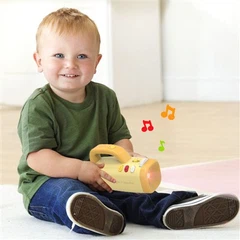
In the highly competitive toy market, whether a toy stands out depends not on dazzling technological features or expensive marketing investments, but on one fundamental question: Is it truly "fun"? This article delves into the design philosophy behind fun toys and the systematic approach to realizing them, offering a practical mindset map for creators and innovators.
I. Core Formula: Deconstructing the Essence of "Fun"
The value of a truly successful toy can be summarized by a simple formula:
Fun = High Engagement + High Pleasure
This means a toy is no longer merely an object but a system capable of providing users (whether children or adults) with sustained immersive experiences and positive emotional feedback. High engagement ensures users are willing to invest time continuously, while high pleasure guarantees that the experience is positive, enjoyable, and memorable.
II. Four Core Design Principles: Establishing the "Soul" of the Toy
Before putting pen to paper, every creator should use the following four principles as a benchmark for evaluating ideas.
Building a "Flow" Channel: Perfectly Matching Difficulty and Skill
The "Flow Theory," pioneered by psychologist Mihály Csíkszentmihályi, is the golden rule of toy design. An ideal toy should offer a smooth difficulty curve, guiding players from easy to challenging tasks like a patient mentor. Through small, continual achievements, players build confidence and eventually enter a state of total concentration-"flow." The evolution of Lego's product line, from Duplo to Technic, is a classic example of constructing this channel.
Balancing Open-Ended and Closed-Ended Play: Granting Freedom Within a Framework
Closed-Ended Toys (e.g., board games, scripted murder mystery games) provide strategic and competitive fun through clear rules and objectives.
Open-Ended Toys (e.g., building blocks, modeling clay) stimulate creativity and imagination through infinite possibilities.
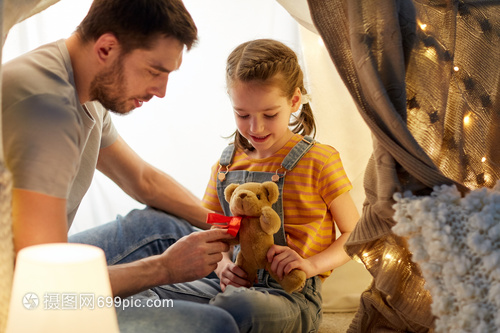
The most ingenious designs often lie between the two: offering an open platform while embedding optional challenges. For instance, a Lego set includes instructions but also encourages players to break free from the guidelines and create freely, thus satisfying both the sense of accomplishment from "completing a goal" and the autonomy of "creating a world."
Creating a Multi-Sensory Feast: An Experience Beyond Vision
Humans perceive the world through their senses, and toys are no exception. Experiences that engage multiple senses are more impactful and memorable.
Sight: Eye-catching appearance, colors, and dynamic effects.
Touch: Rich material textures (soft, smooth, granular) and satisfying physical interactions (feedback from pressing, resistance when plugging/unplugging, smoothness when rotating).
Hearing: Pleasant sound effects and background music act as catalysts for atmosphere.
Even smell can be safely incorporated into the design. Layering sensory experiences significantly enhances emotional connection and memory retention.
Embedding Social DNA: Making Toys a Medium for Connection
Toys that facilitate interaction between people (cooperation, competition, communication, sharing) inherently have a longer lifecycle and stronger(communication power). Board games, trading cards, and construction sets requiring multiplayer collaboration offer value far beyond the physical object-they become mediums for social interaction and vessels for shared memories.
III. A Four-Step Design Process: Systematic Realization from Inspiration to Product
After conceiving a great idea, a rigorous process is needed to bring it to life.
Inspiration and Insight Phase: Understanding Your User
Defining the target user is the prerequisite for everything. It is essential to immerse in real scenarios and observe how children actually play, rather than relying on assumptions. Identifying "pain points" in existing products and market gaps is the birthplace of innovation.
Concept Generation and Screening Phase: Divergence and Convergence
Conduct brainstorming sessions around core principles and use storyboards to map the entire user experience flow, identifying potential experience breakpoints early. Then, ruthlessly screen ideas using four criteria: "Is it fun? Is it safe? Is it manufacturable? Is there a market?" This ensures the health and feasibility of the concept.
Prototyping and Testing Phase: The Most Critical Lean Iteration
Rapidly Create Rough Prototypes: Use low-cost materials like cardboard and clay to quickly bring ideas to life.
Test with Real Users: Hand the prototype to users and observe silently! Their confusion, excitement, and unexpected ways of playing are "golden feedback" more valuable than any expert opinion.
Iteration Cycle: Modify the design based on feedback and test again. The number of these cycles is directly correlated with the ultimate success of the product.
Refinement and Production Phase: Bringing the Dream into Reality
After finalizing the core experience, proceed with aesthetic design, structural engineering, and safety testing (drop tests, small parts tests, material toxicity tests, etc.), finding the optimal balance between fun, safety, and cost.

IV. Avoiding Common Pitfalls: The "Traps" Others Have Fallen Into
Over-Engineering: More features ≠ more fun. Simple yet profound designs often possess greater magic.
Self-Centeredness: "I think it's fun" is the biggest misconception. Must return to user testing.
Neglecting the Unboxing Experience: Packaging is the first act of the play-it should build anticipation and a sense of ceremony.
Blindly Chasing Trends: While drawing inspiration from popular elements, it is crucial to protect the product's unique core gameplay soul; otherwise, it risks becoming a short-lived imitation.
Conclusion
Ultimately, designing a fun toy is a journey of deep empathy. It requires us to shed adult perspectives and view the world anew with curiosity and exploration. Its ultimate mission is to create a "magical artifact" for every child and the child within every adult-one that triggers "flow" experiences, allows for free exploration, and fosters warm connections with others and the world. This is not only a commercial success but also a gift of creation.