

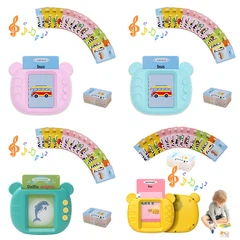





How many times have I sat across from a buyer who points at a competitor's product and says, "I want that, but cheaper," and then watched the same mistake play out - different client, same flaw, same painful discovery three months into production?
Too many to count.
So here's the thing about educational toy hardware: the mistakes that kill your project aren't the exotic ones. They're the same six problems, repeated by different companies, every single quarter. I've been on the factory floor for over a decade, and I can spot them before the first prototype even arrives.
Let me save you the tuition.

Mistake #1: Speaker Impedance Mismatch - The #1 Audio Killer
This one hurts because it's so easy to get right. And yet.
A buyer sends us a spec: 4Ω speaker, 3W amplifier. Sounds fine on paper. But when we test the module they sourced? The amplifier is actually rated for 8Ω. The result: the speaker draws more current than the amp can deliver, the sound clips at anything above 50% volume, and the "crystal-clear audio" they promised their distributor turns into a distorted mess.
Worst part - they've already ordered 10,000 units.
The fix: Always match your speaker impedance to your amplifier's rated output. A 4Ω speaker needs a 4Ω-rated amp. An 8Ω speaker needs an 8Ω-rated amp. And if you're mixing sources from different suppliers, test the combo before you commit to MOQ.
BOM reality check: A decent matching combo adds $0.15-0.30 to the BOM. A mismatch costs you a rework bill that's 10x that - plus the damaged buyer relationship.

Mistake #2: Battery Capacity Miscalculation
This one shows up on every third project that comes through our door.
The spec sheet says "300mAh battery, 6 hours playtime." The client believes it. The distributor believes it. The end customer gets 2 hours and leaves a one-star review.
Here's what actually happens: the 300mAh rating is measured at 0.2C discharge. But your toy has a WiFi module drawing 150mA, an audio amp drawing 80mA, and an LED driver pulling another 50mA. That's 280mA continuous draw. At 280mA, that 300mAh battery delivers closer to 200mAh in real-world conditions - about 45 minutes of active use, not 6 hours.
The fix: Calculate your actual system power draw under worst-case load. Then add 30% margin. Then test. I repeat - test. Not on a bench with fresh cells. In a plush toy, at 40°C, after 200 charge cycles.
BOM reality check: Jumping from 300mAh to 600mAh costs about $0.50 more. The difference between a 4.5-hour product and a 9-hour product. Which one do you want your brand name on?

Mistake #3: PCB Layout That Eats Your Audio Quality
I wrote about this in my last article about Jieli chips, but it deserves repeating because it keeps happening.
Two modules with the same chip, same microphone, same speaker. One sounds clean and warm. The other buzzes like a beehive.
The difference? PCB layout.
A poorly routed audio board puts the power traces next to the audio signal traces. The switching noise from the power supply couples directly into the audio path. No amount of "better components" can fix a bad layout - because the noise is baked into the board itself.
What we see most often:
No ground plane separation between analog and digital sections
Power traces running parallel to audio traces for more than 5mm
Missing decoupling capacitors near the audio amplifier power pins
Single-point grounding ignored in favor of "whatever connects"
The fix: If you're not an audio PCB specialist, don't design it yourself.

Mistake #4: Tactile Switch Lifetime Underestimation
This one makes me wince every time.
A 6×6mm tactile switch rated for 50,000 cycles costs about $0.03. A child playing with a sound book presses a button - on average - 3-5 times per page turn. If they go through the book twice a day, that's 60-100 presses daily.
50,000 cycles ÷ 80 presses/day = 625 days.
The switch fails before the second year. And this is a children's product. Kids don't press gently. They mash.
What we recommend to every client:
For sound books and flash card machines: use switches rated at 100,000+ cycles minimum
For toys with heavy interaction (recording buttons, play buttons): consider silicone rubber keypads instead - they last 500,000+ cycles
Always check the switch datasheet for the "bounce time" spec - longer bounce time means missed presses
BOM reality check: Upgrading from a 50K-cycle switch to a 100K-cycle switch adds 0.01−0.02perunit.Ona10,000−unitorder,that′s0.01−0.02perunit.Ona10,000−unitorder,that′s200. The warranty return cost for a failed switch is easily $5-8 per unit after shipping and handling.
The math writes itself.

Mistake #5: Thermal Design Ignored in Plush Toys
This one is becoming more critical as AI plush toys pack more processing power into soft enclosures.
A plush toy is essentially a blanket wrapped around electronics. Blankets trap heat. Heat kills batteries, degrades speaker magnets, and can cause processor throttling that makes your "responsive AI toy" feel sluggish.
We tested a client's AI bear prototype last year. Ambient temp was 25°C. After 30 minutes of continuous chat mode, internal temperature hit 52°C. The battery protection circuit cut output - and the bear went silent mid-conversation.
What we've learned:
Never seal a battery inside plush without ventilation channels
Position the processor away from the battery - they're your two biggest heat sources
Use thermal pads to spread heat to larger surface areas of the enclosure frame
Test at 40°C ambient (warehouse in summer, delivery truck in Dubai) - not just in your air-conditioned office
For WiFi/BT-enabled toys, factor in worst-case thermal load from continuous transmission
The truth: A $0.50 thermal pad costs less than one angry Amazon review.

Mistake #6: Certification Treated as an Afterthought
I saved the most expensive one for last.
We see this pattern constantly: a startup or brand designs a beautiful smart toy. 3D-printed casing, custom PCB, bilingual audio. They're ready to go to production. Then they ask, "How long for CE and FCC certification?"
And we have to tell them: the enclosure needs an additional air gap for the speaker magnet. The charging circuit needs a different IC to pass EN71. The battery doesn't have the right UN38.3 documentation. The paint on the plush eyes isn't CPSIA-compliant.
Redesign. Retool. Recertify. The timeline slides by 8-12 weeks. The budget doubles.
The fix: Involve your manufacturing partner in the component selection phase, not after the PCB is locked. At XDT, we flag certification risks during the engineering review - before you spend a dollar on tooling.
A short checklist for smart toy compliance (by market):
US: CPSIA (lead, phthalates, small parts), FCC Part 15 (wireless emissions)
EU: CE (EN71 safety, EN62115 electric toys, RED for wireless), RoHS, REACH
UK: UKCA (post-Brexit alignment with CE requirements)
China: CCC (for certain categories), GB standards for audio/toys
Battery: UN38.3 (lithium cell transport), IEC 62133 (cell safety)
Cost reality check: Certification for a smart toy runs $5,000-15,000 depending on markets and features. Doing it after the design is locked? Add 50-100% for expedite fees and retesting. Doing it from day one as part of the engineering plan? Included in the normal development timeline.

The Common Thread
Every single one of these mistakes has the same root cause: deciding the hardware spec in isolation, without a manufacturing review before committing to tooling.
A speaker spec looks fine on paper. A battery number looks generous. A tactile switch is 3 cents - how bad can it be? Bad enough to kill a product line.
The best educational toy companies - the ones that last - don't treat hardware engineering as a one-and-done specification exercise. They treat it as a conversation between the design team and the factory floor. Because the factory floor knows what actually works when 10,000 units come off the line.
What's the most expensive hardware mistake you've seen - or made - in a toy project?
I answer every comment. Drop your story below.
#EducationalToys #ToyManufacturing #HardwareDesign #OEM #ODM #ProductDevelopment #SmartToys #PCBDesign #BatterySafety #ToyCompliance