

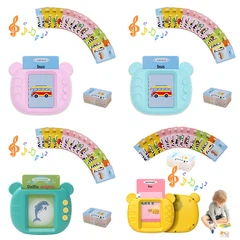
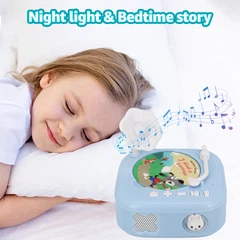



Amid the wave of globalization, language learning is no longer confined to mainstream languages like English, Chinese, or Spanish. Demand for languages such as Arabic, Japanese, Korean, and even those specific to certain religious and cultural contexts is quietly growing.
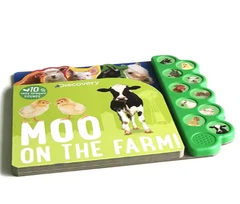
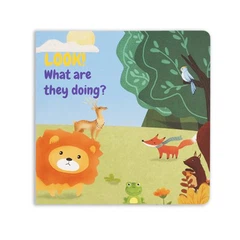
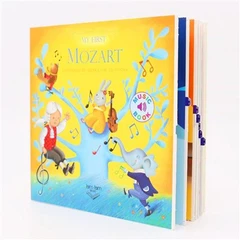
The product line of talking flash cards displayed on the official website of Shenzhen Xinditai Electronics Co., Ltd. clearly supports multiple language combinations, including English, Chinese, Spanish, French, Arabic, German, Japanese, and Korean. It also offers religious themes and IP customization services.
This seemingly niche market contains immense potential that traditional language learning tools have yet to tap into.
01 Market Status: A Blue Ocean Beyond the Mainstream
The niche language education market is undergoing a silent but steady transformation. There are approximately 7,000 languages worldwide, over half of which are spoken by fewer than 10,000 people. These languages carry unique cultural and identity significance.
As globalization deepens, immigrant communities' emphasis on heritage language preservation, the rise of multicultural education, and the growing demand for professionals proficient in less commonly taught languages in business activities are driving the expansion of the niche language learning tools market at an unprecedented pace.
The product page of Xinditai Electronics shows that its talking flash cards not only support eight major language combinations but also offer customization for religious themes, covering various religious cultures such as Islam, Christianity, Judaism, and Hinduism. This ability to customize for specific cultural communities reflects the professionalism required in the niche language market.
Compared to traditional language learning tools, talking flash cards offer advantages such as strong interactivity, ease of use, and targeted age groups, making them particularly suitable for preschoolers and beginners in language learning.
These devices typically feature screen-free designs, reducing potential impacts on children's eyesight, while creating an immersive language learning environment through the combination of sound and images.


02 Driving Factors: Engines of Growth Under Diverse Demands
The growth of the niche language education market is driven by multiple social factors. The heritage language preservation needs of immigrant communities form a stable foundation for the market. According to United Nations data, the global number of international migrants has reached 281 million.
These migrant groups commonly face the challenge of intergenerational language loss and urgently need mother tongue learning tools within the family environment to maintain cultural ties.
Policy support for multicultural education provides institutional guarantees for market growth. More and more countries and regions are incorporating multicultural education into formal education systems.
Several European countries have added community language courses to school curricula, while Canada has launched specific Indigenous language revitalization programs. These policies directly stimulate demand for corresponding language learning resources.
Global business activities are also driving demand for proficiency in niche languages. As the economic status of emerging market countries rises, the commercial value of non-traditional "major languages" such as Arabic, Japanese, and Korean is becoming increasingly prominent.

03 Product Advantages: Innovative Technology Building Competitive Barriers
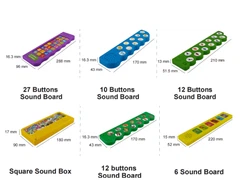
Talking flash cards possess unique technological advantages and application value in the niche language market. Taking the products displayed by Xinditai Electronics as an example, these devices are typically equipped with high-quality speakers, large-capacity rechargeable lithium batteries, and durable card designs that can withstand daily wear and tear from children's use.
The customization capability of the products is one of their greatest competitive advantages. Businesses can flexibly adjust card content, voice guidance, and interface design according to different language and cultural needs, and even develop specialized versions for specific cultural contexts.
This flexibility allows the products to precisely meet the unique needs of different communities, building strong user loyalty.
From an educational effectiveness perspective, talking flash cards combine multi-sensory learning principles, enhancing language memory efficiency through the synergy of visual, auditory, and tactile senses.
For niche language learners, standard pronunciation models are particularly important, as these languages often lack widely accessible high-quality learning resources. Professionally recorded audio content effectively fills this gap.
04 Challenges: Unique Difficulties in a Niche Market
Despite promising prospects, the niche language education market still faces a series of unique challenges. The complexity of content development is the primary difficulty. Each language requires the involvement of specialized language experts in content design to ensure accurate pronunciation, appropriate word choice, and alignment with the cognitive level of the target age group.
For languages with smaller speaker populations, finding qualified language experts is itself a challenge.
The limited market size leads to higher per-unit development costs. The potential user base for niche languages is relatively small, making it difficult to amortize development costs through mass production like mainstream language products. This requires businesses to precisely target their user base and achieve profitability through high-value-added services.
Intellectual property protection is another issue that cannot be overlooked. Many niche languages are closely tied to cultural symbols and traditional knowledge. Businesses must carefully handle culturally sensitive content when developing related products.
Avoiding inappropriate use or misinterpretation of cultural elements is not only a matter of business ethics but also directly affects product acceptance within target communities.


05 Future Trends: Technology Integration and Market Segmentation
The development of talking flash cards in the niche language education field will exhibit dual trends of technology integration and market segmentation. The integration of artificial intelligence technology will fundamentally change how products interact. Through speech recognition and natural language processing technologies, devices will be able to assess learners' pronunciation accuracy, provide personalized feedback, and even simulate simple conversations.
Augmented reality technology is expected to combine with talking flash cards to create more immersive learning experiences. Learners can scan cards with a phone or dedicated device to see 3D animated demonstrations and hear contextual dialogues. This multimodal learning approach is particularly suitable for teaching abstract concepts like verbs and positional words.
The market will further segment, developing specialized products for users of different ages, learning goals, and language backgrounds. Products targeting preschool children will focus more on gamification and interactivity; products for schools and educational institutions will emphasize curriculum alignment and assessment functions; products for adult learners will need to consider different learning motivations and cognitive characteristics.
Talking flash card products lie quietly on display shelves, seemingly small yet quietly connecting the heritage threads of thousands of languages worldwide. Arabic versions sound in kindergartens in Dubai, Japanese versions are passed along in homes in Tokyo, and the next batch of custom orders may include voices in Māori or Swahili.
When technology meets diverse cultural needs, these flash cards are no longer just children's toys but modern carriers of cultural heritage. The niche language market, once a peripheral area, is now quietly transforming through innovations in educational technology into one of the warmest commercial landscapes of the globalization era.