

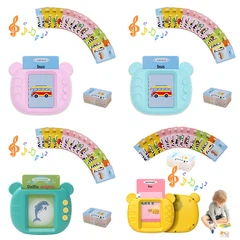








Have you ever stopped to think about this:
There are over 7,000 languages spoken in the world today, yet 99% of language learning products on the market cover fewer than 20 of them.
What about everyone else?
Someone learning Icelandic can hardly find a single set of flashcards with standard pronunciation. An immigrant family living abroad, hoping to pass on their mother tongue to their children, has very few tools to turn to.
But over the past 18 months, something has shifted. Demand for lesser-taught language learning tools has grown by over 40% year-over-year, and Talking Flash Cards are gaining rapid traction in this overlooked market.
This isn't a coincidence. What I want to share today isn't about any single hit product - it's about the underlying trend that's quietly taking shape.
I. This Isn't "Learning a Foreign Language" - It's "Finding Your Roots"
To understand why Talking Flash Cards in the lesser-taught language space have suddenly taken off, we first need to look at who's using them and why.
Data shows that the lesser-taught language learning market has distinct segments, but the core drivers come from three groups:
Immigrant families: There are 281 million international migrants worldwide. These families face a common challenge - children grow up immersed in the dominant language of their new country, and their heritage language gradually fades. Parents desperately want the next generation to speak their ancestors' language and maintain that cultural bond.
Cultural enthusiasts: Language lovers, travelers, and cultural explorers. They learn a lesser-taught language not for exams or career advancement, but out of genuine curiosity about the culture itself.
Professional users: Diplomats, multinational employees, and academic researchers. This group accounts for only 23% of the market, yet contributes 47% of the revenue.
Notice the common thread? These learners are, to a large extent, seeking "identity" through language.


In Kenya, enrollment in online Kikuyu language courses has surged in recent years. One teacher shared: "Most young people raised in cities can only speak English and Swahili. When they realize they can't even speak their basic mother tongue - especially when communicating with elders - they feel a deep sense of shame."
This "identity anxiety" is driving a long-neglected market. And similar stories are unfolding simultaneously across the globe. In the United States alone, there are approximately 8,000 community-based heritage language schools, teaching around 200 languages, with over 1.5 million students enrolled.
Behind all of this is a real, growing gap in demand.
II. Why Are Talking Flash Cards the Perfect Fit?
In the past, the biggest cost in creating a lesser-taught language product was content - hiring native speakers for recordings, proofing, and production. The process was lengthy and expensive.
But today, the Talking Flash Cards format happens to address the three core pain points of lesser-taught language learning perfectly:
1. No standard pronunciation. AI-powered voice synthesis technology has matured, making it possible for any language - even those with fewer than 100,000 speakers - to have clear, standard pronunciation models.
2. No practice environment. Language requires repetition and feedback. The flashcard format supports repeated listening, self-testing, and review, solving the "no conversation partner" problem.
3. No structured beginner materials. Bite-sized, modular content design lowers the barrier to entry for beginners.
More importantly, Talking Flash Cards are naturally suited to a "community-driven" content model. Take a successful flashcard app as an example - 67% of its Basque language content library was contributed by native speaker users.


The "user-generated content + platform quality control" model allows even resource-scarce languages to have continuously updated learning materials.
III. From "Niche" to "Trend": Three Signals Worth Watching
If you're following the EdTech or consumer products space, here are a few trend signals worth paying attention to:
Signal 1: B2B demand is emerging
More schools, cultural institutions, and multinational companies are starting to procure lesser-taught language learning tools. These orders typically feature high average order value and stable partnerships - once you're in, it's hard to be replaced.
Signal 2: Technology barriers have been broken
Advances in voice synthesis, NFC sensing, low-power chips, and other technologies have made the "hardware + content" model rapidly replicable across different languages. One standard hardware platform, paired with different language content, can serve multiple niche markets.
Signal 3: The market is moving from "fringe" to "visible"
The global language learning market has reached $96 billion, and the lesser-taught language segment is growing at 18.7% annually - significantly outpacing the growth of English learning. This is no longer a small opportunity to ignore.
IV. The Deeper Question: Cultural Awakening or Business Opportunity?
Let's return to the original question: Is the boom of Talking Flash Cards in the lesser-taught language market a sign of "cultural awakening"?
My view is this: Yes and no.
It is, in part, a cultural awakening - people are increasingly aware that language is not just a tool, but a carrier of identity and a vessel of culture. From Māori to Sámi, from Basque to Welsh, global awareness and protection of minority languages is growing. This heightened consciousness is directly driving demand for learning.
But it's also a business signal. When technology lowers the barriers, when fragmented demand is finally seen, and when tools can truly solve the "nothing available" problem - those marginalized needs can become new growth opportunities.
Cultural awakening provides the motivation. Technology provides the feasibility. The market provides the commercial return. It's the convergence of all three that has created what we're seeing today.


V. What Does This Mean for B2B Players?
For brands, distributors, and buyers paying attention to this space, a few considerations are worth keeping in mind:
The growth of the lesser-taught language market isn't short-term - it's backed by multiple structural forces, including migration, cultural preservation, and globalization
The product format is already mature. The "hardware + content" model has been validated in the lesser-taught language space by early players
First movers have the opportunity to build content barriers and user trust. Latecomers will face higher costs to catch up
The market is already there. What's missing isn't demand - it's great products.
Tides often don't start at the center. They gather quietly from the edges.
While the world chases the hundred-billion-dollar market of mainstream languages, those overlooked, scattered, and marginal needs are forming a force that can no longer be ignored.
What starts as a minority pursuit eventually becomes a majority consensus.
If you're also following the EdTech or language learning space, feel free to share your observations in the comments.