











In today's tech-driven world, wireless communication technologies are everywhere, powering everything from contactless payments to inventory tracking. Two of the most common ones you'll hear about are RFID and NFC. But what's the real deal between them? Are they basically the same thing, or are there big differences that matter for everyday use? In this article, we'll break it down step by step, explaining what each technology is, how they differ, and where they're making an impact in real-world scenarios. Whether you're a business owner looking to streamline operations or just curious about the tech behind your phone's tap-to-pay feature, we've got you covered.
What is RFID Technology?
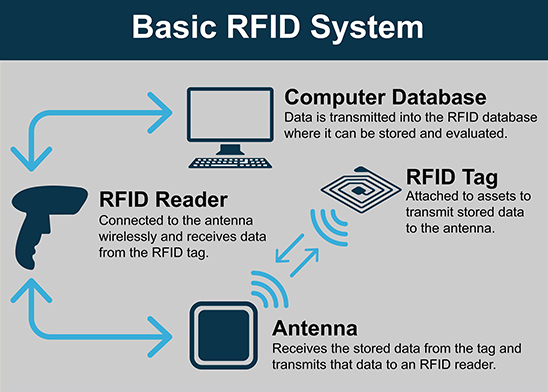
RFID, or Radio-Frequency Identification, has been around for decades and is a staple in industries that need to track stuff without direct contact. At its core, RFID uses radio waves to identify and track tags attached to objects. These tags can be as small as a grain of rice and don't need batteries in many cases-they get their power from the reader's signal.

How RFID Works
Picture this: An RFID system has three main parts-a tag, a reader, and an antenna. The tag holds a microchip with unique data, like a serial number or product details. When the reader sends out a radio signal, the tag responds by bouncing back its info. This happens super fast, often in milliseconds, and can work from several feet away, depending on the setup.
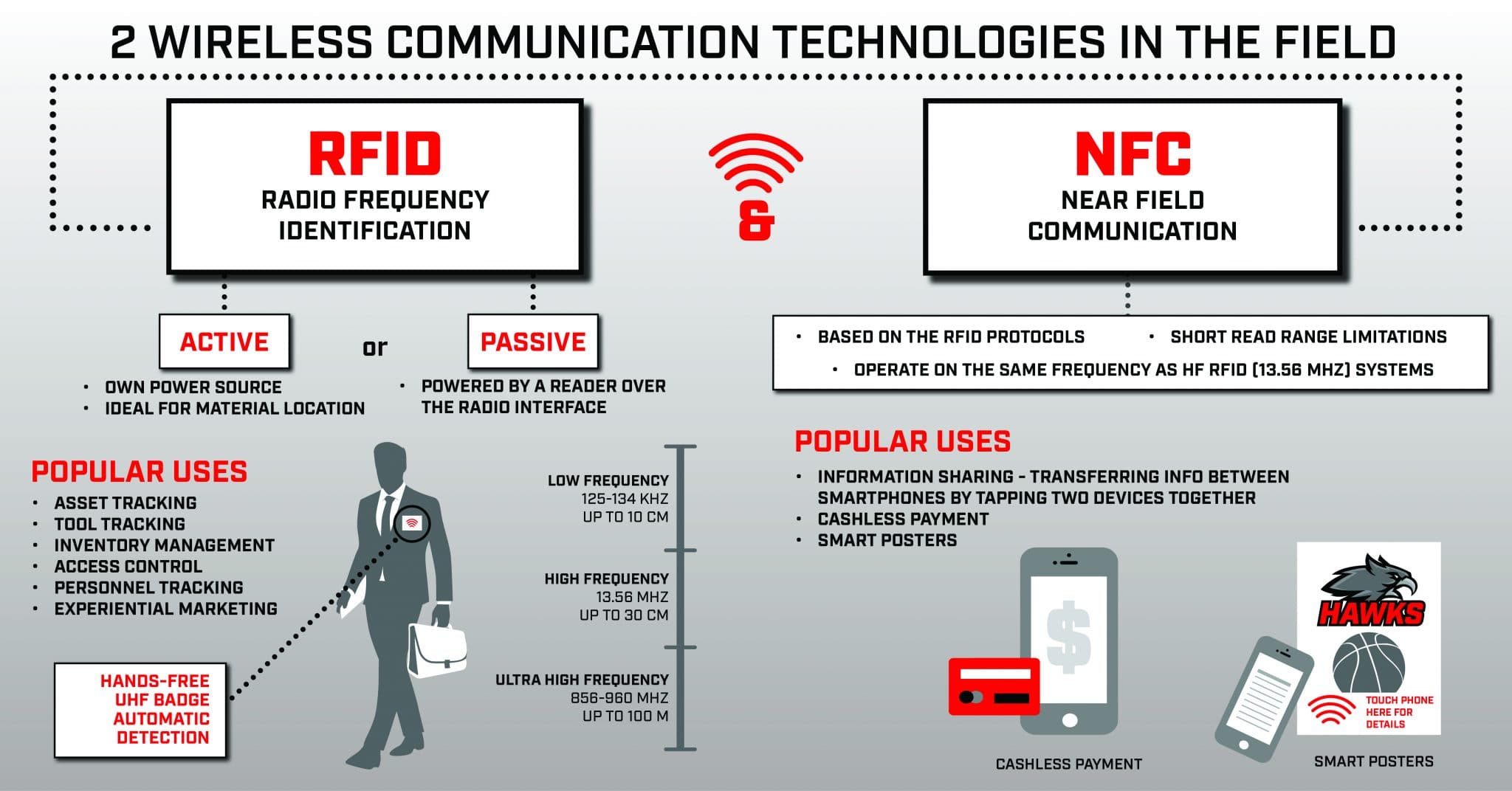
There are different types of RFID tags too. Passive tags are the cheapest and most common; they rely on the reader's energy. Active tags have their own battery, so they can broadcast signals farther-think up to hundreds of feet. Then there are semi-passive ones, which use a battery for extra features but still get triggered by the reader.
RFID got its start during World War II for identifying friendly aircraft, but it really took off in the 1970s for animal tracking and anti-theft systems. Today, it's evolved with better security features to prevent cloning or unauthorized reads.
History and Evolution of RFID
Back in the day, RFID was clunky and expensive, limited to big operations like military logistics. But as chips got smaller and cheaper in the 1990s, it spread to retail and supply chains. Remember those anti-shoplifting tags on clothes? That's early RFID in action. Fast forward to now, and it's integrated with IoT devices, making smart factories a reality where machines talk to each other seamlessly.
What is NFC Technology?
NFC stands for Near Field Communication, and it's like the close cousin of RFID-but with some key twists. NFC is a short-range wireless tech that lets devices exchange data when they're just inches apart. It's what powers your Apple Pay or Google Wallet transactions at the checkout.

How NFC Operates
NFC builds on RFID principles but operates at a much closer range-typically 4 inches or less. It uses electromagnetic induction between two loop antennas: one in the initiator (like your phone) and one in the target (like a payment terminal). Devices can act as both readers and tags, which is handy for peer-to-peer sharing, like bumping phones to swap contacts.
There are three modes: Reader/Writer for scanning tags, Peer-to-Peer for device-to-device transfers, and Card Emulation, where your phone pretends to be a credit card. NFC chips are passive or active, but most consumer stuff uses passive for simplicity and low power.
NFC hit the scene in the early 2000s, developed by Philips and Sony (now NXP Semiconductors). It gained traction with smartphones in the 2010s, turning your phone into a wallet, key, or transit pass.

Development Over Time
Early NFC was tested in public transport trials in Europe and Asia around 2004. By 2011, with Android's Beam feature, it went mainstream. Security has been a big focus, with encryption standards like those in EMV chips to protect against skimming. Now, it's expanding into wearables and smart home gadgets.
Key Differences Between RFID and NFC
While both RFID and NFC use radio frequencies for contactless communication, they're not interchangeable. Let's dive into what sets them apart, from range to speed and everything in between.
Range and Frequency
The biggest standout is range. RFID can read tags from up to 100 feet with active systems, making it ideal for warehouses where you need to scan pallets without getting up close. NFC? It's limited to about 4 inches max, which boosts security since you have to intentionally tap devices together.
Frequency-wise, RFID operates across low (LF: 125-134 kHz), high (HF: 13.56 MHz), and ultra-high (UHF: 860-960 MHz) bands. NFC sticks to the HF band at 13.56 MHz, which is why it's compatible with some RFID systems but not all.
Power Requirements and Data Transfer
RFID tags can be passive, active, or semi-passive, giving flexibility for battery life. NFC is mostly passive on the tag side, drawing power from the reader, which keeps costs down for things like smart posters.
Data speed is another angle. RFID can handle bulk reads-think scanning hundreds of items at once in a shipping container. NFC is slower, around 106-424 kbps, but it's bidirectional, allowing two-way chats between devices.
Security Features
Security is crucial in both, but NFC edges out with built-in encryption for sensitive apps like payments. RFID can be vulnerable to eavesdropping if not encrypted, though modern versions add layers like unique IDs and passwords.
Cost and Compatibility
RFID setups can be pricier for long-range systems, but tags are dirt cheap in bulk-pennies each. NFC is baked into most smartphones, so adoption is easy and low-cost for consumers. Compatibility? NFC is a subset of RFID, so NFC devices can read HF RFID tags, but not vice versa for UHF.
To make this clearer, here's a quick comparison table:
| Feature | RFID | NFC |
|---|---|---|
| Range | Up to 100+ feet (active) | Up to 4 inches |
| Frequency | LF, HF, UHF | HF (13.56 MHz) |
| Power Source | Passive, Active, Semi-Passive | Mostly Passive |
| Data Transfer Speed | Up to 640 kbps (UHF) | 106-424 kbps |
| Read Capability | One-way or bulk reads | Bidirectional, peer-to-peer |
| Security | Varies; optional encryption | Built-in encryption standards |
| Cost per Tag | $0.05 - $5+ | $0.10 - $1 |
| Primary Use Cases | Inventory, logistics | Payments, access control |
This table highlights the core contrasts-RFID for distance and volume, NFC for secure, close interactions.
RFID shines in scenarios where you need to track lots of items efficiently without manual input. It's a game-changer for businesses dealing with supply chains or assets.
Supply Chain and Inventory Management
Think about Walmart or Amazon warehouses. RFID tags on products let scanners read entire shelves in seconds, cutting down on human error and speeding up stock checks. In manufacturing, it tracks parts from assembly to shipping, ensuring nothing gets lost.
For example, the fashion industry uses RFID to monitor inventory in real-time. Companies like Zara embed tags in clothes, so stores know exactly what's in stock and can reorder automatically. This reduces overstocking and lost sales.
Asset Tracking and Logistics
Hospitals use RFID to track equipment like wheelchairs or IV pumps, saving time hunting for stuff. In logistics, shipping companies like FedEx tag packages for automated sorting, improving delivery accuracy.
A cool case is livestock farming. Farmers tag cattle with RFID ear tags to monitor health and location, helping with disease control and breeding records.
Access Control and Identification
RFID badges are common for office entry or event access. In cars, key fobs use RFID for keyless entry. Even passports in the U.S. have RFID chips for faster border checks, though with shields to prevent unauthorized scans.
Practical Uses for NFC
NFC is all about convenience in daily life, especially where security and quick interactions matter.
Contactless Payments
This is NFC's superstar role. Services like Apple Pay use NFC to let you tap your phone or watch at terminals. It's faster than swiping a card and more secure with tokenization-no actual card numbers are shared.
In the U.S., adoption skyrocketed post-COVID for hygiene reasons. Chains like Starbucks let you pay and earn rewards with a tap.
Public Transportation and Ticketing
Subway systems in cities like New York or Chicago support NFC for fare payments via phones or cards. No more fumbling for tickets-just tap and go. Events like concerts use NFC wristbands for entry and cashless buying inside.
Smart Home and IoT Integration
NFC tags can trigger actions on your phone. Stick one on your nightstand to set an alarm or dim lights. In smart homes, it pairs devices quickly, like connecting a speaker to your network.
A fun example: Museums use NFC-enabled exhibits where tapping your phone pulls up audio guides or extra info.
Marketing and Data Sharing
Businesses embed NFC in posters for interactive ads-tap to get coupons or product details. Professionals use NFC business cards to share contacts instantly.
Advantages and Limitations of Each Technology
Both have pros and cons that dictate where they're best used.
Pros and Cons of RFID
Pros: Long range, bulk reading, durable in harsh environments. Cons: Potential privacy issues if not secured, higher setup costs for advanced systems.
Pros and Cons of NFC
Pros: High security, easy integration with mobiles, low power. Cons: Short range limits scalability, slower for large data transfers.
Future Trends in RFID and NFC
Looking ahead, RFID is merging with AI for predictive analytics in supply chains, like forecasting stock needs. NFC is expanding into healthcare for patient ID bands and even implantable chips for medical records.
Hybrid systems combining both are emerging, like in retail where RFID tracks stock and NFC handles checkouts. With 5G and edge computing, expect faster, more reliable performance.
Privacy concerns will drive better encryption, and sustainability efforts might push for eco-friendly tags.