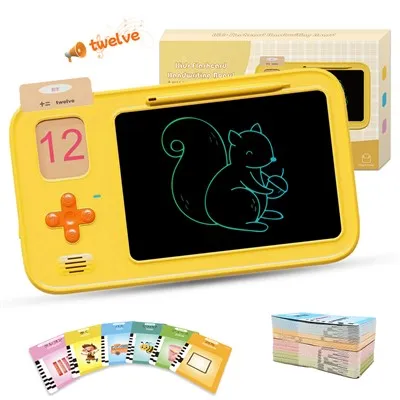

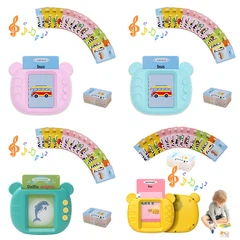


RFID story machines are rapidly becoming a core category in early childhood education toys. By combining RFID (Radio Frequency Identification) technology with audio playback systems, these devices enable children to interact with physical cards, books, or figurines to trigger educational content instantly.
For brands, distributors, and procurement managers, understanding the technical structure, manufacturing requirements, and market positioning of RFID story machines is essential for successful product development and sourcing.

An RFID story machine is an interactive audio device that reads embedded RFID tags in objects such as cards or books. When a child places or taps an item on the device, the system identifies the tag and plays corresponding audio content.
Core Components
RFID Reader Module (13.56 MHz HF standard)
Embedded MCU (Microcontroller Unit)
Audio Decoder + Amplifier System
Speaker Unit (typically 4Ω / 3W–5W)
Power Supply (Rechargeable Li-ion battery)
Storage (Flash memory or TF card expansion)
How RFID Technology Works in Story Machines

RFID story machines typically use HF (High Frequency) passive RFID tags, compliant with ISO standards such as:
ISO/IEC 14443 (NFC Type A/B)
ISO/IEC 15693
Interaction Flow
RFID tag is embedded in a card/book/toy
User taps or places it on the reader area
RFID reader scans and identifies UID/data block
MCU matches ID with stored audio file
Audio content is played instantly
This creates a screen-free, intuitive learning experience, especially suitable for children aged 2–8.
Key Technical Advantages
1. Durable and Child-Friendly
RFID tags are contactless and enclosed, making them more durable than QR codes or optical recognition systems.
2. Fast Response Time
Typical response latency is under 300 ms, ensuring seamless interaction.
3. Offline Functionality
All content can be stored locally, eliminating the need for Wi-Fi and improving data privacy.
4. High Customization Flexibility
Custom audio content (multi-language support)
Custom card shapes and materials
Firmware customization (learning modes, games, quizzes)

OEM / ODM Capabilities for Brands

Product Customization Options
Industrial design (ID) and structural design (MD)
RFID encoding and content mapping system
UI/UX interaction logic
Packaging and branding
Typical Development Timeline
Concept & ID Design: 2–4 weeks
Prototype Development: 3–5 weeks
Tooling & Mass Production: 30–45 days
Minimum Order Quantity (MOQ)
Standard models: 1,000–3,000 units
Fully customized projects: 3,000–10,000 units
Certifications and Compliance
For global distribution, RFID story machines typically comply with:
CE (Europe)
FCC (USA)
RoHS (environmental safety)
EN71 / ASTM F963 (toy safety standards)
Additional certifications may include:
CPSIA (US market)
KC (Korea)
TELEC (Japan RF compliance)

How to Choose the Right RFID Story Machine Supplier
When selecting a manufacturing partner, consider:
R&D capability (hardware + firmware integration)
Experience with RFID/NFC toy development
Certification support for target markets
Flexible MOQ and scalable production capacity
Proven OEM/ODM case studies