



What a Phonograph Story Machine Actually Is
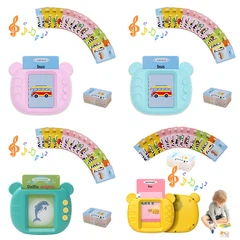
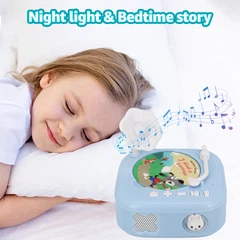
The name misleads people, so the definition matters. A phonograph story machine is not a record player and it does not play vinyl. It is a modern digital audio device - stored content, a speaker, a battery, a recognition system - inside a housing that references early recorded sound: the flared horn, the turntable, the wind-up key, the warm wood tone. A child places a disc or card, the device recognises it, and the story, song or language lesson plays.
The recognition itself is contemporary. Depending on the platform it may be optical, RFID or a mechanical position switch, and the audio is a digital file rather than a groove. What is old is the gesture and the object. That combination is the product: a two-year-old can operate it, and a parent is willing to leave it on a shelf where guests can see it.

Why the Retro Form Converts
Feature: a vintage audio silhouette - horn, turntable, wood tone - wrapped around a screen-free digital player.
Advantage: the object reads as decor rather than as another plastic gadget, so parents permit it in shared living space.
Benefit: it earns a place in the nursery and in the gift channel, two places where feature-led toys struggle.
Evidence: grandparents buy on their own memory of childhood, not on a child's feature request; lifting a lid and placing a disc carries a ceremony that pressing a button does not.
What the Shape Promises
Feature: an old-looking device implies slowness, simplicity and restraint.
Advantage: in a category where parents are wary of smart devices, the form reassures before anyone reads a specification.
Benefit: fewer objections at the shelf and in the parent's own mind.
Evidence: the signal is generated by the shape, not by a claim, which is why it survives contact with a sceptical buyer.
Three things are doing the work, and only one of them is nostalgia. The first is permission to be visible. Parents who refuse a plastic gadget in the living room will happily place an object that reads as decor - the same instinct that keeps wooden kitchens and wooden train sets in the nursery long after their novelty has gone. The second is the gifting layer: grandparents are a substantial purchase channel for children's audio and they are not shopping for the child's taste, they are shopping for their own feeling about childhood. The third is the implied promise - a device that looks old suggests it is slow, simple, and not collecting anything, which is exactly what a cautious parent wants to hear.
The Gesture Is the Interface
Content is chosen by placing a physical disc or card, not by navigating a menu. There is no reading, no icons and no wrong tap: the action is the selection. A child operates it independently long before they can read, and because the library is fixed and recorded by a person, parents know exactly what the device will say every time.
That last point is why retro players and AI companions are complements rather than competitors. A phonograph story machine plays what someone chose and recorded, unchanged, which suits a four-year-old's bedtime. A conversational companion handles a six-year-old's questions. Brands that stock both find they cannibalise each other far less than expected, provided they are merchandised differently: the phonograph sells on appearance and calm, priced against home and gift goods and photographed in a room; the conversational toy sells on capability and needs a demonstration.

Vintage Outside, Contemporary Inside
The engineering is where programmes get into trouble, because a retro shell hides requirements that a modern shape makes easy. Start with the horn. On the original machines the flare was an acoustic amplifier; on a toy it is usually decorative, which means the real sound has to come from a driver and an enclosure hidden somewhere in a body that was never designed for acoustics. Getting a warm, clear voice out of that shape is a genuine design task, not a finishing detail - and a hollow plastic horn can make a good driver sound thin and boxy.
Then the moving parts. If the turntable or crank actually moves, it is a mechanism that children will operate thousands of times, often with more force than intended. Cycle testing matters here in a way it does not for a static enclosure. If the disc sits in a recess, the recess needs to tolerate a child who places it crooked, upside down, or with a biscuit in the other hand. Recognition has to be forgiving: a disc that fails to read one time in ten will be blamed on the product, not on the child.
Materials carry their own constraints. A wood tone can be achieved with real wood, veneer, or a finish, each with different cost, weight and safety implications. Painted antique effects must still pass the same migration and coating requirements as any toy finish. And the whole thing has to survive being knocked off a shelf, which is a different test from being dropped in play.
Content Is the Product After the First Week
Feature: each disc or card is an album - a bedtime set, a nursery rhymes set, a first-words set in a second language.
Advantage: a coherent narrated collection beats a large undifferentiated pile of audio tracks.
Benefit: the child does not exhaust the library in a fortnight, and the first expansion set feels like a treat rather than a patch.
Evidence: the device is bought once; the content is bought repeatedly, and that is what keeps the hardware out of the cupboard.
Two Commercial Questions
Depth: how many hours ship with the unit, and how quickly does a child exhaust them? Extensibility: can a buyer add titles without changing hardware, and is the content protected against copying? For licensed material, confirm what the licence permits by device, region and term before committing to a library size you cannot lawfully distribute.

Where It Sells, and Why Placement Matters
Channel choice changes the product more than most buyers expect. In a toy aisle, a phonograph player competes on features and loses to whatever has the most lights. In a nursery or gift shop it competes on appearance and wins, because it is being bought as an object for a room as much as a toy for a child. Museum shops, bookshops and concept stores are the same story: the customer is not comparing specification sheets, they are deciding whether this belongs in their home.
That has practical consequences. Packaging has to read as a gift - the box is part of the purchase and often the only thing a grandparent sees before buying. The finish has to survive being handled in a shop, because unlike a boxed toy it will be picked up, turned over and set down repeatedly. And the price position should be set against home and gift goods rather than against talking toys, because the comparison set in the customer's head is not the one on your shelf.
One consequence follows from this: decide the shelf before you finalise the packaging. A unit priced for a gift shop can carry a rigid box, a printed sleeve and a higher margin, because the buyer is comparing it to a music box or a framed print rather than to a talking toy. The same unit priced for a toy aisle has to compete on features and usually cannot carry that packaging cost. Buyers who let the factory design packaging before agreeing the channel end up with a box that is wrong for both - too expensive for the aisle, too plain for the gift shop.

What to Check Before You Order
Judge the sample the way a child will meet it. Place a disc badly and see whether it still plays. Play ten discs in a row and listen for whether the narrator sounds the same through the whole set, because inconsistent recording levels are common and immediately audible to a parent. Hold the unit at arm's length in a noisy room and check whether the voice stays clear. Time how long it takes from opening the box to first sound, because that is the moment the gift is judged.
Then the commercial checks. Confirm whether the mechanism is tested to a cycle count and what that number is. Ask what happens when a disc is lost - can it be replaced singly? Ask which recognition technology is used and what its read accuracy is with a slightly bent or dirty disc. Ask for the certification file for the exact production unit, including the battery and the coating. And ask how content is updated on the platform you are buying, because a library that cannot grow has a short commercial life.
What to Put in the Brief
Retro-form projects go smoother when the brief answers five things before anyone opens a drawing tool. A visual reference - not a mood, an actual object or photograph to aim at. A material and finish direction, including whether real wood is in scope, because that decision moves cost, weight and compliance together. A sound target described in listening terms, since warm and clear can be engineered while nice cannot. A content plan: how many hours, in which languages, recorded by whom, and how the library expands. And a target retail price with the destination market, which quietly decides the module class, the driver quality and how much of the finish budget survives.
Skipping any of these does not save time; it moves the decision into the sampling rounds, where it costs more. The buyers who get to a good sample in two rounds are usually the ones who arrived with a reference object and a number.
How XDT Builds This
XDT builds children's phonograph toys and early-learning record players alongside card readers, story machines and AI plush ranges - eight phonograph SKUs in a 13-series, 85+ SKU catalogue, with platforms supporting libraries of 240 cards and 500+ audio tracks. The designs pair the retro turntable form with contemporary recognition and LED feedback, so the object reads as vintage while the interaction stays reliable and screen-free.
Because the enclosure, the board and the content are developed in the same Shenzhen facility - SMT, injection, card printing and assembly under one roof, with a monthly capacity above 50,000 units - acoustic and mechanism problems get solved in the same week rather than being passed between suppliers. Standard configurations carry CE (EN71, EN62115), FCC Part 15, RoHS and REACH documentation, with ASTM F963, CPSIA, UKCA, CCC and SASO available where the destination requires them. Standard models start at 500 units with 25–35 day lead times; full custom tooling runs 1,000–2,000 units at 45–60 days, with a twelve-month warranty against manufacturing defects.
Two details matter more than they sound. Acoustic tuning is done with the real enclosure rather than a generic cavity, because the horn shape changes how a driver behaves and a hollow shell will make even a good driver sound thin and boxy. And because content is produced in the same facility - recording, card printing and audio loading under one roof - a market-specific library can be prepared for each shipment instead of being sourced separately. For language versions we record with native speakers rather than dubbing, since a child's ear catches what a specification sheet does not, and a story read in the wrong accent is noticed within a week.

Frequently Asked Questions
Does it play real records? No. The audio is digital and stored; the discs or cards are triggers. If your marketing implies vinyl playback, expect returns from disappointed gift buyers.
Is the horn just decoration? Usually, which is why sound quality has to be engineered into the enclosure rather than assumed from the shape. Listen to a working sample, not a render.
Can we use our own recordings? In most OEM programmes yes, provided you hold the rights. Narrator consistency across a set matters more than studio polish.
How many titles should ship with the unit? Enough that a child does not exhaust them in a fortnight, and few enough that the first expansion set feels like a treat rather than a patch.
Is this suitable as a grandparent gift product? It is one of the strongest fits in the category, provided the packaging reads as a gift rather than as a gadget. That is a packaging decision, not a product one.
Can the same platform take another language? Usually, and it is one of the cheapest ways to extend a product's market. Record with native speakers rather than dubbing.