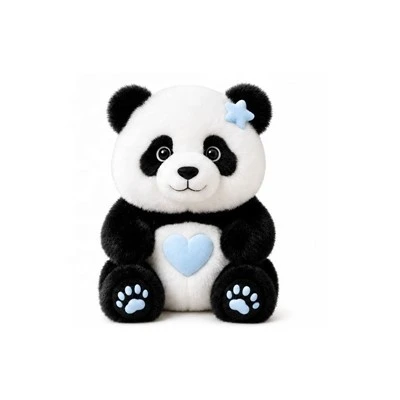
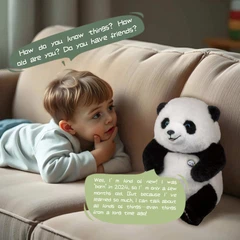
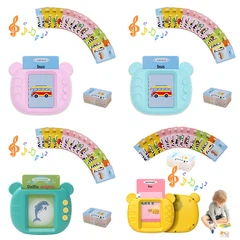
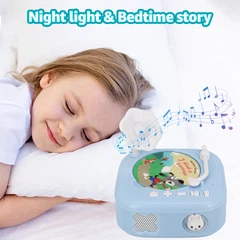



Abstract: As AI plush toys evolve from simple voice responses to emotion recognition and empathetic interaction, we are witnessing not just a technological upgrade, but a redefinition of the very essence of "companionship." This article delves into how core technologies like affective computing and multimodal interaction are driving the evolution of the next generation of companion toys, analyzing the underlying market opportunities and ethical challenges.
Introduction: The Paradigm Shift from "Feature Phone" to "Intelligent Emotional Partner"
Early electronic toys, like "feature phones," could only execute pre-set commands. Today, interactive companion and emotional communication AI toys, represented by Moxie and CogniToys Dino, are undergoing a paradigm shift from "instrumental" to "relational." Their core value is no longer limited to "playing stories" or "answering questions," but lies in becoming a genuine "growth partner" by establishing continuous, personalized, and emotionally warm connections with children. This is driven by the integration of several cutting-edge technologies.
I. Core Technology: How Affective Computing and Multimodal Interaction Enable "True" Companionship
Simple voice interaction alone can no longer meet the needs of deep companionship. Truly "emotionally communicative" toys rely on the following technological pillars:
Affective Computing: This is the "heart" of the toy. By analyzing the tone, speed, and volume of a child's speech, the AI can infer their emotional state-whether they are excited, sad, or calm. For instance, upon detecting a tearful voice, the toy might slow its speech and respond in a softer tone: "You sound a bit upset. Do you need a hug?" This transforms the interaction from a mechanical Q&A into a dialogue with emotional warmth.

Multimodal Interaction Fusion: This is the toy's "sensory system." Top-tier products combine:
Computer Vision: Using cameras to recognize a child's facial expressions and simple body language.
Tactile Sensors: Detecting a child's touch, pat, or hug and producing corresponding physical responses (e.g., vibration, purring sounds).
Voice Interaction: Serving as the primary communication channel.
The fusion of multiple sensory signals creates a more three-dimensional and realistic interactive scenario, significantly enhancing the child's sense of immersion and trust.
Personalized Adaptive Learning: This is the "brain" of the toy. The AI continuously learns and remembers each child's preferences, habits, and interaction history. If it learns today that the child loves dinosaurs, tomorrow it might use a dinosaur to explain a new concept. This feeling of "being understood" is key to building a deep emotional bond.

II. Market Drivers: Why is "Emotional Companionship" Becoming a New Blue Ocean?
Market demand is shifting from "intellectual development" to "nurturing the heart," driven by profound social and family factors:
The Popularization of Refined Parenting Concepts: Modern parents increasingly value their children's mental health and emotional intelligence development. They are no longer seeking just a temporary distraction to "stop the baby from crying," but a positive partner that can aid in developing their child's social-emotional learning (SEL) skills.
The Reality of Nuclear Families and Single Children: In environments where companionship from siblings may be lacking, a stable, positive AI partner can effectively alleviate a child's loneliness and provide a safe subject for social practice.
The Inevitable Trend of Humanized Technology: As IoT and AI technologies mature, tech products inevitably evolve towards more natural and humanized interaction methods. Emotional interaction with children is one of the warmest and most promising directions for this technological evolution.
III. Challenges and Future: Privacy, Ethics, and the Future "Super Partner"
However, the path is not without its obstacles; opportunities coexist with challenges.
Core Challenges: Data Privacy and Algorithmic Ethics
Privacy Security is the Bottom Line: Toys that record children's conversations and behaviors are a "gold mine" in the eyes of hackers. Brands must excel in data encryption, on-device processing, and transparent privacy policies to win parental trust.
Algorithmic Bias and Influence: The values and responses of a toy are determined by its training data. Ensuring that the conveyed content is fair, inclusive, and positive, avoiding the reinforcement of social biases, is an ethical issue developers must confront.
Future Outlook: From "Toy" to "Lifelong Learning Partner"
Integration of Large Language Models (LLMs): Future AI toys will no longer have a "conversation database" ceiling. They will be able to engage in imaginative, logical, and creative conversations like ChatGPT, becoming excellent tools for stimulating imagination.
Cross-Device Ecosystem Interconnection: AI toys will connect with smart speakers, tablets, and other devices in the home, becoming the child's exclusive AI terminal, providing a seamless personalized experience.
Expanding the Scope of Emotional Support: Future applications will extend beyond children, potentially helping to alleviate loneliness in the elderly or serving as social aids for children with special needs (e.g., on the autism spectrum).

IV. Implications for the Industry and Consumers
For industry practitioners, technology is easy to acquire, but "trust" is hard to earn. The future competitive barrier will not only be technological leadership but also the brand trust built upon data security and content quality.
For consumers, when making a purchase, look beyond the dazzling facade of "high-tech" and focus critically on the product's privacy policy, the educational philosophy of its content, and the emotional authenticity of its interactions. A truly excellent AI companion toy should be one that respects the child, understands the parent, and becomes a technological vessel for warm family memories over time.
Conclusion
The evolution of AI plush toys reflects our ultimate expectation for technology-that it should not be cold code, but a warm force that enhances human well-being and enriches the emotional world. As toys learn to "feel" and "respond" to emotions, we are opening the door to a future of human-machine integration, a more considerate future.