




What Is an Offline Voice Recognition Toy?
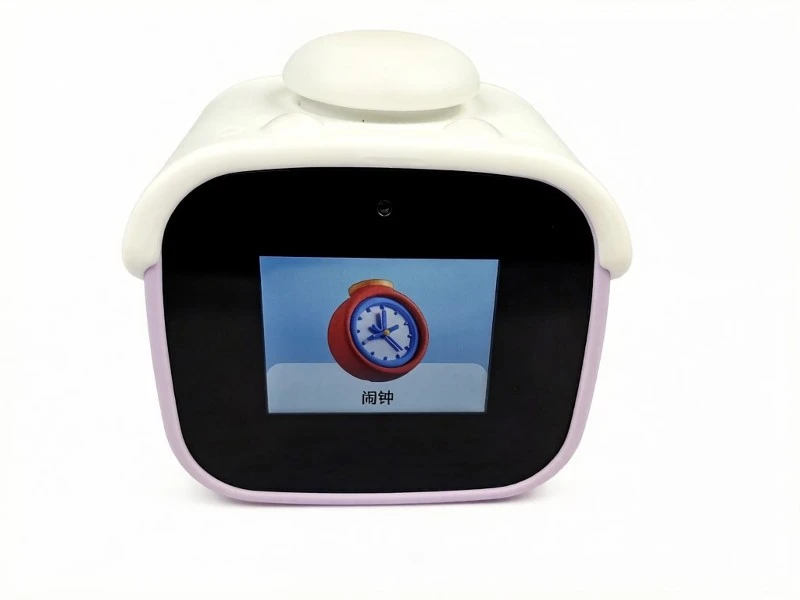
An offline voice recognition toy is a voice-enabled toy that understands speech on the device itself, without sending audio to a remote server. The microphone, the keyword model and the audio playback all sit inside the same shell, and the exchange the child hears begins and ends in the box. A cloud-connected toy does the opposite: it captures speech, sends it out over a network, waits for an answer and plays it back. That is why it can answer almost anything, and also why it carries a subscription, an account and a data path that outlives the sale. Neither architecture is universally better. They fail in different places, they cost money in different places, and they suit different shelves. An offline voice recognition toy trades breadth for determinism: a defined command set, a reply measured in fractions of a second, and nothing outside the factory gate that can be switched off after you have shipped. For a buyer the question is never which technology is cleverer. It is which failure mode your channel can absorb, and which cost curve matches the price on your ticket. Which data rules apply to a connected feature should be confirmed with your own counsel or local authority; as an OEM/ODM manufacturer of electronic and voice-enabled learning toys we build both architectures and document exactly which one you are buying.
How an Offline Voice Recognition Toy Compares With a Cloud-Connected One
Most projects that go wrong here do not fail in engineering; they fail in decision order. The architecture is chosen after the industrial design is frozen, and by then the microphone count, the board and the battery are already the answer. The five dimensions below are the order we recommend, each paired with the lead time we commit to, because the calendar is where an offline voice recognition toy decision actually costs money.
Dimension A → Decide what the voice has to do: a defined command set and an open-ended conversation are two different products, and only one of them needs a server. Write the command list before you write the brief - wake word, answers, volume, sleep, content skipping - because that list is what tells you whether an offline voice recognition toy can carry the feature set at all. We issue the STP file within 3 days of a signed brief, which is the first moment at which form factor, trigger style and command scope can be judged together.
Dimension B → Choose hardware that matches that decision: on-device keyword spotting needs a processor and memory budget that a streaming design does not, and a streaming design needs a radio that changes your test plan. This is the dimension most often skipped, and it is the one that later forces a board change. Our electronics team returns a working PCBA sample in 5 days, early enough to move the microphone, the amplifier and the power path before the enclosure is frozen.
Dimension C → Write the behaviour down before it is built: wake-word sensitivity, false-accept behaviour, timeout, what the toy says when it does not understand, and how the volume ceiling is enforced. These are firmware decisions with compliance consequences, so they belong in a document rather than in a developer's head. We deliver the program white paper in 3 days, and it is the cheapest page in the project.
Dimension D → Design for the demo and for the failure: a toy is bought on a shelf in about three seconds, and returned when the first interaction disappoints. Latency, speaker level and the recovery phrase are merchandising assets. A 3D-printed mock-up is ready in 3 days, and it is where microphone porting, speaker cavity and the push-to-talk button get checked together instead of discovered later.
Dimension E → Freeze the architecture before steel is cut: moving from an offline voice recognition toy to a connected one after tooling is not a firmware update; it is a board change, a radio question and a new packaging statement. A dedicated mold takes 30 days and mass production follows 30 days after sample sign-off, so this is the last cheap moment to make the call.
Six Checkpoints When Specifying an Offline Voice Recognition Toy

1. On-Device Keyword Spotting - AI Interactive Toy
Feature: the AI interactive toy runs wake-word detection and a fixed command set on the device, with LLM-driven dialogue available only where you explicitly specify a network path, and with no camera in the standard configuration.
Advantage: recognition happens locally, so the reply lands in a fraction of a second rather than after a round trip, and the control layer keeps working in a bedroom with poor coverage, on a plane, or in a store with no guest network. You choose which features carry a data path instead of inheriting one by default.
Benefit: shelf demos convert, because a three-second demo is the entire purchase moment in this category, and returns fall for the same reason. It also removes a recurring per-unit service cost from your landed calculation, which is what makes a fixed retail price defensible across a full season instead of only at launch.
Evidence: LLM-driven dialogue with a custom persona; no camera and push-to-talk wake-up; program white paper in 3 days; 1 dedicated AI content creator; 4 electronics engineers in-house.
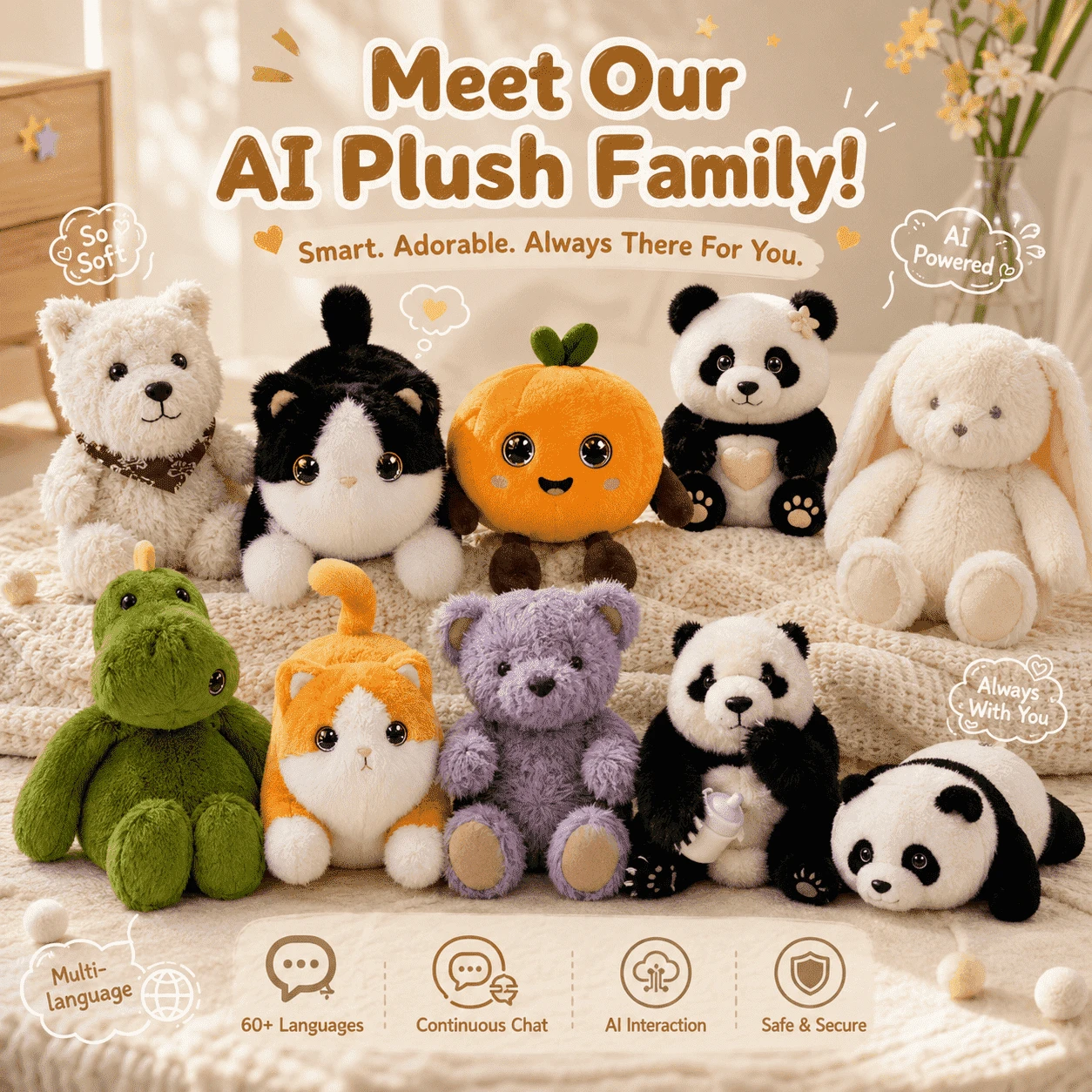
2. Push-To-Talk Instead Of Always-On Listening - AI Plush Toy
Feature: the AI plush listens only while a button or a paw is held, shows a clear listening state through LED expression eyes, and keeps no audio once the exchange ends.
Advantage: the privacy question is answered by the mechanism rather than by a policy document - there is no continuous capture to explain, and the one-page data map becomes short enough to hand to a retail reviewer without a legal conversation. Comfort and companionship are what this category can honestly promise, and we do not claim therapeutic outcomes.
Benefit: faster retailer onboarding and a shorter marketplace document request, because the reviewer closes the file in one pass. It also protects the listing you have already paid to build: in this category the expensive outcome of a privacy dispute is not a penalty, it is a delisting.
Evidence: no camera, push-to-talk wake-up, data path documented on one page; we do not claim a privacy certification we do not hold; factory certifications include ISO9001, BSCI, SEDEX, CE (EN71), FCC, RoHS, UKCA and CPSIA.
3. A Physical Trigger Is The Cheapest Offline Answer - Talking Flash Cards
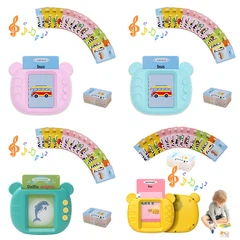
Feature: a card is inserted, optical or contact recognition identifies it, and local audio plays immediately. No wake word, no network, no account, no app.
Key functions include:
• 138 pre-loaded cards with 200+ card capacity and six-plus themes
• Mother-tongue narration in English, Chinese, Spanish, Arabic, French and Japanese
• 400gsm laminated cards built for classroom and retail handling
• Compact housing around 25 x 18 x 3 cm, sized for shelf and parcel
Advantage: the recognition problem is solved by geometry instead of by a model, which means the accuracy question disappears and the hardware bill stays low. An offline voice recognition toy and a card-triggered toy both answer instantly; only one of them needs a microphone budget and a tuning cycle.
Benefit: a lower BOM at the same perceived responsiveness, a shorter test plan, and refill card packs as the highest-margin repeat item in the line - paper-level inventory risk rather than electronics-level risk, with no mold and no firmware change between seasons.
Evidence: all raw materials RoHS and CPSIA compliant; 4 electronics engineers; PCBA sample in 5 days; 2 graphic designers for card artwork and manuals.
4. Content That Works With No Network Dependency - Kids Story Player
Feature: the story player is a screen-free audio device triggered by RFID or NFC cards or by a figure, with the library stored on 4GB to 16GB of local memory and updated by USB or SD card.
Advantage: nothing in the bedtime routine depends on a router, an account or a server that can be retired. For a channel with fixed term dates, or a household that does not want another subscription, that independence is the feature rather than a compromise.
Benefit: fewer negative reviews of the kind that are impossible to fix from a help desk - "it stopped working" after a service change - and a second revenue season from a content update instead of a second mold. A new story pack carries no tooling, no electronic material and no certification cycle.
Evidence: content updateable by USB or SD card; program white paper in 3 days; 1 AI content creator for script and persona; RFID, NFC, touch and voice-recognition stack available in-house.
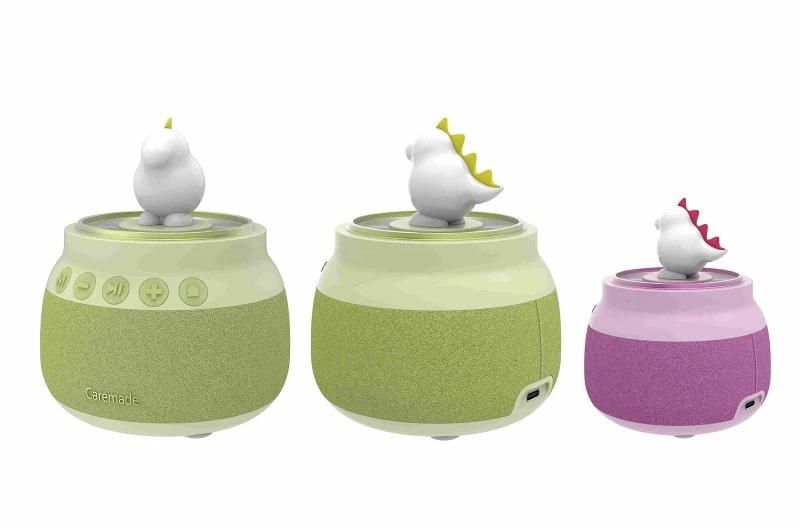
5. A Timed Routine Needs No Microphone At All - Children's Projector Toy
Feature: wall projection with synchronised audio, swappable content reels, adjustable focus and brightness, and a timer that remembers the last setting across the Timer Clocker platform shared with our story player and night light.
Advantage: the bedtime use case is scheduled, not conversational. Building it without a microphone removes an entire class of question from the test plan and from the retail reviewer's list; which requirements apply to your resulting configuration should be confirmed with your own laboratory or notified body.
Benefit: a shorter path to shelf and a simpler manual, and the two most expensive reviews in this category - "it stayed on all night" and "it was dead by morning" - are addressed by the timer rather than by a support team. Shared electronics across three bedtime SKUs also means one spare-parts stock.
Evidence: AQL 1.0 inspection with 100% functional testing; 10 QC inspectors on line; 3 structural and design engineers; 3D-printed mock-up in 3 days for focus, brightness and timer ergonomics.
6. The Fully Offline Configuration - White Noise Night Light
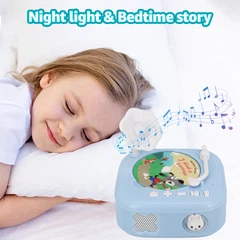
Feature: light and sound in one unit, with adjustable colour temperature, brightness and volume, a custom sound library of rain, waves, heartbeat and lullaby, and no microphone, no camera, no app and no cloud account.
Advantage: an offline voice recognition toy still has a microphone; this configuration has none, which is the strongest possible answer to the question a nursery buyer asks first. It is also the cheapest architecture to keep in production for years, because there is no backend to maintain and no service to sunset.
Benefit: the lowest after-sales burden in the catalogue and the cleanest listing in the sleep category, where reviews and returns decide the next reorder. For a buyer running several SKUs, it balances a connected hero product with a dependable volume seller.
Evidence: 20,000+ units daily capacity and 5,000 ㎡ facility to hold one platform across repeat orders; 12-month warranty with a spare-parts kit; 7×24 sales response.
B2B Applications: Where an Offline Voice Recognition Toy Fits Your Channel
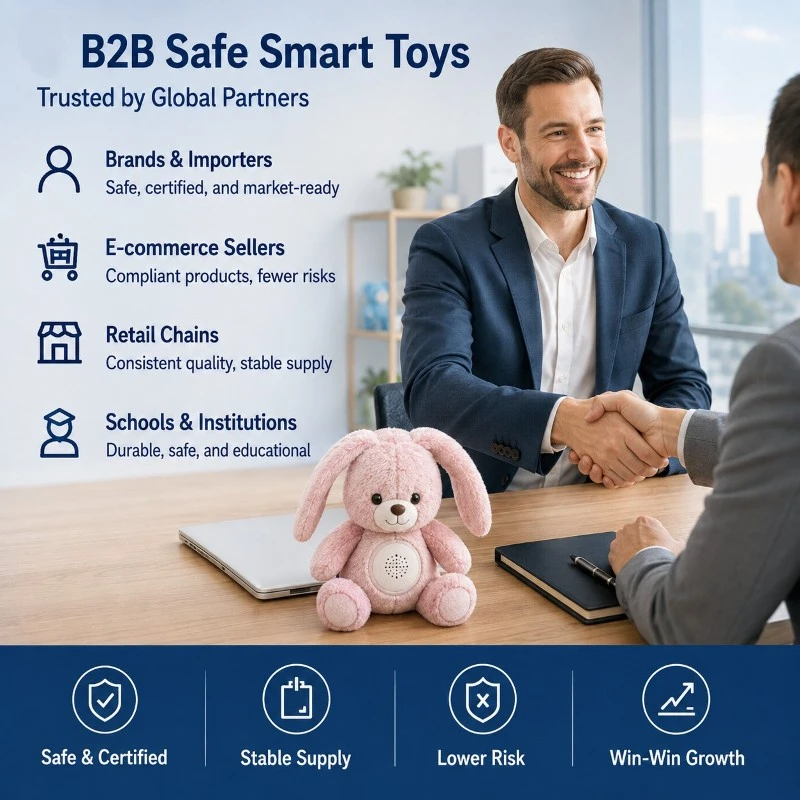
The same architecture decision lands differently in each channel. A brand owner is buying differentiation and a launch date; a retail chain is buying a file that closes line by line; a marketplace seller is buying a listing that survives a document request. Below is how the offline voice recognition toy question meets each buyer, and which line we would put in front of them.
1. Brand owners and IP licensors: your asset is the character and its voice, and both now run on electronics. Recommended lines: AI Interactive Toy and AI Plush Toy - LLM-driven dialogue with a defined persona, on-device wake word, no camera, and a persona and command white paper written before the character design is frozen. Practical point: decide at brief stage which features need a network, because that single sentence sets your board, your battery and your test plan.
2. Large supermarkets and chain retail: this is the buyer whose file is audited line by line and whose demo happens on a shelf with no network. Recommended lines: Interactive Plush Toy and Talking Flash Cards - proven mechanisms, strong shelf presence, low return rates. What the compliance reviewer will ask for: BSCI and SEDEX social-audit reports, ISO9001 quality system, CE (EN71) covering EN71-1/2/3, EN 62115 for the electric functions, FCC Part 15 evidence where a radio or fast digital function is present, RoHS, UKCA, and CPSIA together with the children's product certificate supporting documents, AQL 1.0 inspection and 100% functional testing. Name the pack in the quotation; a retail buyer cannot accelerate a document that was never created.
3. B2B importers and distributors: you want standard SKUs that reorder cleanly and behave the same in every market. Recommended lines: Kids Story Player and Talking Flash Cards - screen-free, content updateable by USB or SD, no service dependency after the sale. Practical point: hold one resin, one coating source and one battery source across reorders, so the file you built for the first container still describes the tenth.
4. Amazon and marketplace sellers: your risk is a document request or a review wave arriving at the worst possible moment. Recommended lines: Children's Projector Toy and White Noise Night Light - compact packaging, strong demonstration value, and no account for a customer to fail to set up. Practical point: keep the test report, the label artwork, the manual statement and the traceability photo in one folder per ASIN.
5. Education and nursery channels: durability and predictable behaviour matter more than novelty, and twenty units have to work on the first morning. Recommended lines: Talking Flash Cards and Kids Story Player - no IT deployment, no network dependency in the classroom, content that matches a term. Practical point: a product that needs no radio removes one review from your calendar, and for a channel with fixed term dates the calendar is the binding constraint.
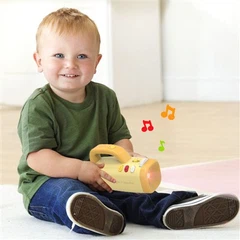
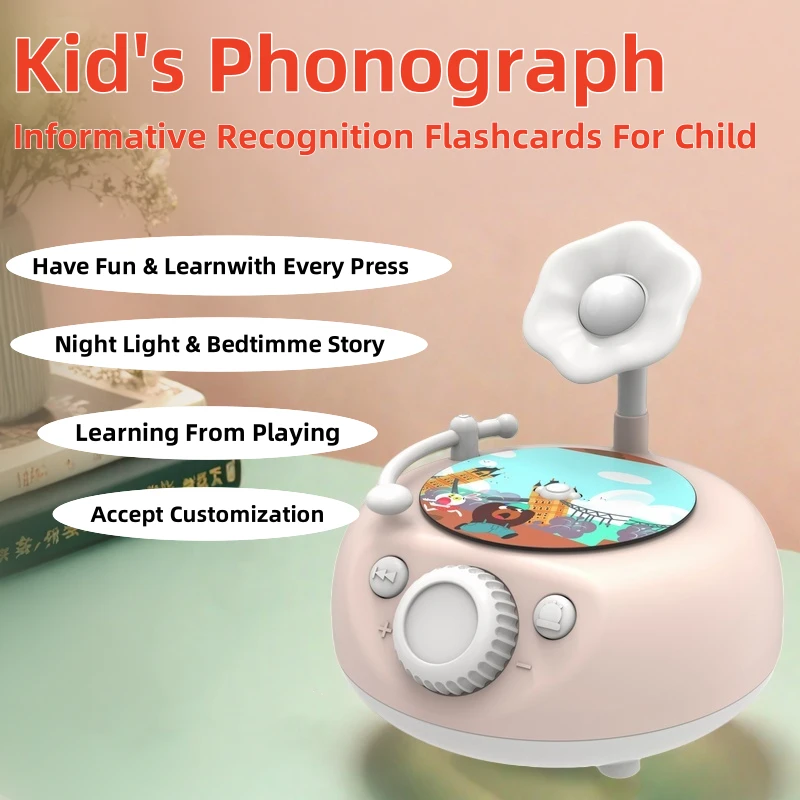
6. Gift, hotel and senior-care channel: the buyer needs a demo in three seconds and a product that still works years after the promotion. Recommended lines: Children's Phonograph Toy and White Noise Night Light - a mechanical trigger that needs no setup, and a calm-down routine positioned for companionship rather than for a claimed outcome. Practical point: a fully offline configuration is the easiest gift to give, because it asks nothing of the recipient.
OEM/ODM Customization Services for Offline Voice Recognition Toys
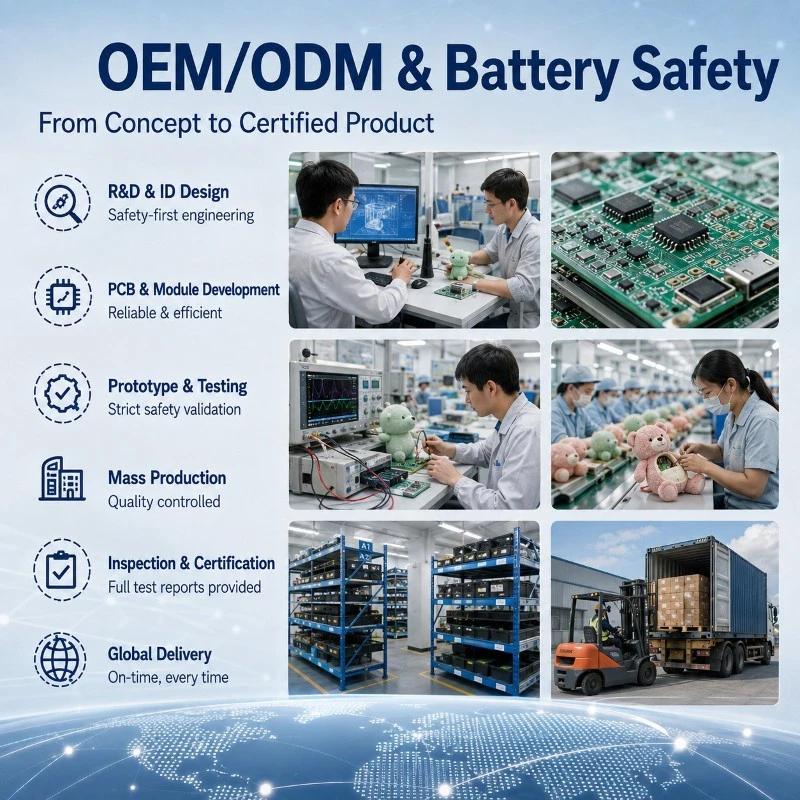
Product Design Customization
Geometry decides where the microphone sits, how the speaker cavity is formed and how much of the shell is painted, so structure is where a voice architecture becomes physical. We start from your character, your channel and your command scope, then place the acoustics before the surface design is frozen.
• STP file within 3 days of a signed brief
• 3D-printed mock-up within 3 days, checked for microphone porting, speaker cavity and button reach
• 3 structural and design engineers; 10 new products developed every year
• 10 injection machines and an in-house mold shop for wall-thickness and coating-reduction iteration
• Platform approach: one chassis, several shells, so a second SKU reuses the tested electronics
Dedicated mold in 30 days, with the microphone, speaker and material set agreed before steel is ordered.
Hardware Customization
Our electronics team designs the board, the power path and the acoustics as one system, then hands you a sample you can measure - and a BOM you can submit.
• PCBA sample in 5 days, early enough to move the microphone before the enclosure is frozen
• On-device keyword spotting with a defined command set, or a hybrid design with a declared network path
• Controlled part numbers for microphone, amplifier, cable, charging board and battery cell, written into the BOM
• Power options: AAA dry cells, rechargeable lithium with a protection board, or USB-C input
• Storage 4GB to 16GB; technology stack includes NFC, RFID, vibration sensing, touch sensing, voice recognition, colour recognition and temperature control
Software & Audio Content Customization
Firmware and content are what make the product yours, and firmware is also part of what gets reviewed. We write both down, so what you submit matches what you ship.
• Program white paper in 3 days: command set, wake-word behaviour, false-accept handling, output level, sleep and wake, charging state
• LLM-driven dialogue with a custom persona; no camera, push-to-talk wake-up, and a data path we can describe on one page
• Audio library in English, Chinese, Spanish, Arabic, French and Japanese, with mother-tongue narration available
• Content updateable by USB or SD card, so a second season does not need a second mold
• One dedicated AI content creator for script, persona and age-appropriate phrasing
Comfort, companionship and a calm-down routine are what this category can honestly promise; we do not claim therapeutic outcomes, and we do not claim a privacy certification we do not hold.
Packaging & Compliance Customization
The file pack is part of the product. We assemble it while the goods are being made, not after a buyer asks for it.
• One pack per SKU: test report, certificate elements, BOM with controlled part numbers, label artwork, manual page
• Permanent traceability marking matched to carton marking, barcode and production record
• Written change rule: which microphone, board or material changes trigger new testing, agreed before mass production
• Retail packaging: barcodes and UPC, shelf-ready cartons, multi-language manuals, 2 graphic designers on staff
• Quality: AQL 1.0 inspection and 100% functional testing on every unit, 10 QC inspectors on line
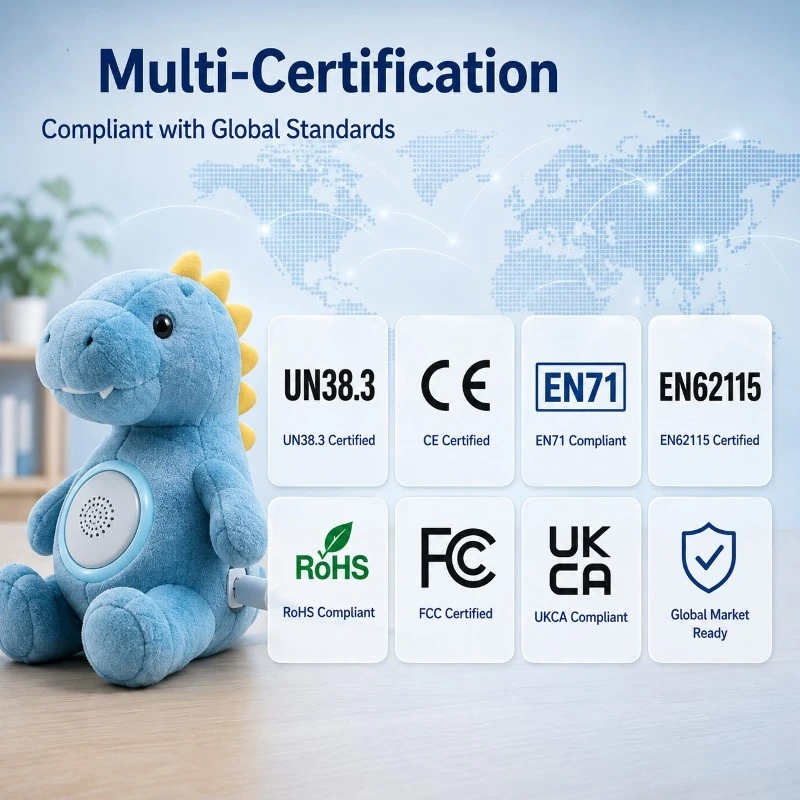
• Certification scope: ISO9001, BSCI, SEDEX, CE (EN71), FCC, RoHS, UKCA and CPSIA; which rules apply to your specific configuration should be confirmed with your own laboratory or notified body
Why Choose XINDITAI as Your Voice Toy Manufacturing Partner
Factory-Direct Manufacturing
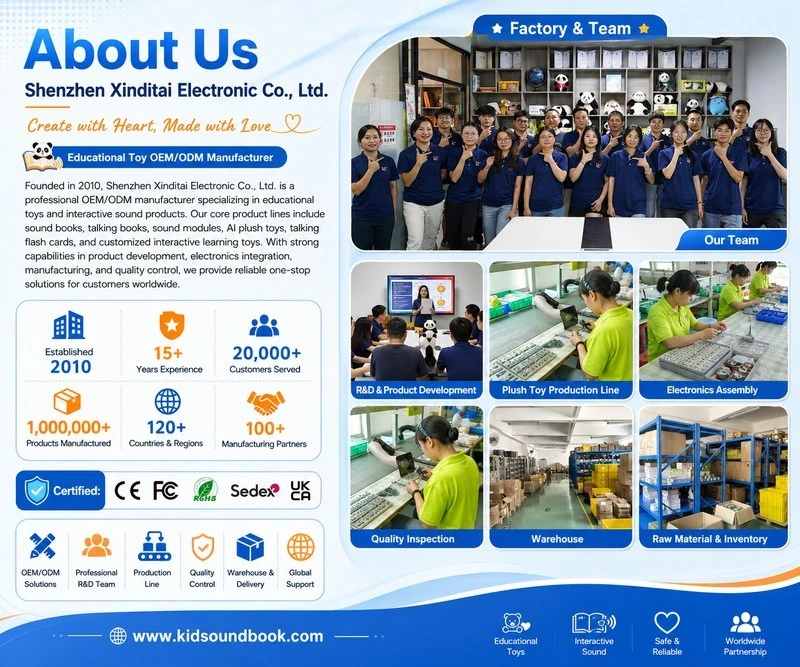
Design, tooling, electronics and assembly sit in one 5,000 ㎡ site, which is why an offline voice recognition toy question can be answered with a BOM record in hours rather than a supplier negotiation in weeks.
• 5,000 ㎡ facility, 20,000+ units daily capacity, 10 injection machines, in-house mold shop
• 3 structural and design engineers, 4 electronics engineers, 2 quality engineers, 10 QC inspectors
• 1,000,000+ products manufactured, 100+ manufacturing partners, 10 new products developed each year
• AQL 1.0 inspection with 100% functional testing; dedicated mold in 30 days, mass production 30 days after sample sign-off
Global Export Experience
Shipping to 120+ countries means the file pack is built for the market on the carton, not translated afterwards.
• Exported to 120+ countries and regions; 20,000+ customers served since 2010
• OEM and ODM each account for roughly half of our business - both a factory and a development partner
• National high-tech enterprise; certifications include ISO9001, BSCI, SEDEX, CE (EN71), FCC, RoHS, UKCA and CPSIA
• 7×24 sales response, so a technical question raised in your time zone is answered in your time zone
Frequently Asked Questions About the Offline Voice Recognition Toy
Q1: What is the MOQ, and how should I think about tooling cost?
MOQ depends on the line and on whether you take an existing tool or a dedicated one. The useful way to read tooling is per unit, not per month: the mold is paid back by repeat orders, not by the first one, so cavity count should be chosen from a twelve-month forecast rather than from the first purchase order. Ask us for the amortisation curve on two or three volume scenarios before you sign; the answer usually changes the cavity decision, and that decision is made once.
Q2: What compliance file will a retail chain ask for on a voice-enabled toy?
Expect the reviewer to work through BSCI and SEDEX social-audit reports, ISO9001, CE (EN71) with EN71-1/2/3, EN 62115 for the electrical functions, FCC Part 15 evidence where a radio or fast digital function is present, RoHS, UKCA, and CPSIA together with the children's product certificate supporting documents, AQL 1.0 inspection records and 100% functional testing. Which rules apply to your specific configuration should be confirmed with your own laboratory, notified body or counsel; we build to the requirements you bring us and document what we built.
Q3: Does choosing an offline voice recognition toy remove the privacy question?
It shortens it dramatically, but be precise about what you are claiming. An offline voice recognition toy with push-to-talk wake-up and no camera leaves you with a one-page data map instead of a retention policy, and that page is easy to hand to a reviewer. A fully offline configuration with no microphone leaves almost nothing to describe. We do not claim a privacy certification we do not hold. The commercial point is that a privacy failure is not a fine, it is a delisting - which is why the data map belongs in the same pack as the test report.
Q4: How long does development take?
STP file in 3 days, 3D-printed mock-up in 3 days, program white paper in 3 days, PCBA sample in 5 days, dedicated mold in 30 days, and mass production 30 days after sample sign-off. Those six dates are why the architecture question is asked first: a command set is worth an afternoon on a drawing and several weeks once the board is built and steel is cut.
Q5: Can I have a private mold and retail-ready packaging?
Yes. A private tool gives you a shape nobody else can list, and the packaging is designed with the shelf and the FBA dimension in mind at the same time - barcodes and UPC, shelf-ready cartons, multi-language manuals, permanent traceability marking and insert artwork handled by our two in-house graphic designers. Private tooling also makes the platform logic work: one tested chassis under several shells keeps the second SKU cheap and keeps its re-test scope small.
Q6: What happens if a batch fails inspection or a component changes?
Every unit is 100% functionally tested and inspected to AQL 1.0, with 10 QC inspectors on line and 2 quality engineers owning the record. If a microphone, board or material has to change, our written change rule states whether the change triggers new testing before the batch ships, so the file keeps describing the goods in the container. After delivery, we back the product with a 12-month warranty, a spare-parts kit and 7×24 response.
Future Trends in Voice-Enabled Toy Architecture
1. Hybrid becomes the default, not the exception. On-device keyword spotting handles control, wake-up and volume, while network dialogue is added only where a buyer wants it and declares it. For buyers this means the architecture decision is now a feature list rather than a platform commitment - you choose per feature which cost and which file burden you accept.
2. Latency replaces accuracy as the specification that sells. Recognition quality is close to good enough across the category; what differs between a returned unit and a recommended one is how fast the reply lands and what the toy says when it does not understand. Expect more briefs to specify response behaviour rather than word error rate.
3. Content ownership becomes the margin. Cards, reels, story packs and sound libraries carry no mold, no electronic material, no firmware change and no certification cycle. As hardware margins compress, the refill economy around an offline voice recognition toy is where the second and third year of a range is earned.
4. Offline positioning opens adult and senior channels. A companion product positioned for comfort, companionship and a calm-down routine does not need the breadth of a cloud assistant, and an offline configuration suits a buyer who does not want to run a service. Age positioning belongs in the first brief, because it shapes design, channel and packaging at the same time - and it cannot be reversed with a sticker.
Conclusion: Specify Your Next Voice Toy Today
An offline voice recognition toy is not the conservative choice and a cloud-connected one is not the ambitious one; they are two cost curves, two latency profiles and two file packs, and only one of each matches your shelf. Buyers who decide late discover the difference at the board revision, when the microphone, the battery and the radio have already answered the question for them. Buyers who decide in the brief usually never think about it again, which is the point.
Send us your channel, your command list, your age positioning and your target retail price, and we will come back with the architecture recommendation, the six lead times and the checkpoint list that applies to your SKU. We will also tell you where a connected feature is not worth the file burden it creates, because the fastest route to shelf is still the shortest list of things that have to be reviewed.
Contact Us
Contact: Zoey
WhatsApp: +86 13342950150
Email: xdt06@dtdianzi.com
Company: SHENZHEN XINDITAI ELECTRONIC CO., LTD | Website: www.kidsoundbook.com