

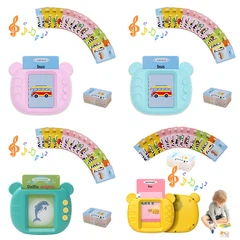
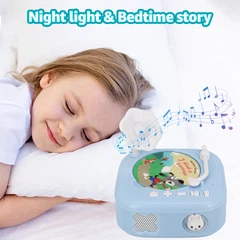
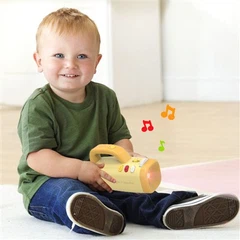
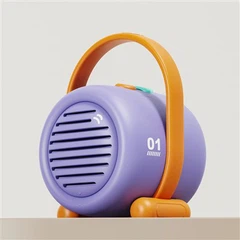

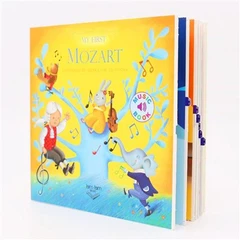
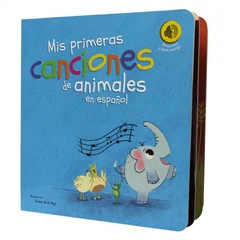
What Are OEM/ODM Talking Flash Cards?

OEM talking flash cards are electronic learning devices that combine printed flash cards with instant audio playback, enabling children to hear correct pronunciation, sound effects, and instructional content by simply inserting or tapping a card onto the reader. Unlike basic flash card sets that require a parent or teacher to read aloud, these intelligent devices operate autonomously, providing consistent, high-quality audio feedback for every card. The global market for interactive educational toys exceeded USD 12 billion in 2025 and is projected to grow at a CAGR of 12.4% through 2030, driven by rising demand for screen-free learning alternatives and bilingual early childhood education. As a dedicated talking flash cards manufacturer, XDT Electronic Co., Ltd. (branded as KidsoundBook) delivers comprehensive OEM/ODM solutions spanning NFC card encoding, custom audio libraries, and region-specific compliance certifications, serving brands, importers, distributors, e-commerce sellers, and educational institutions worldwide.
How Do OEM Talking Flash Cards Work?

An OEM talking flash card device operates through a tightly integrated hardware-software interaction pipeline. Understanding this architecture is critical for B2B buyers evaluating manufacturing partners:
1. NFC/RFID Tag Encoding & Card Fabrication: Each flash card is embedded with a passive NFC tag or printed with an optical recognition code during the card manufacturing process. For NFC-based systems, the tag stores a unique 7-byte UID that the reader maps to a specific audio file. For image-sensor-based systems, a proprietary dot-pattern code is printed on the card back using offset or flexographic printing at 600+ DPI resolution. The card substrate uses 350–400 gsm coated board with gloss lamination and rounded corners, rated for 10,000+ insertion cycles in classroom environments.
2. Card Insertion & Sensor Read: When the user inserts a card into the device slot, an infrared optical sensor or NFC antenna array detects the card presence within 50 ms. The onboard MCU (typically a 32-bit ARM Cortex-M series running at 48–120 MHz) decodes the tag ID using the ISO 15693 or ISO 14443A protocol and queries the flash memory lookup table. No internet connection is required - all content mapping is local.
3. Audio Decoding & Playback: The MCU retrieves the corresponding audio file from SPI flash or NAND flash storage (4–16 GB depending on configuration). Audio files are encoded in ADPCM or MP3 format at 32–128 kbps, optimized for fast seek and low power consumption. A dedicated DAC and Class-D audio amplifier (output: 1W–3W) drive the speaker at 87–93 dB SPL, ensuring clear room-filling audio for classroom settings. Battery life ranges from 4–8 hours continuous playback on two AAA alkaline cells or a 600–1200 mAh lithium polymer rechargeable battery.
4. Visual & Interactive Feedback: Higher-end models integrate a 2.8"–4.3" TFT LCD panel that displays the card image, vocabulary word in both languages (where bilingual), and optional stroke-order guides. Some models incorporate an LCD writing tablet layer for handwriting practice, capacitive touch buttons for mode selection, and an LED indicator ring for visual engagement.
Key Features of OEM Talking Flash Cards

1. NFC Multi-Card Instant Recognition System
Feature: The device supports instant recognition of 200+ uniquely encoded cards using NFC ISO 15693 protocol with zero-latency lookup. Each card is factory-encoded with collision-avoidance algorithms, allowing multiple cards to be detected in sequence without read errors.
Advantage: Unlike optical-sensor competitors that require precise card alignment and suffer from dust accumulation errors, the NFC-based system reads cards at any insertion angle and is immune to surface wear over thousands of uses.
Benefit: B2B buyers gain a more durable, maintenance-free product with lower return rates - critical for Amazon sellers and distributors managing customer satisfaction at scale.
Evidence: NFC read accuracy exceeds 99.8% over 100,000 insertion cycles in accelerated laboratory testing, compared to 93–96% for optical sensor alternatives.
2. Multi-Language Audio Engine
Feature: The onboard audio engine supports up to 8 pre-loaded languages per device, switchable via hardware button or software menu. Each language can be recorded with native speakers through our studio production pipeline - we manage translation, voice artist selection, recording, editing, and QC in-house.
Advantage: A single SKU can serve multiple language markets, reducing inventory complexity for distributors and importers who serve diverse regions.
Benefit: Importers and distributors can stock one product for English, Spanish, French, Arabic, and Mandarin markets simultaneously, optimizing warehouse space and working capital.
Evidence: We maintain an active database of 120+ native voice artists across 25 languages, with turnaround times of 7–14 days for full audio production.
3. Curriculum-Aligned Content Architecture
Feature: Card content can be structured to align with international early childhood education frameworks including Montessori language sequences, Common Core State Standards (CCSS) for Pre-K literacy, UK Early Years Foundation Stage (EYFS) communication goals, and China's 3–6 Child Development Guidelines.
Key capabilities:
• Pre-built curriculum templates for rapid content development across 5 age brackets (18 months to 7 years)
• Phonics progression maps: letter-sound correspondence → CVC blending → sight words → sentence reading
• Bilingual parallel tracking: monitor vocabulary acquisition in both L1 and L2 languages
Advantage: Unlike generic flash card products that offer random themed card sets, curriculum-aligned content gives your product a defensible position in the educational procurement market.
4. Hearing-Safe Audio Design & Volume Limiting
Feature: The audio subsystem includes a hardware volume limiter that caps maximum output at 85 dB SPL, complying with EU EN 71 and US ASTM F963 safety standards for children's electronic toys. A gradual volume ramp prevents startle response when the device powers on.
Advantage: Volume limiting is enforced at the hardware level (not software), meaning no firmware glitch or user misconfiguration can exceed safe levels - a critical differentiator for school procurement officers.


5. Global Certification Package
Feature: Every standard model ships with CE (EN 71, EN 62115), FCC Part 15, RoHS, REACH, and California Proposition 65 compliance documentation. Optional certifications include ASTM F963, CPSIA, CCC, UKCA, and SASO depending on target market.
Advantage: Pre-certified products eliminate the 8–16 week certification process that custom-designed competitors require, allowing you to launch products 2–4 months faster.
Benefit: Amazon sellers avoid listing suspensions due to missing compliance documents, and importers clear customs without detention delays - saving an estimated USD 2,000–8,000 per SKU in certification costs.
6. Content Update Platform via USB/SD Card
Feature: The device firmware supports content updates via USB-C or microSD card, enabling you to add new card sets, update audio files, or patch firmware without opening the device or returning stock.
Advantage: Distributors and brands can release seasonal expansion packs (holiday themes, summer learning sets) that existing customers purchase as add-ons, extending product lifecycle and per-customer revenue.
B2B Applications: Where OEM Talking Flash Cards Deliver Value

1. Brands & IP Licensing Partners: Create differentiated products under your own brand using custom-designed cards featuring licensed characters, proprietary mascots, or branded learning themes. The OEM talking flash card format supports exclusive distribution arrangements with retail chains and specialty stores. Brands achieve market differentiation through unique content they control, while the underlying hardware platform ensures consistent quality and certification across runs.
2. Importers Serving Multi-Region Markets: Importers value the multi-language hardware configuration that lets a single device model ship to different countries by simply varying the card content language. Combined with our CE/FCC/RoHS certification package, importers avoid duplicate compliance processes for each destination market. MOQ as low as 500 units for standard models allows importers to test new markets with minimal risk exposure.
3. Distributors Building Category Portfolios: Distributors can layer talking flash cards into their existing educational toy portfolio at a retail price point of USD 18–45, filling the gap between low-cost basic toys and premium electronic learning tablets. The product's compact footprint (FBA-friendly packaging for card reader + 50–100 cards) optimizes warehouse cube utilization and shipping container density (12,000–18,000 units per 20-foot container).
4. Amazon & E-Commerce Sellers: The strong demo appeal of the "insert card → hear audio" experience translates directly into higher video conversion rates on product detail pages. Multiple color variants (pink, blue, green, yellow) support A/B testing of main images. The card expansion model creates natural upsell paths - sell the starter set at competitive pricing, then generate repeat revenue through themed card expansion packs.
5. Educational Institutions & School Districts: Kindergartens, preschools, ESL centers, and special education programs use talking flash cards as a center-based learning station. Custom content can align with specific curriculum chapters, phonics programs, or IEP goals. Bulk orders for 200–2,000 units typically include bundled teacher guides, wall charts, and activity cards, creating a complete classroom solution.
6. Corporate CSR & Educational Gifting: Corporations seeking educational giveaways for CSR programs or client gifting can order custom-branded talking flash cards with proprietary content aligned to their corporate education initiatives. The product's perceived educational value (vs. promotional giveaways) enhances brand perception among recipients.
OEM/ODM Customization Services for Talking Flash Cards

Product Design & Industrial Molding
As an experienced talking flash cards manufacturer, XDT Electronic Co., Ltd. provides end-to-end product design from concept sketches through mass production mold trials. Our in-house ID (Industrial Design) team can work from your reference images, CAD files, or functional specifications:
• Custom shell design with 3D-printed prototype validation (5–7 day turnaround)
• Plastic injection mold development: steel molds with 500,000+ shot lifespan
• Pantone color matching with gloss/matte finish options for brand consistency
• Logo integration: pad printing, silk screen, UV transfer, in-mold decoration (IMD), or silicone keypad embossing
With 10+ years of OEM/ODM production and over 200 completed projects, we have the tooling expertise and mold-making supply chain to deliver reliable hardware at competitive unit pricing.
Hardware Configuration Options
• Card detection technology: NFC (ISO 15693), optical sensor, or hybrid dual-mode
• Display: 2.8" TFT LCD, 4.3" TFT LCD, or LCD writing tablet layer only, or no display (audio-only)
• Audio: 1W–3W speaker, 3.5mm headphone jack option, Bluetooth speaker variant
• Power: 2×AAA battery, 600–1200 mAh Li-Po rechargeable with USB-C charging
• Storage: 4 GB / 8 GB / 16 GB SPI NAND flash
Content Management & Audio Production Pipeline
Our most significant OEM/ODM advantage is our full-stack content production capability. We handle every stage of your content project:
• Script development: vocabulary selection, curriculum alignment, difficulty progression design
• Professional recording: studio-grade audio capture with native speakers, male/female/child voice options
• Audio processing: noise gating, compression, normalization, ADPCM/MP3 encoding at your target bitrate
• Content packaging: firmware integration with drag-and-drop content management tool for non-technical operators
Our audio production pipeline can deliver a 200-card bilingual content set in 14–21 days from script approval to production-ready audio files.
Packaging & Private Label Service
• Box design: magnetic flap box, window display box, clamshell, or eco-friendly Kraft packaging
• Printing: 4-color offset, spot UV, foil stamping, embossing
• Documentation: instruction manual, warranty card, QR-linked digital user guide
• Barcode & labeling: UPC, EAN, Amazon FNSKU barcodes, country-specific import labels

Why Choose KidsoundBook as Your OEM Talking Flash Cards Manufacturing Partner
Factory-Direct Manufacturing in Shenzhen
XDT Electronic Co., Ltd. (KidsoundBook) operates a purpose-built 3,000+ sqm manufacturing facility in Shenzhen, China, with dedicated SMT lines for PCB assembly, injection molding stations, automated card printing presses, and manual assembly lines for final product integration. By working directly with our factory, you eliminate broker margins and gain end-to-end visibility into production quality and scheduling.
• Monthly production capacity: 50,000+ talking flash card units
• Standard lead time: 25–35 days from deposit to shipment
• QC process: incoming material inspection → in-process QC at each assembly stage → 100% functional test → 24-hour aging test → final AQL 2.5 sampling inspection
Global Export & Logistics Expertise
We have exported OEM talking flash cards and educational toys to 30+ countries across North America, Europe, Southeast Asia, the Middle East, and Latin America. Our logistics team manages complete export documentation including certificate of origin, bill of lading, packing list, commercial invoice, and destination-market customs clearance guidance.
• Shipping: sea freight (FOB Shenzhen), air freight (CIF), express (DHL/FedEx/UPS)
• Payment: T/T, L/C at sight, Western Union, Alibaba Trade Assurance
• MOQ: 500 units for standard models, 1,000–2,000 units for fully custom mold designs
• Warranty: 12 months manufacturing defect coverage with spare parts kit included

Frequently Asked Questions About OEM Talking Flash Cards
Q1: What is the difference between NFC-based and optical-sensor talking flash cards?
NFC-based cards use a passive RFID tag embedded in the card stock, allowing instant recognition at any insertion angle without precise alignment. Optical-sensor systems read printed dot codes on the card surface but require consistent card positioning and can accumulate errors as the printed surface wears. NFC systems offer higher read accuracy (>99.8%) and longer card lifespan. XDT Electronic Co., Ltd. supports both technologies and can advise on the best option for your target price point and quality requirements.
Q2: Can I create proprietary card content that cannot be copied by competitors?
Yes. Our NFC tag encoding process supports unique encryption and authentication schemes. Cards manufactured for your brand can use proprietary UID mapping tables and encrypted audio file containers that prevent card-reading on competitor devices. This provides a significant market protection advantage for brands investing in original content development.
Q3: What is the minimum order quantity for private-label talking flash cards?
Our MOQ is 500 units for standard models using existing shell tooling. For fully customized hardware requiring new injection molds, the MOQ ranges from 1,000 to 2,000 units depending on the complexity of the design. We offer flexible terms for first-time trial orders - contact Ryan at ryan@xinditai.com to discuss your specific requirements.
Q4: How do I handle after-sales support and returns for end customers?
We provide a 12-month warranty covering manufacturing defects and include spare parts kits (speakers, batteries, card readers) with each bulk order. Replacement units are dispatched within 15 business days of defect confirmation. For Amazon sellers, we also offer FBA-ready packaging with pre-printed return labels and a QR code linking to your customer support portal.
Q5: What certifications are included and which do I need for my target market?
Our standard products include CE (EN 71, EN 62115), FCC Part 15, RoHS, REACH, and CA Prop 65. For specific markets we also offer: ASTM F963 + CPSIA (USA), UKCA (UK), CCC (China), SASO (Saudi Arabia), and IS 9873 (India). We recommend confirming your target market certification requirements during the quotation stage so we can include them in the production timeline.
Q6: Can the card content be updated after the product ships?
Yes. All our talking flash card devices support content updates via USB-C or microSD card. This allows you to release new card expansion sets, update existing audio files, or patch firmware months after the initial shipment - extending the product lifecycle and creating additional revenue opportunities through digital content sales.
Q7: How long does a typical OEM/ODM project take from first contact to shipment?
For standard models (existing tooling, custom packaging + content): 25–35 days. For fully custom hardware (new molds): 45–60 days including mold development, prototype validation, PPAP, and pilot run. Express timelines can be arranged for urgent orders with an expediting fee.
Q8: Do you offer exclusivity agreements for distributors entering new markets?
Yes. We offer regional exclusivity arrangements for qualified distributors who commit to minimum annual volumes. Exclusive territories typically include pricing protection, dedicated inventory allocation, and co-marketing support. Contact Ryan to discuss your target market and volume projections.
Future Trends in Talking Flash Cards & Interactive Learning Technology
1. AI-Powered Adaptive Card Sequencing: Next-generation talking flash card devices will integrate lightweight on-device AI to track which cards a child has mastered (3+ consecutive correct responses) and which require reinforcement, dynamically adjusting card recommendation order. This adaptive learning engine, running on the existing MCU without cloud connectivity, creates a personalized learning path for each child while maintaining privacy and offline operation.
2. Cloud-Connected Content Ecosystems: Future models with optional Wi-Fi or Bluetooth connectivity will sync learning progress data to companion mobile apps, enabling parents and teachers to monitor vocabulary acquisition, identify struggling areas, and download new card sets from a cloud marketplace. This creates a recurring revenue model for B2B buyers selling content subscriptions alongside hardware.
3. Voice Recognition & Pronunciation Feedback: The next major hardware evolution will integrate a MEMS microphone and low-power speech recognition co-processor, allowing the device to listen to the child's spoken response and provide corrective feedback. This moves the product from passive card-reading to active speaking practice - particularly valuable for ESL/EFL markets where pronunciation coaching commands premium pricing.
4. Sustainable Materials & Circular Production: OEM talking flash card manufacturers are increasingly adopting recycled ABS (rABS) for device shells, FSC-certified card stock, and plastic-free packaging. As EU and北美 retailers tighten sustainability requirements, B2B buyers should partner with manufacturers who offer eco-material options that maintain certification compliance.
5. Hybrid Digital-Physical Learning: The convergence of physical flash cards with digital companion apps will create "phygital" learning products where a child taps a card on a NFC-enabled tablet or smartphone to trigger augmented reality animations, interactive quizzes, or animated story content. This hybrid approach bridges the tactile advantages of physical cards with the engagement of digital experiences.
Conclusion: Partner with a Trusted OEM Talking Flash Cards Manufacturer
OEM talking flash cards remain one of the most accessible and high-growth product categories in the global educational toy market. With a clear technology roadmap, established certification frameworks, and proven consumer demand across both retail and institutional channels, this category offers B2B buyers a reliable path to market.
As a dedicated talking flash cards manufacturer with over a decade of OEM/ODM experience, KidsoundBook (XDT Electronic Co., Ltd.) offers the manufacturing infrastructure, content production pipeline, certification expertise, and logistics capability to launch your custom talking flash card product efficiently. From NFC card encoding to multi-language audio libraries to global shipping, our team manages every detail so you can focus on building your brand and growing your market.
Contact Ryan today to discuss your project requirements, request a quotation, or arrange a factory visit to see our production line in Shenzhen.
Ryan | +86 13828891874 | ryan@xinditai.com
XDT Electronic Co., Ltd. / KidsoundBook