





NFC Card vs QR Code vs Buttons for Kids Audio: A Buyer Test
An audio trigger is not a cosmetic choice. NFC cards, QR codes and dedicated buttons create different requirements for child independence, connectivity, content mapping, durability and support. Buyers should compare them through a repeatable use test rather than choosing the most familiar technology.
This guide evaluates three interfaces for a kids story player. It does not assume one winner; it shows which evidence to collect before an OEM/ODM team commits to housing, firmware and content operations.
Test 1: Can a child start audio alone?
Place each interface in front of a first-time user. NFC should be tested at the center and edges of its read zone; QR should be tested with the actual camera device and lighting; buttons should be tested for symbol recognition and navigation depth.
Record prompts, failed attempts and adult interventions. Independence is measured by completed playback, not by whether the technology worked for an engineer.
Record the result: for can a child start audio alone?, note the sample version, environment, number of attempts, failures and recovery steps. Repeat the test after one controlled change and compare the evidence. This method separates a stable interface decision from a result that only worked once under ideal engineering conditions. Add the finding to the comparison table, name any unresolved dependency, and require a fresh run when the token, print, enclosure, firmware, audio package or service configuration changes.
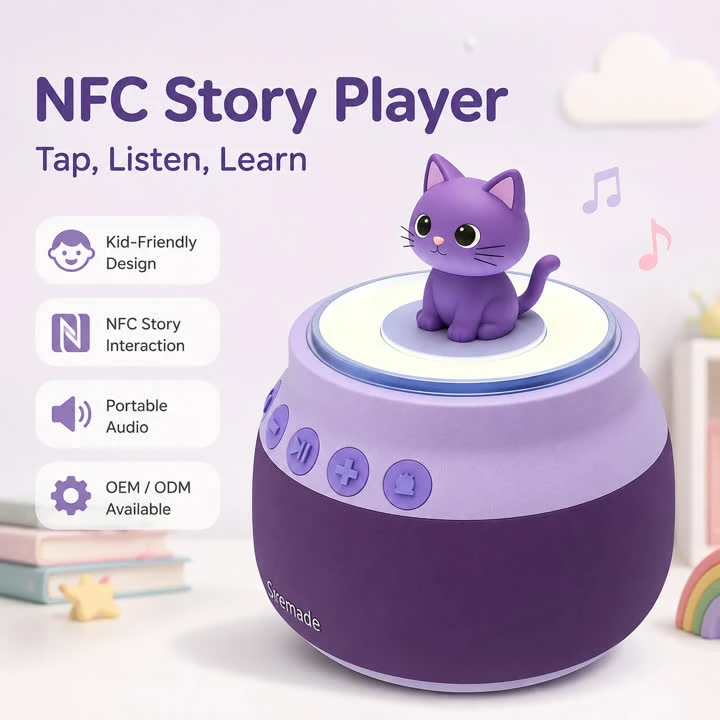
A child-readable product face
The front view shows the cat figure, broad base and simple control area. For a interface comparison sample, buyers should confirm that the recognition point and physical controls remain obvious without relying on printed instructions.
Test 2: Count the setup dependencies
List every item needed before first play: player, token, phone, app, account, network and downloaded file. NFC can support local or connected models, QR generally needs a camera-capable device, and buttons depend on content already available inside the player.
The best route is the one whose dependencies match the promised use environment. Do not call an experience "simple" until the full setup chain is visible.
Record the result: for count the setup dependencies, note the sample version, environment, number of attempts, failures and recovery steps. Repeat the test after one controlled change and compare the evidence. This method separates a stable interface decision from a result that only worked once under ideal engineering conditions. Add the finding to the comparison table, name any unresolved dependency, and require a fresh run when the token, print, enclosure, firmware, audio package or service configuration changes.
Features must map to a real architecture
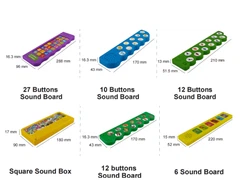
The feature board is useful for defining tap-to-play behavior, audio controls and content ownership. Each claim still needs a named module, firmware state and sample acceptance test before it belongs on retail packaging.

Test 3: Compare recognition under real handling
Children approach tokens quickly, at an angle and sometimes repeatedly. Run NFC taps with offsets and different speeds. Scan QR codes with glare, folds and partial obstruction. Press buttons with small, wet or gloved fingers where relevant to the market.
Use a defined pass rate and capture failure behavior. A missed input is less damaging when the player explains what to do next.
Record the result: for compare recognition under real handling, note the sample version, environment, number of attempts, failures and recovery steps. Repeat the test after one controlled change and compare the evidence. This method separates a stable interface decision from a result that only worked once under ideal engineering conditions. Add the finding to the comparison table, name any unresolved dependency, and require a fresh run when the token, print, enclosure, firmware, audio package or service configuration changes.

Check volume from three directions
Front, side and rear views reveal base stability, figure clearance and speaker placement. An kids audio interface sample should be photographed at fixed angles so housing changes are easy to compare.
Test 4: Map content capacity and browsing
NFC and QR can point to large catalogs, but families still need a way to browse physical items. Buttons avoid loose media yet can make a large library difficult to navigate without a display or spoken menu.
Build a representative twenty-title set and ask users to find a named story. Measure time, mistakes and how the collection is stored afterward.
Record the result: for map content capacity and browsing, note the sample version, environment, number of attempts, failures and recovery steps. Repeat the test after one controlled change and compare the evidence. This method separates a stable interface decision from a result that only worked once under ideal engineering conditions. Add the finding to the comparison table, name any unresolved dependency, and require a fresh run when the token, print, enclosure, firmware, audio package or service configuration changes.
Treat the exploded view as a question list
The internal diagram suggests where the reader, speaker, battery and PCB may sit. Procurement should verify the production-intent stack rather than assuming a concept rendering proves component selection or safety.

Test 5: Verify offline behavior
Disconnect the network and repeat previously successful sessions. An NFC identifier may map to local files or cached downloads; a QR link may stop without network access; a button-based player may continue if content is embedded.
Document initial setup separately from daily playback. Buyers need to know what works on travel days, in bedrooms and after router changes.
Record the result: for verify offline behavior, note the sample version, environment, number of attempts, failures and recovery steps. Repeat the test after one controlled change and compare the evidence. This method separates a stable interface decision from a result that only worked once under ideal engineering conditions. Add the finding to the comparison table, name any unresolved dependency, and require a fresh run when the token, print, enclosure, firmware, audio package or service configuration changes.

Freeze the silhouette before tooling
The design board helps teams control cat proportions, button spacing and the relationship between the figure and base. Industrial design changes made after electronics are fixed can create avoidable antenna or acoustic rework.
Test 6: Examine content update ownership
Ask who creates IDs, links or menu indexes and who can correct them after shipment. NFC may require encoding and database mapping, QR requires destination maintenance, and button systems need a defined update path if the library changes.
A small content correction exercise reveals whether the workflow is controlled or dependent on informal manual steps.
Record the result: for examine content update ownership, note the sample version, environment, number of attempts, failures and recovery steps. Repeat the test after one controlled change and compare the evidence. This method separates a stable interface decision from a result that only worked once under ideal engineering conditions. Add the finding to the comparison table, name any unresolved dependency, and require a fresh run when the token, print, enclosure, firmware, audio package or service configuration changes.
Define customization by layer
Color, figure, card artwork, audio library, firmware and packaging are separate approval tracks. A disciplined NFC story machine OEM brief states which layer the buyer supplies and which the factory develops.

Test 7: Review privacy and data flow
Draw the data path for each architecture. Identify accounts, analytics, microphones, cameras and external services. The physical trigger alone does not determine privacy; the complete system does.
Packaging claims should reflect the tested version. If a QR route uses a parent phone, that should be explicit rather than hidden behind a screen-free headline.
Record the result: for review privacy and data flow, note the sample version, environment, number of attempts, failures and recovery steps. Repeat the test after one controlled change and compare the evidence. This method separates a stable interface decision from a result that only worked once under ideal engineering conditions. Add the finding to the comparison table, name any unresolved dependency, and require a fresh run when the token, print, enclosure, firmware, audio package or service configuration changes.

Bedtime use changes the test plan
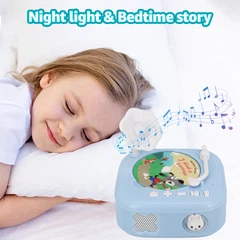
A dim bedroom scene highlights light level, button feel and low-volume clarity. Buyers should test the finished player at realistic bedside distance instead of judging sound from a bare speaker on a bench.
Test 8: Measure durability of the media
Cards can bend or delaminate, QR printing can scratch or fade, and buttons can wear or collect debris. Figures introduce attachment and drop considerations. Use the intended materials and decoration, not generic samples.
After conditioning, repeat recognition and compare against the initial result. Cosmetic survival is not enough if the trigger becomes unreliable.
Record the result: for measure durability of the media, note the sample version, environment, number of attempts, failures and recovery steps. Repeat the test after one controlled change and compare the evidence. This method separates a stable interface decision from a result that only worked once under ideal engineering conditions. Add the finding to the comparison table, name any unresolved dependency, and require a fresh run when the token, print, enclosure, firmware, audio package or service configuration changes.
Independent play needs predictable feedback
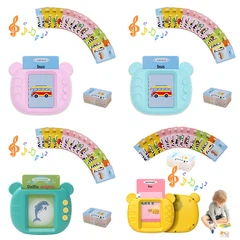
The learning scene shows why recognition speed, clear prompts and recoverable errors matter. A child should know whether a card was accepted without opening an app or asking an adult to reset the unit.

Test 9: Calculate the support burden
Create likely failure tickets: unknown token, dead link, stuck button, missing content and changed account. Ask how support will identify the cause and restore playback.
Interfaces with a magical first impression can still create expensive support if errors are invisible. Diagnostic feedback should be part of the product specification.
Record the result: for calculate the support burden, note the sample version, environment, number of attempts, failures and recovery steps. Repeat the test after one controlled change and compare the evidence. This method separates a stable interface decision from a result that only worked once under ideal engineering conditions. Add the finding to the comparison table, name any unresolved dependency, and require a fresh run when the token, print, enclosure, firmware, audio package or service configuration changes.

Gift appeal cannot hide setup friction
A strong gift presentation only works when the first-use sequence is short and reliable. Sample reviews should include unpacking, initial content access, charging and the first NFC tap with no engineer present.
Test 10: Compare retail explanation
Give a sealed pack to someone who has not seen the project. Observe whether they understand what is included, how to start and whether extra media is required.
NFC, QR and buttons need different packaging language. A good pack prevents mistaken expectations about phones, connectivity and catalog access.
Record the result: for compare retail explanation, note the sample version, environment, number of attempts, failures and recovery steps. Repeat the test after one controlled change and compare the evidence. This method separates a stable interface decision from a result that only worked once under ideal engineering conditions. Add the finding to the comparison table, name any unresolved dependency, and require a fresh run when the token, print, enclosure, firmware, audio package or service configuration changes.
Packaging is part of the system
The final pack must protect the figure, reader area, controls and accessories while explaining content accurately. Confirm insert fit and post-transit playback before approving mass-production packaging.

Test 11: Run a cost-of-change exercise
Change one story title, one artwork file and one language after the prototype is built. Track every affected token, database record, printed code, firmware menu and instruction.
This exercise exposes where late editorial changes become hardware or inventory problems. It is especially useful for publishers with frequent catalog updates.
Record the result: for run a cost-of-change exercise, note the sample version, environment, number of attempts, failures and recovery steps. Repeat the test after one controlled change and compare the evidence. This method separates a stable interface decision from a result that only worked once under ideal engineering conditions. Add the finding to the comparison table, name any unresolved dependency, and require a fresh run when the token, print, enclosure, firmware, audio package or service configuration changes.
Test 12: Select by product promise
Choose NFC when tangible media and quick recognition support the experience; choose QR when phone access and low-cost printed distribution are acceptable; choose buttons when a contained library and no loose media matter most.
Hybrid designs are valid only when each interface has a clear role. Adding all three without a hierarchy usually increases confusion and validation work.
Record the result: for select by product promise, note the sample version, environment, number of attempts, failures and recovery steps. Repeat the test after one controlled change and compare the evidence. This method separates a stable interface decision from a result that only worked once under ideal engineering conditions. Add the finding to the comparison table, name any unresolved dependency, and require a fresh run when the token, print, enclosure, firmware, audio package or service configuration changes.
Turn interface preference into measurable evidence
A strong kids audio player interface is the one that fulfills the promised routine with the fewest hidden dependencies. Run the twelve tests on production-intent samples, record results and let the evidence guide the architecture.
For related engineering context, see our NFC interactive toy OEM/ODM guide. Joy shares visual product-development updates for buyers reviewing new concepts and samples.
FAQ
Does an NFC card store the complete audio file?
Not necessarily. It often provides an identifier that maps to local or connected content.
Can a QR product be called screen-free?
Only with careful wording, because scanning typically requires a phone or camera device.
Which option works best offline?
It depends on storage and setup. Verify the complete architecture under disconnected conditions.
Should we combine NFC, QR and buttons?
Only when each has a distinct user purpose and the added complexity is justified.
Use these twelve checks to compare interface prototypes before approving tooling, content operations or retail claims. Contact Joy on WhatsApp: +86 13691793052 or E-mail: xdt05@dtdianzi.com.