


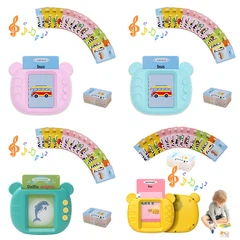










NFC Story Machine, RFID Children's Story Machine, Smart Early Education Device, Interactive Learning, Children's Technology Product
In today's rapidly evolving landscape of smart early childhood education products, NFC (Near Field Communication) and RFID (Radio Frequency Identification) technologies are quietly revolutionizing the user experience of traditional story machines. These wireless communication technologies represent more than just incremental feature upgrades; they serve as bridges connecting the physical and digital worlds, offering children more intuitive and engaging ways to learn and interact. This article will delve into the applications of these two technologies in children's story machines and explore how they enhance the product's educational value and user experience.
Demystifying NFC and RFID Technologies: Simple Yet Powerful Interaction Methods
NFC Technology: Intelligent Short-Range Interaction
NFC is a short-range, high-frequency wireless communication technology that enables contactless point-to-point data transfer between electronic devices. In children's story machines, this technology has brought about revolutionary changes in interaction:
Touch-and-Go Experience: A child simply needs to gently bring an NFC card close to the story machine's sensing area to trigger corresponding content, requiring no complex operations.
Secure Communication Range: The working distance is typically within 10 centimeters, effectively preventing accidental triggers and interference.
Low-Power Design: Ideal for portable children's devices, extending battery life.


RFID Technology: A Flexible Identification Solution
RFID technology uses radio waves to identify specific targets and read/write related data, finding wide application in children's products:
Support for Diverse Tags: Compatible with various tag forms, including cards, dolls, stickers, etc.
Longer Sensing Distances: Some RFID systems can achieve reading distances of several meters, suitable for a broader range of application scenarios.
Cost Advantage: RFID tags are relatively inexpensive, ideal for large-scale integration.


