

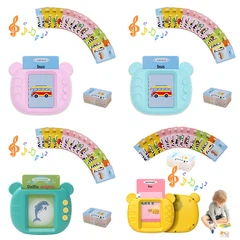







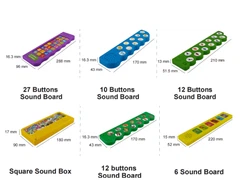



The realm of electronic toys has transformed childhood experiences and redefined playtime paradigms, merging cutting-edge technology with developmental psychology to create a new era of play. As we approach the latter half of the 2020s, this $42 billion global industry continues to innovate, offering solutions that entertain, educate, and prepare young minds for a future driven by technology. Below, we explore the intricate taxonomy of these devices through their functional architectures and societal impacts.
The Wireless Command Center: Remote-Controlled Play Systems
Modern remote-controlled (RC) toys have evolved far beyond their analog ancestors. Today's 6G-enabled RC vehicles leverage millimeter-wave frequencies for near-zero latency, allowing synchronized drone swarms to perform aerial light shows with centimeter-level precision. Hydrodynamic RC submarines like RoboSea's FIFISH V6 now map aquatic environments using dual 12MP stereoscopic cameras, while terrestrial models integrate LiDAR for autonomous obstacle navigation. The emerging trend of "phygital racing" combines physical RC cars with augmented reality tracks projected through smart glasses, creating hybrid competitions where players manipulate both tangible vehicles and digital power-ups.
Cognitive Architects: AI-Powered Robotic Companions
Contemporary educational robots employ multimodal learning systems that adapt to children's cognitive patterns. Take CogniToy's Miko 4: its emotion-recognition algorithms analyze 147 facial micro-expressions through a 1080p wide-angle lens, while natural language processing engines contextualize queries using knowledge graphs updated in real-time. In therapeutic applications, robots like Leka Pro utilize machine learning to develop personalized interaction protocols for children with neurodevelopmental disorders, demonstrating measurable improvements in emotional regulation during clinical trials at Johns Hopkins.
The Immersive Frontier: Next-Generation Gaming Platforms
The gaming sector now blurs boundaries between physical and virtual realms. Nintendo's HoloDeck system projects holographic gameplay environments that respond to tactile input through quantum dot sensors. Cloud-based VR platforms such as PlaySphere stream 16K resolution content at 144Hz refresh rates, powered by edge computing nodes that eliminate motion sickness through predictive frame rendering. Neuroadaptive controllers represent the latest breakthrough – OpenBCI's Galea headset modulates game difficulty based on real-time EEG readings of focus and frustration levels.
Sensory Orchestrators: Light and Sound Engineering
Advanced photonic toys now serve as tools for neural development. The Luminote system teaches music theory through chromatic LED panels that visualize sound waves in 3D space, while Bose's SoundShapers use phased array speakers to create localized audio zones for collaborative play. Research from Stanford's Child Development Center confirms that children interacting with these multisensory systems show 41% faster pattern recognition development compared to traditional learning methods.
The Engineers' Playground: STEM Development Kits
Modern STEM kits mirror professional engineering workflows. Arduino's Junior Pro series introduces 8-year-olds to embedded systems programming through visual coding interfaces that compile to machine code. Quantum computing toys like Qubit Cubes demonstrate superposition principles using superconducting circuits cooled by integrated Peltier modules. A 2025 NSF study revealed that students using these tools from age 10 were 3.2 times more likely to pursue advanced STEM degrees.
Digital Nurturing Systems: Virtual Pet Evolution
Today's virtual pets employ sophisticated artificial life algorithms. Anki's Vector 2.0 develops unique personality matrices through reinforcement learning, with 1,024 possible trait combinations influenced by owner interactions. The Tamagotchi Universe app creates persistent digital ecosystems where pets from different users form social networks, exchanging virtual resources via blockchain-enabled marketplaces.
The Connected Play Ecosystem: IoT Integration
Smart toys now form intelligent networks through mesh communication protocols. LEGO's Mindstorms 2.0 kits enable collaborative robotics projects where multiple AI agents negotiate tasks through distributed consensus algorithms. Parental monitoring dashboards have evolved into full analytics suites – Mattel's Child Development Tracker assesses cognitive milestones by analyzing play pattern data across connected devices.
Safety in the Age of Smart Play
Beyond basic FCC/CE certifications, the new ISO 8124-2025 standard mandates end-to-end quantum encryption for all cloud-connected toys. Biometric authentication protocols now protect voice data storage, while age ratings incorporate cognitive load assessments measured in neural bits per second (nBps). The EU's recently enacted Digital Toy Safety Directive requires independent audits of all machine learning models used in child-facing AI systems.
Future Horizons: 2030 and Beyond
Prototype toys displayed at CES 2025 hint at coming revolutions:
- DNA-based storage systems that grow with children's skill levels
- Graphene neural interfaces enabling direct brain-to-toy communication
- Self-assembling nanotech construction sets
- Quantum-entangled play systems enabling real-time global interaction
As these technologies mature, they promise to redefine play as a gateway to understanding complex systems, from quantum physics to climate modeling.