Kids Story Speaker Buying Guide Multi Scenario Design Evolution
📊 Market Overview for Kids Audio Product Sourcing
The global market for screen-free children's learning tools has expanded steadily over the past three years. Industry data shows that wholesale screen free audio device orders grew by 28 percent in 2025, as more retailers and brand owners add this category to their product lines. This growth is driven by rising parent concern about screen time, as well as wider use of audio tools in early education settings.
This kids story speaker buying guide combines design evolution analysis, real-world scenario adaptation and custom solution options to help buyers select the right products for their target market. Instead of focusing only on price or basic functions, it covers the full range of factors that affect long-term sales performance and customer satisfaction.

🆚 Three Generations of Kids Audio Devices: Full Comparison
Understanding children speaker design evolution helps buyers pick products that match current market preferences. Each generation of product was built to solve specific user pain points, and each fits different business needs. The table below compares core features, use cases and business value across three product generations:
| Product Generation | Core Design Feature | Supported Scenarios | Key Selling Point for Buyers | Target Customer Group |
|---|---|---|---|---|
| 1st Gen (2015–2019) | Desktop box shape, fixed placement | Bedroom use only | Low unit cost | Local neighborhood toy stores |
| 2nd Gen (2020–2023) | Compact round body, no carry handle | Indoor home use | Small package size for shipping | Basic online retail sellers |
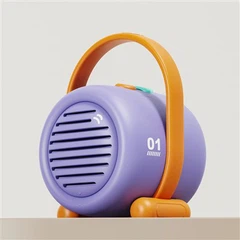
| 3rd Gen (2024–2026) | Integrated carry handle, multi-function buttons | Home, travel, daycare centers | High daily usage rate and broad audience | Brand owners, gift suppliers, education clients |
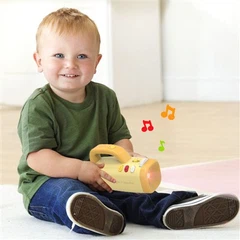
The third-generation multi-scenario kids audio player has become the fastest-growing segment for bulk buyers. Unlike older models that only work in one room, these portable devices fit into many parts of a child's daily routine. This wider usability means longer product life for end users, and higher repeat purchase rates for businesses that sell them.

🎯 Scenario-Based Selection Standards for Bulk Purchases
Home & Bedtime Daily Use
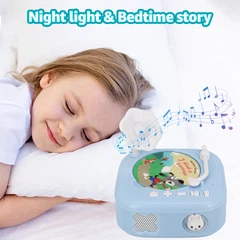
For home-focused product lines, buyers should prioritize sound safety and simple operation. Products for home use need built-in volume limits to protect young hearing, and soft, tuned audio quality that works for both story time and music play. Sleep timer functions are also a high-demand feature for bedtime routines, as they remove the need for parents to return to the room to turn off the device.
Travel & Outdoor Activities
Travel-focused product lines require strong battery performance and shock-resistant build quality. Buyers should look for devices with at least 8 hours of continuous playtime, so they work for full day trips without charging. A solid carry handle and thick, drop-resistant shell are also necessary, as travel devices are more likely to be dropped or bumped during use. Lightweight design adds extra value for families that pack the device in bags for trips.
Daycare & Group Education Settings
Institutional buyers need devices that work for group activities and heavy daily use. Products for daycare centers need simple one-button controls so teachers can switch between content quickly during class time. Bluetooth connectivity is another important feature, as it lets teachers stream custom lesson content from their own devices. Surfaces should be smooth and easy to wipe clean, and all edges must be fully rounded for child safety.

🔧 2026 Design Trends to Evaluate Before Placing Orders
Simplified Multi-Function Button Layout
Modern toddler audio products use fewer buttons with combined short-press and long-press functions. Older devices had separate buttons for every action, which confused young children and created more parts that could break. Newer designs use 3 to 4 multi-function buttons instead of 8 or more separate controls. For buyers, this design trend means lower return rates and fewer customer complaints about complicated operation.
Ergonomic Integrated Carry Structure
An integrated carry handle is no longer an optional add-on but a core design standard for portable models. Older products attached handles as separate parts, which could snap off during active play. Current designs mold the handle directly into the main body as one single piece, which makes it much stronger. Palm-sized dimensions and light weight also follow ergonomic principles for small children's hands.

Unified Type-C Charging & Low-Power Chip Upgrade
Standardized charging ports reduce consumer confusion and after-sales questions greatly. In past years, different brands used different charging cable types, which was a common source of frustration for buyers. The industry has now widely adopted Type-C ports as the universal standard. Low-power chip designs also extend battery life noticeably, which is a strong selling point for families that travel often.
🤝 Custom Options for Branded Product Lines
A custom toddler bluetooth speaker allows brands to build a unique product identity that stands out from generic listings. Basic customization includes custom shell colors, printed brand logos and custom packaging design. For brands with larger order volumes, deeper customization options are available, such as modified button functions, exclusive preloaded audio content and adjusted maximum volume levels.
Content customization is especially valuable for education-focused brands and daycare program providers. Brands can load their own story series, language lessons or music collections directly into the device, creating a complete product and content package. This level of customization builds stronger brand loyalty and supports higher price points in the market.

📋 Simple Steps to Start Your Wholesale Project
Working with an experienced manufacturer makes the wholesale ordering process smooth and predictable. First, share your product requirements, target market and expected order quantity with the manufacturing team. You will then receive a detailed quotation and product recommendation based on your needs. Physical samples can be produced for testing before you confirm mass production.
After sample approval, the factory begins mass production with regular quality checks at every production stage. Typical production lead time is 30 to 45 days depending on order size and customization level. All finished units go through full function and safety testing before packing and shipping.
📩 Get Your Free Project Quotation
If you are looking to source high-quality portable story speakers for your business, our team can provide professional OEM and ODM support with strict quality control. We offer flexible order terms, fast sample production and full customization options to match your brand needs.
You can reach our team directly for a free consultation and detailed price quote:
Email: xdt04@dtdianzi.com
WhatsApp: +86 136 0263 5993