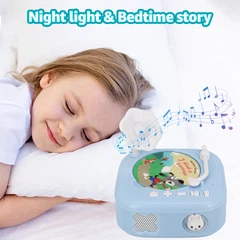
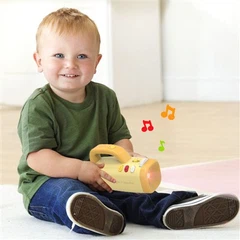
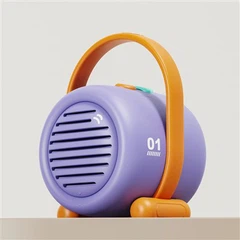
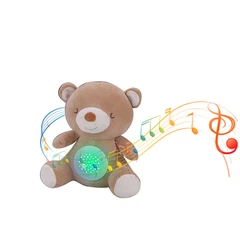
Kids Story Projector Buying Guide Key Factors for Toddlers
With the growing variety of screen free toddler toys on the global market, parents and business buyers often struggle to distinguish high-quality products from low-grade alternatives. A poorly chosen kids story projector can carry hidden risks to eye health and safety, while a well-selected model supports toddler screen time reduction, early learning and a healthy bedtime routine for kids. This guide breaks down three core evaluation dimensions, includes side-by-side product comparisons, and lists common mistakes to help buyers make informed, confident choices.
Why Picking the Right Kids Story Projector Matters 📋
As demand for interactive early learning toys rises, the market fills with products that vary widely in safety, durability and practical value. Many buyers make decisions based only on appearance or price, without checking core performance indicators. For toddlers in critical stages of visual and cognitive development, low-quality projection products can cause eye strain, disrupt sleep patterns, or even expose children to harmful materials. A reliable bedtime story projector, by contrast, serves as a long-term useful tool for daily play, learning and bedtime soothing. For business buyers, selecting products that meet strict safety and quality standards also reduces return rates and builds long-term customer trust.

Core Factor 1: Eye Safety Performance Comparison 👁️
Eye safety is the non-negotiable top priority when selecting any visual product for young children, whose visual systems remain in rapid development. Different projection products use very different light emission technologies, which create vastly different levels of eye strain and sleep impact. The table below compares three common types of children's visual products across key eye safety and performance indicators:
Comparison of 3 Common Children's Visual Products
| Evaluation Criteria | Basic Tablet Devices | Low-Cost Slide Projectors | High-Quality Kids Story Projectors |
|---|---|---|---|
| Light Emission Type | Direct high-energy blue light | Weak direct white light | Soft diffuse reflected light |
| Eye Safety Grade | Low | Medium | High |
| Melatonin Suppression | Significant | Moderate | Minimal |
| Brightness Adjustability | Limited | None | Full range adjustment |
| Suitable for Bedtime Use | No | Not recommended | Yes |
Key Eye Safety Features to Confirm
When evaluating any kids story projector, look for these core features to guarantee eye safety:
✅ Diffuse reflection imaging that projects light onto walls or ceilings instead of shining directly into eyes
✅ Stepless or multi-level brightness adjustment to match different ambient light conditions
✅ No visible flickering or strobing effects that can cause eye fatigue
⚠️ Avoid products with overly bright default settings or unfiltered blue light emission, especially if the product will be used as a bedtime story projector to support a healthy bedtime routine for kids.

Core Factor 2: Material Safety and Durability Standards 🧱
Children's toys face regular handling by small hands, accidental drops, and occasional contact with mouths, so material quality directly affects both safety and service life. Low-quality plastic products may contain harmful substances like BPA, or have thin, fragile casings that break easily and create sharp edge risks. High-quality models follow strict global toy safety standards for both materials and structural design.
Core Material and Durability Checks
Use this list to verify product quality before purchasing:
✅ Shell made of food-contact grade, BPA-free ABS material that meets global toy safety standards
✅ Soft, non-slip silicone handle that is easy for small hands to grip and provides drop protection
✅ Fully rounded edge design with no sharp corners or small detachable parts
✅ Shock-resistant structural design that withstands accidental drops from toddler height
⚠️ Steer clear of products with strong chemical plastic odors, thin flexible casings, or rough unpolished edges, as these typically indicate low production standards.
For business buyers, products with higher material and durability standards have 15-20% lower return rates and higher customer satisfaction, making them a more cost-effective long-term choice despite slightly higher upfront costs.

Core Factor 3: Content Practicality and Expandability 📚
The content system of a kids story projector determines how long the product remains useful as a child grows, and how well it fits different family needs. Many cheap projection toys come with fixed, limited content that children outgrow within a few months, turning the product into a waste of money. High-quality models offer expandable content systems that adapt to different age stages and usage scenarios.
Key Content Features to Evaluate
✅ Audio-visual synchronized playback that matches narration to projected images for better engagement and comprehension
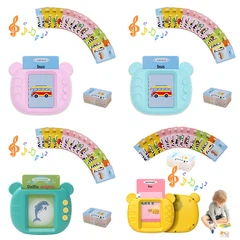
✅ Replaceable story card sets covering multiple themes: fairy tales, animal cognition, basic numbers, lullabies and more
✅ Age-appropriate content design that aligns with toddler cognitive development stages
✅ Adjustable volume levels with maximum volume limits to protect children's hearing
✅ Optional multi-language content support for global markets or bilingual families
Products with expandable content systems have 2-3 times longer effective service life than fixed-content models, delivering much better value for both family buyers and business customers.

Common Buying Mistakes to Avoid ⚠️
Many first-time buyers fall for common marketing traps that lead to disappointing, unsafe or low-value purchases. Avoid these most frequent mistakes when shopping for a kids story projector:
*Choosing only by lowest price: The cheapest products almost always cut corners on material safety, eye protection and durability, leading to higher long-term costs.
*Ignoring official safety certifications: Valid CE, FCC, RoHS and UKCA certifications are basic proof of product safety, not optional marketing add-ons.
*Overlooking content expandability: Fixed-content products quickly become useless as children develop, while expandable models grow with the child.
*Neglecting portability: Lightweight, handheld designs work far better for travel, multi-room use and independent operation by children.

Final Quick Buying Checklist ✅
Use this simple checklist to quickly evaluate any kids story projector before buying:
✅ Diffuse reflection, eye-safe projection technology
✅ BPA-free, food-grade ABS material construction
✅ Replaceable, expandable story card system
✅ Valid global toy safety certifications
✅ Adjustable brightness and focus settings
✅ Shock-resistant, kid-friendly design
A high-quality kids story projector is a versatile tool that supports toddler screen time reduction, early cognitive development and a healthy bedtime routine for kids. By focusing on the three core dimensions covered in this guide and avoiding common mistakes, buyers can select products that deliver long-term value and reliable safety.

To explore our full line of safety-certified kids story projectors that meet all the standards listed in this guide, visit our official website at www.kidsoundbook.com. For business inquiries, detailed product specifications or custom order requests, contact our team via email at xdt04@dtdianzi.com or WhatsApp at +86 136 0263 5993.