

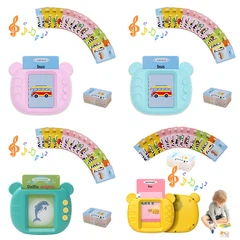
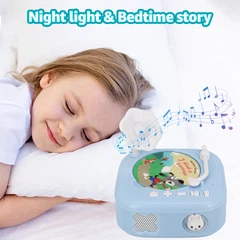
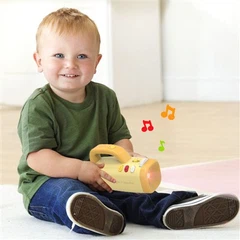
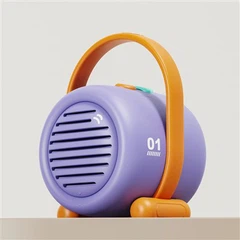


Kid Drawing Talking Flash Card-A – A Drawing Voice That Teaches, Inside a Body Built to Be Handled Roughly
Details: Most drawing toys assume a calm child at a tidy table. This one is designed for the other child – the one who draws on the floor, carries the board by one corner and presses far harder than the picture requires. The Kid Drawing Talking Flash Card-A combines two things that rarely sit in the same product: a guided drawing voice that talks a child through simple pictures step by step, and a 171 × 120 × 25 mm body built as a single rigid slab with a recessed LCD surface. 50 cards define the drawing and vocabulary content, a 36 mm driver carries the narration, 16 MB of memory holds the audio and a 200 mAh cell recharges over USB-C. Four buttons cover repeat, volume, lock and clear. Unit weight 570 g. Minimum order: 1,000 pcs.
Why This One Is Built as a Slab
Ask any service desk what actually fails on a children's electronic toy and the answer is rarely the electronics. It is the moving part: the hinge that no longer locks, the lid that snapped, the pen that stopped clipping, the flap that came away. A child does not open and close a toy a few times a day; they open and close it sixty times, then sit on it. Every mechanism that moves is a countdown, and the count is shorter than anyone expects.
That is the reasoning behind the body of this product. There is no hinge, no lid, no folding stand and no removable cover – just a single rigid shell with everything enclosed inside it. The 25 mm depth holds the panel, the board, the speaker and the cell in one stack, and the whole assembly is held together by fasteners that a child cannot reach. Fewer moving parts is not an aesthetic preference here; it is the reliability specification.
The writing surface is recessed into the front face rather than laid flat over it. That rim of plastic does two jobs. It sits proud of the panel by a small margin, so a face-down drop lands on the shell instead of the glass, and it acts as a physical guide that keeps a stylus from wandering off the edge of the drawing area. The surface itself responds to pressure, needs no ink and never has to be replaced – which removes the most commonly broken component of every drawing toy that came before it.
Weight was chosen the same way. At 570 g the device stays where it is put while a small hand presses down on it, which is the difference between drawing and chasing a board across a table. At 171 × 120 mm it is a hand-sized object rather than a lap-sized one, so a child can hold it on their knees in a car or balance it on a cushion without the whole thing tipping. The proportions were set by how the product is held, not by how it looks on a shelf.
Even the control surface follows the same logic. Four buttons do four single jobs – repeat, volume, lock and clear – and nothing is hidden behind a long press or a combination. A child who has to discover a secret gesture will press every button in frustration until something gives. A child who can see exactly what each button does presses it once and moves on, and the switch membrane underneath never sees the abuse that a guessing child would deliver.
The card slot is the one place where wear is unavoidable, since 50 cards can go in and out dozens of times in an afternoon. It is also the part we specify hardest: the mouth is shaped to accept a card in one obvious orientation, so a child is never forcing an edge into it, and that single design choice does more for service life than any material upgrade could. A slot that cannot be mis-loaded is a slot that does not get damaged.
There is a softer argument running alongside the mechanical one. The guided drawing voice keeps a child at the table longer, and a child who is absorbed in following a voice through a drawing is not bending, dropping or investigating the product. Engagement and durability solve the same problem from two directions, which is why this device carries both a talking card slot and a step-by-step drawing coach in the same shell.
Kid Drawing Talking Flash Card-A – Model FCB 002 Data Sheet
| Kid Drawing Talking Flash Card-A – Specification Summary (FCB 002) | |
| Item | Kid Drawing Talking Flash Card-A / FCB 002 |
| How It Plays | Seat a card, follow the spoken drawing guidance step by step, then clear the surface and start again |
| Card Library | 50 cards; other languages and card sets fully customisable |
| Drawing Guidance | Simple step-by-step drawing audio so a child can complete a picture without an adult |
| Writing Surface | LCD drawing board for free writing and copying; reusable, no ink and no paper |
| Controls | Four function buttons – repeat, volume, lock & clear |
| Speaker | 36 mm driver, tuned for spoken guidance clarity |
| Memory | 16 MB on-board, holding the audio for the card set |
| Battery & Charging | 200 mAh rechargeable lithium cell, USB-C charging |
| Languages | English, English–Chinese, English–Spanish, English–French, English–Arabic, English–German, English–Japanese, English–Korean; further languages on request |
| Customisation | Cards, illustrations, drawing steps and languages all replaceable per order |
| Unit Size | 171 × 120 × 25 mm |
| Gift Box | 207 × 148 × 62 mm |
| Unit Weight | 570 g |
| Carton Configuration | 30 pcs per carton / 43.5 × 33.5 × 47 cm |
| Carton Weight | 18.1 kg |
| Compliance | CE, CPC, UKCA, FCC, RoHS (ASTM F963 / EN71 testing available on request) |
| Order Quantity | 1,000 pieces (trial orders negotiable) |
Buyers who want the full picture get it in one send: unit pricing tiers, sample and trial terms, the card and illustration templates, the drawing-step script format and the 3D files. Route your query through the enquiry form or directly to the export desk and the package reaches you inside one working day. Full range here: https://www.kidsoundbook.com/products
Eight Ways a Child Uses the Drawing Voice
Details: The shell is identical in every production run; the 50-card set behind it is rebuilt for each order. Drawing steps, illustration style, word list and narration all belong to the buyer, and the same hardware supports eight ways of working.
Draw Along With the Voice
The defining activity. The card goes in, the voice walks the child through the picture in short steps – start with a circle, add two ears, draw the line down – and the child follows on the panel. Nobody has to sit beside them, and the picture comes out recognisable on the first attempt.
Copy the Card Picture
Quieter than the guided mode: the child looks at the card and reproduces it freehand. The same 50 pictures then become a difficulty ladder, from a shape a three-year-old can manage to a scene that takes real concentration.
Hear the Word, Draw the Thing
Vocabulary and drawing in one loop. The card names the object, the child draws it from memory, and the repeat button lets them hear it as many times as they need. Drawing a word is a far stronger memory task than pointing at it, and it works for pre-writers who cannot yet spell.
Line, Curve and Shape Practice
Before a child can draw an animal they need control of a line. The panel is used for strokes, loops, spirals and simple geometry – the kind of drill that normally consumes pages of paper and that a reusable surface makes free.
Hold a Drawing Under the Lock
The lock button freezes the surface so a finished picture survives the trip from table to fridge door. Unlock and it clears in a press. It is a small function, but it is the one that decides whether a child feels their work was respected.
Free Drawing With Nothing Loaded
The board does not need a card to work. Switched off, it is simply a reusable sketch surface – which is what earns it a place in a car, on a plane or in a restaurant where nobody is in the mood for structured practice.

Group Drawing Sessions
A nursery or an art club can run one voice for a whole table. The device speaks the steps, every child works on their own board or sheet, and the adult moves between them instead of repeating instructions twenty times. It turns a single unit into a teaching aid rather than a personal toy.
Your Own Drawing Curriculum
Every order rebuilds the set: your pictures, your step sequences, your narrator, your language. Publishers turn a character into a drawing course, schools load a term of art lessons, and brands commission an exclusive set so the same library never appears under a competitor's label.
Six Buyers Who Order This Tablet
Because this product sits between two categories – art material and talking toy – it can be placed in more than one aisle, and the arguments that work in each one are different.
When a Drawing Coach Sells Best
| Seasonal & Occasion Calendar – Kid Drawing Talking Flash Card-A | ||
| Season / Occasion | Who It Appeals To | Pack & Message to Lead With |
| Back to school | Parents, schools, art teachers | Step-by-step drawing set, classroom bundle pricing |
| Summer holidays | Parents, travel retail, holiday venues | Carry pack, offline use, no paper to pack |
| Christmas & New Year | Parents, grandparents, gift retail | Gift-box edition, keepsake card set, screen-free message |
| Birthday (year-round) | Parents, party retail | Single-unit gift box with a name-personalised card sleeve |
| Easter & spring holidays | Art and craft retail | Animal drawing set, window display with live demo |
| Ramadan & Eid (MENA) | Regional retail | Localised-language set, family gift packaging |
| Grandparents' & family days | Extended family | Classic picture set for drawing together across generations |
Two placement rules matter more than any poster. First, demonstrate the guided mode, not the free-draw mode – the voice is the part that cannot be copied by a cheaper sketch pad, and it is the part a customer must hear to value. Second, keep a second card set beside the unit, because a buyer who sees that the set is replaceable is buying a course rather than a gadget.
The Commercial Case – Fewer Returns, More Repeat Orders
For a distributor, the interesting number on this product is not the unit price. It is what happens after the sale, and there are four reasons it tends to behave well.
| Kid Drawing Talking Flash Card-A vs. Common Alternatives | ||
| Kid Drawing Talking Flash Card-A (FCB 002) | Paper sketch pad with a how-to-draw book / drawing app on a tablet | |
| Teaches the steps | Spoken guidance, one step at a time | Printed pages, or an adult reading them aloud |
| Attempts per purchase | Unlimited – one press clears the surface | One per page, or unlimited on a lit screen |
| Consumables | None | Paper, pencils and a new pad every few weeks |
| Screen and blue light | Reflective LCD, no backlight | Backlit screen |
| Moving parts that can break | None – one rigid shell | Spiral binding, clips and hinges on the pad |
| Needs internet or an account | No | Usually yes for the app version |
| Work can be kept | Yes – the lock button holds the picture | Yes, on paper; no, on an app |
The claims we make are deliberately narrow. This is a drawing trainer with a spoken step-by-step guide across a 50-card set, paired with a reusable LCD surface that takes free writing and copying, four single-function buttons, a 36 mm speaker and a 200 mAh USB-C cell. It does not claim to make anyone an artist. It claims to remove the two things that stop children drawing – not knowing where to start, and running out of paper.
Inside the Build – Five Wear Points We Design Against
Durability in a children's product is not one decision, it is a short list of predictable failure points. These are the five this design answers, and each one can be checked on a sample.
The card slot
Fifty cards go in and out for years, often at speed and often by a child who is not looking at the opening. The slot mouth is shaped so the card can only enter in one orientation, which discourages forcing. It is the hardest-worked interface on the device, and it is specified accordingly.
The writing panel
The surface is recessed behind a raised rim, so a face-down impact loads the shell rather than the panel. Because the surface works on pressure rather than ink, there is no stylus tip to wear out, nothing to refill and no cover to lose – three of the most common complaints in the category, designed out rather than serviced.
The button set
Four buttons, four functions, no long presses and no combinations. Every function a child actually needs mid-session is visible on the face, so nobody has to experiment. A membrane that is pressed deliberately lasts far longer than one that is pressed in frustration.
The cell and the enclosure
A 200 mAh cell keeps the body thin while covering the short, repeated sessions this product is used for, and it charges over USB-C. Battery and board sit inside the same rigid shell, with no service flap for a child to open and nothing to remove.
The base and the edges
At 570 g the unit resists sliding when a hand presses down, and every external edge is rounded rather than squared. The result is a device a child can carry by a corner, drop onto a floor and pick up again without either the product or the floor suffering.
The card itself
The 50 cards belong to the durability story, not only to the content plan. A card is gripped at the corner, flexed slightly, pushed into the slot and pushed back into the stack, over and over, by a child who is not being careful with it. Board weight, edge finish and surface treatment are therefore specified for handling before they are specified for print. A set that still looks presentable after a year of that treatment is what keeps the product in use, and continued use is what sells the next set.
Buyer Questions – Answered Straight
Q1: How is spoken drawing guidance different from a drawing app?
An app shows you a picture and leaves you to work out how it was made; this walks a child through the construction of the drawing in the order a teacher would – shape first, then features, then detail. The child is listening and drawing at the same time, which is a genuinely different task from watching a demonstration. It also runs without a network, an account or a lit screen, so it works in the places a child actually draws.
Q2: How does it hold up to everyday use by a young child?
The design targets the failures we see most often in the category. There is no hinge, lid, stand or removable cover, so nothing folds and nothing snaps. The panel is recessed behind a rim instead of sitting flush, so a face-down drop does not land on the writing surface. The buttons are single-function and visible, which stops the frustrated pressing that wears out switches. And at 570 g the unit stays in place on a table instead of being chased around it.
Q3: Can we replace the 50 cards, the illustrations and the narration?
All three are part of the order specification rather than fixed features. Send finished audio and illustrations and we check them for print quality and playback compatibility, or hand the studio a brief and we produce the drawing steps, the artwork and the voice for your market. You decide how many pictures the set contains, how detailed the steps are and which narrator delivers them.
Q4: What should buyers expect from the 200 mAh battery?
It suits the rhythm of the product: a drawing session runs for a few minutes at a time, then the device is set down, often several times a day. The cell is charged over USB-C from any standard adapter, and because the panel itself draws no power – it works on pressure, not on electronics – the battery is only feeding the audio. That keeps the body thin and the charging routine simple.
Q5: Which languages are available, and who records the guidance?
The standard build covers English, English–Chinese, English–Spanish, English–French, English–Arabic, English–German, English–Japanese and English–Korean, and other languages are added as clients ask for them. Translation, cultural review and voice casting are handled in the studio, and both dialect branches can be produced where a market needs them. Narration is recorded by a native speaker so the drawing instructions sound natural to the child hearing them.
Q6: What size of first order makes sense?
A full run starts at 1,000 pieces. For a first test, batches from 200 to 500 units are available at a higher unit cost, which is credited back when the full order is placed. Samples of one to five units leave the plant within five working days of payment and the sample charge is refunded against the bulk order. A short first run is the cheapest way to find out how a market responds.
Q7: Can the same unit serve different countries?
Yes. The hardware does not change between markets – only the card set and the recorded audio do. That lets a distributor carry one device line with several language sets behind it, which keeps inventory simple while the catalogue addresses more than one language community. It also means a market can be tested cheaply, since entering it requires a new set rather than a new product.
Q8: Where does production happen, and can we visit?
Design, card printing, panel assembly, PCB work, speaker tuning, moulding, assembly, testing and packing all take place at our own site in Shenzhen. Buyers are welcome to audit the plant in person or follow a production run over a live video call. Everything is produced in-house rather than subcontracted, and each unit can be traced from its incoming components through to the sealed export carton.
The Factory Behind the Drawing Tablet
for children
Xinditai Electronics has been manufacturing children's audio products in Shenzhen since 2010, and this drawing tablet is one of our own designs. The bulk of our year goes into OEM and ODM programmes for children's audio and interactive products – talking cards, drawing and writing tablets, sound books, story players, projection toys and musical devices – for customers in Europe, the Americas, the Middle East and Asia.
The plant covers 3,000 square metres and keeps nearly everything on site: panel and card work, injection moulding, PCB assembly, acoustic tuning and packing. More than 100 engineers and operators work across those lines to a single standard – Create with heart, ship with pride. Inspection gates sit at each stage rather than only at the end, which is what allows a finished unit to be traced back to the batch of parts it came from.

Compliance & Certificates
Certificates
The certificate set is matched to the destination market and reviewed whenever a standard is revised. Your quotation carries the paperwork that belongs to the batch being quoted, not a copy left over from an earlier shipment.

CE

RoHS

FCC

SEMTA

EMC

ISO