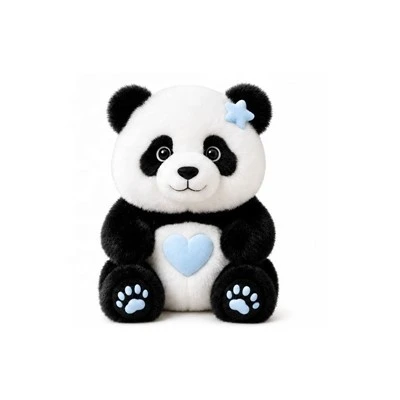
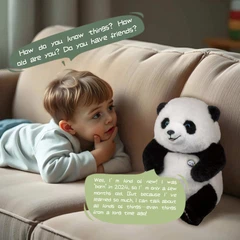
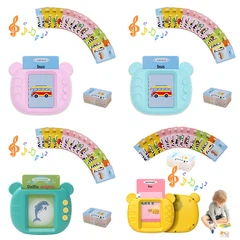
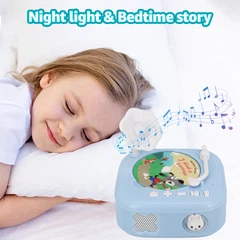

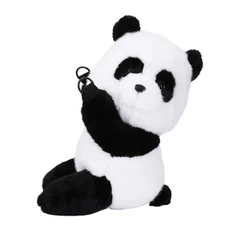

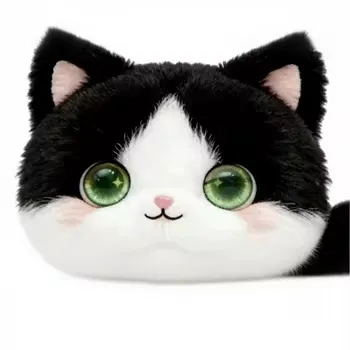
At the recently concluded 52nd Hong Kong Toys & Games Fair, an AI-powered plush creature called RAOO drew industry attention. What makes it special is not its ability to talk, but rather its complete inability to speak. It interacts with you solely through touch, gentle pats, and calls, expressing "emotions" through biomimetic sounds and movements, gradually developing a unique "personality" through long-term companionship.
This may sound like science fiction, but it's becoming our reality. AI emotional toys are evolving at an astonishing pace-from "being able to converse" to "understanding emotions," from "executing commands" to "providing active companionship"-a new "emotional species" is entering our lives.
When Toys Learn to "Read Minds"
Imagine holding a plush toy that not only feels your touch but can also "read" your emotional state. When you're happy, it responds with cheerful sounds; when you're feeling down, it quietly nestles in your arms, offering comfort through gentle movements.
This is no longer fantasy. Xiamen Mai Ming Intelligent Technology Co., Ltd. has developed AI toys that, through proprietary mental algorithm technology, can perceive users' emotional changes and provide genuine "emotional value." Meanwhile, in Shantou's Chenghai District-known as the "Toy Capital"-increasing numbers of companies are integrating large AI models into product development, giving plush toys a "technological core."


From "Being Able to Talk" to "Being Able to Accompany"
The market is hardly short of toys that "can talk." However, industry observers have identified a crucial distinction: "being able to talk" doesn't equal "being able to accompany."
Ruou Technology points out that the core difference in companionship experience stems from more fundamental systemic capabilities: whether the product can continuously update its state through repeated interactions, maintain coherent emotional expression, and gradually develop differentiated personality and behavioral patterns over long-term companionship. Based precisely on this insight, RAOO abandoned voice dialogue functionality, instead modeling the companionship process as an operable state system.
Technology Infused with "Human Touch"
"Early AI products felt very knowledgeable, but lacked a certain 'human touch,'" admits Wu Weiming, General Manager of Xiamen Mai Ming Intelligent Technology Co., Ltd. In his view, the evolution of AI toys extends beyond mere appearance; it lies in being endowed with vivid "personalities" and "character traits."
His team has architected a proprietary mental algorithm layer atop general large language models, systematically portraying character motivations, emotions, and beliefs through tens of thousands of parameters. This approach transcends simple voice imitation or defining characters through a few prompts. In the future, users might continuously "feed" memories and stories about loved ones or idols, enabling AI toys to become "emotional companions" with memory, preferences, and empathy.


Who Is Paying for Emotions?
The consumer base for AI emotional toys is far broader than imagined. Data indicates that children aged 3-12 account for 62% of the market share, primarily for STEM education; the 18-35 "Generation Z" demographic shows a repurchase rate of 45%, driven by a desire for emotional connection; and sales of health-oriented AI toys for the elderly have surged 200% year-on-year, filling companionship gaps.
At a technology product store in Shenzhen, consumer Mr. Yin candidly stated that AI toys serve as "pet substitutes, providing some comfort after work." Another consumer, Chen Shaohui, mentioned that for elderly individuals living alone, "if they had such a 'little friend,' they might transfer their emotions to it, making them happier."
More Than Just Toys
Of course, AI emotional toys are not perfect. Consumer criticisms primarily focus on interactivity-some complain "emotion recognition still needs improvement," while others note "it's just the same few lines; it can't handle deeper conversations at all." High return rates, user retention difficulties, and privacy security concerns are all challenges the industry must confront.
Nevertheless, there's no denying that AI emotional toys are redefining the meaning of "companionship." They are no longer cold machines, nor are they simple "voice assistants." They represent a new kind of existence-they don't speak, yet they understand you best; they don't think, yet they empathize most deeply.