

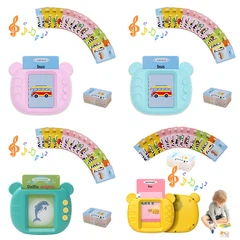
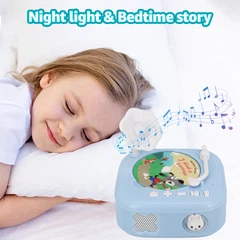





While global tablet sales declined by 12.7% in 2023 (IDC Data), the children's projector market surged by 87% (AVC Research). This dramatic shift reveals growing parental concern about screen time effects:
👁️ 42% of parents list eye protection as primary purchasing motivator (Journal of Pediatrics)
📵 76% of pediatricians now recommend projection over direct screen viewing (AAP Survey)
🧠 Interactive projectors show 34% better learning retention than passive screens (Child Development Institute)

Technology Deep Dive: Beyond Marketing Claims
1. Optical Science Comparison
Tablets/Phones: Direct blue light emission (450-480nm wavelength)
Projectors: Diffused reflection reduces blue light intensity by 60-72% (IEEE Study)
2. Advanced Protection Systems
Industry-leading devices now feature multi-sensor safety arrays:
🚧 Infrared Proximity Detection (3ft/1m auto-dim)
👁️ Pupil Recognition Tech (Detects prolonged staring → sleep mode)
🌗 Adaptive Brightness (Auto-adjusts to room light conditions)
3. Content Quality Matters
WHO's 2023 guidelines emphasize:
Educational content must be age-graded and expert-validated. Premium projectors include:
📚 Common Core-aligned curriculum resources
🎵 Music therapist-approved audio libraries
🎬 Studio partnerships (Disney/Pixar licensed content)
Buying Guide: 5 Technical Criteria
According to IEC 62471 photobiological safety standards:
Lumen Range: 250-400 ANSI lumens (Ideal for low-light environments)
Throw Ratio: 1.2:1 or higher (Large image from short distance)
Content Ecosystem: Harvard Graduate School of Education partnered content
Sensor Accuracy: Dual-axis infrared + optical sensors minimum
Material Safety: FDA-grade silicone body & BPA-free components
Beyond Bedtime: Unexpected Applications
Innovative usage scenarios are emerging:
🏫 Classroom Integration: 2000+ US preschools adopted projectors for group learning
🩺 Therapeutic Use: Johns Hopkins uses customized projectors for vision therapy
🚗 Travel Solution: FAA-certified portable models for in-flight entertainment
Expert Consensus
American Academy of Ophthalmology recommends:
Under 2: No screen time except video-chatting
2-5 years: ≤1hr/day of high-quality programming
Always choose projection over direct screens
Co-viewing enhances learning outcomes (AAO 2024 Guidelines)