




Scientific Standards for Attention Span in 3-Year-Olds
According to the latest guidelines from the American Academy of Pediatrics (AAP):
✅ Completely normal: The attention span of a 3-year-old typically ranges from 3-8 minutes.
✅ Developmental pattern: Increases by about 2-5 minutes per year (reaching around 15 minutes by age 5).
✅ Key indicator: Whether the child can refocus after guidance, rather than the duration of a single session.

Comparative Data:
| Age | Average Attention Span | Normal Range |
|---|---|---|
| 2 yo | 2-4 minutes | 1-6 minutes |
| 3 yo | 5 minutes | 3-8 minutes |
| 4 yo | 8 minutes | 6-12 minutes |
🧠 Three Major Factors Affecting Attention Span
Physiological Development
Immature prefrontal cortex (the brain region responsible for attention control).
Sensory sensitivity period: Easily distracted by new stimuli (an evolutionary protective mechanism).
Toy Suitability Issues
Common mistakes:
• Providing toys beyond the child's current ability (e.g., 50-piece puzzles).
• Open-ended toys lacking clear goals (e.g., unstructured block play).
Environmental Distractions
Research shows: When there are more than 3 toys in the environment, attention span decreases by 40%.
Worst scenario: TV on + phone notifications + people moving around.

5 Scientific Methods to Improve Attention Span
Toy Selection Strategies
Age-appropriate recommendations:
• Large building blocks (e.g., LEGO Duplo).
• 4-6 piece puzzles (e.g., MiDeer step-by-step puzzles).
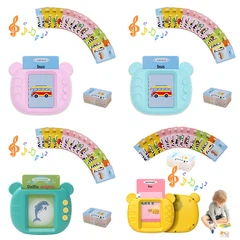
• talking flash cards

Avoid:
✖ Overly stimulating electronic toys with lights/sounds.
✖ Toys requiring complex instructions.
Environment Optimization Tips
"Less is more" principle:
• Offer 1-2 toys at a time.
• Set up a dedicated play area (a quiet 1.5m² space).
Visual decluttering:
Use solid-colored mats + storage bins to hide excess toys.
Interactive Guidance Techniques
Golden 5-minute rule:
First 2 minutes: Observe quietly without interrupting.
Next 2 minutes: Join in and expand play (e.g., "Let's build a house for the block people!").
Last 1 minute: Give a transition warning (e.g., "Three more turns, then we'll clean up!").
Attention-Building Games
• Spot-the-difference cards (3 sets daily, 1 minute each).
• Bead-stringing races (start with 3 minutes, gradually increase).
• Follow-instruction games (e.g., "Touch head – clap hands – jump" sequences).
Lifestyle Adjustments
• Ensure 10-13 hours of sleep (including naps).
• Avoid high-sugar snacks (blood sugar spikes affect focus).
• 30 minutes of physical activity daily (helps them settle down).

⚠️ Warning Signs to Watch For
While short attention spans are normal, consult a professional if:
❌ No interest in any toy for more than 1 minute.
❌ Significant delays in language/social skills.
❌ Complete inability to follow game rules (e.g., taking turns).
📈 Attention Development Milestones
• 3.5 years: Can follow 2-step instructions (e.g., "Bring the block to Mommy").
• 4 years: Can listen to a short picture book from start to finish.
• 5 years: Can complete 8-10 step tasks independently (e.g., simple crafts).
💡 Practical Tips for Parents
• Avoid negative labels: Instead of saying, "Why can't you focus?" try, "Let's try again together!"
• Visualize time: Use hourglasses/timers to make time tangible.
• Track progress: Record the child's longest focus period weekly (natural growth will become evident).
SEO Keyword Optimization:
Core terms: "3-year-old short attention span," "How long should a 3-year-old focus?"
Long-tail phrases:
"My 3-year-old gets distracted while playing-what to do?"
"How to tell if a child has ADHD?"
"Best toys to boost toddler focus."
This article combines child development theory with actionable strategies, easing parental concerns while offering practical tools. It balances professional authority with search intent. Pair with an "Attention Development Timeline" infographic for wider reach.