
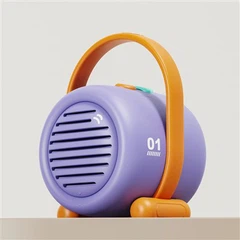
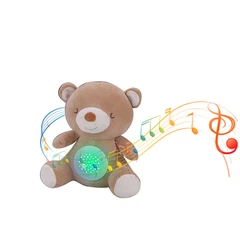


The core idea behind sound books is multisensory engagement. When a child presses a button and hears a corresponding sound, they're not just seeing a picture; they're connecting sight, touch, and hearing. Research shows this kind of interaction strengthens memory, builds vocabulary, and boosts cognitive skills. For young kids, whose brains are wired to learn through exploration, these tools align perfectly with natural development. As technology has advanced, so have the designs, making them more durable, customizable, and feature-rich. In 2025, with the global interactive children's book market pushing toward significant growth, sound books stand out as a bridge between traditional storytelling and modern edtech.
A Short Look Back: From Pull-Strings to Smart Buttons
Sound-enhanced books aren't a new invention. One of the earliest examples dates back to the late 19th century with "The Speaking Picture Book," a German novelty that used pull-strings to produce sounds like animal calls or bells. It was a mechanical marvel for its time, showing even then that audio could make stories more vivid for kids. Fast forward to the 20th century, when phonographs and early audiobooks brought recorded voices into homes, though they were more about listening than interacting with a physical page.
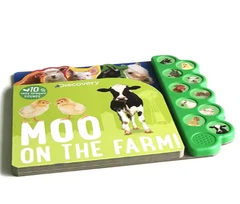
The real leap came with electronic integration in the late 20th and early 21st centuries. Battery-powered buttons replaced strings, allowing kids to trigger sounds on demand. Companies began embedding simple chips and speakers into board books, creating the first wave of what we now call sound books. These early versions were basic-think a farm book where pressing a cow picture mooed-but they proved the concept: kids loved the control and immediacy. Over time, manufacturers refined the tech, improving sound quality, battery life, and durability while keeping costs manageable for mass production. Today, we see a range of designs tailored to different age groups and learning goals, from minimalist touch-activated pages to complex multi-button systems that support entire stories or even musical play.

The Simplicity of Inner Touch Button Sound Books: Ideal for the Youngest Learners
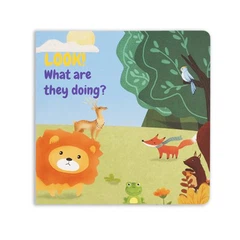
For toddlers and preschoolers, less is often more. Inner touch button sound books embody this philosophy with a clean, single-button-per-page setup. Each page features one large, easy-to-press area that activates a sound or short audio clip when touched. This design keeps things straightforward, reducing confusion for little ones who are still developing fine motor skills and focus.
Educators and parents appreciate how these books align with principles like those from Montessori education, which emphasize self-directed activity and minimal distractions. With no complex arrays of buttons, children can explore at their own pace without feeling overwhelmed. Manufacturers have streamlined production too, using pre-designed templates that allow quick customization-think swapping in different animal sounds or simple phrases for educational themes. Battery choices, like slim coin cells, keep the book thin and lightweight, typically under 18 millimeters thick, so it's comfortable for small hands to hold.
That said, these books aren't perfect for every scenario. Longer narratives, like retelling a Bible story across multiple pages, can feel disjointed because each sound is isolated. Larger formats also bump up shipping costs due to size. Looking forward, innovations are addressing these gaps. NFC-enabled prototypes let parents upload custom content via smartphone, adding personalization. There's even talk of FDA-approved edible silicone buttons for safety-conscious families, expected in the market soon. Overall, inner touch button books remain a strong entry point for early learning, offering quick prototyping and reliable performance.

Sound Board Books: Modular Design Meets Creative Flexibility
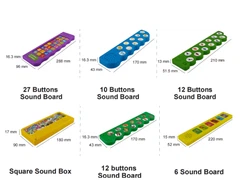
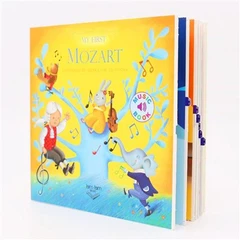
When versatility is key, sound board books shine. These feature a detachable sound module-often a panel with multiple buttons-that can be used across different book titles. Picture a side-mounted board that kids pull out and plug into various themed books, like a music series or popular character collections. This modularity makes them cost-effective for publishers and highly reusable for families.
In the North American market, these books make up a sizable chunk of interactive electronic shipments, especially for music or IP-driven products. The ability to mix and match means one soundboard can support a whole lineup, reducing production expenses while giving kids variety. Eco-friendly versions using plant-based plastics have cut carbon footprints significantly, appealing to environmentally aware buyers. Prototyping is fast too, with existing molds allowing turnaround in days rather than weeks.
Challenges exist, of course. Some toddlers struggle to connect the right button to the right page, leading to frustration. Licensing deals with big brands often require fully integrated units rather than detachable ones. But advancements like pressure-sensitive buttons, which respond differently to light or firm presses for layered sounds, are pushing boundaries. These books excel in group settings or marketing campaigns, where the modular aspect encourages repeat play and shared experiences.

Multiple Button Sound Books: The Powerhouse for Richer Content and Skills
For more ambitious educational goals, multiple button sound books deliver depth. These pack dozens-or even hundreds-of buttons into a single device, arranged in grids that support complex interactions. They're popular in language learning, where kids can hear words in multiple dialects or languages, and in STEM-themed books that turn pages into mini keyboards or interactive lessons.
Durability is a big selling point here. Many models feature waterproofing and can withstand rough handling by active five-year-olds. Matrix circuitry allows for features like piano modes, where pressing sequences creates melodies. Some support up to 47 dialects, making them ideal for multicultural families or global markets. Page limits exist-beyond about 15 pages, sensitivity can drop-but engineers are tackling this with better wiring and materials.
The future looks promising for these powerhouses. Hybrid prototypes blend flexible screens with haptic feedback for tactile responses, while solar-charging options reduce battery waste. In premium gifting or classroom settings, they offer unmatched content potential, turning a single book into a portable learning center.

Why Sound Books Are Gaining Momentum in 2025
The timing couldn't be better. Educational budgets for interactive K-12 resources are growing annually, and parents are investing in tools that make learning engaging. Beyond kids, these technologies are finding new uses-like dementia therapy in aging populations, where familiar sounds trigger memories. Tech convergence is another driver: augmented reality versions are entering testing, overlaying digital elements onto physical pages.
Market projections point to strong expansion, with interactive children's books becoming a key segment. Sound books fit right in, offering tangible benefits like improved language skills, better attention spans, and multisensory reinforcement that screens often lack.
The trajectory is clear: more personalization, sustainability, and integration with emerging tech. From smartphone-customizable content to eco-materials and AR enhancements, sound books are evolving to meet diverse needs. As they do, they continue to prove that the right mix of sight, sound, and touch can create a truly symphonic learning experience-one where children don't just read, but actively compose their own discoveries.