




AI Emotional Toys: The Future of Play That Listens, Feels & Connects

Beyond Intelligence – Toward Emotional Connection
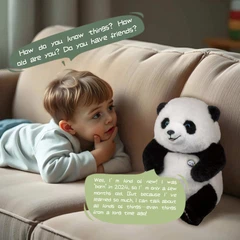
For decades, we measured smart toys by their ability to answer questions, recite facts, or follow commands. But a new generation of #AIToys is emerging – one that prioritizes something far more meaningful: emotional connection. These are #EmotionalAI companions that don't just talk; they listen, sense, and respond to a child's feelings.
Toys like advanced AI companions can now adjust their behavior based on a child's mood, offering comfort when they're sad, excitement when they're happy, and curiosity when they're eager to learn. As one industry expert noted, "AI-powered companions are becoming more attuned to emotional cues, adapting their responses and interactions as the child's mood dictates" .
This shift from cognitive AI to #AffectiveComputing is transforming the toy industry. According to market data, the global AI toy market is projected to reach $35 billion by 2030, with emotional intelligence features driving the highest growth segment.

What Are AI Emotional Toys?
An AI Emotional Toy is a physical companion device that combines sensors, sound, on-device processing, and cloud intelligence to understand and respond to a person's emotional cues. Unlike traditional smart toys that follow scripted responses, emotional AI toys:
Detect vocal tone – excitement, sadness, frustration, or calm
Recognize speech patterns – pauses, speed, intensity
Adapt responses in real time – offering empathy, encouragement, or playfulness
Remember past interactions – building a unique relationship over time
Model emotional vocabulary – helping children name and understand their feelings
These capabilities make AI emotional toys powerful tools for #SocialEmotionalLearning (#SEL), a critical component of early childhood education that focuses on self-awareness, empathy, and relationship skills.
Why Emotional Intelligence Matters in Early Childhood
Research shows that children with strong emotional intelligence are:
Better at making and keeping friends
More resilient in the face of challenges
Less likely to experience anxiety or depression
More successful academically and professionally later in life
Yet emotional skills don't develop automatically. They require practice, modeling, and a safe space to explore feelings. Traditional toys can't provide that. AI emotional toys can.
As one child development specialist noted, "The best way to teach a child about emotions is through a friend who understands – without judgment, without impatience, and without conditions."

Key Features of AI Emotional Toys
1. Voice Tone Analysis
Using advanced #VoiceAI, emotional toys detect subtle changes in a child's voice:
| Tone Detected | Typical Response |
|---|---|
| Excitement | "Wow! You sound so happy! Tell me more!" |
| Sadness | "I hear you're feeling down. I'm here. Want a virtual hug?" |
| Frustration | "That sounds tricky. Let's take a deep breath together." |
| Curiosity | "Great question! Let's explore that together." |
| Fear | "It's okay to feel scared. You're safe. Want a story?" |

2. Long-Term Memory & Personalization
Unlike basic toys that forget every interaction, AI emotional toys remember:
The child's name and preferred nickname
Favorite stories, songs, and topics
Past conversations ("How was your doctor's appointment today?")
Emotional triggers and calming strategies that work
This #LongTermMemory transforms the toy from a gadget into a #AICompanion that builds a genuine relationship over time.
3. Screen-Free, Voice-First Interaction
Most AI emotional toys are designed for #ScreenFreePlay. No LCD screens, no blue light, no passive video consumption. Children interact through natural conversation – speaking, listening, and imagining. This approach:
Reduces digital eye strain
Encourages active listening and creativity
Fits seamlessly into bedtime, car rides, and quiet time
4. Adaptive Learning & Growth
As the child develops, the toy adapts:
Language complexity increases with age
Content depth expands from simple stories to complex discussions
Emotional vocabulary grows from basic feelings (happy/sad) to nuanced emotions (frustrated, anxious, proud)
This ensures the toy remains engaging and educational for years, not months.
5. Privacy & Safety by Design
How Emotion Recognition and Adaptive Learning Are Revolutionizing Early Childhood Development
From Smart to Sentient – The Evolution of Play
The integration of artificial intelligence into children's toys has transformed traditional play, offering interactive, educational, and personalized experiences like never before. Today's #AIToys can interact naturally, respond to emotions, and adapt to a child's behavior, making playtime more engaging and meaningful than ever imagined.
According to market data, the global AI children's toy market is projected to increase from $12.37 billion in 2023 to $25.4 billion by 2030, reflecting surging demand for toys that combine learning, entertainment, and emotional connection. This growth is driven by parents and educators who recognize that #EmotionalAI and #AffectiveComputing are not just buzzwords – they are essential tools for raising emotionally intelligent, resilient children.
This article explores how #AICompanions like Loona, EMO, Moxie, and Rux are leading the emotional AI revolution, the core technologies that make them possible, and what the future holds for #SmartToys that truly understand the children who love them.

Part 1: Key Applications of AI in Emotional Toys
1. Voice Interaction & Natural Language Processing (NLP)
Voice interaction is one of the most impactful features in AI-enabled children's toys. Powered by advanced Natural Language Processing (NLP) , these toys can understand and respond to spoken commands and questions, enabling meaningful, two-way conversations.
Toys like the Loona Robot and Rux Robot use NLP to engage children in interactive dialogue, making them feel as though they're conversing with a companion rather than a toy. This fosters language development, listening skills, and verbal expression – especially beneficial for younger children learning new words and phrases.
Another popular example is the Amazon Echo Dot Kids Edition, programmed to tell stories, answer questions, and play games through voice interactions. By combining play with education, these toys offer a unique, hands-free learning experience. NLP-equipped toys go beyond scripted responses; many, powered by AI models like ChatGPT, have dynamic, flowing conversations that adapt based on context, increasing the depth of learning and engagement.
2. Emotion Recognition & Emotional Interaction
Emotion recognition is perhaps the most exciting frontier in AI toys. It enables toys to interpret a child's emotions and respond accordingly. Toys like Loona and EMO AI Robot incorporate advanced #EmotionalAI that reads a child's facial expressions, tone of voice, and gestures. This allows the toys to mirror emotions – providing comfort or excitement as the child's mood dictates.
The ability to recognize and respond to emotions promotes #SocialEmotionalLearning in children, helping them identify and manage their own feelings and understand others' emotions. The Moxie Robot by Embodied is a notable example designed specifically to help children develop social and emotional skills. Moxie engages children in conversations about feelings and empathy, using emotional AI to teach compassion, kindness, and social interactions.
Such toys become more than mere playthings; they transform into #AICompanions that support social learning and self-regulation.
3. Personalized Interaction & Adaptive Learning
Today's AI toys are highly personalized, adapting to each child's unique behavior, preferences, and interactions. For instance, Rux Robot uses BotLife technology to develop unique personality traits based on the user's interactions, ensuring each experience feels personal and tailored. This customization deepens engagement, as children feel that the toy "knows" them and responds to their specific interests.
EMO AI Robot also learns and adapts over time, offering interactions and suggestions based on a child's past behavior and preferences. These adaptive learning features make toys more engaging, allowing them to evolve alongside a child's growth and learning needs. This functionality supports curiosity-driven exploration and personalized learning paths – especially valuable in educational toys, as they foster an ongoing interest in learning and discovery.
4. Programming Education & STEM Learning Tools
A major trend in AI toys is the integration of #STEM learning tools, especially programming. Loona and other AI toys offer graphical programming interfaces that allow children to control the toy's actions through simple coding. This makes learning programming concepts accessible and enjoyable, introducing children to coding without requiring advanced skills.
The Cozmo Robot by Anki is another excellent example, allowing children to program various tasks and interactions through a visual interface. By making STEM concepts part of playtime, these toys provide valuable educational experiences that develop problem-solving skills, logical thinking, and creativity.
5. Smart Home Integration & Safety Features
As AI toys increasingly integrate with home environments, features like smart navigation and safety monitoring are becoming more common. For example, Loona Robot includes an automatic charging feature, enabling it to return to a charging station when the battery is low. Its 3D-ToF navigation allows Loona to roam the home safely, avoiding obstacles and learning the layout – providing a safer experience for children.
Beyond home navigation, toys like Amazon's Astro offer security features, such as monitoring specific areas of the home, enabling families to use AI toys for both entertainment and home security. Such integration makes these toys more functional for parents, who benefit from added peace of mind.

Part 2: Market Analysis & Development Trends
Market Growth & Consumer Demand
The global AI children's toy market is experiencing significant growth, driven by technology advancements and increased interest in educational toys. From $12.37 billion in 2023, the market is projected to reach $25.4 billion by 2030. This growth reflects rising consumer demand for toys that combine learning and entertainment, as well as a strong focus on educational benefits that support cognitive, social, and emotional development.
Technology Integration & Educational Value
AI is pushing the boundaries of traditional toys, blending entertainment with education to create enriched, interactive experiences. AI toys are increasingly designed to foster cognitive and emotional growth through interactive play. For example, LEGO Mindstorms and Wonder Workshop's Dash Robot allow children to build and program robots, teaching engineering and coding principles. Such toys provide dual benefits: the thrill of play alongside educational value, appealing to parents seeking tools that encourage learning beyond the classroom.
Privacy & Data Security Concerns
As AI toys often connect to the internet for updates, privacy and data security are essential concerns for parents and developers. Toys like Loona Robot and Rux Robot incorporate Amazon's secure cloud services to safeguard children's data. Ensuring robust privacy measures is crucial for maintaining consumer trust, especially when toys collect data that could include voice recordings, usage patterns, or behavioral insights. Manufacturers are now prioritizing secure data storage and compliance with privacy regulations to protect young users.
Part 3: Consumer Feedback & Market Competition
What Parents Are Saying
Consumer feedback for AI toys such as Loona, Rux, and EMO has been generally positive, with users praising the interactive features, emotional expressiveness, and customized experiences. Parents appreciate the educational aspects, as well as the ease with which children can engage with these toys independently. Many users note that these toys have become valuable companions, providing both educational benefits and emotional support.
Key Players in the AI Toy Market
The global AI toy market is highly competitive, with companies like JAKKS Pacific, LeapFrog, VTech, and Mattel leading in innovative products. In China, companies like Silverlit and Baby Star are rising players, leveraging AI to meet the needs of tech-savvy consumers. These brands face the challenge of balancing cutting-edge technology with affordability, striving to make smart toys accessible to a broader audience.
Part 4: Challenges & Future Prospects
Technical Limitations
Despite advances, AI toys still face technical challenges, such as:
Latency in responses – delays that break the illusion of conversation
Limitations in emotional expression – difficulty replicating nuanced human emotions
High costs – integrating advanced AI remains expensive
These challenges have prompted toy companies to invest in R&D to improve AI responsiveness, enhance natural interactions, and develop more affordable components.
Future Directions
As AI technology continues to evolve, so too will its applications in children's toys. Future AI toys may incorporate:
Even more advanced emotional intelligence – detecting subtle emotional cues
Improved voice recognition – understanding childlike speech and accents
Seamless integration with household smart devices – creating connected play ecosystems
These advancements will allow AI toys to offer richer, more immersive experiences that cater to children's educational and emotional needs. Ultimately, the future of AI toys holds the promise of not only keeping children entertained but also supporting their holistic growth through dynamic, responsive play experiences.

The Heart of the New Play
AI is reshaping children's toys, transforming them into tools that support both learning and emotional development. From interactive voice commands to personalized learning and emotional engagement, AI toys provide far more than traditional toys ever could. They foster cognitive skills, improve emotional intelligence, and inspire creativity – making playtime a meaningful and educational experience.
As the market for AI toys continues to grow, innovations in technology and education are likely to drive even more interactive, adaptive, and personalized experiences for children. While challenges remain – including privacy and data security – the future of AI toys looks bright, with opportunities to deepen the impact of AI on children's growth and development.
For brands, distributors, and educators, now is the time to embrace #EmotionalAI, #AffectiveComputing, and #AdaptiveLearning. The children who grow up with these companions will be more emotionally aware, cognitively prepared, and socially connected than any generation before them.
Ready to Bring Emotional AI Toys to Your Market?
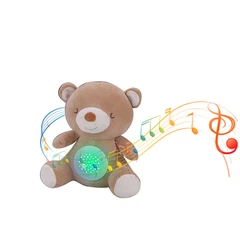
XDT Electronic Co., Ltd. is your trusted OEM/ODM partner for custom #AIToys, #SmartToys, and #EducationalToys. From concept to mass production – certified, safe, and built to make kids love learning.
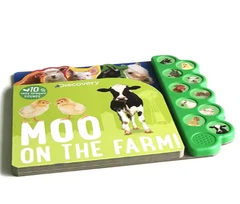
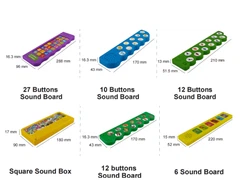
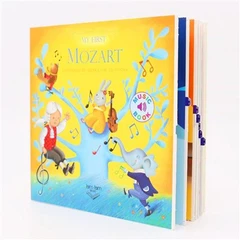
XDT Electronic Co., Ltd. – Your Trusted OEM/ODM Partner for AI Toys, Sound Books & Smart Plush Companions
Why Top Brands Choose XDT for Custom Educational Toys
Who We Are
Founded in 2001 and headquartered in Shenzhen, China, XDT Electronic Co., Ltd. is a leading manufacturer of #AIToys, #SoundToys, and #EducationalToys. With over two decades of experience, we help brands, publishers, and entrepreneurs bring their smart toy visions to life – from initial concept to mass production.
Our mission: Make Kids Love Learning.


