
AI Emotion Toys: The Screen‑Free Companions That Feel, Remember & Grow with Your Child
Emotion‑Aware Plush Toys with Long‑Term Memory, Voice‑Tone Recognition & Parental Controls | CE, ROHS, EN71 Certified | OEM/ODM Customization Available

The Dawn of Emotionally Intelligent Play
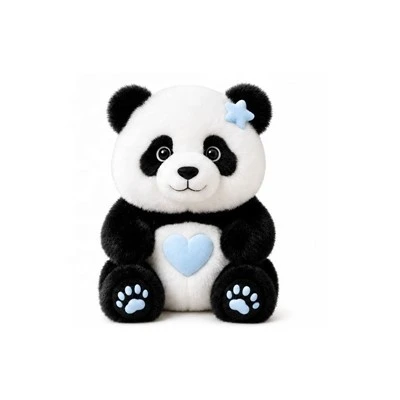
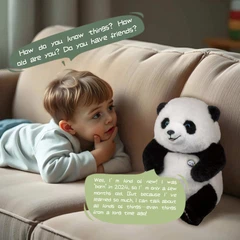
What if your child's plush toy could do more than just sit on a shelf? What if it could sense when they're feeling down, celebrate their small victories, and remember their favorite dinosaur for weeks? That's the promise of AI emotion toys – a new generation of smart companions that blend the warmth of traditional plush with the intelligence of advanced AI.
Unlike standard talking toys that repeat a handful of pre‑recorded phrases, AI emotion toys are equipped with voice‑tone detection, long‑term memory, and natural language processing (NLP). They don't just answer "What's 2+2?" – they ask "How are you feeling today?" and actually remember the answer. These toys are transforming how children learn, express themselves, and form emotional bonds – all without a single screen. The global AI child companion device market was valued at 258.33millionin2025∗∗andisexpectedtogrowataCAGRof14.23258.33millionin2025∗∗andisexpectedtogrowataCAGRof14.23655.75 million by 2032, driven by parents seeking meaningful screen‑free alternatives.
What Is an AI Emotion Toy?
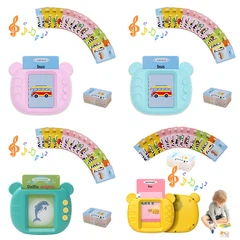
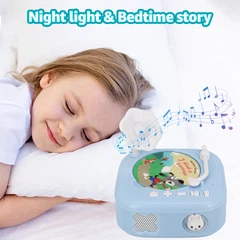
An AI emotion toy is a physical companion device – typically a huggable plush, a soft figurine, or a story box – that uses artificial intelligence to understand and respond to a child's emotional state. According to a systematic academic review, AI toys are defined as "physical toy devices that incorporate AI such as machine learning, natural language processing, or adaptive algorithms, to personalize interactions, simulate decision‑making, and respond dynamically to users". Unlike traditional electronic toys with fixed scripts, these companions:
Detect vocal tone – happiness, sadness, frustration, excitement, or calm
Remember past interactions – the child's name, favorite stories, and emotional patterns
Adapt responses in real time – offering comfort, encouragement, or playful distraction
Learn and grow – evolving their language and content as the child develops
AI emotion toys are purpose‑built for #SocialEmotionalLearning (SEL). They create a judgment‑free space where children can practice naming their feelings, develop empathy, and build resilience. For children with autism, ADHD, or social anxiety, these toys offer predictable, patient, non‑judgmental interaction that helps bridge communication gaps.

How AI Emotion Toys Work: The Technology Behind the Hug
Voice‑Tone Detection & Emotion Recognition
Advanced AI emotion toys use a multi‑modal emotional perception engine that combines voice tone, speech patterns, and sometimes facial micro‑expressions to determine a child's emotional state. For example, a toy may detect a low‑pitched, slow voice as sadness, and respond with gentle comfort; faster, higher‑pitched speech may be recognized as excitement, prompting playful engagement. One recent innovation integrates 31‑point tactile sensors and multi‑modal voice collection to precisely capture crying, whispering, and movement signals, interpreting the underlying emotional needs.
Long‑Term Memory & Personalization
The true magic of an AI emotion toy lies in its ability to remember. Instead of treating each conversation as a fresh start, these toys store a child's catchphrases, preferences, favorite topics, and even developmental milestones. For instance, if a child mentions they're afraid of thunder, the toy will remember that and offer a calming story the next time a storm approaches. This long‑term memory transforms the toy from a generic gadget into a personalized companion that builds a genuine relationship over time.
Cloud Intelligence & On‑Device Processing
Modern AI toys employ an "end‑cloud‑edge" collaborative architecture. Basic functions – wake word detection, simple responses, mute controls – operate locally on the device for instant reaction and privacy. For open‑ended conversation, the toy connects to a cloud‑based large language model (compatible with ChatGPT, Qwen, DeepSeek, or custom models). End‑to‑end LLMs are driving a shift toward more efficient, low‑latency conversation, enabling toys to move from passive response to active understanding.
Privacy‑First Architecture
Concerns about data security are addressed through privacy‑first design:
No cameras – voice‑only interaction, no visual monitoring.
Physical mute button – parents can disable the microphone instantly.
Local processing option – basic voice commands work offline; cloud only for extended conversation.
Secure, encrypted cloud storage – compliant with GDPR and COPPA.
Parental dashboard – full visibility of conversation topics and time controls.
These safeguards align with the 2026 EU Toy Safety Regulation (TSR), which now explicitly requires cybersecurity, data privacy, and mental health impact assessments for AI‑enabled toys.
Educational & Developmental Benefits
Social‑Emotional Learning (SEL)
AI emotion toys help children:
Identify and name emotions – "You sound frustrated. That's okay. Let's take a deep breath."
Practice empathy – "What do you think your friend felt when you shared your snack?"
Develop self‑regulation – guided breathing exercises, calming stories, and gentle reminders.
Research from an ACM study shows that "children exposed to emotional support at an early age have more chances to build resilience and interpersonal skills for navigating everyday challenges". A systematic review of 13 academic prototypes found that AI toys can enhance cognitive and social‑emotional development, particularly in early literacy and collaborative problem‑solving.
Language & Communication Skills
Through natural conversation, children build vocabulary, practice pronunciation, and develop listening comprehension. Unlike human conversation partners who may become impatient, an AI emotion toy will repeat a phrase fifty times without frustration, building confidence.
Cognitive & Fine Motor Skills
The tactile act of picking up, hugging, and pressing buttons strengthens hand‑eye coordination and dexterity. Adaptive storytelling and memory games challenge young minds while keeping them engaged.
Accessibility & Special Needs Support
For children with autism, ADHD, or anxiety, AI emotion toys offer a predictable, low‑pressure environment to practice social scripts and self‑expression. Some products have been specifically designed for social training, using predictable interactive design to help build trust.

Safety Certifications & Global Compliance
All responsible AI emotion toys must meet rigorous international safety standards. The 2026 EU Toy Safety Regulation (TSR) introduces five mandatory compliance dimensions for AI‑enabled toys:
| Dimension | Requirement |
|---|---|
| EN71 Toy Safety | Physical & mechanical safety (EN71‑1), flammability (EN71‑2), heavy metal migration (EN71‑3) |
| Electrical Safety (LVD/EMC) | EN 62115 for toy electrical safety, EN 55032 for electromagnetic emissions |
| RED (Wireless) | For Bluetooth/Wi‑Fi equipped toys – RF performance, EMC, spectrum compliance |
| EU AI Act Compliance | Transparency, data quality, child protection, risk assessment for AI systems |
| GDPR / COPPA | Parental consent, data minimization, secure storage, breach notification |
New requirements from 2026 TSR:
Digital Product Passport (DPP) – every toy must have a QR‑code link to safety data, compliance certificates, and traceability information.
AI & mental health assessment – toys with social‑interactive functions must evaluate potential impact on child psychology and cognitive development.
Cybersecurity – for connected toys, manufacturers must implement security‑by‑design, vulnerability management, and incident response.
Eco‑friendly materials: Our toys use non‑toxic, BPA‑free ABS plastic, hypoallergenic plush fabrics, lead‑free electronics, and recyclable packaging – compliant with RoHS and REACH regulations.

Customization for Brands & Publishers (OEM/ODM)
For publishers, educators, and brand owners, XDT offers complete #OEM / #ODM customization services to create AI emotion toys under your own IP.
What We Customize
| Area | Options |
|---|---|
| Custom IP integration | Transform your characters into AI‑powered plush toys |
| Voice & personality | Custom voice talent, emotional tone, scripted responses |
| Content library | Upload your own stories, songs, SEL lessons (any language) |
| Emotion model | Define how the toy responds to sadness, excitement, frustration |
| Long‑term memory | Set memory duration, data retention policies |
| Hardware design | Custom colors, outfits, night lights, button layouts, private mold |
| Parent app | White‑label companion app for iOS/Android |
| Packaging | Retail‑ready boxes with your branding |
Rapid prototyping: Physical sample in 3‑5 business days. Low MOQ: start from 1,000 units (flexible for pilot runs).

Why Choose XDT as Your Manufacturing Partner?
XDT Electronic Co., Ltd. – founded in 2001 in Shenzhen, China – is a leading #OEM / #ODM manufacturer of #AIToys, #EducationalToys, and #SoundToys. We serve 20,000+ clients in 120+ countries with end‑to‑end in‑house production:
Chip programming & firmware development
Injection molding & private mold design
Plush manufacturing & embroidery
Card printing & packaging assembly
Full compliance testing & certification
Our certifications: CE, ROHS, EN71, FCC, BSCI, SEDEX, ISO9001.
Our mission: Make Kids Love Learning.