

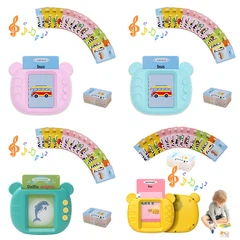






The global toy industry stands at a pivotal moment heading into 2026. Overall market projections point to roughly $87.5 billion in value, with a steady compound annual growth rate around 7.5 percent through the next decade. Yet the real action lies in the educational toy segment, which is expanding faster and promises even stronger returns for brands that get their sourcing right. Parents today care deeply about early learning, STEM skills, and products that support child development, pushing demand for interactive, language-focused, and sustainable toys higher than ever.
This isn't just about riding a wave of consumer interest. Geopolitical tensions, evolving tariffs, stricter safety and environmental rules, and the push for more resilient operations have forced companies to rethink how and where they manufacture. Brands that treat sourcing as a pure cost-cutting exercise risk falling behind, while those viewing it as a strategic capability can capture market share, protect margins, and deliver innovative products faster. Real-world examples from major players and specialized manufacturers illustrate how diversification, compliance, and partnership-driven innovation make the difference between surviving disruptions and thriving amid them.
Why Educational Toys Are Driving the Next Wave of Industry Growth
Educational toys have moved from a niche category to the engine of growth in the broader toy sector. Market estimates place the educational toy space at around $107.4 billion in 2026, with a projected CAGR of 10.1 percent through 2035-noticeably outpacing the general market. Parents are willing to pay a premium, often 42 percent more for items perceived as genuinely developmental compared to standard playthings. Language-learning toys alone saw sales jump 28 percent in recent periods, reflecting the needs of multilingual households and global families.
Demographics help explain the momentum. The global Gen Alpha population hovers near 2.2 billion, creating a massive addressable base of young consumers whose caregivers prioritize screen-free, skill-building play. Regional differences stand out too. Asia-Pacific shows robust expansion at about 12.3 percent CAGR, North America grows steadily around 8.9 percent, and Latin America holds strong potential at 15.7 percent, with countries like Brazil reporting year-over-year order increases as high as 55 percent in educational categories.
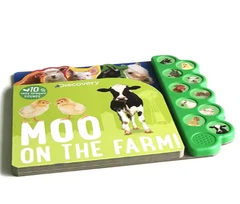
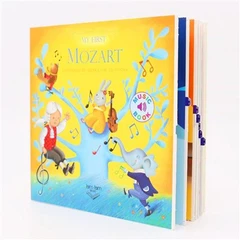
One standout case involves the development of a multi-language interactive sound book with over 100 buttons and activities across eight languages. Through close collaboration between a specialized manufacturer with deep audio engineering expertise and a European retailer, the product reached market faster, delivered higher retail margins (up to 42 percent better than single-language alternatives), boosted repeat purchases by 28 percent, and earned 93 percent customer satisfaction scores. Features supporting cross-language development resonated particularly well, aligning with surveys indicating that 76 percent of parents in multilingual settings actively seek such tools. These outcomes highlight how focusing on high-value educational features can justify premium positioning and strengthen brand loyalty.
Success in this space requires more than good product ideas. It demands manufacturing partners capable of rapid prototyping, precise component integration (such as audio systems and interactive electronics), and scalable production without compromising quality or safety. Companies investing in in-house R&D teams-sometimes numbering 50 or more engineers focused on areas like RFID, sound modules, and sensor technology-can shorten development cycles significantly, sometimes by as much as 50 percent.


The Changing Geography of Toy Manufacturing: Moving Beyond Single-Country Dependence
For decades, China dominated toy production thanks to its unmatched ecosystem of suppliers, skilled labor, and infrastructure for complex electronic and interactive items. Even today, it retains a commanding position, holding around 68 percent of global capacity for precision interactive components. However, brands have accelerated diversification efforts in response to trade policies, tariffs, and risk mitigation needs.
Major corporations provide clear signals. Mattel has set targets to cap any single country's contribution at no more than 25 percent of output, while Hasbro aims to bring China-sourced volume below 40 percent. Data from consulting firms shows that companies with pre-existing diversified networks experienced 32 percent lower disruption-related costs during recent global shocks. Southeast Asia has gained ground quickly: Vietnam, Indonesia, and Thailand together now represent about 18 percent of global toy manufacturing, up sharply from 8 percent earlier in the decade, with Vietnam alone claiming a 7.8 percent share.
Nearshoring has also gained traction, especially for North American markets. LEGO's substantial investment in a new Virginia facility, slated to open in 2027, aims not only to serve local demand but also to cut the carbon footprint of imports by roughly 62 percent. Consumer research indicates that 67 percent of U.S. buyers express preference for North American-made toys and are willing to accept a modest 15 percent price premium for that origin story.
Many forward-thinking suppliers have adopted hybrid models to balance strengths. For instance, keeping the majority of high-precision electronic and interactive work in established Chinese hubs like Shenzhen, while shifting plastic molding, basic assembly, or final customization to Vietnam or Mexico. Such strategies can deliver tangible benefits: reduced tariff exposure (sometimes by 35 percent on U.S.-bound goods), shorter lead times (around 22 percent faster for regional markets), lower overall logistics expenses, and smoother compliance with standards like EU REACH or U.S. CPSIA. Industry-wide, the share of major brands employing multi-country sourcing has climbed dramatically-from 37 percent in 2019 to 89 percent today.
Tariffs have undeniably accelerated these shifts. Recent U.S. policy changes have imposed or threatened higher duties on goods from China as well as alternative hubs like Vietnam, Mexico, and Indonesia, sometimes pushing retail prices up 25-30 percent in affected categories. While China retains advantages in complex electronics and scale, alternatives are maturing, though they often still rely on Chinese components for critical parts. This interdependence means true decoupling remains challenging, and smart sourcing involves layered strategies rather than abrupt relocation. India has also emerged as a growing player, supported by government initiatives to boost domestic manufacturing and exports.
The lesson is clear: resilience comes from building flexible networks rather than seeking the single lowest-cost location. Brands that front-loaded diversification before crises hit have been better positioned to pivot volumes, maintain continuity, and avoid sharp cost spikes.
Compliance, Sustainability, and the New Cost of Doing Business
Regulatory requirements have become non-negotiable drivers of sourcing decisions. Non-compliance with EU toy safety directives can trigger fines reaching €13 million plus expensive recalls. The list of restricted substances under REACH has expanded to 235 items, and expectations around carbon reporting, recyclable content (targeting 80 percent by 2030 in some markets), and labor standards continue to tighten. Most large brands now conduct unannounced audits at rates exceeding 94 percent.
Sustainability has shifted from a nice-to-have marketing angle to a core business imperative. Consumers, particularly parents, show strong preferences: 83 percent reportedly steer clear of brands with poor environmental or social records, and up to 69 percent are prepared to pay 10-15 percent more for certified sustainable options. Retailers increasingly demand detailed carbon data, with projections indicating 62 percent will require it by 2027.
Manufacturers investing proactively in green practices-such as renewable energy adoption, closed-loop recycling systems that reuse the vast majority of scrap, water-saving technologies, and formal certifications like ISO 14001-position their partners for smoother market access and potential cost savings. One European collaboration, for example, yielded a 23 percent sales lift from eco-labeling alongside significant reductions in carbon-related taxes. These efforts often require meaningful upfront capital (millions in facility upgrades), but they deliver long-term advantages in risk reduction, brand reputation, and pricing power.


Building a Future-Proof Sourcing Strategy: Key Pillars for Success
Effective sourcing strategies in 2026 rest on several interconnected pillars that go beyond simple supplier selection.
First, move toward genuine strategic partnerships instead of transactional relationships. The best collaborators offer co-innovation capabilities, shared R&D resources, real-time visibility into production, and support like rapid tooling design. This approach speeds up iteration on new educational features and helps align on quality, compliance, and customization needs from the earliest stages.
Second, embrace data-driven decision making. With educational toys growing faster than the overall market, analytics tools that forecast demand, optimize inventory, and evaluate total cost of ownership (including tariffs, logistics, and disruption risks) provide a clear edge. Companies leveraging predictive capabilities have reported meaningful reductions in stockouts and improved margin management.
Third, prioritize agility and modular design. Products engineered with reusable components (sometimes 80 percent or more across a product family) allow quicker adaptations when supply issues arise. Dual or multi-sourcing for critical parts can cut risk substantially, while technologies like digital twins help simulate and test designs virtually, slashing physical prototyping time.
Real incidents demonstrate the value. When one partner faced a potential four-week delay due to component shortages, a responsive manufacturer reengineered elements quickly, shifted sourcing across its network, and delivered on schedule-ultimately protecting millions in potential lost revenue. Such flexibility turns potential disasters into proof points of reliability.
Looking Ahead: Turning Challenges into Competitive Advantages
The toy industry in 2026 and beyond will reward brands that integrate market intelligence, operational agility, and trusted manufacturing ecosystems. While tariffs and geopolitical frictions create headwinds, they also spur innovation in supply chain design, sustainability practices, and product development focused on genuine educational value.
Specialized OEM/ODM partners with multi-region footprints, deep category expertise in interactive and audio toys, and a track record of compliance and speed can help brands shorten time-to-market, enhance margins, and launch differentiated products that resonate with today's parents. Whether through advanced sound books, talking learning tools, or other STEAM-oriented items, the focus remains on play that supports child development while meeting the practical demands of modern global trade.
For companies evaluating their options, the message is proactive: assess your current exposure, invest in diversified and sustainable networks, and build collaborative relationships that treat sourcing as a growth driver rather than an afterthought. Those who do so stand the best chance of not only navigating the shifts but capitalizing on the substantial opportunities in educational and sustainable toys.