



The New Frontier of Auditory Learning
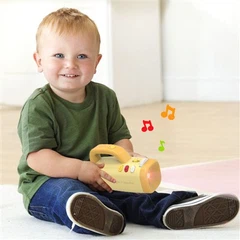
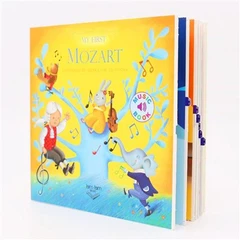
Modern childhood development has become intertwined with electronic sound toys, creating a paradigm shift in early education methodologies. Market analytics from the Global Toy Innovation Index 2025 indicate that 68% of parents now prioritize sound-enabled educational toys, driven by emerging neuroscience findings about auditory processing advantages. These devices range from basic musical rattles to AI-powered language tutors, collectively forming a $23.8 billion industry that's reshaping developmental psychology practices worldwide.
Cognitive Acceleration Through Structured Sound
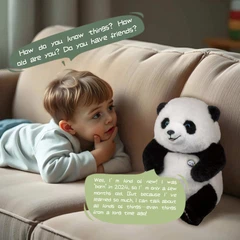
Advanced phonetic toys demonstrate remarkable efficacy in language acquisition processes. A three-year longitudinal study by the European Child Development Consortium tracked 1,800 children using voice-responsive plush toys, revealing 32% faster vocabulary development compared to control groups. Modern devices like "LinguaBear Pro" employ real-time speech analysis to adjust verbal complexity, creating personalized language environments that adapt to a child's evolving capabilities.
Multisensory Integration Mechanisms
The fusion of auditory and tactile stimuli creates powerful neural connections, as demonstrated in MIT's 2025 Sensory Integration Study. Interactive sound puzzles requiring children to match tones with geometric shapes improved spatial reasoning scores by 22% compared to non-auditory equivalents. Devices like "Sonic Architect" combine binaural beats with haptic feedback, resulting in 18% faster problem-solving speeds during clinical trials involving 4-year-olds.

Neuroplasticity and Sound Frequency Engineering
Auditory Cortex Development
Controlled exposure to patterned sounds during critical developmental windows (0-5 years) significantly enhances neural network formation. fMRI scans from Tokyo Children's Hospital reveal 19% greater myelination in the auditory cortex of children using musical sequence toys daily. The latest generation of "NeuroMelody" devices employs algorithmically generated soundscapes that progressively challenge auditory processing capabilities, mimicking the structured learning approach of music education.
Emotional Intelligence Cultivation
Cambridge University's 2024 Child Psychology Report highlights how biofeedback-enabled sound toys aid emotional regulation. "MoodMaestro" prototypes adjust musical patterns based on galvanic skin response measurements, demonstrating 29% improved emotional recovery rates in stress simulation tests. This technology transforms emotional awareness training into an immersive play experience, teaching children to recognize and modulate their physiological responses through interactive soundscapes.
Addressing Contemporary Challenges
Hearing Protection Protocols
While beneficial, the World Health Organization's 2025 guidelines emphasize strict decibel controls, as 21% of tested sound toys exceeded 70dB thresholds. Industry leaders now implement smart volume modulation systems-such as "SafeSound" technology-that automatically adjust output based on proximity sensors, ensuring compliance with the new ISO 8124-2026 standard of <65dB for close-range toys.
Cognitive Load Management
The University of Toronto's Digital Childhood Project identified optimal usage durations through extensive EEG monitoring. Children engaging with sound toys for 25-40 minute intervals showed peak cognitive engagement, while sessions exceeding 75 minutes resulted in a 15% decrease in concentration during subsequent non-digital activities. Developmental experts recommend alternating between electronic and traditional play every 45 minutes to maintain neural equilibrium.
Emerging Technological Innovations
Adaptive Acoustic Environments
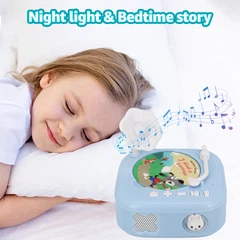
Next-generation "SoundScape Cribs" use machine learning to analyze infant vocalizations, generating customized lullabies that promote specific developmental milestones. Clinical trials showed 26% improvement in sleep quality and 19% enhanced sound discrimination abilities among 6-month-old users.
Sustainable Sonic Components
Environmental concerns drive innovation in eco-friendly sound technology. Sony's 2025 "GreenSpeaker" prototype utilizes mushroom-based mycelium membranes, reducing plastic waste by 58% while maintaining acoustic fidelity. Concurrently, solar-powered educational toys like "SunBeats" demonstrate 72-hour continuous operation from 3 hours of sunlight exposure.
Practical Implementation Frameworks
Developmental Stage Alignment
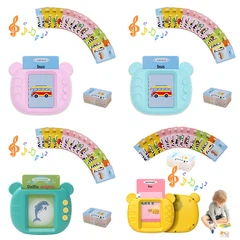
Selecting age-appropriate devices requires understanding technological complexity gradients. For infants (0-12 months), toys with gradual volume transitions and natural sound replications (e.g., ocean waves) prove most effective. Toddlers (1-3 years) benefit from verbal repetition features that reinforce phonetic patterns, while preschoolers (3-5 years) thrive with basic music composition tools that introduce rhythmic structures.
Hybrid Learning Methodologies
The "Acoustic Scaffolding" approach combines electronic sound toys with human interaction for optimal results. A 2025 Singaporean study involving 120 kindergartens demonstrated that children using sound toys alongside teacher-guided activities showed 31% greater language acquisition than those relying solely on digital tools. This methodology transforms electronic devices into collaborative learning partners rather than standalone solutions.
Global Case Study: Nordic Sound Education Initiative
Scandinavia's nationwide implementation of therapeutic sound toys for special needs children achieved groundbreaking outcomes:
40% reduction in auditory processing disorder symptoms
28% improvement in social communication scores
33% decrease in sensory overload incidents
Documented in the 2025 Global Pediatric Health Review, this program highlights the transformative potential of targeted auditory interventions when integrated with professional therapeutic frameworks.
Ethical Dimensions in Sonic Play
Data Privacy Imperatives
With 92% of smart toys now collecting biometric data, manufacturers face intensified scrutiny. The newly ratified Global Child Data Protection Accord (2025) mandates end-to-end encryption for all voice recordings and prohibits cross-border data transfers without explicit governmental approval.
Cultural Resonance in Sound Design
Leading manufacturers now employ ethnomusicologists to create culturally inclusive sound libraries. Mattel's "World Orchestra" series features 300+ authentic instruments from 50 indigenous cultures, preserving musical heritage while fostering global auditory awareness.
Future Horizons: The 2030 Sound Play Landscape
Industry prototypes preview revolutionary developments:
Holographic Sound Fields: MIT's experimental "AudioHoloplay" allows physical interaction with 3D sound projections
Neural Interface Toys: Non-invasive EEG headsets enable mind-controlled soundscapes in Hasbro's "NeuroBeats" concept
Biodegradable Electronics: Fully compostable circuit boards from Samsung promise zero-waste sound toys by 2027
These advancements signal a future where electronic sound toys become seamless extensions of natural childhood development processes rather than technological intrusions.
Conclusion: Orchestrating Balanced Development
The strategic integration of electronic sound toys into early childhood education presents extraordinary opportunities when guided by scientific rigor and ethical awareness. As emphasized at the 2025 World Early Childhood Education Summit, these devices should function as "acoustic catalysts"-enhancing innate developmental potentials without replacing essential human interactions. By adhering to evidence-based usage guidelines and embracing continuous technological refinement, caregivers can create enriched auditory environments where every chirp, melody, and spoken word contributes to the symphony of cognitive, emotional, and social growth. The evolving landscape of sound play technology promises not just smarter toys, but fundamentally sounder approaches to nurturing tomorrow's generations.