


Ask any experienced toy buyer what kills a Christmas order, and the answer rarely starts with price. It starts with a certificate that was never issued, an audit report that expired, or a test report that covered a different model. Certification is not paperwork attached to a product - it is the evidence that determines whether your container clears customs, whether a retailer accepts your listing, and whether a recall becomes a headline or a footnote.
For AI plush toys, the stakes are higher than for ordinary soft toys. These products combine soft goods, electronics, batteries and wireless modules, which means each layer carries its own compliance gate. Below is how we structure factory credentials at Shenzhen Xinditai Electronic Co., Ltd. (XDT / Kidsoundbook), and a practical checklist you can use to verify any supplier before you place a seasonal order.
01 / Our certification stack: four layers, not one
A single "CE certificate" tells a buyer almost nothing. Real sourcing confidence comes from four separate layers, each answering a different question.
| Layer | Credentials | What it actually proves |
|---|---|---|
| Quality management | ISO 9001 | Documented, repeatable process control across design, production and inspection - not a one-off good batch |
| Social & ethical compliance | BSCI, Sedex | Third-party audited labour, safety and ethics conditions; the audits European and US retailers most commonly request |
| Product safety & materials | CE, EN 71, RoHS, UKCA | The product itself is safe and legally placeable in the EU and UK markets; hazardous substances are restricted |
| Electronics & materials | FCC; raw materials compliant with RoHS and CPSIA requirements | US electronic compliance; material-level restriction of lead, phthalates and other restricted substances |
| Intellectual property | 100+ product patents | Original structures and mechanisms are protected - relevant when your brand needs exclusivity |
| Enterprise recognition | National High-Tech Enterprise | Independently recognised R&D capability, not pure assembly |
| Arranged per program | ASTM F963 and additional market tests | US children's-product testing scoped to your target market and age grade |


02 / Where certification lives: inside the factory, not in a file folder
Certificates are the output; the systems behind them are the substance. XDT's credentials are backed by in-house capability rather than outsourced promises:
Own mold workshop with 10 injection molding machines, plus 3D printing and in-house tooling - quality is controlled from the tool up, and mold development runs 15–25 days for many projects
In-house laboratory and dedicated engineering bench for functional and durability validation
Fully automated SMT lines with optical inspection, keeping defect rates below 0.3% on electronics assembly
Four-stage quality control - IQC, IPQC, FQC, OQC - covering incoming components, in-process assembly, finished units and outgoing packing, with full functional testing of every finished unit and AQL-based sampling before container loading
Materials sourced against RoHS and CPSIA requirements, with certified component suppliers held to long-term agreements for pricing and consistency
Dedicated quality and engineering staffing: 3 design engineers, 4 electrical engineers, 2 quality engineers, 10 QC staff, plus in-house AI content and graphic design
03 / The documents a buyer receives with an order
When you place a program with XDT, compliance is handed over as a document set, not a verbal assurance. Buyers typically receive:
Certificates of conformity for CE, FCC, UKCA, RoHS and EN 71 coverage as applicable to the model
Social audit reports (BSCI / Sedex) with validity dates
Material compliance statements aligned with RoHS and CPSIA requirements
Functional and durability test records, including full-unit testing evidence
Final random inspection reports against AQL sampling before loading
Market-specific test reports (for example ASTM F963) when the program requires them, coordinated with third-party laboratories such as SGS, TÜV, BV or Intertek
IP documentation where a custom structure or mechanism is developed for your brand
Buyer audits and factory visits are welcome, and can be arranged alongside your program's sampling stage.

04 / Why this compresses your Christmas timeline
Certification is a scheduling problem as much as a technical one. Independent laboratory queues tighten sharply in Q3, exactly when holiday orders peak - which is why buyers who freeze specifications early lose fewer weeks than buyers who test late.
Three practical consequences for the 2026 season:
Existing certified platforms move fastest. Colors, embroidery, voice content and packaging can be changed around an already-certified AI plush platform - stock customization starts from 100 pcs, with no new safety file required.
New designs must budget test time. A custom structure or new electronics architecture means a fresh test scope. Custom programs start from 1,000 pcs, with OEM lead times of roughly 45–60 days and full ODM programs of 60–90 days.
Certification file readiness protects the retail window. A complete, valid document set is what allows your retail partner or marketplace to list the product without last-minute holds.
05 / A buyer's verification checklist (use it on any supplier)
Do not accept "we are certified" as an answer. Ask for:
Certificate numbers and issuing bodies - then verify them with the issuing organisation
Model coverage - confirm the certificate names the exact SKU or platform you are buying, not a similar one
Audit report validity - BSCI and Sedex reports have expiry dates and audit grades; request the current report
Wireless documentation - for Bluetooth or Wi-Fi models, request the relevant authorisation documents for your destination market
Battery transport documents - UN38.3 test summaries and safety data sheets are required by carriers for lithium battery shipments
Test reports from accredited third-party labs, matching your destination market and the intended age grade
Inspection evidence from previous orders - AQL reports and full-unit functional test records
A sampling gate you control - the certificate chain is only as strong as the sample you actually approved

06 / XDT at a glance
Founded 2010; 15+ years of OEM/ODM manufacturing for interactive and educational toys
ISO 9001, BSCI, Sedex - audited management, social and ethical systems
CE, EN 71, RoHS, UKCA, FCC product compliance; materials aligned with RoHS and CPSIA requirements
100+ product patents; recognised as a National High-Tech Enterprise
In-house mold workshop (10 injection machines), laboratory, automated SMT assembly and four-stage QC
~20,000 pcs daily output; export experience across 120+ countries
MOQ from 100 pcs (stock customization) / from 1,000 pcs (custom programs)
12-month warranty on electronic components; standard terms 30% deposit, 70% before shipment
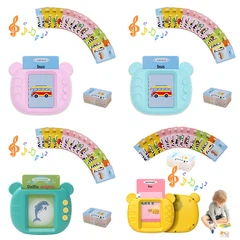
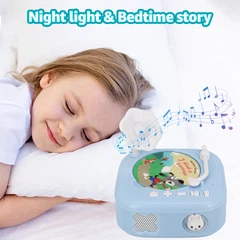
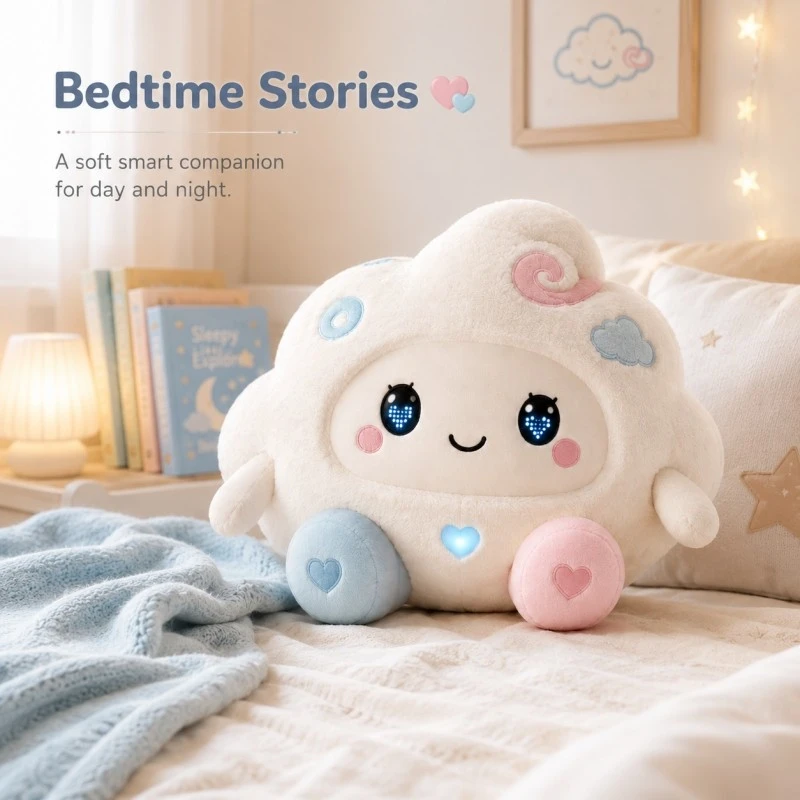
Product platforms across AI emotional plush, AI story machines, talking flash cards, RFID/NFC story devices and sound books
Frequently asked questions
Q: Which certifications come as standard? A: ISO 9001, BSCI and Sedex at the factory level; CE, EN 71, RoHS, UKCA and FCC at the product level, aligned with the model and destination market. Market-specific testing such as ASTM F963 is arranged per program.
Q: Can you support our own audit or a third-party inspection? A: Yes. Buyer audits, factory visits and third-party inspections (SGS, TÜV, BV, Intertek) can be scheduled around production, with inspection reports issued before loading.
Q: Our retailer requires specific documentation. Can you match it? A: In most cases, yes - share the retailer's compliance checklist at the quotation stage so test scope and file preparation are built into the schedule rather than added afterwards.
Q: How early should we lock certification for the holiday season? A: For existing certified platforms, Q3 customization is still workable. For new designs requiring fresh testing, plan 5–6 months ahead of the retail window, since third-party laboratory queues lengthen in peak season.
Certificates are a supply chain decision, not a formality
A B2B buyer is not purchasing a plush toy with a certificate attached; they are purchasing the ability to sell that product legally, repeatedly and without reputational risk. That ability is built from audited systems, in-house tooling, staged quality control and a document set that arrives with the goods.