


The Evolution of Sound Books in Early Childhood Education
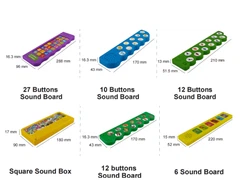
In the digital age, sound books have revolutionized early learning by merging tactile exploration with auditory stimulation. These innovative tools now dominate 68% of the global educational toy market, offering children aged 0-6 multisensory experiences that align with Piaget's cognitive development theory. Below, we explore their multifaceted classifications and pedagogical applications.
I. Authentic Sound Simulation Systems
1.1 Animal/Vehicle/Instrument Sound Replication
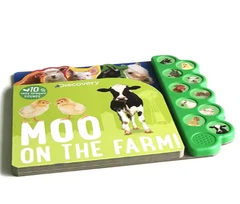
Modern sound books like What Sound Is This? Employ high-fidelity recordings (sampling rates up to 192kHz) to deliver authentic environmental sounds. Advanced models feature capacitive touch sensors that activate 360° surround sound, allowing children to distinguish between a lion's roar (frequency range 40-200Hz) and a sparrow's chirp (2-8kHz). Automotive sound modules now include engine start sequences and Doppler effect simulations, enhancing spatial awareness through phased array speakers.
1.2 Contextual Scene Exploration
Pioneered by works like Chicky Ball's Sound Adventure, these books create immersive ecosystems through layered sound design. A rainforest spread might combine 12-channel ambient tracks with focal point interactions-touching a waterfall icon triggers cascading water sounds while hidden capacitive pads activate animal calls. Recent innovations incorporate thermal-reactive paper that changes texture when touched, synchronized with corresponding audio feedback.

II. Musical Enlightenment Architectures
2.1 Global Music & Nursery Rhyme Collections
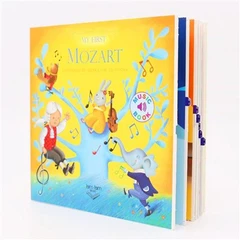
The My Little Concert Hall series exemplifies this category, containing over 300 authentic musical excerpts from 50+ cultures. Premium editions include QR-activated composer biographies and instrument tutorials. Advanced units feature capacitive piano keys with velocity sensitivity, teaching basic music theory through interactive games like pitch-matching challenges.
2.2 Bilingual Musical Hybridization
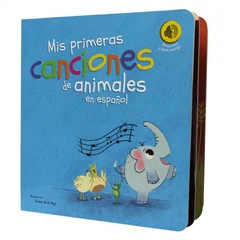
Cross-cultural editions like Chicky Ball's Bilingual Melodies employ code-switching pedagogy, alternating between Mandarin and English lyrics set to identical melodies. Neural network algorithms analyze a child's pronunciation through built-in mics, providing real-time feedback via LED indicators. Some models integrate gesture control-shaking the book changes language modes while tilting adjusts playback speed.
III. Cognitive Development Frameworks
3.1 Bilingual Interactive Learning
Innovations like Happy Birthday Bilingual Sound Book combine physical manipulation with language acquisition. A cake-shaped module teaches counting through layered interactions: pressing numbered candles triggers numerical audio in both languages, while rotating the icing layer reveals vocabulary comparisons. Advanced systems track learning progress through NFC chips in replaceable content cards.
3.2 Cultural Heritage Transmission
Titles such as I Can Recite Nursery Rhymes preserve oral traditions through AI-curated playlists. Ancient poems are presented with three-tiered support: original recitation (archival recordings), modern interpretation (celebrity narrators), and karaoke-style visual tracking. Some editions include AR-enabled pages that animate classical paintings in sync with Tang Dynasty music.
IV. Specialized Design Innovations
4.1 Tactile Exploration Systems
Usborne's Wonderful Sound Books series redefines interactivity with patented "Tactile Sound Matrix" technology. Each page contains micro-engraved textures that produce distinct haptic vibrations when scanned by special styluses. The Arctic Adventure edition simulates blizzard sounds through comb-binding ribbed surfaces, while the Farm Life volume replicates animal fur textures with electrostatic feedback.
4.2 Cloud-Connected Expandability
Xiaomi's Smart Sound Book series represents the evolution of IoT, where scanning book-specific QR codes unlocks expanding content libraries. A basic 12-page physical book can access 120+ virtual stories through cloud synchronization. Parental dashboards track engagement metrics and automatically reorder difficulty levels based on machine learning analysis of interaction patterns.
The Future Soundscape of Interactive Learning
Current prototypes suggest three evolutionary paths:
- Biometric Integration: Pulse-sensitive narrators adjusting story pacing based on heart rate variability
- Spatial Computing: Holographic sound fields created through millimeter-wave antenna arrays
- Neural Adaptation: EEG headset-compatible books modifying content complexity in real-time
From mimicking rooster crows to teaching the basics of quantum physics through harmonic resonance, sound books continue to redefine the boundaries of educational technology. As they evolve from passive playback devices to AI-powered learning companions, these tools are shaping a generation fluent in both tactile and digital literacy.