



INTRODUCTION
Most factory owners in Shenzhen know about CE marking and CPC certificates. Those are table stakes. You cannot export without them.
What changed in 2026 is not the existence of regulation. It is the layering. A single AI-enabled sound toy shipped to the EU and US simultaneously must now satisfy:
CPSC eFiling (US) -- live since July 8, 2026
EU AI Act (EU) -- supervision begins August 2, 2026
EU Battery Regulation Article 11 (EU) -- enforceable February 18, 2027
EU Toy Safety Regulation (EU) 2025/2509 (EU) -- in force since January 1, full compliance by August 1, 2030
Each regulation demands different documentation, different testing, and different product design decisions. Missing one does not mean a warning letter. It means a container held at customs, a product recalled from Amazon, or a fine of up to 35 million euros.
Here is the calendar, the cost, and the checklist you need before your next production run. ☝️
1. The Four Regulations at a Glance
The Scenario 🎯
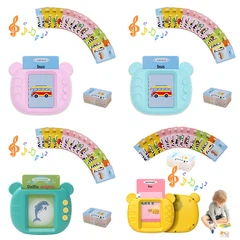
A UK-based educational toy brand sources talking flash card machines from XDT. They sell on Amazon US, Amazon EU, and their own Shopify site. One product. Three markets. Four regulators.
The compliance matrix for a single AI sound toy in July 2026:
RegulationMarketKey DateWhat It DemandsPenalty for Non-ComplianceCPSC eFilingUSJul 8, 2026 (live)Electronic CPC/GCC filing before arrivalContainer held at port. No release. No appeal. EU AI ActEUAug 2, 2026 (supervision)AI risk classification. Inventory. CE + AI conformity.Fines up to EUR 35M or 7% of global turnover. EU Battery Reg Art. 11EUFeb 18, 2027Battery must be user-removable with common tools. Market withdrawal. Recall costs. EU TSR (EU) 2025/2509EUJan 1, 2026 (force) / Aug 1, 2030 (full)DPP. PFAS ban. BPA at 0.005 mg/L. Chemical combined exposure.RAPEX alert. Customs rejection. Platform delisting.
BOM Reality Check 💰
A sound toy that complied with 2025 regulations now needs:
eFiling registration per shipment: 50 to 50 to 150 per filing through a customs broker.
AI Act classification and documentation: One-time 5,000 to 5,000to15,000 for third-party assessment per product family.
Battery door redesign: 2,000to2,000to8,000 for mold modification on existing products.
PFAS-free material substitution: 0.10to0.10to0.50 per unit in higher material costs.
Total compliance burden per new product launch in 2026: 7,000 to 7,000 to 25,000 upfront plus 0.10 to 0.10 to 0.50 per unit.

2. CPSC eFiling: July 8, 2026 -- Already Live
The Scenario 🎯
On July 8, 2026, the US Consumer Product Safety Commission flipped the switch. Every consumer product subject to CPSC safety rules must now file certificate data electronically through CBP's ACE system before the container arrives at a US port.
This is not a paperwork change. It is a gate. No eFiling, no entry. Full stop.
What eFiling means for sound toy shippers:
Every shipment needs a CPC (Children's Product Certificate) or GCC (General Certificate of Conformity) filed before arrival.
The filing must include 7 data elements: product ID, regulation codes, manufacture date, manufacturing address, test date, test lab details, and record-keeper contact.
There is no de minimis exemption. A 10-unit sample shipment needs eFiling the same as a 10,000-unit container.
Foreign Trade Zone entries get a grace period to January 8, 2027. Everything else is live now.
Which sound toys are caught:
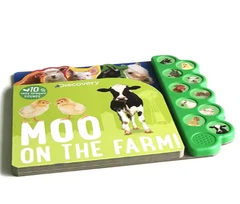
Product CertificateKey Test StandardsTalking flash cards (under 12)CPCASTM F963, CPSIA lead, phthalates AI plush toys (under 12)CPCASTM F963, CPSIA, plus battery safetySound books (under 12)CPCASTM F963, heavy metals in paper/ink White noise machines (general use)GCCUL safety, EMC/FCCEducational tablets with audioCPC or GCCDepends on age group labeling
The Fix
If your factory does not already require your freight forwarder or customs broker to file eFiling data as part of every shipment, start this week. The data elements are deterministic. There is no judgement call. Late filing equals a locked container.
BOM Reality Check 💰
E-filing incurs no government fees. However, your customs broker will charge $50–$150 per filing for data entry and verification. For an annual volume of 50 containers, this translates to an additional annual operating cost of $2,500 to $7,500. Please factor this into your budget.

3. EU AI Act: August 2, 2026 -- Supervision Begins
The Scenario 🎯
Eighteen days from today, EU member state supervisory authorities gain full enforcement powers under the AI Act. They can demand your AI inventory. They can audit your risk classification. They can issue corrective orders.
The full compliance obligations for AI toys (classified as high-risk systems embedded in regulated products) have been extended to August 2, 2028 under the May 2026 Omnibus agreement. But the extension does not delay enforcement readiness. From August 2, 2026, you must be able to show:
A complete inventory of all AI systems in your products.
A documented risk classification for each system.
Evidence that you have begun the conformity assessment process.
What makes a sound toy "AI" under the Act:
Any toy that uses machine learning, natural language processing, voice recognition, or algorithmic content generation is in scope. This includes:
AI plush toys that converse with children.
Talking flash card machines with adaptive voice content.
Sound books with personalized audio playback based on user behavior.
Any connected toy that processes voice data through a cloud API.
The obligations (phased approach):
PhaseDateRequirementSupervision beginsAug 2, 2026AI inventory + risk classification must be complete. Authorities can audit.Standalone high-risk (Annex III)Dec 2, 2027Full compliance: risk management, documentation, CE + AI marking, EU database registration.Embedded in toys (Annex I)Aug 2, 2028Full compliance identical to standalone, plus coordination with Toy Safety Regulation.
The Fix
If you manufacture or export AI sound toys to the EU, your first step this month is not a test. It is a classification exercise. List every product that contains AI. Document whether each one qualifies as high-risk. If it does, begin the conformity assessment pipeline now. An 18-month lead time for a notified body review is not unreasonable when every toy manufacturer in Asia is competing for the same assessors.
BOM Reality Check 💰
High-Risk AI Toy | Third-Party Conformity Assessment (AI Act Compliance)
Notified body fees: $8,000 – $20,000 per product family
Technical documentation preparation: $3,000 – $8,000 (in-house or outsourced consultancy)
Annual surveillance audit: $2,000 – $5,000 per year
Total 1st-year compliance cost (3 new AI toy SKUs launched annually): $39,000 – $99,000

4. EU Battery Regulation: February 18, 2027 -- Design Your Battery Door Now
The Scenario 🎯
In 7 months, every portable battery in an EU-market product must be removable and replaceable by the end user using commercially available tools. A standard Phillips screwdriver counts. A soldering iron does not.
This regulation was passed in 2023. Most factories ignored it until the deadline approached. The deadline is now 7 months away.
What changes for sound toys:
Sealed battery compartments with screws hidden under fabric or glued panels are no longer compliant.
Toys with soldered-in LiPo batteries (common in slim sound book designs) must be redesigned.
Battery connectors must withstand repeated removal cycles. Spring-loaded contacts or JST connectors replace solder joints.
The electric toy exemption (critical nuance):
On April 28, 2026, the EU Commission published a draft exemption adding electric toys to the "independent professional only" category. This means electric toys do not need to be end-user-removable until July 31, 2030. Instead, they only need to be removable by a qualified technician.
What this means in practice:
Battery Regulation & Deadlines
Sound books with coin cell: User-removable (requires tool) | Deadline: Feb 18, 2027
Talking flash cards (rechargeable): Technician-removable (Exempt) | Deadline: Feb 18, 2027
AI plush with LiPo pack: Technician-removable (Exempt) | Deadline: Feb 18, 2027
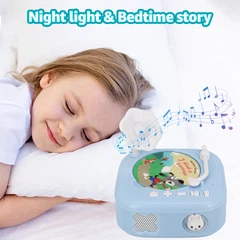
White noise night light: User-removable (requires tool) | Deadline: Feb 18, 2027
All electric toys (post-exemption): User-removable | Deadline: Jul 31, 2030
The Fix
If your product qualifies for the electric toy exemption, document the exemption basis in your technical file. Keep the April 28, 2026 Commission draft on hand. If your product does not qualify (e.g., a sound book with a non-rechargeable coin cell), redesign the battery compartment now. A battery door mold costs 2,000 to 2,000 to 8,000 and takes 3 to 4 weeks.
BOM Reality Check 💰
Retrofitting a battery door onto an existing sound book or plush toy:
Mold modification: 2,000 to 2,000 to 8,000 (one-time).
Battery connector (JST or spring-contact): 0.08 to 0.08 to 0.25 per unit.
Battery door latch/mechanism: 0.05 to 0.05to 0.15 per unit.
Assembly labor increase: 0.02 to 0.02 to 0.05 per unit.
Total per-unit increase: 0.15 to 0.15to 0.45. Spread across a 50,000-unit order, the mold amortizes to 0.04 to 0.04 to 0.16 per unit. Net per-unit cost: 0.19 to 0.19 to 0.61.

5. EU TSR: The Chemical and Digital Overhaul That Starts Now
The Scenario 🎯
The EU Toy Safety Regulation (EU) 2025/2509 entered into force on January 1, 2026. Full enforcement is August 1, 2030. But the supply chain changes it demands take years to implement. Waiting until 2029 to start means non-compliant inventory in 2030.
The five changes that affect sound toys most:
Change 1: PFAS ban.
PFAS (per- and polyfluoroalkyl substances) are banned from intentional use in toys. They are common in water-repellent fabric coatings, non-stick treatments, and some PCB conformal coatings. Every fabric, coating, and treatment in your product supply chain must be PFAS-free.
Change 2: BPA migration limit cut by 87.5%.
Bisphenol A migration limit drops from 0.04 mg/L to 0.005 mg/L. This affects polycarbonate components, epoxy coatings on PCBs, and certain adhesives used in toy assembly.
Change 3: Four new monomer limits.
Styrene (0.77 mg/L), acrylonitrile (0.01 mg/L), butadiene (0.07 mg/L), and vinyl chloride (0.01 mg/L) now have migration limits. These are common in ABS, SAN, and PVC plastics used for toy housings.
Change 4: Formaldehyde tightened.
Wooden sound toys and MDF-based products must meet 0.062 mg/m³ formaldehyde release, down from 0.1 mL/m³. This affects wooden sound book covers and puzzle-style talking toys.
Change 5: Digital Product Passport (DPP).
Every toy must carry a unique digital identifier (QR code or data matrix) linking to a DPP containing CE mark, safety warnings, batch traceability, material composition, and conformity assessment reports. Online sellers must display the DPP link before checkout.
Chemical compliance cost comparison:
Chemical Testing Updates & Cost List
BPA migration: Old 0.04 mg/L → New 0.005 mg/L | Cost: $200–$400 | Test per new material
Formaldehyde (wood): Old 0.1 mL/m³ → New 0.062 mg/m³ | Cost: $150–$300 | Test per wood batch
PFAS screening: Previously not required → Intentional use banned | Cost: $500–$1,500 | Test per material family
4 new monomers: Previously not required → Subject to individual limits | Cost: $300–$600 | Test per plastic batch
Nitrosamines (slime/clay): Only for finger paint → Applies to all moldable toys | Cost: $200–$400 | Test per color batch
The Fix
Start with a material audit. Identify every plastic, coating, adhesive, and fabric in your product. Cross-reference against the new restricted substances. Substitute where necessary. This is not a one-month project. For a factory with 20 active SKUs, a full TSR compliance audit takes 3 to 6 months.
BOM Reality Check 💰
Material substitution costs for TSR compliance:
PFAS-free fabric coating: $0.05 to $0.20 per unit
BPA-free polycarbonate alternative: $0.02 to $0.10 per unit
ABS reformulation for monomer limits: $0.01 to $0.05 per unit
DPP QR code printing on packaging: $0.01 to $0.03 per unit (design and database cost is separate)
Total per-unit increase for a fully TSR-compliant sound toy: $0.10 to $0.50 One-time DPP system setup: $3,000 to $10,000

THE COMMON THREAD
The four regulations share one pattern: they were all drafted in 2023-2025 and are all executing in 2026-2027. No regulator coordinated the timing. The industry gets no collective extension.
A factory that ships a single AI plush toy to a US Amazon warehouse and a German distributor in Q4 2026 must navigate:
CPSC eFiling for the US shipment.
EU AI Act classification for the EU shipment.
Battery removability design compliance for the EU shipment.
TSR chemical compliance and DPP planning.
None of these are optional. None of these can be fixed at the port. They are design-phase and documentation-phase requirements.
At XDT, we built a compliance checklist into every new product development cycle. Before tooling starts, we confirm the regulatory pathway for each target market. We maintain a material compliance database covering all our suppliers. We pre-file eFiling data with every shipment. 🔧
WHAT THIS MEANS FOR YOUR NEXT PRODUCT
Three questions to answer before your next production run:
Is your AI toy classified under the EU AI Act? If yes, has the conformity assessment pipeline started?
Does your product battery meet EU Article 11 removability? If it qualifies for the electric toy exemption, is the exemption documented?
Have you audited your material supply chain for PFAS, BPA at 0.005 mg/L, and the 4 new monomers?
IF YOU ARE SHIPPING SOUND TOYS TO THE EU OR US IN Q3 2026
Send me your product spec and target markets. I will return a compliance gap analysis with estimated costs and timelines within 48 hours.
Official Website: www.kidsoundbook.com | www.xinditai.com
Email: happy@xinditai.com WhatsApp: +8613824343309
LET ME HEAR FROM YOU
Have you received an AI Act compliance request from your EU distributor yet? Or is your battery design already compliant with the 2027 removability deadline?
Drop your status below.
#EURegulations #AIAct #ToySafety #BatteryRegulation #DigitalProductPassport #PFAS #BPA #Compliance #CPSC #eFiling #SoundToys #ShenzhenFactory #OEM #ODM #AIToys #ChildrensToys