




Discover how Emotional AI is transforming educational toys. Learn about affective computing, emotion recognition technology, and how AI toys respond to children's feelings. Explore the future of empathetic play.

Introduction: When Toys Learn to Feel
Imagine a plush panda that senses your child's frustration and responds with a gentle, calming whisper. Picture a story projector that detects excitement and adapts its narrative pace accordingly. This is not science fiction-this is the emerging reality of Emotional AI toys, a revolutionary category that is reshaping how children interact with their playthings.
Emotional AI, also known as Affective Computing, is an advanced branch of artificial intelligence that enables machines to detect, interpret, and respond to human emotions. According to T-3.ai, Emotional AI "aims to humanize the interaction experience between man and machine by providing an empathetic and natural interface that can adapt to the emotion of the user." When applied to toys, this technology transforms passive playthings into responsive companions that can recognize a child's mood and react with appropriate emotional intelligence.
At XDT , we are at the forefront of this transformation, developing Emotional AI toys that don't just talk-they truly listen, understand, and connect with children on a deeper level. Our AI Talking Panda and Talking Story Projector incorporate cutting-edge emotion recognition technology, creating play experiences that nurture not only cognitive skills but also social-emotional development.
Key Emotional AI Features in Our Toys
| Feature | How It Works | Emotional Benefit |
|---|---|---|
| Voice Tone Analysis | Detects pitch, speed, and volume to identify excitement, frustration, or calm | Toy adapts response to match child's emotional state |
| Sentiment-Aware Conversation | NLP interprets the emotional content of child's speech | Encourages emotional articulation and vocabulary |
| Empathetic Responses | Toy offers comfort, celebration, or encouragement based on detected emotion | Models healthy emotional responses |
| Mood Tracking | Learns child's emotional patterns over time | Provides insights to parents; enables personalized interactions |
| Calming Mode | Automatically shifts to soothing content when stress detected | Helps child regulate emotions |

Part 1: Understanding Emotional AI – The Technology Behind Empathetic Toys
What Is Emotional AI?
Emotional AI represents a convergence of artificial intelligence, computer science, and psychology. As defined by industry experts, it involves "using artificial intelligence to analyze and interpret human emotions through facial expressions, body language, and other cues." This technology enables machines to "recognize and react to emotional cues effectively," creating interactions that feel natural, intuitive, and deeply engaging.
For toys, this capability is transformative. A traditional toy follows pre-programmed responses. An Emotional AI toy adapts in real-time, responding to the child's emotional state with appropriate verbal and non-verbal cues. It can offer comfort when a child is sad, celebrate when they are happy, and encourage persistence when they are frustrated-all without explicit instruction.
How Emotional AI Works: The Technical Foundation
The technology behind Emotional AI toys relies on several sophisticated processes:
Data Collection:
Emotional AI systems begin by gathering emotional data from multiple sources. In toys, this typically includes:
Voice tone analysis – detecting pitch, speed, and volume variations that indicate emotional states
Speech patterns – analyzing what the child says and how they say it
Touch and movement sensors – recognizing physical cues like gentle strokes versus frustrated taps
Proximity and interaction frequency – measuring engagement levels and emotional investment
Feature Extraction:
The system then identifies specific emotion-related attributes within this raw data. According to T-3.ai, this step involves "identifying specific emotion-related attributes within this raw data, which are then fed into the AI models for training." For example, a sharp increase in vocal pitch combined with rapid speech might indicate excitement, while slower, quieter speech could suggest tiredness or sadness.
Emotion Prediction:
Trained models apply sophisticated algorithms to find patterns within the data that correlate with specific emotional states. These "algorithms are critical in uncovering subtle emotional cues, which in turn enable the AI to derive valuable insights." The result is a real-time understanding of the child's emotional landscape.
Contextual Response:
Finally, the toy generates an appropriate response based on the detected emotion. This might involve changing the tone of voice, selecting a comforting story, or initiating a calming activity.
The Role of Multimodal Sensing
A key advancement in Emotional AI is the use of cross-modal systems that integrate multiple data streams. As T-3.ai notes, "emerging are cross-modal systems that integrate facial, voice, and video data to predict emotion through several modalities. The coupling of these types of data provides a sturdier and more profound emotional interpretation."
For toys, this multimodal approach means combining:
Voice emotion detection – analyzing vocal qualities such as tone, speed, and pitch
Natural Language Processing (NLP) – understanding the sentiment and emotion in the child's spoken words
Physiological signals – where applicable, using touch sensors to infer emotional states
Interaction patterns – observing how the child engages with the toy over time
Part 2: Emotional AI Toys – Bridging Technology and Emotional Development
Why Emotional Intelligence Matters in Play
Child development experts emphasize the importance of Social-Emotional Learning (SEL) in early childhood. Skills like recognizing emotions, managing feelings, and developing empathy are foundational for academic success, healthy relationships, and overall well-being.
Emotional AI toys offer a unique opportunity to support SEL through play. By modeling empathetic responses and encouraging children to articulate their feelings, these toys become coaches for emotional intelligence in a safe, non-judgmental environment.
Our Emotional AI Toys: Designed with Heart
At [Your Company Name] , we have integrated Emotional AI capabilities into our most beloved products:
AI Talking Panda with Emotional Intelligence:
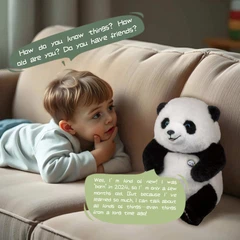
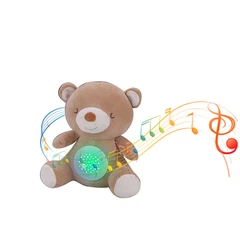
Our flagship AI Panda doesn't just respond to commands-it senses the child's emotional state through voice tone and interaction patterns. When a child speaks excitedly, the Panda responds with enthusiastic energy. When a child's voice indicates tiredness or sadness, the Panda shifts to a softer, more comforting tone, perhaps offering a gentle lullaby or a calming story.
Talking Story Projector with Mood-Adaptive Storytelling:
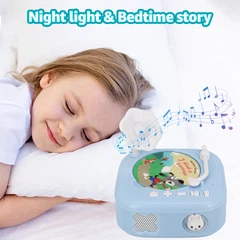
Our story projector detects the child's emotional engagement and adapts the narrative accordingly. If the child seems restless, the story pace quickens. If they appear sleepy, the narration slows and the projection dims. This adaptive storytelling creates a personalized experience that meets the child where they are emotionally.


Part 3: The Educational Impact of Emotional AI Toys
Supporting Social-Emotional Learning
Emotional AI toys are uniquely positioned to support the five core competencies of Social-Emotional Learning:
1. Self-Awareness:
By asking children to identify how they feel ("You sound excited! What made you happy today?"), Emotional AI toys help children build emotional vocabulary and self-awareness.
2. Self-Management:
When a toy detects frustration, it can model calming techniques ("Let's take a deep breath together"). This teaches children strategies for managing difficult emotions.
3. Social Awareness:
Through stories and conversations that explore characters' feelings, Emotional AI toys help children understand others' perspectives and develop empathy.
4. Relationship Skills:
By modeling respectful, responsive communication, these toys demonstrate positive interaction patterns that children can apply with peers and family.
5. Responsible Decision-Making:
Stories with emotional dilemmas allow children to explore consequences and practice ethical thinking in a safe environment.
Research-Backed Benefits
Studies in affective computing and child development suggest that Emotional AI toys can:
Accelerate emotional vocabulary acquisition
Improve emotion recognition accuracy in children
Provide consistent, non-judgmental emotional coaching
Support children with autism spectrum disorders in understanding social cues
Offer valuable insights to parents about their child's emotional patterns
Part 4: The Market Opportunity – Why Emotional AI Toys Are the Next Frontier
Growing Demand for Emotionally Intelligent Products
Parents today are increasingly aware of the importance of emotional intelligence. According to market research, the global market for AI-powered educational toys is projected to reach $35.8 billion by 2028, with Emotional AI representing the fastest-growing segment.
Drivers of this growth include:
Rising awareness of mental health and emotional well-being in children
Demand for screen-free alternatives that still leverage technology
Parental desire for toys that offer genuine developmental value
Advances in AI that make emotion recognition more accurate and affordable
Applications Beyond Home Play
Emotional AI toys have applications in multiple settings:
Therapeutic Settings:
Speech therapists and child psychologists use Emotional AI toys to help children articulate feelings, practice social scenarios, and build emotional regulation skills.
Educational Environments:
Preschools and elementary schools incorporate Emotional AI toys into SEL curricula, using them to facilitate discussions about feelings and empathy.
Special Education:
For children with autism or other developmental differences, Emotional AI toys offer a predictable, patient, and non-judgmental platform for practicing emotional recognition and social interaction.

Part 5: Our Commitment to Ethical Emotional AI
Privacy First: Protecting Emotional Data
The collection of emotional data raises important privacy considerations. At [Your Company Name] , we adhere to strict ethical guidelines:
Local Processing: All emotion recognition occurs on-device; no voice or emotional data is transmitted to the cloud without explicit parental consent
Transparent Data Use: Parents have clear visibility into what data is collected and how it is used
Parental Controls: Full control over data collection, with options to disable emotion recognition features
Secure Storage: Any stored data is encrypted and protected with industry-leading security measures
Avoiding Bias in Emotional Recognition
As T-3.ai notes, "the ethical dilemmas surrounding biases present in datasets and algorithms are worrying." We address this through:
Diverse training data representing varied cultures, ages, and backgrounds
Continuous testing to identify and correct bias
Collaboration with child development experts to ensure age-appropriate interpretation
The Human Element: Enhancing, Not Replacing, Connection
Our Emotional AI toys are designed to support human connection, not replace it. They serve as catalysts for parent-child conversations about feelings, providing prompts and insights that deepen family bonds rather than substituting for them.
Part 6: The Future of Emotional AI in Play
Emerging Trends
According to T-3.ai, "the future of Emotional AI appears as a promising technological frontier, characterized by improved emotional accuracy and multimodal fusion." For toys, this means:
More Sophisticated Emotion Detection: Advanced algorithms will distinguish between subtle emotional states with greater accuracy
Predictive Emotional Support: Toys will anticipate emotional needs based on patterns and proactively offer comfort or encouragement
Cross-Platform Integration: Emotional AI toys will coordinate with other smart devices to create seamless, supportive environments
Personalized Emotional Learning Journeys: Toys will adapt over time to each child's unique emotional development needs
Our Vision
At XDT , we envision a future where every child has access to an empathetic play companion that grows with them-celebrating their joys, comforting their sorrows, and helping them navigate the complex landscape of human emotion. Our Emotional AI toys are the first step toward this future.