Best AI Emotion Toys for Toddlers – Screen‑Free Voice Companions That Recognize Feelings

Why Gen Z, Gen Alpha, and Global Audiences Are Driving Demand for Companionship, Identity, and Humor in AI-Powered Play
The New Currency of Play
For decades, the global toy industry followed a predictable pattern: Western stories, characters, and formats traveled East. A Disney princess or a Marvel superhero would land in Shanghai, Tokyo, or Mumbai, and local markets adapted to Western cultural templates. That model is now reversing at an accelerating pace.
According to Singing Grass Communications, a cultural intelligence consultancy, the reverse cultural flow is quietly-and rapidly-reshaping global consumer culture. What once predominantly flowed West → East is now increasingly moving East → West, redefining retail, storytelling, licensing, and brand strategy across markets. Brands such as Labubu, Jellycat, and Pokémon are no longer niche collectibles, but clear indicators of how Asian-origin creativity is progressively shaping global consumer taste, emotional behavior, and purchasing decisions.
This shift is intimately tied to the rise of the Emotional Economy-a marketplace where financial decisions are increasingly made to support emotional needs, psychological tendencies, and personal values rather than pure product utility. Generation Z and Generation Alpha are leading this transformation, engaging with intellectual property through comfort, identity, humor, and emotional resonance rather than functional features alone. For the creators of AI emotional toys, this convergence of reverse cultural flow and the emotional economy represents a profound opportunity: to build companions that don't just teach facts, but resonate with how children feel and identify across cultures. iPads and smartphones offer isolated consumption; AI emotional toys offer companionship, comfort, and continuity.

What Is the Emotional Economy and Why Does It Matter for Toys?
The Emotional Economy describes a marketplace where value is created by fulfilling emotional needs-comfort, identity, belonging, humor, and self-expression-rather than focusing solely on product utility. Data underscores the magnitude of this shift.
A 2025 report by the Just So Soul Institute and the Shanghai Youth Research Center found that 56.3% of young people are willing to pay for emotional value, a 16% increase from 2024; 34.2% of respondents were making emotional purchases for self-healing or to relieve negative emotions, with over 40% of those purchases including stuffed animals, stress-relieving toys, and other emotionally uplifting items. A separate report found that 93.1% of Chinese consumers born after 1995 seek emotional value in their spending, from plush toys to physical or virtual companions.
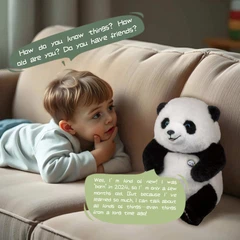
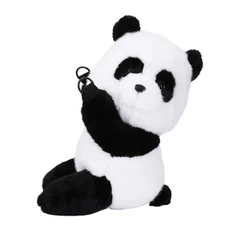
For children and tweens, AI emotional toys become powerful vessels for these emotional needs. A plush panda that remembers a child's name, tells gentle jokes, and asks about their day isn't merely a language-learning device-it is a companion that provides comfort, reduces loneliness, validates the child's emotional world, and models healthy social interaction. In the Emotional Economy, that companionship is not an added feature; it is the core value proposition.
Research suggests that touching or hugging a soft toy can significantly reduce levels of the stress hormone cortisol. In fast-paced urban life where academic competition, internal workplace dynamics, social anxiety, and uncertainty about the future shape a strong internal drive for emotional connection and understanding, plush toys and AI companions serve as a form of healing for many. AI emotional toys, which combine this therapeutic potential with interactive intelligence, meet an even deeper set of needs: a child doesn't just hug them; the toy talks back, listens to worries, and creates a sense of being understood.
Key Drivers of the Emotional Economy in Toys
| Driver | How It Applies to AI Emotional Toys |
|---|---|
| Comfort | Soft, huggable design + soothing voices + night lights → reduces bedtime anxiety and daily turbulence |
| Identity | Customizable voices, languages, and characters let children see themselves in the toy |
| Humor | Gentle jokes, playful banter, and silly sound effects create joy and repeat engagement |
| Shared Experience | Parents and children co-create stories or record custom messages → bonding and continuity |
| Nostalgia | Vintage phonograph designs, classic tales, and familiar lullabies bridge generational gaps |
Reverse Cultural Flow – East to West and Its Impact on AI Toys
The reverse cultural flow is not merely a theoretical abstraction; it is visible in real-world sales figures and cultural phenomena. UK plush brand Jellycat reportedly sold around $117 million worth of products to Chinese consumers in 2024 alone-a clear signal of how cultural influence and emotional attachment now travel in both directions. Pop Mart, the Chinese toy retailer behind the Labubu craze, has become a global cultural phenomenon.
This bidirectional flow reflects a fundamental rebalancing of global cultural influence. Asia is no longer simply a growth market to be tapped; it is increasingly a source of global cultural taste and aesthetics. Characters, narratives, and visual language scale across borders more effectively than functional offerings, and IP travels faster than products themselves.
For AI emotional toys, reverse cultural flow means:
Diverse character designs inspired by Eastern aesthetics (rounder, softer, more expressive faces) resonate globally
Storytelling formats emphasizing collectivism, family bonds, nature, and harmony appeal to Western parents seeking alternatives to hyper-individualistic content
Voice and language options must include Mandarin, Korean, Japanese, and Hindi-not just English and Spanish-to tap into diverse global markets
Symbolic details such as lucky motifs, festival-specific phrases, and culturally resonant color choices can transform a generic AI companion into a culturally specific friend
Moreover, reverse cultural flow empowers local publishers and IP owners in Asia to launch AI companions directly to global markets without requiring a Western intermediary. An AI panda designed in Shenzhen that speaks both Mandarin and English, uses traditional Chinese lullabies, and features culturally subtle design elements can become a bestseller in Paris or New York-not because it carries a familiar Western logo, but because it taps into the universal, human need for comfort and play.
Practical Example
A mid-sized Chinese children's book publisher successfully adapted its popular rabbit character into an AI plush toy. The toy speaks both Mandarin and English, uses lullabies from the publisher's homeland, and features clothing inspired by traditional patterns. Initially designed for the domestic market, it gained unexpected traction at the Bologna Children's Book Fair, a major global gathering of children's publishing professionals, and secured distribution in European boutique toy stores. That is reverse cultural flow in action: cultural detail, not Western standardization, drove global appeal.


How AI Emotional Toys Fulfill Emotional Economy Needs ?
1. Comfort and Emotional Regulation
AI emotional toys use voice-tone detection to sense when a child is upset, frustrated, or tired. They respond with calming phrases, breathing exercises, or gentle music. This directly addresses the emotional need for security and comfort-a central component of the Emotional Economy. The feedback loop is immediate and reassuring: a child's distress is met with warmth, not confusion or silence.
2. Identity and Personalization
Children can name their AI companion, choose its voice (cheerful, gentle, funny, or wise), and dress it with interchangeable accessories (seasonal hats, capes, soft outfits). Some systems allow parents to upload custom content-family stories, inside jokes, or affirmations in the child's home dialect. This level of customization makes the toy an extension of the child's identity, supporting the trend where products increasingly serve as expressions of self.
3. Humor and Joy
Humor is often overlooked in educational toys. Yet Gen Alpha craves silliness alongside learning. AI emotional toys can be programmed with joke modes, funny sound effects, and playful interruptions ("Did you know pandas invented the moonwalk?"). Laughter triggers oxytocin, strengthening the emotional bond and encouraging repeated use-the toy becomes a source of delight, not just information.
4. Shared Experiences Across Generations
The Emotional Economy also values co-play-technology as a bridge, not an isolator. AI toys that include recordable cards allow grandparents to record lullabies from another country. Parents can join in voice-activated choose-your-own-adventure stories. These features turn a solitary device into a family ritual, building emotional capital far beyond the toy's price tag, addressing concerns about AI replacing rather than augmenting human interaction.
5. Cultural Intelligence, Not Just Surface Localization
In the era of reverse cultural flow, brands that rely on surface-level localization risk missing the emotional logic that makes IP resonate across different markets. Effective AI emotional toys must embed cultural intelligence into their core design: characters that feel authentic, narratives that reflect shared values, and interaction styles that respect different communication norms (e.g., more indirect reassurance in some Asian contexts, more direct praise in others).
Part 4: Features of a Modern AI Emotional Toy Designed for Emotional Economy
Based on emerging market trends and best practices, the most successful AI emotional toys share a common set of features:
| Feature | Emotional Need Addressed |
|---|---|
| Voice-tone recognition and adaptive responses | Emotional safety, being heard and understood |
| Long-term memory (remembers child's name, past conversations, favorite topics) | Identity, continuity, and being known |
| Interchangeable accessories and seasonal customization | Self-expression, play-based creativity |
| Multilingual support (English + Mandarin/Korean/Japanese/Spanish) | Cultural inclusion, belonging, and family language continuity |
| Screen-free, tactile interaction | Focused attention, sensory grounding, reduced overstimulation |
| Parent-enabled conversation logging (with privacy-first design) | Shared oversight, trust-building, and reassurance without intrusion |
| Recordable DIY cards for family voices | Cross-generational bonding, nostalgia, and emotional permanence |
| Gentle humor mode / curated joke library | Joy, levity, and warmth |
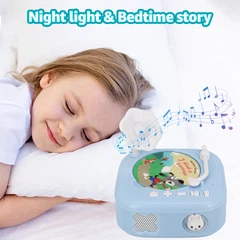
| Night light / sleep sounds with sunset transitions | Comfort, routine, and gentle daily endings |
All these features must be delivered with certified safety (CE, ROHS, EN71, FCC) and privacy-first design (no cameras, physical mute buttons, local processing options). In the Emotional Economy, trust is the highest form of emotional capital-parents must know that a "listening toy" is safe, not surveilling.

The Future of AI Toys – Cultural Intelligence, Responsible Design, and Collaboration
As the market for AI toys expands, the distinction between simple gadgets and genuine companions becomes increasingly important. The emotional economy and reverse cultural flow are not temporary trends; they are enduring structural shifts in how consumers, young and old, relate to products and IP.
Emerging Industry Directions
Integration of IP and AI: As noted in the Bologna Children's Book Fair discussions, Asian market trends, nostalgia marketing, and the rights chain dominate conversations about where children's content and licensing are headed. AI emotional toys that embed meaningful IP with emotional resonance will outperform generic, interchangeable designs.
Emotional learning and brand development: Emotional learning is increasingly influencing brand development strategies across publishing and licensing. AI emotional toys designed in collaboration with child development specialists or aligned with established SEL frameworks will gain parent and educator trust.
East–West bidirectional influence: The Bologna Licensing Trade Fair has highlighted that East–West influence in children's licensing is increasingly bidirectional, with Asian creative trends spreading across European and North American markets. AI toy creators must design for a global audience from the start, not as an afterthought.
Decline in traditional reading: The global decline in reading among young people-tweens are spending upwards of five hours per day on digital devices, according to Common Sense Media-creates both an urgent problem and an opportunity. Audio-based AI toys can provide an engaging gateway to narrative, language, and imagination that bridges the gap between passive screen consumption and active literacy.
Challenges to Address
As the AI toy industry matures, several challenges must be confronted. Privacy-by-design is not optional: families are increasingly wary of always-on microphones and cloud-based voice data without transparent controls. Content safety is paramount: generative AI models must be rigorously filtered for age-appropriate responses, avoiding inappropriate or manipulative outputs. And regulatory alignment is essential: staying ahead of evolving international safety and data standards (GDPR in Europe, emerging US federal guidelines, and updated Asian regulations) is a competitive necessity.
For manufacturers, those who succeed will be those who embed ethical guardrails into product architecture-hardware mute switches, local-processing options, and transparent data policies-rather than retrofitting them late in development.

How XDT Supports Brands in Entering the AI Emotional Toy Market
For publishers, licensors, and toy brands, the path to success in the Emotional Economy is through OEM/ODM partnerships that allow full creative control without heavy upfront investment.
XDT Electronic Co., Ltd. (www.kidsoundbook.com) has specialized in screen-free audio toys since 2001, serving over 20,000 clients in 120+ countries. With end-to-end in-house manufacturing-from chip programming and injection molding to card printing, plush production, and final assembly-plus full OEM/ODM customization, XDT helps clients:
Transform existing book IP or characters into AI emotional plush toys, NFC story boxes, or talking phonographs
Provide audio content (stories, songs, lessons) in MP3/WAV format with professional voice casting
Design cards and retail packaging using CMYK die-cut templates (3mm bleed)
Customize hardware (colors, buttons, night lights, voice models, and physical controls)
Obtain global certifications (CE, ROHS, EN71, FCC, BSCI, ISO9001) for smooth international distribution
Rapid prototyping is available in 3–5 business days. Low MOQ of 1,000 units makes market entry accessible for small and medium publishers, startups, and independent IP owners. A one-year warranty on all products provides additional peace of mind.
Our mission: Make Kids Love Learning-by building toys that children don't just use, but feel connected to across cultures, contexts, and years of growth.

The Future of AI Toys Is Emotional, Global, and Huggable
The Emotional Economy and Reverse Cultural Flow are not distant abstracts. They are shaping buying decisions at the Bologna Children's Book Fair, in licensing deals across continents, and on wishlists worldwide today. Gen Z parents and Gen Alpha children are voting with their wallets-and their hearts-for toys that offer comfort, identity, humor, emotional continuity, and genuine shared experience.
AI emotional toys, designed responsibly and with cultural intelligence, are perfectly positioned to meet this demand. They are not merely functional or educational; they are fundamentally empathetic, their emotional intelligence integrated into both software and physical materials. In a world that increasingly values emotional capital over machine-like utility, that capacity for kindness is the ultimate competitive advantage.
The shift is clear: cultural influence flows in both directions, emotions drive value, IP travels faster than products, and local insight is essential. The inverse is equally true. AI toys that ignore these dynamics will feel generic, disconnected, and forgettable. Those that embrace them will become lifelong companions, cherished across generations and continents.