



Electronics Inside Plush: Map the Hard-Point Problem
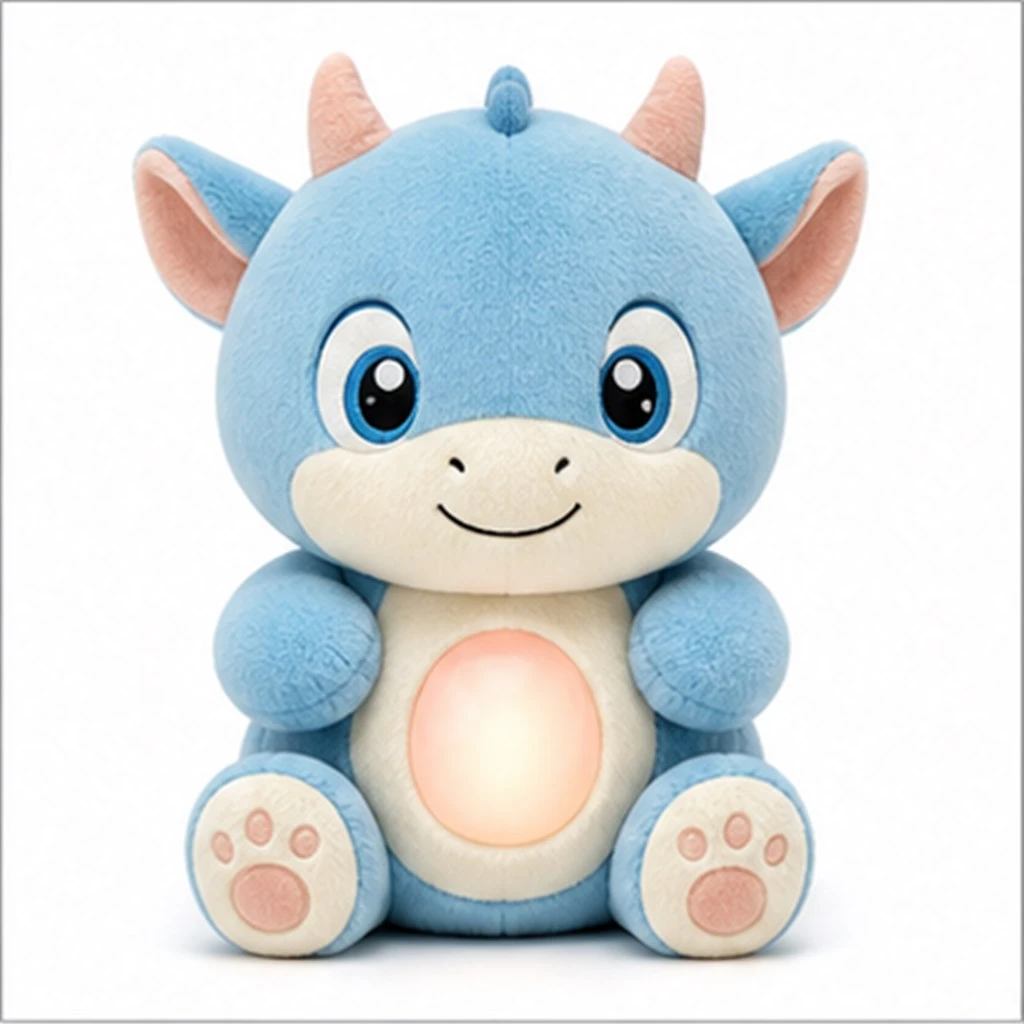
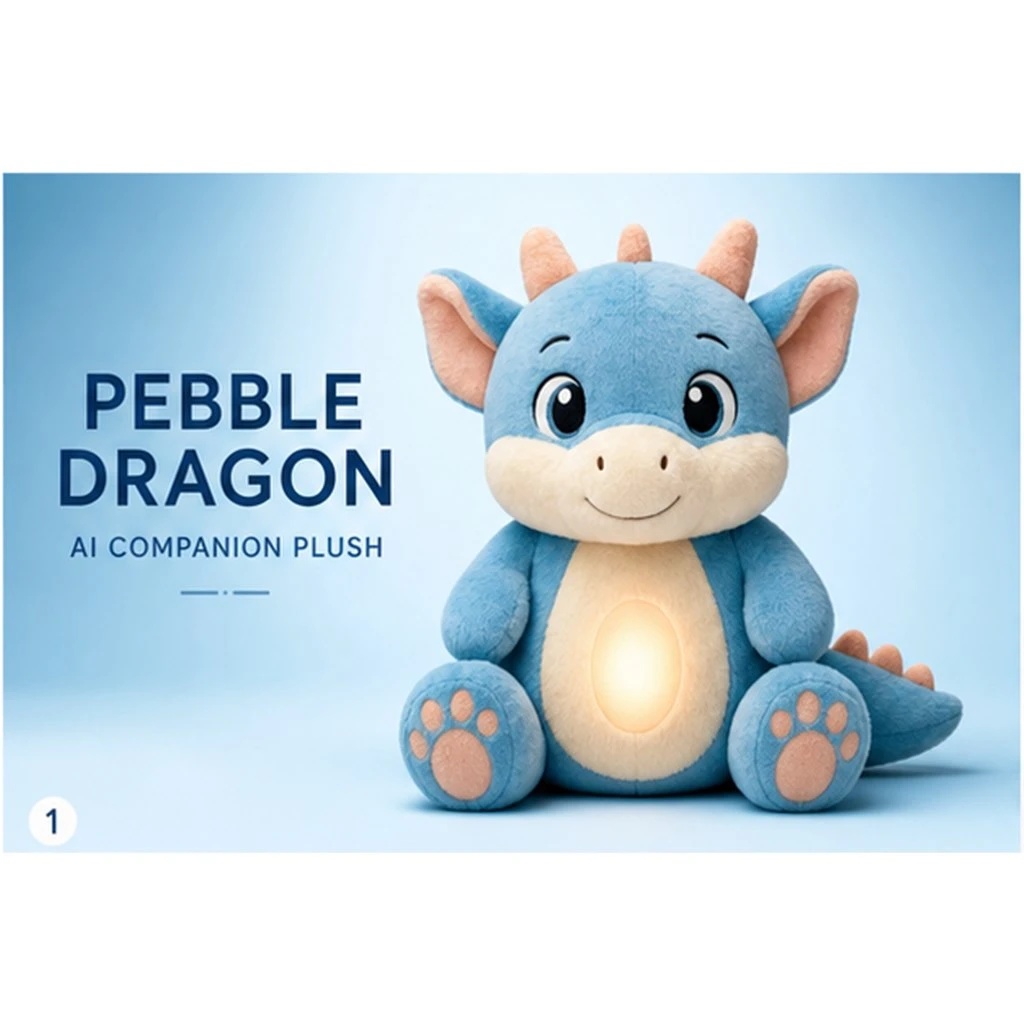
A hard spot in a plush toy is an observation, not yet a diagnosis. It may come from the selected module, its protective construction, displaced filling or a seam that behaves differently under pressure. This plush electronics integration guide uses Pebble Dragon to explain a structured investigation. The blue character provides useful landmarks: a cream belly, small arms, forward feet, central back spines and a curved tail. No physical sample has been tested for this article. The method is a proposed review approach, not evidence that the illustrated product contains approved hardware.
Define What the Hand Is Supposed to Encounter
Before comparing samples, write a plush hand-feel requirement for the intended areas of contact. The front view suggests that someone may hold the torso or rest a hand over the cream belly. If an electronic insert is selected, agree where it can be perceptible and where the desired construction should remain soft. Avoid an instruction such as no hard parts anywhere when the selected configuration necessarily contains a protected assembly.
The requirement should distinguish visual shape, local firmness and acceptable handling. They are related but not identical. A body can look round while feeling uneven; another can feel soft yet fail to hold the approved seated pose. State which observation each review is intended to answer.
Use the intended users and product configuration to define the scope with responsible technical reviewers. This article does not assign safety limits, test forces or regulatory suitability. Those need appropriate project-specific input. The immediate objective is clearer communication: when a buyer reports an uncomfortable point, everyone should know which part of the dragon, which action and which comparison they mean.
Create a Map With Landmarks That Do Not Move
For a hard-point mapping exercise, name areas that remain recognizable across revisions. On the dragon, use the belly centre, belly edge, arm junctions, lower torso and tail root. Include the side of the head if its filling or structure is part of the investigation. A note saying hard on the right is ambiguous unless the viewing direction is agreed.
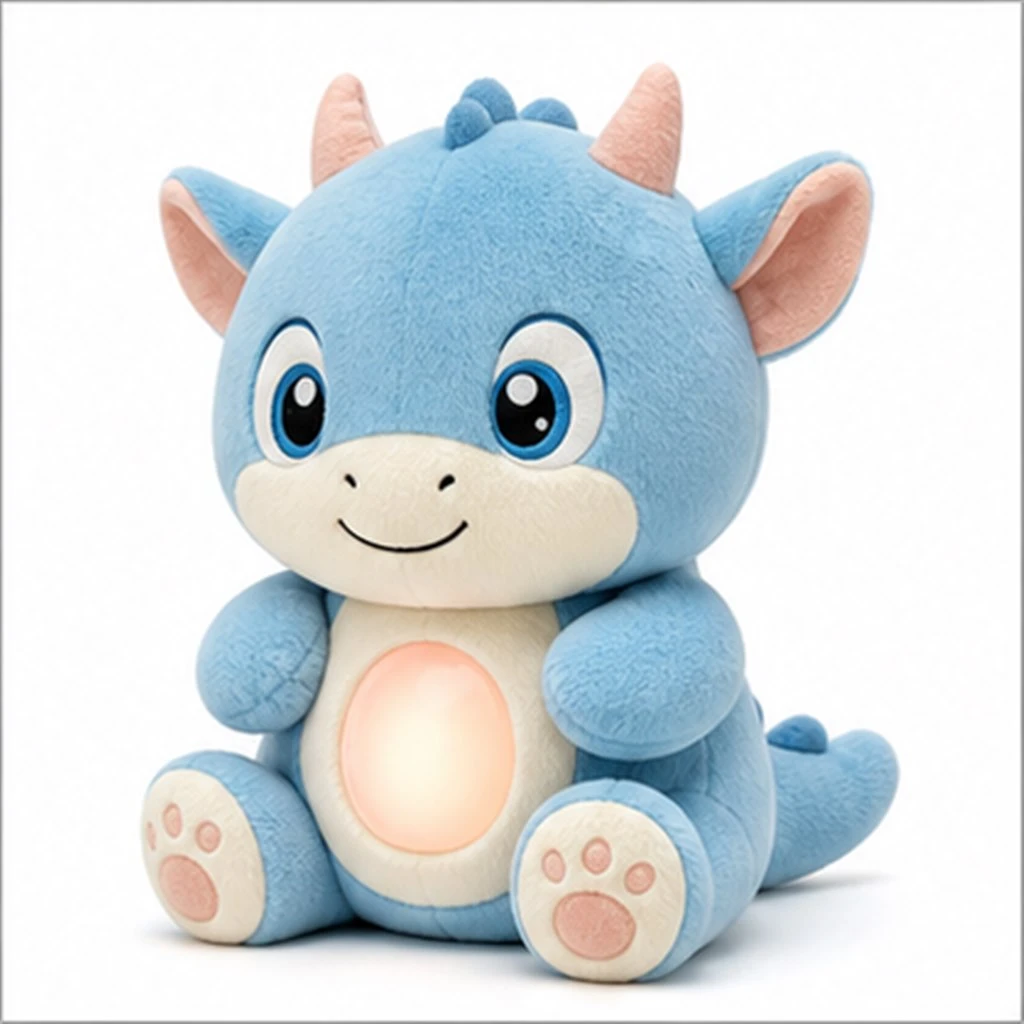
Photograph the complete sample from a consistent front and side position, then mark the observation areas. Keep the normal unmarked view as a reference too. The point is not to produce a complicated diagram; it is to make the same location identifiable by someone who did not hold the toy during the first discussion.
Record the sample revision and selected configuration alongside the map. A plain plush shell, an assembly with a dummy insert and a powered prototype should not share an unlabeled photograph. Otherwise a later reviewer can mistake a result from one arrangement for evidence about another. The appearance may be nearly identical while the internal conditions differ substantially.
Use the Side Profile to Separate Position From Pressure
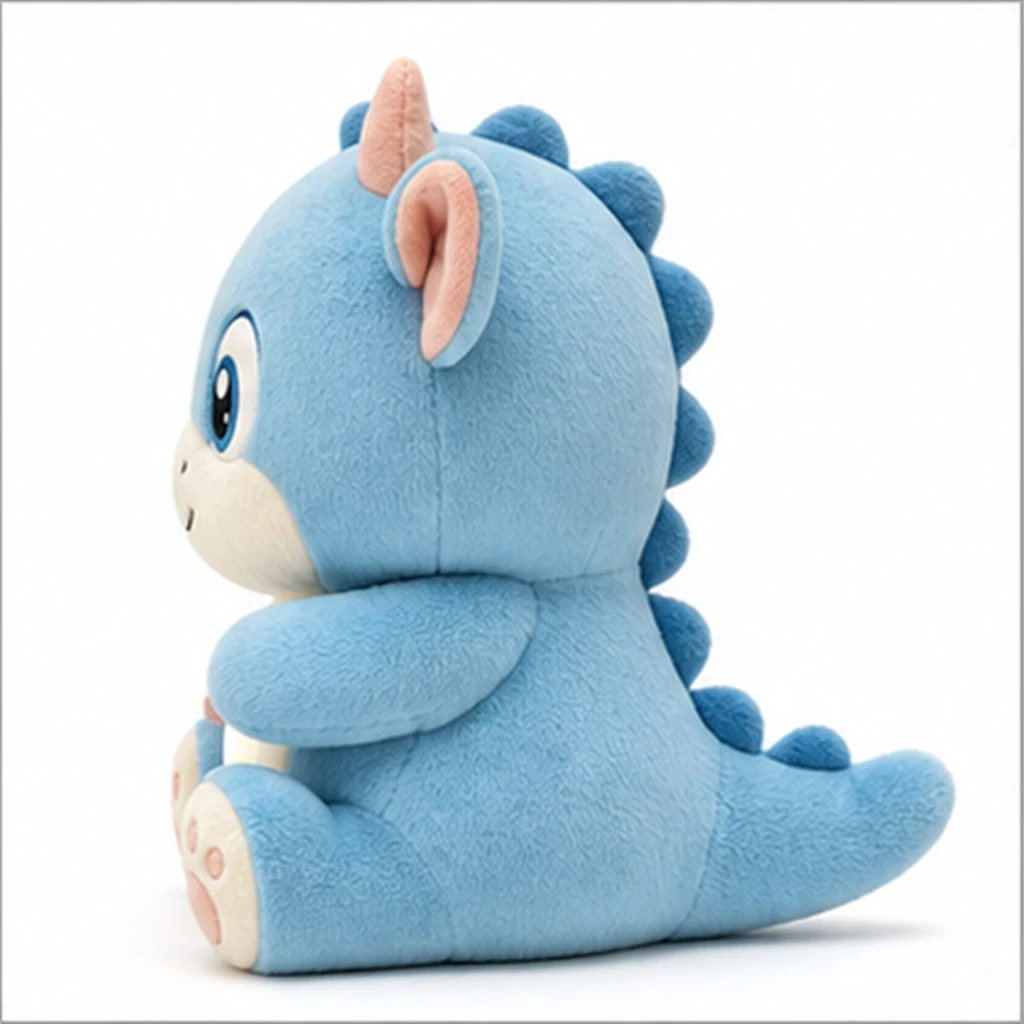
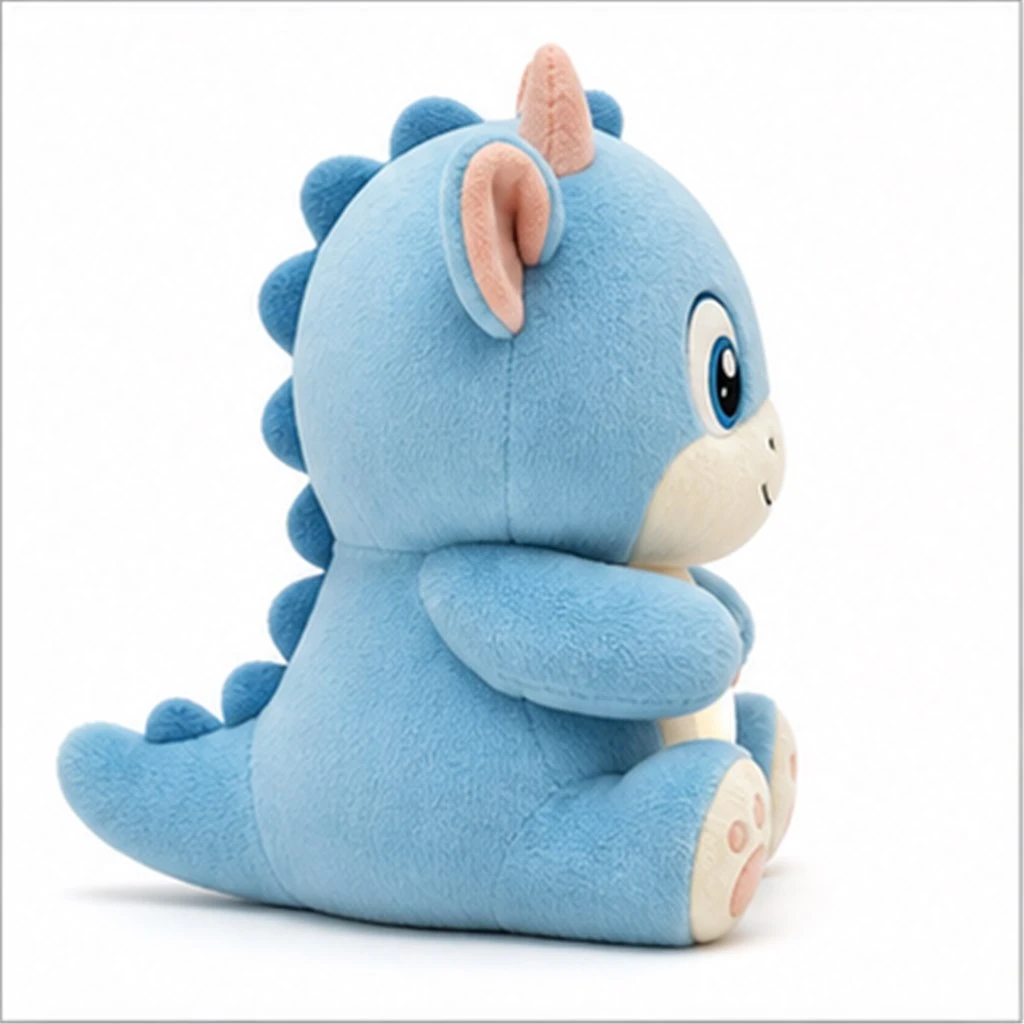
The side image shows how the head, arm and torso overlap. In an integrated plush sample, a firm point felt through the side may not sit directly behind the visible belly centre. Internal retention, filling distribution and the shape of the insert can change the relationship. The observer should record the location felt at the surface without guessing the internal cause.
Apply the agreed handling sequence consistently. If the observation appears when the toy is lifted rather than resting, record that distinction. If it is only noticeable when the arm is moved, preserve the arm position in the evidence. Do not compare a relaxed sample with another that someone is gripping tightly and then attribute the difference entirely to the hardware.
A qualified development reviewer can inspect the proposed internal arrangement through the agreed access method. Keep that inspection separate from ordinary user handling. Opening or disturbing the filling can change the very condition being investigated, so document the assembled state first. The purpose is to reduce uncertainty, not to produce a confident explanation before the evidence exists.
Control the Sample Size and Sitting Pose
The concept drawing proposes a 25 cm height with width and depth figures. For a soft-toy integration comparison, use the agreed physical size and pose, not the rendering alone. A smaller torso around the same insert can feel quite different. A tilted seated sample can also change where the module rests relative to the surface and the person's hand.
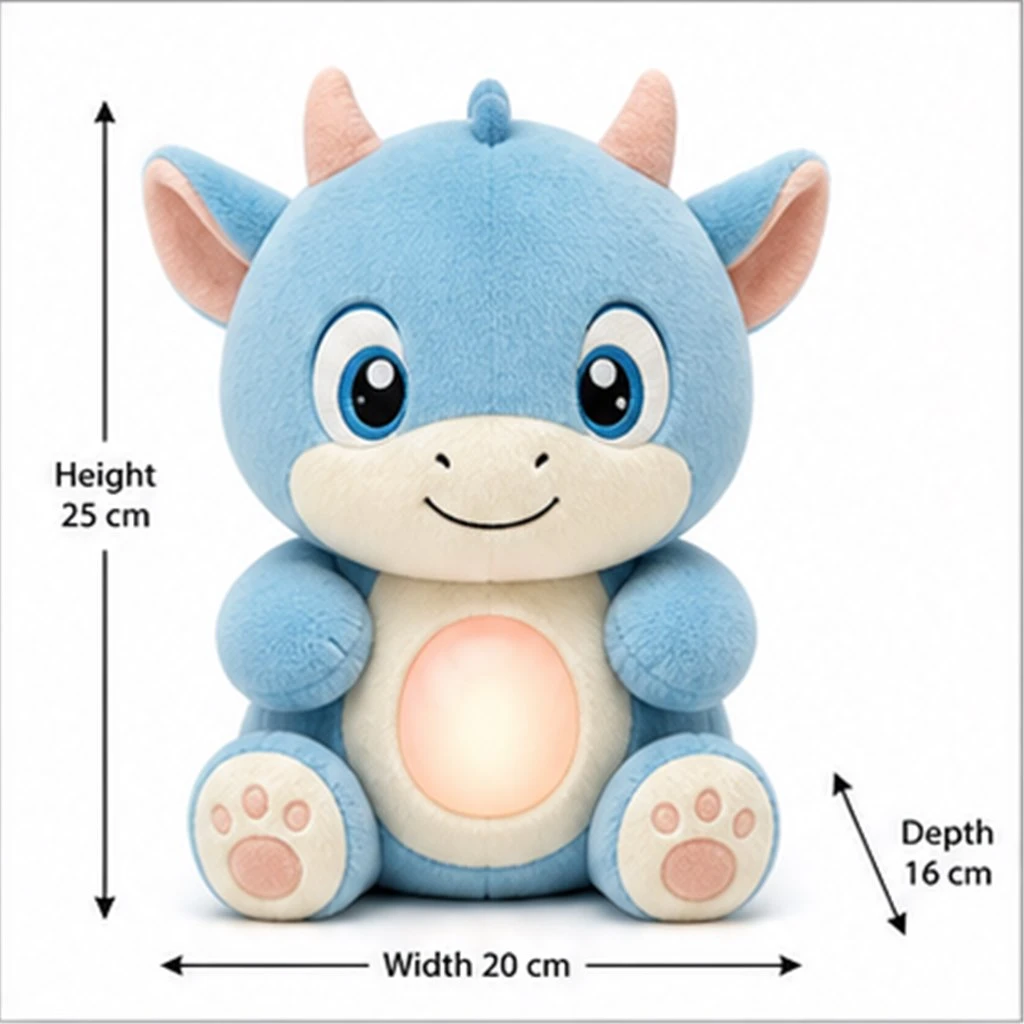
Record the measuring endpoints used for horns, feet and tail. Place the sample on the same type of surface for the ordinary seated observation. If it needs external support to hold the pictured pose, document that rather than hiding the support outside the camera frame. Posture is part of the assembly evidence.
When a size revision is intentional, treat it as a changed condition. Do not label the new result a direct repeat of the earlier test without explanation. Identify the expected consequences for internal space, retention and filling before deciding what to inspect again. A clear comparison prevents an appearance adjustment from being mistaken for an improvement or deterioration in an otherwise unchanged module installation.
Compare Filling Before Repositioning Hardware
The left profile provides a view of the torso below the large head. A plush filling evaluation can begin by comparing the approved shell and filling arrangement with the proposed integrated assembly. Where a suitable control sample is available, use it to understand which differences appear after the selected insert is introduced. State the limitations if no comparable control exists.
Do not prescribe more filling as a universal correction. Extra material may mask an edge locally while changing the sitting pose, facial proportion or access arrangement. Similarly, reducing filling can make the character softer while allowing an insert to move more noticeably. The right response depends on the observed condition and the designed internal construction.
Document one deliberate change at a time when practical. If the pattern, filling and insert location all change together, the next sample may feel better without showing which change mattered. Sometimes a combined revision is necessary, but that limitation should be explicit. Good investigation aims for an explanation that can guide repeatable assembly, not just one sample that happens to feel acceptable.
Inspect Retention Along the Rear Construction
The dragon's rear has a centreline seam and rounded spines. A module retention review must consider the real pattern and access design behind that appearance. The rendering does not show a verified compartment or fastening method. Engineering should identify the proposed arrangement before anyone assumes that a visible seam is a suitable service opening.
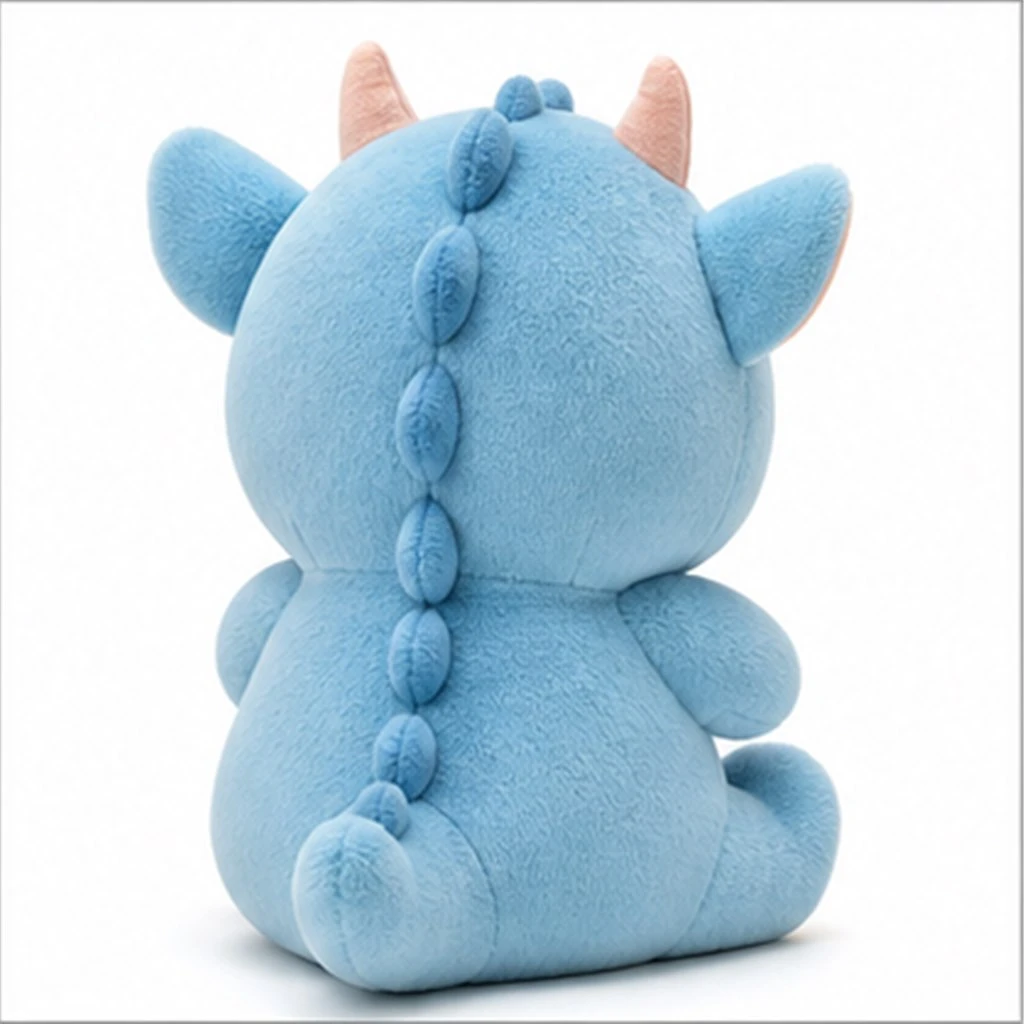
Where the selected design allows controlled technical access, inspect the relationship among insert, retention features and surrounding filling. Record the condition before repositioning anything. An insert found away from its intended location may explain an observation, but the team still needs to determine why that displacement occurred under the agreed conditions.
Review the rear appearance after reassembly. A technically convenient arrangement that distorts the central spine line may solve one issue while creating another. Keep functional and cosmetic observations on the same revision record so neither disappears between teams. Any access and retention changes also need the appropriate product assessment; an informal hand-feel improvement is not evidence that the complete construction meets all requirements.
Follow the Spine Line to the Tail Root
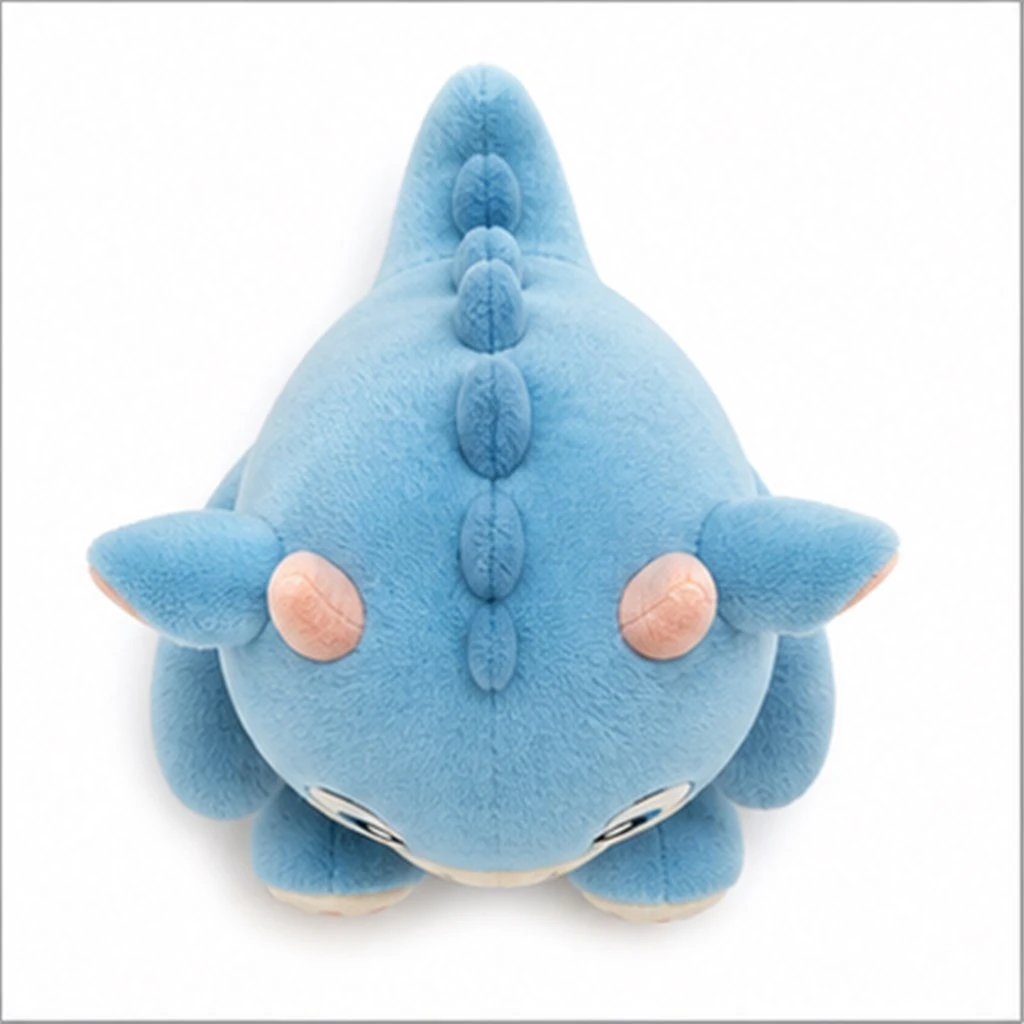
The overhead rear view shows the crown and spines leading toward the tail. For dragon plush structure analysis, that line helps identify where a body revision affects more than the belly. Changes in filling or insert position may alter the seated outline or how the tail joins the torso. Observe those relationships instead of limiting the review to the most obvious firm spot.
Photograph the resting shape before and after the agreed handling sequence. A shifted tail or changed body angle is useful evidence even if the person still describes the toy as soft. Do not assume that a visually subtle change is irrelevant; equally, do not call every variation a defect without an acceptance reference.
If an alternative retention proposal moves the insert lower, ask the team to review the base and tail-root relationship. If it moves higher, examine the torso and head transition. These are questions for the selected construction, not universal rules about where modules belong. The physical sample should answer them through a documented arrangement rather than an invisible assumption behind the front photograph.
Check Function After a Physical Adjustment
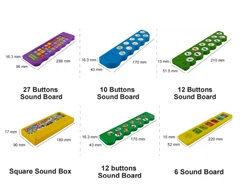
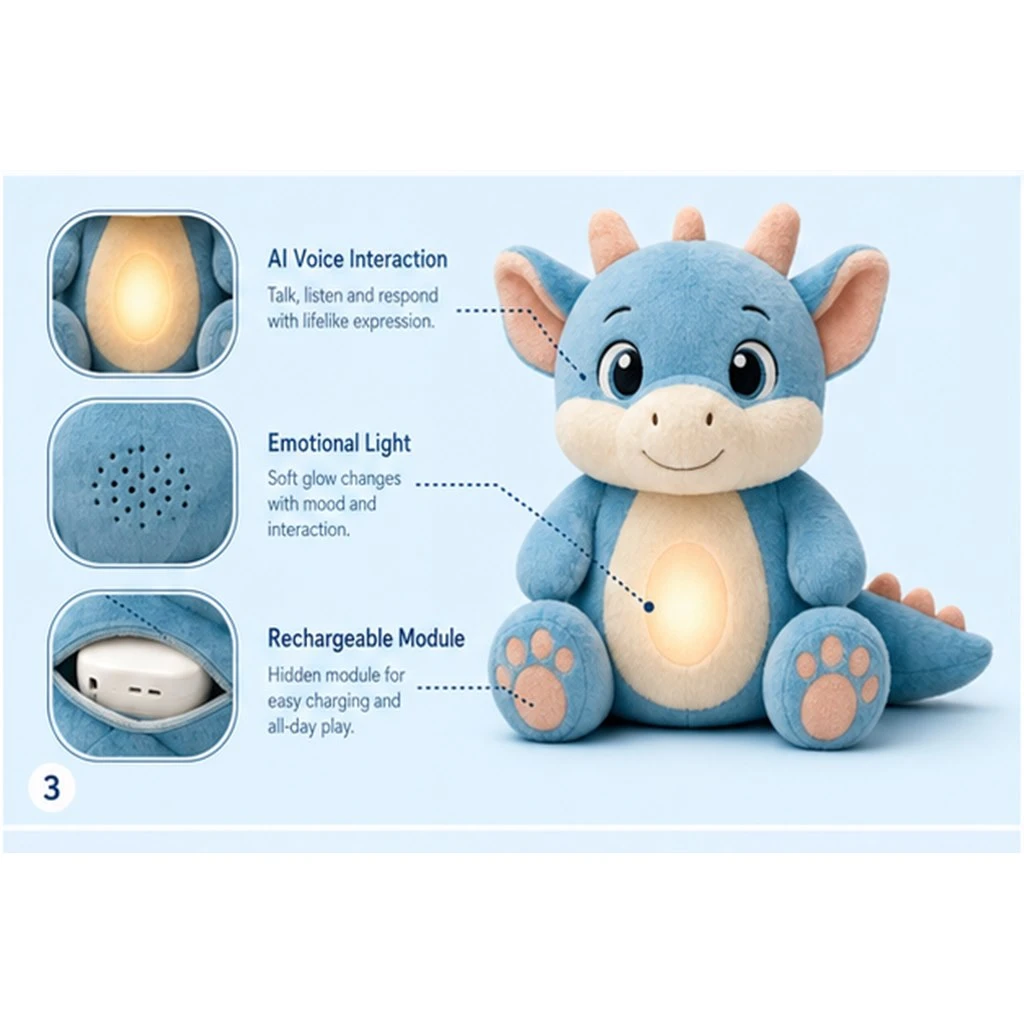
The character board suggests optional interaction, but it does not establish a working system. When a real electronic plush prototype exists, repeat the affected functional checks after changing retention, filling or internal protection. A hand-feel correction may alter a selected control's accessibility, the sound path or the appearance of a proposed belly light. Improving touch should not silently invalidate an earlier functional observation.
Use the same content, settings and operating sequence when comparing revisions. Record intentional differences. If sound becomes less clear after a filling adjustment, preserve the observation before making another change. A review that changes several conditions between demonstrations will be difficult to interpret.
For powered work, follow the procedure agreed by the responsible technical team. Do not improvise access to energized components or assume a safe power arrangement from the promotional art. The hand-feel map is one tool within a broader development process. It is not a replacement for electrical, mechanical or other applicable assessments of the final product.
Observe an Ordinary Hold Without Coaching the Pose
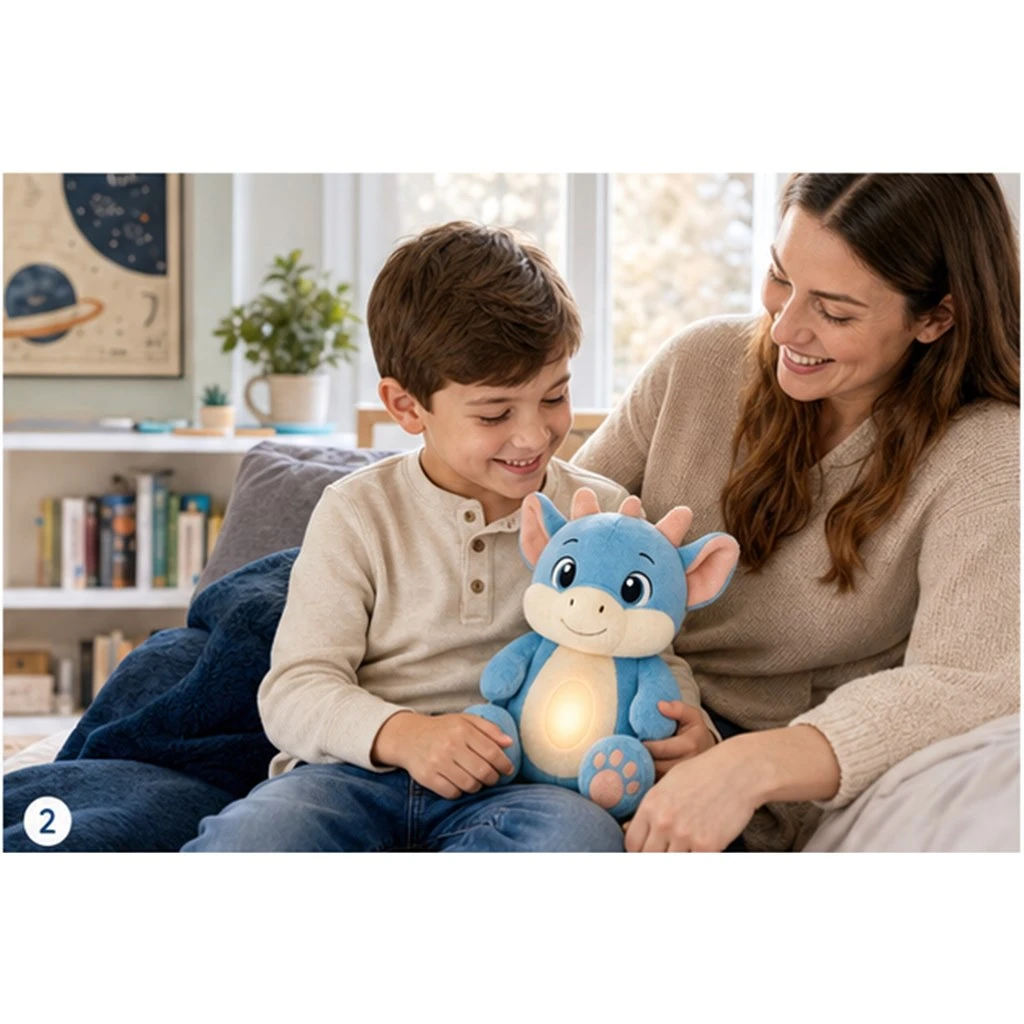
The lifestyle illustration offers a possible shared-play context, not a measured trial. A plush handling observation on a later sample should let the intended operator use the proposed instructions and ordinary pose. If a reviewer keeps repositioning the toy to avoid a firm area, record that behaviour rather than presenting only the comfortable moment in a photograph.
Explain the observation task clearly without telling participants which result to produce. Record where they hold the dragon, whether support is needed and what assistance is provided. Keep the evidence descriptive. One person's reaction is not proof of universal comfort, and the exercise should not be marketed as a clinical or therapeutic evaluation.
Joy's visual project updates can offer broader design context, but they cannot replace this sample evidence. A useful report names the exact assembly and action. It should be possible for a second reviewer to repeat the sequence without relying on the first person's memory. That is what turns a subjective complaint into an actionable development question.
Include an observation that did not change after the revision. An unchanged comparison area can help the next reviewer understand the scope of the correction. If every part of the toy is described as improved, the record may be too general to support a repeatable assembly decision. Name the local difference and keep the unaffected reference areas visible.
The record should also state who prepared the sample. A prototype assembled carefully by one engineer may not yet demonstrate a repeatable process. Where the project reaches a later production-oriented stage, the team needs an appropriate way to check that the agreed arrangement can be reproduced. That is a separate question from whether one hand-built sample feels acceptable.
Keep rejected proposals in the development history with a short reason. A later reviewer may otherwise suggest the same arrangement again without knowing that it displaced the tail or made the belly edge more noticeable. Concise evidence is easier to use than a long message thread in which the important assembly change is never identified.
Close the Issue With a Reproducible Assembly Record
The functions board proposes a removable-looking module but does not define an approved installation. A plush integration issue record should name the actual components selected, the assembly revision, the observation and the agreed acceptance reference. Avoid closing the issue merely because a newly presented sample feels better during an informal pickup.
Repeat the original sequence and inspect the previously successful areas. If the correction changes the shell or internal arrangement, identify the related approvals that need review. Preserve photographs and notes from both versions. The team should understand what was changed and how the assembly can be reproduced, not just which sample was preferred.
A clear record also protects purchasing decisions. If the next quotation uses a different insert or construction, the buyer can recognize that it is not automatically equivalent to the reviewed version. Hand feel belongs to the complete assembly. It cannot be guaranteed by a fabric name, a module drawing or a general promise that the dragon will remain soft regardless of what is placed inside.
A Useful Map Leads to a Specific Next Change
The best outcome is a narrow, testable statement: where the observation occurs, which action reveals it and what the next sample changes. For Pebble Dragon, keep the cream belly, arm junctions, seated base and tail root in the same conversation. They belong to one soft structure even when separate teams own the pattern and electronics. A clear record should distinguish an observed improvement from a verified cause, especially when several parts of the assembly changed together.
This method describes proposed evaluation work, not completed tests on the illustrated dragon. Agree project-specific procedures and acceptance criteria with the responsible specialists. To coordinate a development brief, contact Joy on WhatsApp: +86 13691793052; E-mail: xdt05@dtdianzi.com. Include the selected configuration and clearly marked observations so the next sample can answer a precise question.
FAQ
Q: Does a firm area always mean the module is positioned incorrectly?
A: No. Filling, seams, protective construction and the selected insert can all influence the observation. Record the condition before identifying a cause.
Q: Can additional stuffing solve every hard-point complaint?
A: No. It may change posture, retention and other interactions. Compare controlled revisions and document the tradeoffs on the complete assembly.
Q: Which checks follow a retention change?
A: Repeat the original handling sequence and the related appearance and functional checks affected by the change. Appropriate product assessments remain separate requirements.