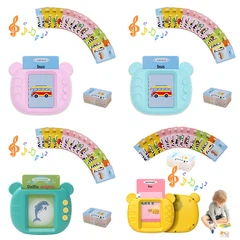
Eco Friendly 2 in 1 Talking Flash Cards LCD Writing Tablet Guide
The Sustainable Shift in Global Early Education Products
Growing Demand for Zero Waste Kids Learning Tools
As environmental awareness rises worldwide, the market for eco friendly educational toys is growing much faster than traditional toy categories. 🌱
Market research shows that the global sustainable children's product sector will maintain an annual growth rate of over 8% from 2026 to 2030. More than 62% of parents in developed markets say they are willing to choose low-waste, reusable learning products for their children, even if they cost slightly more than ordinary disposable items. AI technology has accelerated this transition. With mature AI voice synthesis and low-power LCD display technology, electronic learning tools can now replace a large amount of paper-based teaching aids at an accessible cost. This not only reduces the consumption of wood pulp and printing ink, but also cuts down the carbon emissions generated by long-distance transportation of heavy paper products. For both families and businesses, sustainable early education tools are no longer an optional niche choice, but a mainstream development direction.

Why Sustainable Toys Bring Long Term Business Value
For retailers and brand owners, eco-friendly product positioning is not just a social responsibility, but also a proven way to improve customer loyalty and profit space.
First, eco-conscious consumer groups usually have lower price sensitivity and higher brand loyalty. They recognize product values beyond function, so they are less likely to switch brands simply because of small price differences. Second, more and more cross-border e-commerce platforms have launched green product labels and support traffic for environmentally friendly products, which can bring extra natural exposure to listings. Third, sustainable product positioning helps sellers avoid homogeneous price competition, build a high-end brand image, and open up high-value customer groups that ordinary low-price products cannot reach.
Environmental Value of the 2-in-1 Integrated Design
Replacing Massive Disposable Paper Learning Supplies
A single 2-in-1 talking flash card and drawing board can replace hundreds of disposable paper products that are used once and thrown away. 📉
To show the environmental benefits more intuitively, we compare the resource consumption of traditional paper learning materials and this integrated electronic learning tool under normal use scenarios:
| Comparison Items | Traditional Paper Flash Cards + Drawing Paper | 2-in-1 LCD Learning & Drawing Device |
|---|---|---|
| Annual Paper Consumption | High (thousands of sheets per child) | Zero paper for daily operation |
| Daily Consumable Waste | Large amount of non-reusable paper waste | Almost no disposable waste in use |
| Replacement Cycle | New cards or paper packs every 1-2 months | Normal service life of 5 years or more |
| Resource Input | Continuous wood pulp, ink and packaging consumption | One-time material input at purchase |
| Transportation Carbon Footprint | High (frequent replenishment shipments) | Low (one-time delivery only) |
For families, this product eliminates the recurring cost of buying drawing paper and flash card sets. For the environment, it greatly reduces paper waste and resource consumption caused by frequent replacement. This aligns perfectly with the zero-waste lifestyle pursued by more and more families today.

Durable Design Extends Product Service Life
High durability is another core part of sustainable product design, which reduces the waste caused by frequent product replacement. Many cheap early education toys on the market use thin, fragile shells that break easily after a few months of use, turning into plastic waste. This 2-in-1 device is made of thick, impact-resistant ABS material with fully rounded edges. It can withstand daily drops and rough use by children, which greatly extends its service life. The LCD screen supports tens of thousands of repeated erasures and writes without consuming ink or paper. With AI-optimized low-power circuit design, the device can work for a long time on a single charge or a set of batteries, reducing the frequency of battery replacement. All these designs reduce unnecessary waste from the source, making the product truly sustainable from production to daily use.
How Eco Positioning Helps Sellers Improve Market Performance
Catering to Green Consumption Trends in Major Markets
Green consumption has become a mainstream trend in developed markets, and products with environmental attributes can reach more high-value customer groups.
In North America and Western Europe, a large number of parents actively search for keywords such as zero waste toddler toys and sustainable preschool supplies when choosing early education products. These users pay more attention to product material safety and environmental value, and have stronger purchasing power. In the Middle East and Southeast Asian markets, eco-friendly labels can also help products stand out among numerous homogeneous goods and shape a high-quality brand impression. For gift channels, environmentally friendly educational toys are also more suitable as holiday and birthday gifts. They convey both practical educational value and positive environmental values, which is more in line with the gift-giving needs of modern families.
Differentiating From Homogeneous Price Competition
Most standard early education toys compete on low prices, while eco-friendly positioning can help products jump out of the price war and build a premium brand image.
On cross-border platforms, products with only basic functions usually fall into fierce price competition, and profit margins are continuously compressed. By highlighting the environmental value of the product - replacing disposable paper products, reducing waste, and using safe recyclable materials - sellers can create a unique selling point that is difficult for competitors to copy. This positioning also matches the content preferences of social media platforms. Parent bloggers and environmental lifestyle creators are willing to recommend such products with practical value and positive concepts, which can bring free word-of-mouth traffic and long-term brand exposure for sellers.
Our Eco-Friendly Manufacturing & Customization Support
Shenzhen Xinditai Electronic Co., Ltd. (XDT) integrates environmental protection concepts into the whole production process to support clients in building sustainable product lines. 🏭
All raw materials used in our products meet international environmental protection standards and have passed RoHS and related material safety certifications. Our production workshop optimizes the process to reduce material waste and energy consumption in the manufacturing process. We also support a variety of eco-friendly customization options: you can choose recyclable paper card materials, plastic-free packaging boxes, and soy ink printing to further strengthen the environmental attribute of the product. For brand customers who want to build a full sustainable product line, we can provide targeted product solutions from material selection to packaging design, helping you accurately match the environmental consumption needs of your target market.

If you want to learn more about our eco-friendly early education toys, request product specifications, or discuss customized sustainable product solutions, you can contact our team directly:
*Email: xdt04@dtdianzi.com
*WhatsApp: +86 13602635993
Final Thoughts
Sustainable development will remain a core trend in the global toy industry for a long time. Multi-functional, durable and low-waste early education products not only conform to the direction of social environmental protection, but also bring real economic value to families and business value to sellers. As AI and display technology continue to progress, electronic learning tools will replace more disposable paper products, becoming the mainstream choice for family early education. This 2-in-1 talking flash card LCD writing tablet is a typical product that combines educational value, creative function and environmental protection concept. It has a broad market space in both household consumption and institutional procurement scenarios. We are ready to work with global partners to promote the upgrading of sustainable early education products.