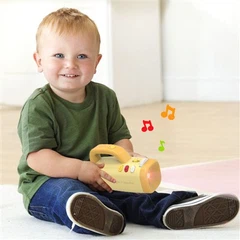



Introduction: When Technology Meets Childhood
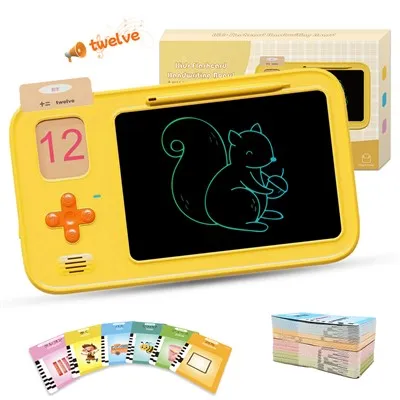
In today's world swept by the digital wave, children's growth environments are undergoing unprecedented changes. The integration of traditional toys with advanced technology has given birth to a new generation of educational and entertainment products. Among them, children's projector toys, with their unique charm of light and shadow, are redefining the methods of parent-child interaction and early childhood education. These seemingly simple toys actually carry multidimensional developmental value, becoming bridges connecting reality and imagination, learning and play.
Educational Value: Multi-Sensory Learning Experiences Beyond the Screen
Scientifically Designed for Visual Development
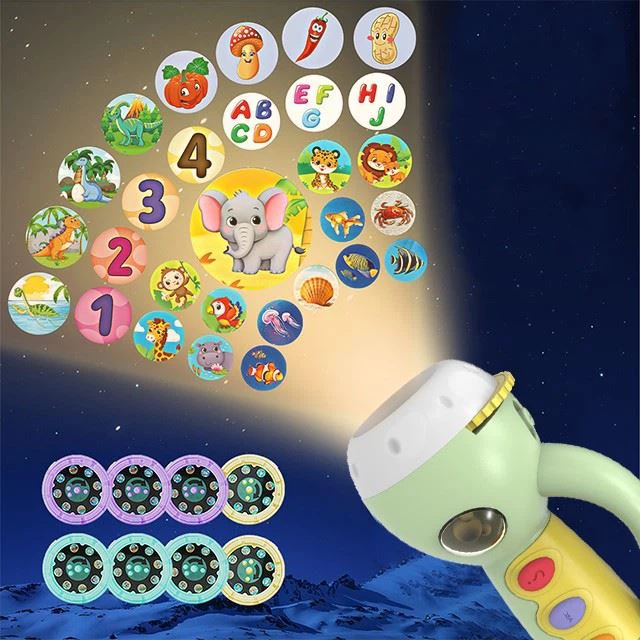
Children's projector toys utilize the reflective imaging principle, creating a stark contrast to directly lit electronic screens. This imaging method reduces the potential harm of direct blue light exposure to children's retinas, providing a safer viewing environment for infants and toddlers in their visual development stage. Research indicates that appropriately changing light and shadow stimulation can promote the development of visual tracking ability and spatial perception in young children. Projector toys achieve this educational function precisely through slowly changing scenes.
The Learning Advantage of Multi-Sensory Integration
High-quality projector toys often combine visual projection, audio narration, and tactile operation, creating a multi-sensory collaborative learning environment. When children watch projected stories while listening to accompanying explanations and sound effects, and manually operate to change scenes, this multi-coding method of information input can improve the durability and retrieval efficiency of memory, aligning with findings in modern cognitive psychology regarding the effectiveness of multi-sensory learning.

Psychological Development: Dual Nourishment for Imagination and Emotional Bonds
Cultivating Soil for Creative Thinking
Unlike the passive reception of traditional TV programs or tablet applications, projector toys create an open narrative space. Children are not just viewers of stories but can become creators. They can weave their own narratives based on projected images, developing narrative skills and logical thinking; they can combine different scenes to create brand-new stories, exercising creative thinking and problem-solving abilities. This semi-structured play method balances guidance and autonomy, providing just the right space for children's imagination to flourish.
Emotional Security and Parent-Child Bonding
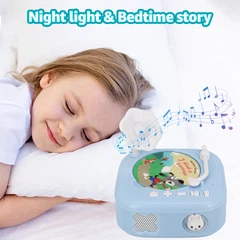
Bedtime storytime holds special significance for children's emotional development. The immersive story environment created by projector toys upgrades traditional verbal storytelling into a multi-sensory experience, enhancing the narrative's appeal. More importantly, parental involvement in this process-operating the projector, explaining scenes, responding to children's questions-creates high-quality bonding time, strengthening the emotional connection between parent and child. This sense of security and intimacy has a profound impact on children's emotional regulation abilities and social development.

Technological Innovation: Evolution from Simple Projection to Intelligent Interaction
Advances in Optics and Materials Science
One of the core advantages of modern children's projector toys lies in the optimization of their optical systems. Professional manufacturers use high-quality lenses and precision light sources to ensure the clarity and color fidelity of projected images, presenting detail-rich pictures even in low-light environments. Simultaneously, the use of eco-friendly materials and enhanced safety designs-such as choke-proof parts, smooth edges, and safety locks-reflects manufacturers' comprehensive consideration for child safety.
Trends in Smart Technology and Customizability
With technological progress, projector toys are evolving from static displays to dynamic interactions. Products with sensor-based interactive functions, capable of responding to children's movements or voices, have already appeared on the market. Concurrently, customizability has become a significant industry trend-parents can record personalized narration, educational institutions can customize story films aligned with curriculum content, and brands can integrate corporate identity elements. This flexibility allows projector toys to adapt to different cultural backgrounds and educational needs, expanding their application scenarios.
Market and Educational Integration: The Future Prospects of Projector Toys
Deepening Home Education Scenarios
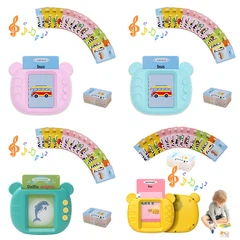
In home education, projector toys are transitioning from entertainment tools to educational assistants. Reflecting the distinct developmental characteristics of children at different ages, product design shows clear differentiation: simple color recognition projectors for infants, letter and number learning projectors for preschoolers, and science knowledge projectors for school-age children. This trend toward specialization and segmentation reflects manufacturers' understanding and application of child development principles.
Expanding Applications in Educational Institutions
In educational settings such as kindergartens and early learning centers, projector toys are becoming a valuable supplement to group teaching. Teachers can use large-scale projections to create immersive teaching environments, tell group stories, and conduct thematic instruction. Some high-end products even support multi-device synchronization, enabling unified classroom environment setups and providing technical support for collective teaching.
Integration of Sustainable Development Concepts
The rise of environmental awareness is prompting manufacturers to innovate in material selection, energy consumption design, and product lifecycle. The use of recyclable materials, the adoption of energy-efficient LED light sources, and designs allowing for film replacement to extend product lifespan-these measures not only reduce environmental impact but also convey environmental values to children.


Conclusion: Redefining the Educational Mission of Toys
The rise of children's projector toys is not merely a result of product innovation but also a response to children's developmental needs. It skillfully finds a balance between technological appeal and educational value, between entertainment functions and developmental goals. As technologies like augmented reality and voice interaction further integrate, this product category will continue to evolve. However, its core value-creating safe, fun, and educationally meaningful parent-child interactive experiences-will remain constant.
In the digital age, choosing the right growth tools for children requires seeing both the potential of technology and understanding children's genuine needs. In its unique way, the children's projector toy reminds us that the best educational tools often do not replace human interaction but enhance interpersonal connections; they do not provide ready-made answers but stimulate the desire to explore; they do not fill all time but create space for thinking. In this toy interwoven with light and shadow, we see not just the projection of technology but the possibilities of childhood.