

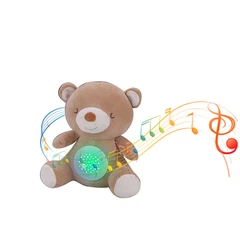


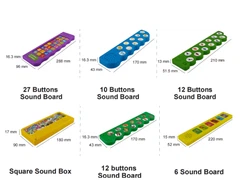



Short answer: it can be done, and for a prototype it is often the right move. For a product you intend to sell to children, it usually trades a small upfront saving for a much larger hidden cost. The situation is becoming common. A brand arrives with its own companion app and its own conversational model, then decides to skip hardware and firmware development by buying what is already on the market - a voice module, a reference board, a ready-made firmware image. The logic is sound for proving a concept. The trouble starts when the same stack has to hold a compliance file, survive a safety test, keep a child's voice inside a boundary the brand controls, and still be serviceable two years later.
Below are the seven risks that decide whether this route works, the questions to ask before you commit, and where a purpose-built ODM platform removes the exposure.
Key Takeaways
- Market firmware is a black box: you inherit the vendor's update schedule, security posture and end-of-life date.
- Your AI model only runs if the audio path is yours. Many modules keep the cloud endpoint fixed.
- Certification belongs to a configuration, not to a board - changing the model, the app or the enclosure can put the file out of date.
- Children's voice data is the most regulated data in the category; an unmapped pipeline is a compliance exposure you cannot document.
- Generic modules are not toy-grade: acoustics, output level, drop behaviour and battery access still have to meet toy rules.
- When something fails, four suppliers can each demonstrate their part working while nobody owns the whole.
The Terms That Decide the Deal
Four definitions keep the rest of this guide honest. Off-the-shelf hardware is a board or module sold to any buyer, with a fixed set of components you did not choose. Market firmware is the software image on that board: it decides wake behaviour, audio routing, which cloud the device talks to, and whether you can change any of it. Bring-your-own-model means you supply the AI while the device supplies capture and playback - and it only works if the endpoint is configurable. White-label resells an existing platform; ODM develops the hardware and firmware for your product, so the seams are designed rather than inherited. Finally, toy-grade compliance is the full set of toy safety, radio, chemical and battery requirements that apply to the finished product, not to the components inside it.
Risk 1 - You Inherit a Firmware You Cannot Patch
Market firmware usually arrives as a binary. That means no source review, no way to confirm what telemetry leaves the device, and no ability to ship a fix on your own schedule. For an adult gadget that is an inconvenience; for a device with a microphone in a child's bedroom, it is a liability. Known issues in connected-device firmware - default credentials, unencrypted audio streams, outdated libraries - cannot be fixed by you. And when the vendor declares end of life, the product's core function can disappear through no decision of your own.
The questions are simple and worth asking in writing: who signs the firmware, how often is it updated, what is the committed support window, and does an offline fallback keep the toy working if the service ends? A supplier who cannot answer these is telling you something important about the roadmap you would be joining.
Risk 2 - Your Model May Never Actually Run
This is the risk buyers feel most painfully, because it is usually discovered late. A child speaks; the microphone captures; the firmware decides where the audio goes. If the module is built around the vendor's own speech service, the endpoint is fixed and the audio is transcribed before you ever see it. Your model is then reduced to answering text produced by someone else's pipeline - with someone else's wake word, latency budget and error handling. If you cannot point the device at your own endpoint, you do not have a product with your AI in it; you have a reskinned one.
Ask for the software development kit and the endpoint documentation before you buy a single unit. Confirm whether the wake word, the speech recognition and the voice output can each be replaced independently. If a vendor offers only a fixed demo of their own service, treat that as the answer.

What to Check Before You Buy
Feature: an SDK that exposes the audio path and the cloud endpoint.
Advantage: your model, your latency budget, your data boundary.
Benefit: the product you sell is the product you designed.
Evidence: suppliers who will not document endpoint configuration usually cannot support it.
Risk 3 - Certification Belongs to a Configuration, Not a Component
Toy safety and radio approvals describe a build. A CE file constructed on EN 71 and EN 62115, an FCC grant, a UN 38.3 battery report, a RoHS and REACH declaration - each names a specific configuration: this board, this battery, this enclosure, this antenna behaviour, this firmware. Swap in your own model, add an app that changes when the radio is active, or move the antenna by a few millimetres, and the file may no longer describe what you ship.
When hardware comes from one vendor and firmware from another, no single party holds the complete file, and the importer carries the obligation. Ask for the certification file of the exact configuration you intend to ship, and a written statement of what triggers a retest. A module certificate is a starting point, not a shield.

Risk 4 - A Child's Voice Leaves Through a Door You Did Not Build
If audio streams to a third-party cloud before it reaches your model, that third party becomes a processor of children's data you did not choose and cannot fully bound. COPPA in the United States centres on verifiable parental consent and data minimisation; GDPR places children's data at the sensitive end; several jurisdictions treat voice characteristics as sensitive data and restrict voiceprint identification and cloning. Market firmware rarely offers retention limits you control, deletion that genuinely deletes, or a promise that audio is not used to improve someone else's model.
Map the Audio Path First
The most useful document in a bring-your-own-model project is a one-page data map: where the voice is captured, where it is transcribed, which model answers, where the answer is stored, and how a parent deletes it. If a supplier cannot draw it, they cannot support your compliance position.

Risk 5 - Generic Hardware Is Not Toy-Grade
A module designed for a smart speaker or an appliance has never had to be a toy. Toy rules and real nurseries ask for a battery compartment a child cannot open, an output level that protects small ears, materials that pass migration testing, and an enclosure that survives being dropped from a bed. Acoustics are the quiet failure: filling shifts over the microphone, the speaker fires into stuffing, and a module tuned for a plastic cavity sounds thin and muffled inside a plush body. None of that is fixed by a firmware update.
Test the module inside the real enclosure. Measure playback level at the ear, wake reliability through fabric, and drop behaviour with the battery fitted. A vendor demonstration on an open bench tells you almost nothing about the product you will ship.

Risk 6 - When It Breaks, Nobody Owns It
Hardware vendor, firmware vendor, your app team, your model provider. When wake rate drops or audio distorts, each party can demonstrate that their piece works. Meanwhile the retailer's deadline does not move. The fix is contractual as much as technical: name one party accountable for end-to-end behaviour, and set acceptance criteria - wake rate at a stated distance, response latency, drop survival - before tooling begins. Without that, debugging becomes a conference call and the launch calendar absorbs the delay.
A useful test is to ask each supplier to demonstrate a controlled failure: what does the child experience if your model is unreachable, or the module's own service is down? A stack designed for children degrades into something still usable - a stored response, a clear signal to the parent. A stack assembled from separately sold parts usually fails into silence, which is the moment a parent decides the product was a mistake.
Risk 7 - The False Economy
Market modules are sold to everyone, so there is usually no exclusivity and no roadmap commitment. The same board can appear in a competitor's product, which leaves your enclosure and your content as the only real differentiation. Continuity is the second half: if the module is discontinued, you face a second integration round, new firmware behaviour and new certification. And the apparent saving narrows once integration engineering, re-certification, acoustic rework and a second enclosure iteration are counted - often costing more than a platform designed for the product from the start.
When Market Hardware Does Make Sense
This route is genuinely useful for three things: a working prototype for investor or retail review, an internal test of whether children actually talk to the product, and a first small run to validate demand before committing to tooling. Treat it as a learning purchase with an exit plan. Decide in advance what result will trigger the move to a controlled platform, and keep the enclosure, the acoustic path and the content plan stable so the pilot teaches you something reusable.
The Eight Questions to Ask Before You Sign
These are the questions that separate a workable pilot from an expensive lesson, and any supplier should be able to answer them without a sales deck.
First: can the device be pointed at our own endpoint, and is that a documented feature or a favour? Second: who else touches the audio between the microphone and our model, and in which country? Third: which certificate file will match the exact unit we ship, and who pays if the configuration has to be retested? Fourth: what happens to the product when a component reaches end of life, and how much notice do we get? Fifth: can we ship a firmware fix on our own schedule, or only when the vendor chooses? Sixth: which child-safety behaviours live in your firmware and which are left to our model and app? Seventh: what is the measured output level at the ear for the finished configuration? Eighth: if the integrated product fails, is there one party accountable for end-to-end behaviour?
The pattern behind all eight is the same. You are not buying a board; you are buying a set of permissions - to route data, to patch code, to certify a configuration and to get an answer when something breaks. Where those permissions are missing, the saving on the board is usually spent several times over later.
A De-risking Checklist
- Get the SDK and endpoint documentation before paying for tooling.
- Confirm the wake word, speech recognition and voice output can each be replaced independently.
- Get the firmware update and support policy in writing, including end-of-life notice and offline fallback.
- Map the audio path end to end: capture, transport, storage, retention, deletion, sub-processors, training use.
- Request the certification file for the exact configuration you will ship, and ask what triggers a retest.
- Validate acoustics, wake reliability and output level inside the real enclosure, not on the vendor's demo box.
- Confirm supply continuity: last-time-buy terms, pin-compatible alternatives, and any exclusivity in your category.
- Name one party accountable for integrated behaviour, with acceptance criteria agreed before tooling.
How XDT Approaches a Bring-Your-Own-Model Programme
XDT is an ODM manufacturer: hardware, firmware, audio content and assembly are developed in the same Shenzhen facility - SMT, injection, card printing and assembly under one roof, with monthly capacity above 50,000 units. Our connected AI plush range runs ChatGPT-class conversational technology with 4G connectivity and support for 60-plus languages, so the audio pipeline, streaming behaviour and certification work for a networked toy are established rather than experimental.
For a brand arriving with its own app and model, the engineering review covers what the platform must expose: endpoint configuration, where audio is processed, which certificates the shipped configuration will carry, and how the acoustic path behaves in your enclosure. If a requirement is something the platform cannot support, we say so at review rather than at the test house. Standard configurations carry CE (EN 71, EN 62115), FCC Part 15, RoHS, REACH and CA Prop 65 documentation, with ASTM F963, CPSIA, CCC, UKCA, SASO and IS 9873 available where the destination requires them. Standard models start at 500 units with 25–35 day lead times; full custom tooling runs 1,000–2,000 units at 45–60 days, with a twelve-month warranty against manufacturing defects. Our talking-flash-card range uses an 85 dB hearing-safety output cap; for plush programmes the level is set and measured during development.

Frequently Asked Questions
Can I use my own AI model with market hardware? Only if the firmware lets you configure the endpoint and swap the speech components. Many market modules are fixed to the vendor's own service - confirm before you buy.
Is it cheaper to start with off-the-shelf? For a prototype, usually yes. For production, integration, re-certification and acoustic rework tend to close the gap and can reverse it.
Who is responsible for COPPA and GDPR if the firmware sends audio elsewhere? In most import structures the brand or importer carries the obligation, even though it did not choose the data path. Make the flow a contractual term.
Do I need recertification if I only change the AI model? Possibly. If the change alters radio activity, power draw or battery behaviour, retesting may be required. Ask what triggers it before you commit.
Can XDT work with an app and model we already built? Yes - this is a common starting point. We review your requirements against the platform, confirm the data flow and compliance scope, then develop the hardware and firmware around them.