In the dazzling lights of a toy store, countless parents silently ask the same question: "Which one will my child like?" Yet, a more fundamental and empowering question is: "Which one does my child need?"
Toys are far more than mere playthings. They are a child's first tools for exploring the world, the building blocks of cognitive development, and a medium for expressing emotions and imagination. Choosing a toy is, at its core, an exercise in deep insight into child development. When we can decode the developmental cues of different ages, what we offer is not just a toy, but a key that supports their flourishing growth.
Ages 0-3: The Foundation of Senses and Movement - "The World is Tangible"
Infants and toddlers at this stage are complete "bodily explorers." They construct their basic understanding of reality through their senses and movements. Piaget called this the "Sensorimotor Stage."
Decoding Development & Toy Strategy:
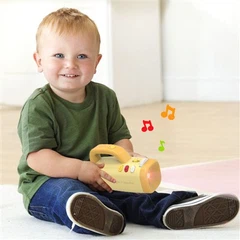
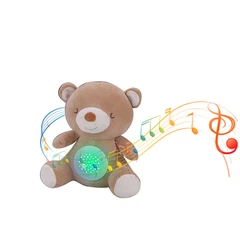
Security & Sensory Stimulation: Soft sounds, warm colours, and gentle textures provide an infant's first sense of security. Soon, they need richer sensory input to "feed" their developing brains.
Upgraded Toy Suggestion: Transition from a simple comfort toy to a sensory ball with different sound-making materials (like crinkle paper, bells) or sensory bottles with different liquids, offering dual visual and auditory stimulation.
The Inner Drive for Motor Development: From involuntary waves to purposeful grasps, from crawling to running, each motor breakthrough is driven by an innate life force.

Upgraded Toy Suggestion: Beyond activity gyms, a collapsible play tunnel strongly incentivizes crawling. A deceptively simple object permanence box (where a ball rolls into a hole, disappears, and reappears) perfectly satisfies a child's fascination with exploring the concept that "out of sight" does not mean "gone."
The Core of Selection: Safety is paramount. Toys at this stage must be made of "mouthable," food-grade materials, have no small parts, and feature rounded designs. A parent's presence and interaction are the best "toy amplifiers" at this stage.
Ages 3-6: The Emergence of Imagination and Rules - "The World is Creatable"
The child's stage expands from the physical world to the inner world. Symbolic play (pretend play) becomes dominant, meaning they can use one object to represent another (a stick is both a sword and a magic wand). This is a leap in abstract thinking and creativity.
Decoding Development & Toy Strategy:
Making Imagination Tangible: Role-playing is no longer simple imitation but an expression of complex narratives and emotions. A child playing doctor might be processing their own fear of check-ups; playing parent rehearses the care and authority they've observed.
Upgraded Toy Suggestion: Upgrade from a single doll to toys that enable complete scenarios, like a well-stocked play grocery store or a multi-level fire station set. Open-ended materials with low structure (like a blue cloth representing the sea or sky) spark more imagination than highly structured, single-purpose toys.

The Laboratory of Sociality: Play becomes the first laboratory for learning social rules. Here, they learn to wait, negotiate, cooperate, and resolve conflicts.
Upgraded Toy Suggestion: Introduce cooperative board games with clear rules where players work towards a common goal, rather than competing. This reduces frustration and lets children focus on the joy of collaboration.
The Core of Selection: Heavily favour "open-ended toys". Blocks, magnetic tiles, playdough, and art supplies have no instruction manual; their value is determined by the child's imagination. They have an extremely long lifespan and represent the highest return on investment.
School Age (6+): Forging Thinking and Interests - "The World is Understandable"
A child's thinking moves from concrete to abstract, enabling hypothesis and logical reasoning. They begin seeking depth of knowledge and mastery of skills, craving to find their place and value within peer groups.
Decoding Development & Toy Strategy:
From "How" to "Why": They aren't satisfied just building a model; they want to understand the underlying principles of gear transmission or circuitry.
Upgraded Toy Suggestion: STEAM toys (Science, Technology, Engineering, Arts, Math) are key. For example, a programmable robot turns a child from a "player" into a "creator"; a real chemistry set allows them to verify textbook knowledge firsthand.
The Crucible of Concentration & Achievement: The deep satisfaction derived from completing a complex task is a crucial source of confidence-building at this stage.

Upgraded Toy Suggestion: Intricate model kits, musical instruments, magic kits, or strategic board games (like Chess) require sustained practice and thought, greatly training a child's concentration and perseverance.
The Core of Selection: Transition from "parent-led choice" to "child-led, parent-supported" selection. Observe and respect the child's emerging specific interests. If they are obsessed with Interstellar, a constellation projector or a book on space exploration becomes the best "toy." At this point, the line between toys and hobbies blurs, becoming a gateway to a wider world.
Conclusion: Be Your Child's "Toy Curator"
We don't need to be child psychologists, but we can be thoughtful "curators" in the museum of our child's growth. Our task is not simply to fill their toy chest, but to carefully select "exhibits" that can converse with and provoke new thinking for their ever-changing "developmental exhibition theme."
The next time you choose a toy for your child, try kneeling down first and carefully observing their current obsessions and puzzles. You will then discover that the best selection guide is already written in their sparkling eyes and tireless exploration.