




The AI Toy Revolution Transforming Children's Play
In the digital age, AI toys are rapidly becoming an indispensable part of children's growth. These smart toys not only provide entertainment but also promote cognitive development, emotional cultivation, and skill enhancement through interactive learning. This article offers a comprehensive analysis of the AI toy market status, educational value, purchasing guidelines, and future trends to help parents and educators make informed choices.
1. What Are AI Toys? Core Definitions of Smart Toys
1.1 Basic Concepts of AI Toys
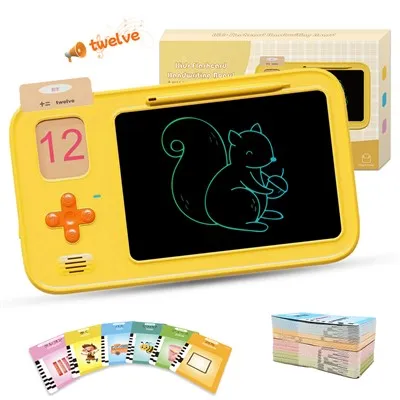
AI toys (Artificial Intelligence Toys) refer to children's play products integrated with artificial intelligence technologies. They utilize machine learning, natural language processing, computer vision, and other technologies to enable intelligent interactions with children. Unlike traditional toys, AI toys have the following distinctive features:
Interactive Capabilities: Can recognize voice, gestures, or expressions and respond accordingly
Adaptive Learning: Adjust content and difficulty based on children's usage habits and developmental stages
Data Recording: Track children's progress and provide personalized feedback
Connectivity: Some products can connect to the internet for content updates or remote control

The Educational Value and Potential Benefits of AI Toys
2.1 Cognitive Development and Learning Enhancement
Research shows that well-designed AI toys can effectively promote various aspects of children's development:
Language Skills: A 2022 Harvard Graduate School of Education study found that preschoolers using language-learning AI toys showed 40% faster vocabulary growth compared to traditional methods
Logical Thinking: MIT Media Lab discovered that programming AI toys can improve problem-solving skills in 7-9-year-olds by 35%
Creativity: University of California research indicated that users of creative AI toys scored 28% higher on average in divergent thinking tests
2.2 Social-Emotional Cultivation
High-quality AI toys can also help children:
Understand social rules through role-playing games
Develop empathy and emotional recognition skills
Build a sense of responsibility (e.g., caring for electronic pets)
Overcome social anxiety (2023 Stanford Children's Development Center report)
2.3 Special Education Applications
AI toys demonstrate unique value in special education:
Autism intervention: Robots like Milo help ASD children practice social interactions
Speech therapy: Products like Speech Buddies assist with pronunciation correction
Motor rehabilitation: Systems like Rebound aid in physical coordination training

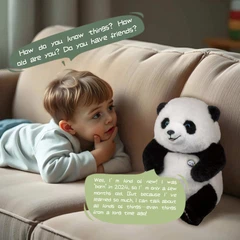
To keep up with the AI era, our company has also developed an AI interactive panda.
When it was first launched, we sold it offline and it was well-received by many parents

AI Toy Industry Trends and Future Outlook
Technological Development Directions
Multimodal interaction: Combining voice, gestures, eye-tracking, and other interaction methods
Affective computing: More accurate emotion recognition and response
Metaverse integration: AI toys as bridges between physical and virtual worlds
Biofeedback: Adjusting interaction content based on physiological data
Educational Application Prospects
Personalized learning paths: Fully adaptive learning systems based on big data
Teacher assistance tools: AI toys as extensions of classroom education
Lifelong learning records: Continuous competency development profiles from childhood to adulthood
Social Impact and Ethical Considerations
The industry needs to address:
Digital divide issues (ensuring children from all economic backgrounds can benefit)
Human-machine relationship boundaries (avoiding emotional substitution risks)
Algorithmic bias prevention (ensuring diverse and inclusive content)
Environmental sustainability (material selection and recycling systems)

Conclusion: Make Wise Choices to Let AI Toys Become Growth Assistants
As emerging educational technology products, AI toys bring unprecedented learning opportunities while requiring careful selection and guidance from parents. By understanding product features, clarifying educational goals, and establishing scientific usage habits, AI toys can become valuable companions in children's growth rather than mere entertainment tools. With technological advancements, we can expect safer, smarter, and more educationally meaningful AI toys to emerge continuously, providing richer learning experiences for the next generation.