





AI Toys, Educational Toys, Interactive Toys: What Do These Labels Actually Mean?
"AI toys", "educational toys" and "interactive toys" describe three different things: how a toy produces a response, what the toy is for, and how a child acts on it. They are overlapping dimensions, not competing categories. A single plush product can legitimately sit under all three.
Confusion starts when a buyer treats a search phrase as a specification. A retailer asks for interactive toys, a factory quotes a press-to-sound module, and the retailer expected a conversation. Nobody was dishonest; the label was never translated into a requirement. The same gap appears with age words, plush words and the growing family of "smart" and "AI" compounds.
This glossary is for importers, brand owners and marketplace teams writing a first brief. It groups the labels buyers actually use, says what each one implies, and gives the question to put to a supplier. We have left commercial figures out: order quantities, lead times, prices and test standards depend on your market and should come from your factory in writing, not from an article.
Three dimensions, one product
Think of the labels as three questions rather than three shelves. "AI" asks where the toy's next response comes from. "Educational" or "learning" asks what the child is meant to gain. "Interactive" asks what the child does and whether the toy reacts. A product answers all three at once, and a brief that names only one leaves the other two to be guessed.
Format words are a fourth, separate layer. Plush, soft, stuffed, electronic and card-based describe the body of the product, not its behaviour. Age words are a fifth layer, and they change the safety file and the content depth rather than the electronics. Most sourcing mistakes come from mixing layers: paying for an AI feature when the real requirement was a washable shell, or specifying a preschooler label without checking the small-parts rules that follow it.
AI search tools amplify the problem in a useful way. A buyer who types one phrase into an assistant often receives a confident summary that merges two different product types, then forwards that summary as a brief. Treat any label arriving this way as a starting point for questions, not as a requirement that has already been agreed with anyone.
The "AI toys" family

Where the response comes from
Feature: A scripted unit plays a stored reply; a generative unit composes one.
Advantage: Knowing which one you are buying sets the data, connectivity and approval conversation.
Benefit: No surprises about accounts, updates or offline behaviour after the order ships.
Evidence: Ask the factory to show the same prompt answered twice, and explain where each answer was produced.
Not a shape
AI capability does not imply a screen, an app or a plush body.
The term "ai toys" refers to the response mechanism, not the product shape. A single ai toy may be a plush character, a story box or a small desktop device, and it may run locally or rely on a cloud service. Ask two questions before anything else: is the reply composed or simply selected from a library, and does the toy still work with no connection? Those two answers determine the data path, the safety review and what the packaging may claim.
Compound labels narrow the search without changing the definition. ai interactive toys usually signals that the buyer wants a two-way exchange rather than one-way playback. ai powered plush toy adds a format: the intelligence sits inside a soft body, which brings fabric, seams, washability and sensor placement into the same conversation. Neither phrase tells you whether the unit records audio, where it is processed, or who can delete it - ask those separately.
ai toys manufacturing is different in kind: it is a supplier search, not a product search. A buyer using this phrase is comparing factories, not features. The useful reply is a description of which parts are designed in-house, which are sourced, who owns the firmware, and what documentation comes with a shipment. If your page targets this phrase, answer the factory question rather than repeating the product pitch.
The "educational toys" and "learning toys" family
A claim versus an activity
Educational describes an intended outcome; learning describes what the child practises while playing.
A brief that names the activity is far easier for a factory to build against than one that names only a claim.
Modifiers, not SKUs
Most long phrases here are search modifiers for the same underlying product, not separate categories.

Educational toys name a promised outcome, while learning toys name an activity. In practice the phrases are used interchangeably by shoppers, but they ask different questions of a supplier. The first asks what evidence supports the claim; the second asks what the child repeats, recognises or practises. Put the activity in your brief and the claim becomes a packaging decision rather than an engineering guess.
The rest of this family is mostly audience and channel wording attached to the same idea. kids learning toys, children's learning toys and educational toys for kids differ in tone, not in specification; educational children's toys leans toward gift and retail language. early education toys usually signals an institutional or curriculum-adjacent buyer. None of them should trigger a new tooling decision on their own.
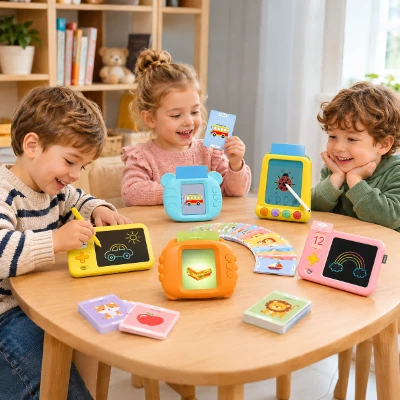
Two compounds do change the brief. interactive learning toys and educational interactive toys add a response requirement: the child does something, the toy reacts, and that loop carries the learning. Ask what the child does, what feedback arrives, and how the unit behaves when the child does nothing. Finally, instruction toys appears in some buyer lists as a loose label for guided or instructional play; confirm what the sender meant before putting it in an RFQ, because it is not a standard category term.
Age-stage labels: toddler, preschooler, early years
Age words change the safety file and the content depth, not the electronics. The same platform can serve several stages with different markings, different printed material and a different content library, but each marking has to be supported by the current documentation for the market where it is sold.

toddler learning toys and educational toddler toys point at the youngest independent users, where construction, small parts, volume behaviour and washability dominate the specification. smart toys for toddlers adds a tension worth resolving early: the younger the child, the more the "smart" layer should stay quiet, predictable and locally controlled. Ask the factory which behaviours are locked for that age band and who can change them.
educational toys for preschoolers shifts the emphasis toward sequence, narrative and longer content, and toward shared use in a group. Do not assume the printed assets, the age marking or the test file can simply be carried over from the toddler version. Request the current documentation for each market and check that the model designation and configuration match the unit you are ordering.
The "interactive toys" family

Define the loop
Feature: A child acts and the toy responds; a button, a card, a touch or a spoken phrase can start the loop.
Advantage: Naming the trigger and the feedback removes the widest source of quotation errors.
Benefit: The factory prices the right mechanism on the first pass.
Evidence: Request a short clip of one complete loop, including what happens when the child does nothing.
Not the same as AI
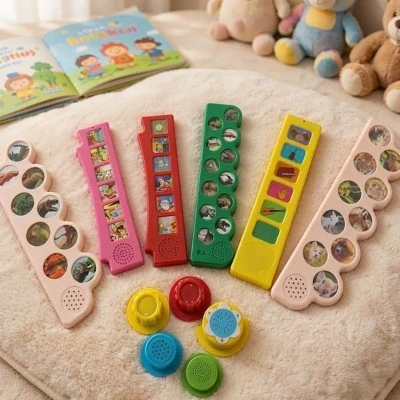
A press-to-sound book is interactive without being intelligent.
The term interactive toys is the broadest label in this glossary: it only requires that a child acts and something comes back. That covers a push-button sound book, a card player, a touch-sensitive plush and a conversational character. It says nothing about where the response comes from. interactive toys for children is the same phrase with the audience made explicit, and is often used by retailers to separate this aisle from passive plush.
Because the word is so wide, always write the loop into the brief: what the child does, what the toy does next, how quickly, and what happens on a repeated or failed action. Those four lines cost nothing and prevent the most common mismatch in this category. If you also need the toy to teach something or to compose a reply, say so separately - interactive learning toys and educational interactive toys add a purpose, and ai interactive toys adds a response mechanism, but none of them replaces a description of the loop.
Plush-format labels
Plush words describe the body of the product, not what it can do. They matter because they change construction, cleaning, sensor placement and the compliance path, and because different channels use different words for the same object.

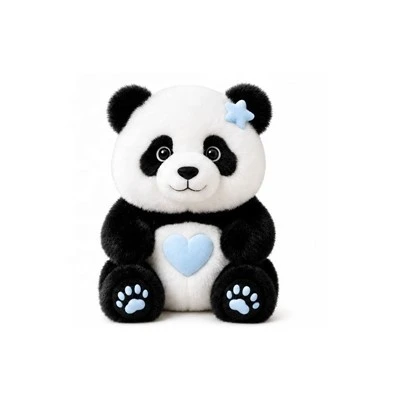
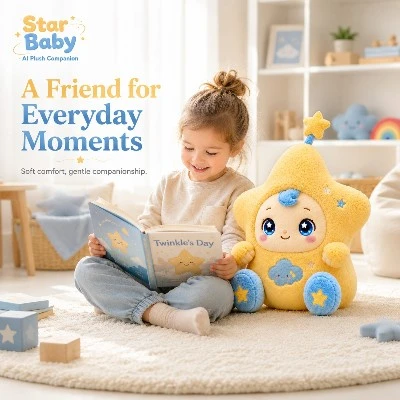
interactive plush pet toy frames the product as a character with behaviour, which is useful in gift and toy channels. interactive stuffed animal and interactive soft toys are closer to retail category language, often used where the buyer cares about fabric, stitching and shelf presentation. smart plush toys and electronic plush toy signal that a module sits inside the soft body - the second phrase in particular should prompt questions about the battery compartment, the module's removability and how the unit is cleaned.
Keep these out of the capability column of your RFQ. A buyer who writes "electronic plush toy" and expects a conversation will receive a perfectly good press-to-sound unit, because that is what the label legitimately describes. State the behaviour separately, then choose the fabric word that matches your channel.
A label-to-brief table
Translate each label into one question before it reaches a supplier. The table below is a working template, not a category list.
| Label a buyer uses | What they are really asking | Question for the factory |
|---|---|---|
| ai toys | Where does the reply come from, and does it work offline? | Is the response composed or selected, and where is audio processed? |
| educational toys | What is the claimed outcome, and what supports it? | Which learning activity does the content actually rehearse? |
| learning toys | What does the child practise or repeat? | Can we see one complete practice loop on a sample? |
| interactive toys | What does the child do, and what comes back? | Describe the trigger, the feedback and the failed-action state. |
| educational toys for kids | Age-appropriate framing of the same claim | Which age marking and printed assets apply in our market? |
| educational toys for preschoolers | Longer content and shared use | Which content build and group-use settings are supplied? |
| children's learning toys | Retail language for a learning claim | Which channel wording is on the approved packaging? |
| interactive toys for children | Aisle placement, not a specification | Which parts of the shell are child-operable? |
| early education toys | Institutional or curriculum-adjacent use | What shared-use and cleaning documentation is available? |
| ai toys manufacturing | Who can actually build and support this | Which parts are in-house, and who owns the firmware? |
Use one row as the opening line of your brief, not all ten. A request that opens with "we need an AI toy" invites a feature list; a request that opens with "the reply is composed locally, the child taps a card, and feedback arrives immediately" invites a quotation you can compare. Keep the original label in the subject line for your own search records, and let the specification carry the meaning.
For a blank label-to-brief table you can send with an RFQ, contact Iris Fang | +86-15728259858 | xdt02@dtdianzi.com. The template is yours to use with any factory, including one you already work with.
Questions buyers ask about these labels

Are AI toys always screen-based? No. Many are screen-free and audio-first. The label describes how a response is produced, not where it is displayed.
Is an interactive plush pet toy automatically an AI toy? No. A press-to-sound mechanism is interactive without being intelligent. Ask where the reply comes from.
Should we create a separate SKU for kids learning toys and educational toys for kids? Almost never. They are the same product described in different channel language; separate packaging copy, not separate tooling.
What does smart toys for toddlers actually require? Usually a quieter, more predictable behaviour set rather than more features. Confirm which behaviours are locked for that age band.
Do instructional labels like instruction toys appear in standards? Not as a product category. Confirm the sender's meaning before putting the phrase into an RFQ.
Is an electronic plush toy harder to approve than a soft one? It carries an additional set of questions about the module, the battery compartment and cleaning. Ask for the current documentation with the holder name and model designation.
Which label should lead our first brief? The one describing the interaction loop. Add AI, educational and format words afterwards, each converted into one checkable question.
One brief, one clear requirement
Pick the label your customer used, look up the question behind it in the table, and open your brief with that question in plain language. Add the age band, the format and the capability as separate lines. Three sentences are enough to stop a supplier from quoting the wrong mechanism.
Search language will keep multiplying - smart plush toys, interactive soft toys, interactive stuffed animal, educational interactive toys and whatever comes next all point back to a small number of real decisions. A brief that names those decisions stays accurate no matter which label the market adopts.
For the blank label-to-brief table and a one-page RFQ opener, contact Iris Fang | +86-15728259858 | xdt02@dtdianzi.com. XDT Electronic Co., Ltd. / KidsoundBook builds OEM and ODM interactive and AI plush products, and the template works with any supplier, including us.