

AI Toy Safety Compliance Children Data Privacy EU Rules
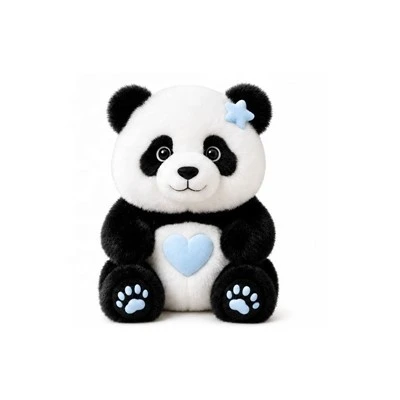
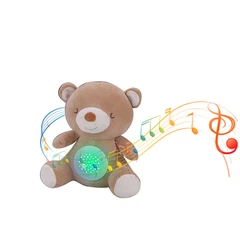
In November 2025, a plush teddy bear called Kumma was pulled from shelves after OpenAI discovered it was giving children inappropriate answers. Social media nicknamed it "ChuckyGPT." The toy was relisted a week later, but the damage was done. Parents around the world started asking a new question: is my child's AI toy safe?
That question has now reached regulators. In 2026, AI toy safety is no longer a product design issue. It is a legal issue. Brands that ignore it risk fines, product seizures, and reputational damage that no marketing budget can fix.
This article maps the regulatory landscape as of late 2026 and explains what every brand selling AI plush toys must do before launch.

🌍 Three Regulatory Fronts at Once
The compliance picture is not one rulebook. It is three separate systems converging at the same time.
European Union. The new EU Toy Safety Regulation 2025/2509 entered into force on January 1, 2026. It replaces the old Toy Safety Directive and applies directly across all member states - no local translation needed. For AI toys, the regulation adds requirements around chemical safety, physical hazards, and now digital interactions. It also requires manufacturers to document how the toy handles voice data.
United States - Federal. COPPA (Children's Online Privacy Protection Act) was updated in 2025. The amendments, fully enforceable by April 2026, require companies to limit how long they store children's voice recordings, restrict third-party SDKs embedded in the companion app, and pay over $53,000 per violation per day for non-compliance.
United States - State Level. This is where the situation gets complex. In the first half of 2026 alone, 27 states introduced 78 bills related to AI chatbots and toys. Fourteen have already become law. California proposed a four-year ban on AI chatbot toys for minors while regulators build enforcement capacity. Maryland requires pre-market safety assessments. Washington, Oregon, and Kentucky have all passed their own versions.

The message is clear: the era of "ship first, apologize later" is over.
📊 Compliance Requirements by Market
| Requirement | 🇪🇺 EU (TSR 2025/2509) | 🇺🇸 US Federal (COPPA) | 🇺🇸 State (CA/MD/WA) |
|---|---|---|---|
| Voice data retention limit | Must be documented | Max 12 months, then delete | Varies by state |
| Parental consent before data collection | Required | Required (verifiable) | Required + age verification |
| Content filtering for minors | Expected | Required by FTC rules | Mandatory pre-market testing |
| Third-party SDK audit | Required | Required (2025 amendment) | Not yet specified |
| AI model disclosure | Expected | Not yet required | California requires labeling |
| Pre-market safety assessment | CE marking process | Self-certification | Maryland requires third-party test |
| Penalty range | Product recall + fines | $53K+ per violation per day | State-specific injunctions |
The table shows that compliance is not a checkbox. It is a multi-layered process that differs by region. A toy approved for California may not meet EU requirements, and vice versa.
🛡️ What "Content Filtering" Actually Means
One of the most misunderstood terms in AI toy compliance is "content filter." Many brands assume a filter is a simple keyword blocklist. It is not.
A proper AI toy content filter operates at three levels:
 Level 1 - Input filtering. Before a child's voice reaches the cloud model, the system scans for risky topics. If the child asks about self-harm, violence, or adult themes, the toy does not send the question to the model. It responds with a pre-scripted, age-appropriate redirect.
Level 2 - Model routing. Not all children use the same model. A toy sold in Europe may route to a model hosted in the EU. A toy sold in China may route to a domestic model. This is not just about language. It is about data residency and regulatory alignment.
Level 3 - Output filtering. Even after the model generates a response, the system scans it before speaking. If the output contains anything inappropriate, it is replaced with a safe fallback.
Skipping any of these three levels is how a Kumma-style incident happens. The toy passes input filtering, routes to a general-purpose model, and the model says something it should not.
🔐 Children Data Privacy: What Parents Are Worried About
Parents do not only worry about what the toy says. They worry about what it records.
Every AI plush toy that connects to WiFi captures voice. That voice is converted to text, sent to a cloud server, processed by a language model, and stored somewhere. The question is: how long, where, and who can access it?
Under the updated COPPA rules, companies must:
*Delete voice recordings after a defined period (typically 12 months or less)
*Not sell children's voice data to advertisers
*Audit every third-party SDK in the companion app
*Provide parents with a data deletion request option
A connected plush toy that records voice indefinitely is not just non-compliant. It is a liability.

✅ The Pre-Launch Compliance Checklist
If you are bringing an AI plush toy to market in 2026, work through this list before your first production run:
Which markets are you selling in? Each market has different rules. Do not assume CE marking covers COPPA.
Where is the voice data stored? Map the data flow from toy to cloud to storage.
What is your content filtering architecture? Document all three levels (input, routing, output).
How long do you keep recordings? Set a retention policy and implement it in code.
Have you audited your third-party SDKs? Every library in the companion app must be COPPA-compliant.
Do you have a parental consent flow? The app must ask for verifiable consent before collecting data.
What happens if the cloud model goes down? Have a fallback that keeps the toy safe offline.

📈 Why This Is a Competitive Advantage
Compliance is usually seen as a cost center. But in a market where one viral incident can sink a brand, it is actually a selling point.
Parents who remember the Kumma headlines are now checking: does this toy have content filters? Where is my child's voice stored? Can I delete the data? A brand that can answer these questions clearly - and show them on the packaging - will win trust.
AI toy safety compliance is not a barrier to entry. It is the entry ticket. The brands that treat it as a feature, not a burden, will be the ones that survive the next regulatory wave. 🧸
About Shenzhen Xinditai Electronic Co., Ltd. (XDT)
We design and manufacture AI interactive plush toys with built-in content filtering, regional model routing, and COPPA-aligned data practices. Our factory supports compliance documentation for EU TSR, US COPPA, and major state-level requirements.
📧 Email: xdt04@dtdianzi.com
🌐 Website: www.kidsoundbook.com
📱 WhatsApp: +86 136 0263 5993
👤 Contact: Judy