

CPSC enforcement is seasonal. It always has been.
Q1 is quiet. Regulators are reviewing the previous year's data. Q2 is moderate. A few routine actions. Q3 is the warning shot. Batch enforcements. Mass recalls. Industry-wide signals. Q4 is the execution. If your product is on shelf for Christmas and it has a compliance gap, Q4 is when CPSC pulls it.
The July 2 recalls are the Q3 warning shot. Five products. Three categories relevant to sound toys: button battery access, small parts detachment, and packaging compliance. The message is clear: check your product now, or we will check it for you in November.
Here are the four checks. They take roughly one afternoon each. They cost nothing except the time of someone who knows your product. Skipping them costs your Amazon listing, your FBA inventory, and your Q4 revenue. ☝️

1. Button Battery: Can a Child Reach It Without a Tool?
The Scenario ⚠️
The POPOOO LED finger lights were recalled because a child could access the button cell battery compartment without a tool. 62,490 units. Sold on Amazon. The importer was Shenzhen Bopu Product Design Co., Ltd. The CPSC notice is three paragraphs long. The word "tool" appears twice.
Reese's Law (effective March 2024) requires that any consumer product containing a button cell or coin battery must have a battery compartment that requires a tool to open. A screw counts. A coin counts. A child's fingernail does not. If the compartment can be opened by twisting, pressing, or sliding without a tool, the product is non-compliant.
How this applies to sound toys:
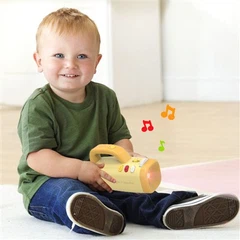
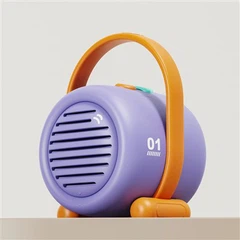
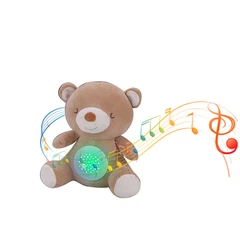
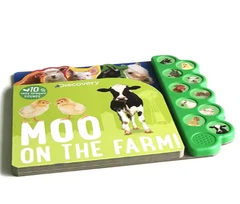
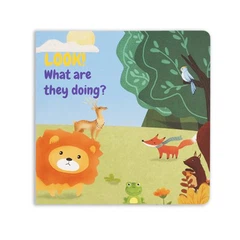
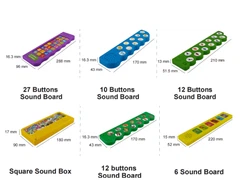
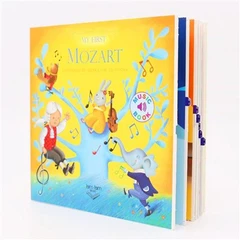
Sound books use coin cells. Talking flash card machines use AAA or 18650 cells. AI plush toys use LiPo packs. White noise night lights use rechargeable cells. Every single one of these products has a battery compartment. Every single one needs a tool to access it.
The common failure modes we see in factory QC:
Battery door secured with a single Phillips screw. Passes Reese's Law. But the screw head strips after 5-10 open-close cycles. The parent replaces the battery once, the screw strips, the parent tapes the door shut. The tape comes off. The child accesses the battery. This is a design failure disguised as a manufacturing success.
Battery compartment uses a slide-and-lift mechanism. The slide requires 2 Newtons of force. A 3-year-old can exert roughly 5-8 Newtons with one finger on a sliding motion. The compartment opens. This is a test failure that the factory's QC checklist missed because they tested with adult fingers.
Battery door is a snap-fit. No screw. The snap requires a pry tool. The instruction manual says "use a coin." The packaging does not include a pictogram showing a coin being used. The parent uses a fingernail. The fingernail works. The child copies the parent. This is a documentation failure.
The Fix
Open every battery compartment on every SKU you ship to the US. Use the tool specified in the manual. Then try to open it without the tool. If you succeed without the tool, the product fails. If the tool strips the screw head on the third attempt, the product fails. If a child-sized finger can exert enough force to slide the latch, the product fails.

2. Small Parts: Can Anything Detach Under 15 Pounds of Pull Force?
The Scenario ⚠️
The Target Gigglescape popping toy was recalled because a small part detached during play. A child choked. ASTM F963 requires that any component accessible to a child under 3 years must withstand 15 pounds of pull force without detaching. The test uses a clamp attached to the component. A force gauge pulls at a steady rate. If the component separates before 15 pounds, it fails.
This is not a popping toy problem. This is a sound toy problem.
Small parts on sound toys that most factories do not test:
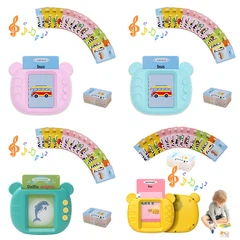
Flash card machine card slot bezel. Plastic ring around the card insertion slot. Glued or snap-fit. A child pulls on the edge of the card while it is inserted. The bezel pops off. It fits in a choke test cylinder. Fail.
Sound book capacitive touch button. A fabric patch covering a touch sensor. Sewn or heat-sealed. After 50-100 presses, the edge lifts. A child picks at the lifted edge. The fabric separates. Fail.
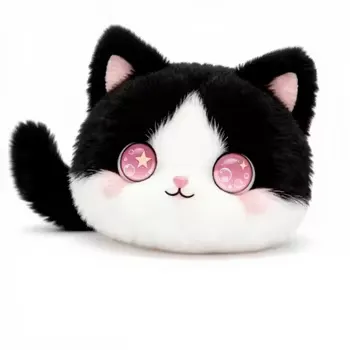
AI plush embroidered eye. Thread. Tension. Pull test. The eye must withstand 15 pounds of direct pull without the thread breaking or the embroidery backing separating from the fabric. We have seen embroidered eyes fail at 8-10 pounds because the backing fabric was too thin.
Story projector lens ring. Plastic ring around the projection lens. Snap-fit. A child twists the ring during play. It unscrews. It falls off. It fits in a child's mouth. Fail.
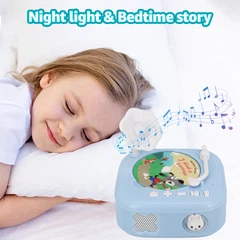
White noise night light silicone button cover. Glued over the mechanical switch. Adhesive fails after 6 months of heat cycling from the LED. The button cover detaches. Fail.
The Fix
Pull on every external component. Use a force gauge if you have one. Use your hands and common sense if you do not. If anything moves, shifts, lifts, or separates - anything - it fails. A component that moves 0.5 mm on the first pull test will move 5 mm after 500 cycles. Design the attachment for 15 pounds. Test at 20 pounds. Ship with confidence.

3. Certificate Expiry: When Did Your CPC Last Update?
The Scenario ⚠️
A Children's Product Certificate is not permanent. It is valid for the production batch that was tested. If you changed the colour masterbatch, the plastic supplier, the battery model, the speaker driver, or the packaging ink since your last test, your CPC is no longer valid for the current production batch.
The June 26 CPSC eFiling mandate makes this worse. Before eFiling, an expired CPC was a paperwork problem discovered during a spot check. After eFiling, the certificate data is filed electronically with every shipment. If the test date on the CPC is older than one year, or if the test report does not cover the current material configuration, the eFiling is rejected. The container is held. No release. No appeal.
What expires and when:
Heavy metal migration test (EN 71-3 equivalent under ASTM F963) -- expires when the plastic material changes. New colour masterbatch equals new material equals new test.
Phthalate content test (CPSIA Section 108) -- expires when the soft plastic or fabric changes. New PVC coating supplier equals new test.
Flammability test (ASTM F963) -- expires when the fabric or textile component changes. New plush fabric batch equals new test. However, an annual re-test of the same material is accepted under most lab interpretations.
Lead content test (CPSIA Section 101) -- expires when the paint, coating, or substrate changes.
Small parts test (ASTM F963) -- expires when the product design changes. New mould cavity equals new test.
Battery safety test (UL 4200A for products with button/coin cells) -- expires when the battery type, battery compartment design, or PCB protection circuit changes.
The Fix
Open your most recent CPC. Check the test date. Check the tested material/substance list. Compare it to your current production BOM. If anything changed between the test date and today, order a new test. Do not wait for the CPSC letter. The CPSC letter arrives after the recall, not before.

4. Warning Label: Does Your Packaging Say What It Needs to Say?
The Scenario ⚠️
The Junpower CR2032 lithium coin batteries were recalled because the packaging was not child-resistant and lacked required warnings under Reese's Law. Not the battery. The packaging.
Warning labels are the cheapest compliance failure and the most common. A missing pictogram. A wrong age grading. A CE mark that is too small. A choking hazard warning in 10-point font instead of the required minimum. Any one of these triggers a customs hold. Any one of these costs less than USD 0.01 to fix at the printing stage and USD 5,000-50,000 to fix after the product is on a pallet in a US warehouse.
The warning label checklist for sound toys shipped to the US:
Choking hazard warning -- Required on all toys with small parts intended for children under 3. Must appear on the packaging and in the product listing. Exact wording is specified in 16 CFR 1500.19. Do not paraphrase. Copy the exact text from the regulation.
Age grading -- Must appear on the packaging. "Ages 3+" or "Not for children under 3 years." If the product can be used by a child under 3 but is marketed as 3+, CPSC considers the intended use, not the label. This is a common trap for flash card machines marketed as educational tools.
Battery warning -- Required under Reese's Law for any product containing a button cell or coin battery. Must include: "WARNING: This product contains a button or coin cell battery." Plus ingestion hazard warning. Plus a pictogram. Plus the poison control centre phone number.
Importer identification -- Required under 16 CFR 1110. The name and US address of the importer or domestic manufacturer must appear on the product or packaging. A factory name and Shenzhen address is not sufficient for US customs.
Tracking label -- Required under CPSIA Section 103 for children's products. Must include manufacturer name, location, production date, and batch number. Must be permanently affixed to the product and packaging.
The Fix
Print your packaging artwork. Lay it on a table next to the CPSC labelling requirements. Check every element: exact wording, minimum font size, correct pictograms, importer address format, tracking label content. Then have someone who did not design the packaging do the same check. Fresh eyes catch what tired eyes miss.

THE COMMON THREAD
The July 2 recalls are not five isolated incidents. They are one message: CPSC is actively enforcing. Not passively monitoring. Actively enforcing.
The button battery access rule has been law since March 2024. Reese's Law is 28 months old. The small parts test has been ASTM F963 standard for decades. None of this is new. What is new is the enforcement tempo. Five recalls in one day. All China-made. All sold on Amazon.
The factories that will survive this enforcement cycle are the ones that treat compliance as a production step, not a paperwork step. Every batch gets a pull test. Every battery door gets a tool-access check. Every packaging print run gets a label audit. Every material change triggers a new certificate.
At XDT, we run these four checks on every new product before the first container loads. It does not add cost. It adds confidence. The buyer who receives a fully compliant product in November does not return it in January. 🔧
WHAT THIS MEANS FOR YOUR NEXT SHIPMENT
Four checks. One afternoon each. Before your next container departs:
Open every battery door with and without the specified tool. If you can open it without the tool, fix it.
Pull on every external component with 15 pounds of force. If anything detaches, redesign the attachment.
Check your CPC test dates against your current BOM. If anything changed, re-test.
Audit your packaging artwork against CPSC labelling requirements. If anything is missing or paraphrased, re-print.
IF YOU ARE SHIPPING SOUND TOYS TO THE US BEFORE CHRISTMAS
Send me your product spec and I will run you through the four checks from a factory perspective. No charge. No sales pitch. Just a compliance sanity check before your container leaves.
Official Website: www.kidsoundbook.com | www.xinditai.com Email: happy@xinditai.com
WhatsApp: +8613824343309
LinkedIn: https://www.linkedin.com/in/happy-gao-education-toy-oem-odm/
LET ME HEAR FROM YOU
Have you ever had a product flagged at US customs for a labelling issue? Or discovered a small parts problem in QC that the factory had missed?
Drop your story below.
#CPSC #ToySafety #ProductRecall #SoundToys #AmazonFBA #Compliance #ReesesLaw #ASTMF963 #CPSIA #ShenzhenFactory #OEM #ODM #ButtonBattery #SmallParts