









For thirty years, the map of Chinese toy manufacturing had one answer: the Pearl River Delta. Shenzhen. Dongguan. Shantou. Everything from the mold to the packaging to the shipping port within a 100-kilometre corridor.
That map is being redrawn. Not by Vietnam. Not by India. By Chinese inland counties.
The data is concrete. Xinye, in Henan province, went from zero to a 1 billion yuan toy industry in seven years. It did not do this by attracting foreign investment. It did it by bringing its own people home - the 60,000 Xinye natives who had spent years working in toy factories in Chenghai and Dongguan. They came back with skills, contacts, and the muscle memory of the industry. The county built parks, standardized factories, and a mold design centre, and waited for them to land.
This is not the story of Shenzhen losing. It is the story of a production layer peeling away from the Pearl River Delta and landing inland - while the design, engineering, and decision-making layers stay where the ecosystem is deepest.
Here is how that works, and what it means for every buyer who sources toys from China. ☝️

The Return of the Geese
The Chinese expression is "guiyan jingji" - the return of the geese economy. It describes workers who flew south for work, then flew back home to build.
Xinye's version is precise. The county estimates 60,000 of its natives worked in the toy industry in Guangdong. In 2019, a local businessman named Chen Yujie - who had built a toy company in Chenghai - accepted an invitation to return and open the county's first toy factory.
The factory was registered in three days. The provincial government had signed a cross-province administrative agreement with Chenghai, so the paperwork that used to take weeks moved in days.
Five years later, that single factory has become the anchor of an industrial park that spans 1,200 mu. Around it: a mold design and manufacturing centre, the largest in central China. A toy battery production base. And 42 toy companies employing thousands of workers who used to leave home every year for Guangdong. 🏭
Why this matters beyond one county:
The geese economy is not unique to Xinye. Counties across Henan, Anhui, and Jiangxi are running the same playbook. Each one is building a toy cluster by repatriating the workers who learned the trade in the Pearl River Delta.
That changes the map in a specific way: the mass-production layer of Chinese toys is spreading inland, following labour and land costs. The layer that needs daily iteration - mold prototyping, engineering changes, firmware development, certification testing - stays where the ecosystem is dense.
The two layers are splitting. And they are splitting along a line that favours Shenzhen. 🧠

What the Inland Counties Cannot Copy
Here is the part buyers often miss. A county can build a factory building, install injection machines, and hire workers who know how to run them. What it cannot build in seven years is the ecosystem that surrounds a mature toy manufacturing cluster.
What inland clusters have:
Cheap labour -- wages roughly 30-40 per cent lower than the Pearl River Delta.
Cheap land -- industrial parks priced at a fraction of Shenzhen's industrial land.
Government support -- tax breaks, standardized factories, logistics subsidies.
Skilled workers -- the returning geese brought real production experience.
What they still lack:
A mold prototyping network -- a design change today needs a mold modification tomorrow. That requires a mold shop that can turn a change in 24 hours. Inland clusters have mold centres; the Pearl River Delta has mold ecosystems where three competing shops sit within a 10-kilometre radius.
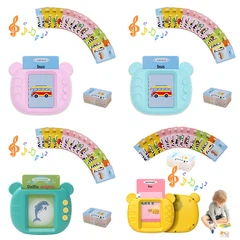
Component density -- a talking flash card machine needs 40 components. In Shenzhen, every one of them has a supplier within 50 kilometres. An inland cluster can import components from Shenzhen, but "import" means freight, lead time, and buffer inventory.
Engineering talent -- firmware engineers, RF engineers, and compliance specialists are concentrated in Shenzhen, Dongguan, and Guangzhou. They do not move to counties. The products that need engineering depth - AI toys, connected devices, anything with a chip that runs software - still need the brain.
Testing and certification infrastructure -- labs, notified bodies, and compliance consultants cluster where the industry already is. Inland counties are catching up, but certification timelines still favour the delta.
BOM Reality Check 💰
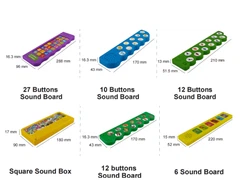
A simple plush toy or a basic sound module can be made inland at 5-10 per cent lower total cost - the labour saving is real and the product does not need daily engineering iteration. An AI toy or a product with firmware, radio, and certification complexity cannot. The inland factory quotes 8 per cent cheaper; then the buyer pays 3-4 per cent more in freight, 2-3 weeks more in lead time for component sourcing, and takes on the risk that the engineering change they request takes two rounds instead of one.
The map is not splitting into "cheap China" and "expensive China." It is splitting into "production" and "development." 📉
Why Shenzhen Is Not Losing - It Is Moving Up
The question every buyer should ask is not "is Shenzhen dying?" It is "what does Shenzhen produce now that it does not produce before?"
Twenty years ago, Shenzhen made toys. Today, Shenzhen makes the toys' brains. The injection molding moved out years ago - the plastic assembly was never Shenzhen's real value. What stayed, and what grew, is the part of the chain that does not move:
Industrial design -- the 3D design, the aesthetics, the user experience.
Electronics engineering -- the PCBA, the firmware, the chip selection, the radio design.
Mold engineering -- the critical tools that define quality, designed and debugged in Shenzhen.
Certification and compliance -- the paperwork that gets products into regulated markets.
Sourcing and logistics -- the 50-kilometre component radius and the ports.
When a buyer places an order for an AI sound toy with a Shenzhen factory like mine, the inland county is not a competitor. It is a subcontractor candidate - someone I can use for the labour-heavy portion of a run while keeping the engineering, the tooling, and the quality control in Shenzhen, where the feedback loop is 24 hours instead of 3 weeks. 🧠
The division of labour in practice:
Shenzhen factory -- design, PCB layout, firmware, mold, first articles, certification, QC, final assembly of complex products.
Inland factory -- high-volume, labour-intensive, simple products, or the production overflow of a Shenzhen-designed product.
Buyer -- works with the Shenzhen partner, gets the engineering speed and the compliance depth, and lets the partner decide where the physical mass production happens.
BOM Reality Check 🔧
The factories that understand this split win both ways. A Shenzhen factory that can route a simple product's mass production to an inland partner saves the buyer 5-8 per cent on that run, while keeping the engineering, mold, and QC margin. The buyer gets the lower production cost and the Shenzhen-level development speed. The factory gets the volume. The inland county gets the jobs. The map is not zero-sum. It is layered.

What Buyers Should Do With This New Map
The Scenario 🎯
A buyer asks me: "Should I source from the inland factory directly? They are cheaper."
My answer: it depends on your product. If your product is a simple sound module or a basic plush toy with a fixed design and no firmware updates, the inland factory may genuinely be the right call. If your product has a chip that runs software, a radio, a certification file, or a design that will change after the first sales season, you want the factory with the engineering loop - and that loop is in the Pearl River Delta.
The three questions to ask any supplier, whether coastal or inland:
Where is your engineering team? If they are not in the same building as the production line, every design change costs freight and weeks. A factory with co-located engineering is a development partner. One without it is a production vendor.
Where is your mold shop? If the mold is designed in Shenzhen and built in a county, a mold modification takes two trips and a month. If the mold shop is down the road, a modification takes 24 hours.
Can you handle a design iteration in 5 days? Test it: send a small change request - a colour change, a label change, a firmware tweak - and measure how long the revised sample takes. Inland clusters quote weeks. Shenzhen quotes days.
The Fix
Do not treat the inland map as a cheaper alternative to Shenzhen. Treat it as a production layer you access through a Shenzhen partner. The partner keeps the engineering and the quality; the inland layer absorbs the labour. You get both the speed and the cost - but only if your partner is honest about where each part of the work actually happens.
THE COMMON THREAD
The redrawing of the Chinese toy manufacturing map is not a story about decline. It is a story about maturation.
Every mature manufacturing ecosystem goes through the same migration: the production layer moves to where labour and land are cheap, while the development layer stays where the talent and the feedback loops are dense. Shenzhen did this with toys and is now doing it with consumer electronics. The inland counties are the new production floor. Shenzhen is the new brain.
At XDT, we are part of that brain. Our engineers design the PCBA, the firmware, and the mold. Our quality team runs the certification and the QC. And when a high-volume, labour-heavy run makes sense inland, we know the partners who can do it to our standard - because the standard is set here, in the ecosystem where the product was designed. The map changed. The value chain did not. 🔧
WHAT THIS MEANS FOR YOUR NEXT PROJECT
Three questions to ask before your next sourcing decision:
Which layer does your product belong to? A fixed-design simple product can source inland. A product with firmware, radio, or future design changes belongs with a development-capable factory.
Is your supplier's engineering co-located with production? If not, every change is freight and weeks. If yes, every change is days.
Can your supplier route overflow production to a lower-cost partner without dropping quality? A factory that can do both - develop in Shenzhen, mass-produce inland - is the factory of the new map.

IF YOU ARE SOURCING SOUND TOYS FROM CHINA RIGHT NOW
Send me your product spec. I will tell you which layer of the map it belongs to - Shenzhen development, inland production, or both - and show you what the cost and lead time look like on each path. Within 48 hours.
Official Website: www.kidsoundbook.com | www.xinditai.com
Email: happy@xinditai.com
WhatsApp: +8613824343309
LET ME HEAR FROM YOU
Have you sourced from an inland Chinese factory to save on cost? What was the difference in lead time and design iteration speed?
Drop your experience below.
#ToyManufacturing #Shenzhen #MadeInChina #SupplyChain #ToyIndustry #OEM #ODM #ManufacturingChina #PearlRiverDelta #IndustrialDesign #InlandChina