

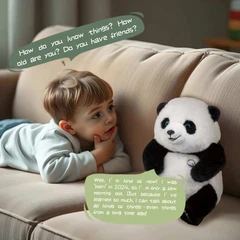
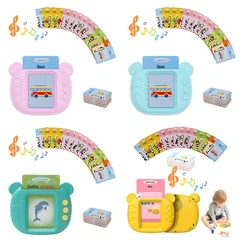
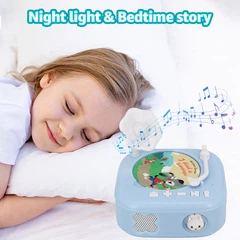
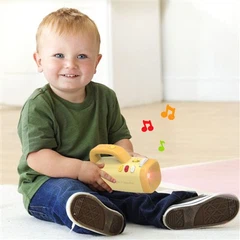

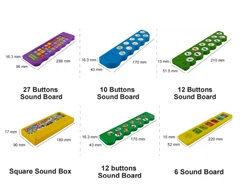

What Is a Projector Toy for Kids?
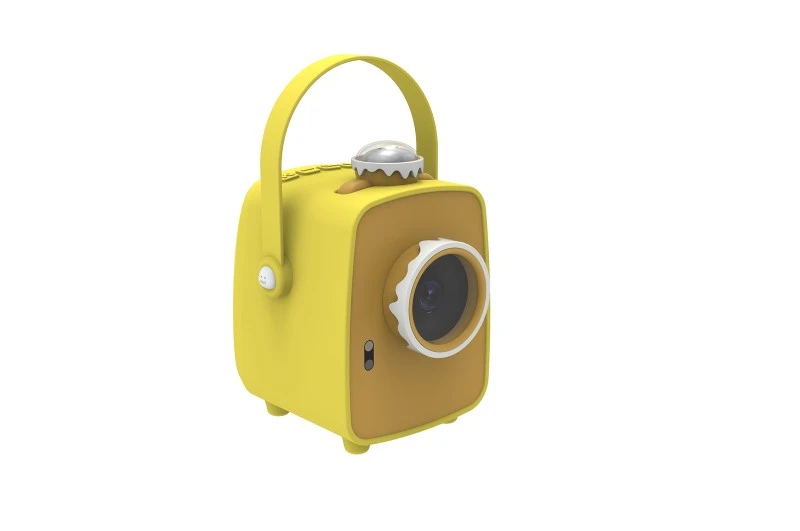
A projector toy for kids is a self-contained story device that throws still or sequenced images onto a wall or ceiling and plays matching audio from a library stored on the unit. There is no handheld screen in the child's hands and no network path inside the product: a swappable story reel carries the pictures, the on-board memory carries the voice, and a focus ring plus brightness steps adapt the image to the room it is used in. The Kids Projector platform behind it runs on the Projector System, the optical and mechanical stack shared by every room profile described below. In commercial terms a projector toy for kids is bought for a room rather than for a datasheet. Three numbers describe that room - how much light is in it, how far the unit sits from the surface, and what the surface is made of - and those three numbers decide the optical path, the housing geometry and the audio ceiling. They also decide when the specification must be frozen, because optics and geometry live in tooling rather than in firmware. SHENZHEN XINDITAI ELECTRONIC CO., LTD has built this category as an OEM/ODM manufacturer since 2010, running a 5,000 square metre plant with daily output above 20,000 units, an in-house mould shop with ten injection machines, and shipments into more than 120 countries.
How Does a Projector Toy for Kids Work?

Two questions matter for any projector toy for kids: what the machine does in the room, and how a private-mould version of it gets built. The function set below answers the first; the five-step programme after it answers the second.
How a Projector Toy for Kids Works: Functions in Detail
Function 1 - Reel loading and frame indexing: A story reel drops into a door on the housing and the drive indexes one frame at a time. Frame count, reel geometry and latch force are mechanical decisions, fixed in the structure stage rather than in firmware. The consequence is commercial: adding a title is a moulded and printed reel, not a second electronics buy, and the door has to survive being opened every evening.
Function 2 - Optical path, focus and brightness: A lens group, a focus ring and adjustable brightness steps let one housing serve both a dark story corner and a lit classroom. Focus travel and brightness range are specified together, because a unit trimmed for a dark corner reads washed out under room lighting. Specify the brightest room you intend to sell into, then let the user dim down - not the reverse.
Function 3 - Wall and ceiling orientation: The unit either stands and throws forward, or tilts and throws upward. Both come from the same optical path but from different base geometry and different foot angles. This is cheap to decide before tooling and expensive after: a redirected throw is a mould change and a season.
Function 4 - Frame-keyed audio: Narration is keyed to the frame index so picture and voice advance together. Speaker cavity volume and grille open area are set by the housing, and maximum output is capped in firmware to remain inside the limit applicable in your target market. Ask for that cap value in writing before the white paper is signed.
Function 5 - Storage and content loading: On-board storage runs from 4GB to 16GB, enough for a launch library plus a second language without a board change. Content is loaded during manufacture and refreshed on later runs by USB or SD, so a library update is a production instruction, not a re-spin.
Function 6 - Languages and narration: Six languages - English, Chinese, Spanish, Arabic, French and Japanese - can be recorded with native voice artists and held in the same library. A small language therefore becomes a short test run rather than a market commitment: if it does not move, what you are left with is audio files, not unsaleable stock.
Function 7 - Power and shut-off: The unit runs on AAA dry cells or a rechargeable lithium pack, with timed shut-off handled by the Timer Clocker System. This is the decision that touches the most paperwork, because changing it rewrites the gift box copy, the manual, the transport declaration and the test list on the same day.
Function 8 - Housing, reel door and age grading: The shell is non-toxic ABS with rounded corners and a screwed battery compartment, and the reel door is cycle-tested for repeat opening. The programme is graded 3+, and age marking, warnings and importer details are placed in the artwork stage, where a correction costs a film change rather than a reprint of finished goods.
The build path turns each function into a dated artefact, and every date below is a freeze point for a projector toy for kids programme:
Step A → Freeze the room and the reel format: We record target room, ambient light, throw distance, surface type and reel geometry in an STP file within 3 days. Everything downstream is quoted against this document, so a change here re-prices the whole programme.
Step B → Draw the housing around the optical path: A 3D printed housing within 3 days. Focus travel, foot angle and cavity volume are checked on the printed part. Finding a problem here is a file edit; finding it in steel is a mould change plus a season.
Step C → Sign the behaviour white paper: Within 3 days we document frame indexing, brightness steps, the volume ceiling, the language list and shut-off timing. This is the reference both sides test against at sample approval.
Step D → Build the PCBA and the optical bench: A working PCBA sample in 5 days, with lens, focus and brightness measured together rather than separately, because they interact.
Step E → Cut steel and start mass production: 30 days for a dedicated mould, 30 days for mass production. Units are inspected to AQL 1.0 with 100% function testing, and the document pack is issued with the shipment.
Key Features of a Projector Toy for Kids
The six points below are the ones that change a sourcing decision on a projector toy for kids. Each is written as a configuration you can freeze, not as a feature you can admire.

1. The Room Writes the Optical Specification
Feature: Every Kids Projector programme starts by recording three numbers - ambient light level, throw distance, and the surface the image lands on. Those numbers go into the STP file before any housing is drawn.
Advantage: Optics specified this way are quoted against a documented room instead of a generic brightness figure, so two buyers sharing one housing receive different lens and brightness configurations rather than the same compromise.
Benefit: You stop paying for optical headroom you will never use, and you stop discovering missing headroom at the photo shoot. It also gives your retail buyer something concrete to approve - a room description instead of a specification sheet.
Evidence: The room record is the STP deliverable issued in 3 days and is reviewed by 3 structural and design engineers and 4 electronics engineers before the 3D print is released.
2. One Optical Platform, Three Room Profiles
Feature: One Kids Projector platform is offered in three room profiles - dark story corner, lit classroom, and unknown travel surface - separated by lens group, brightness range, housing foot angle and power source.
Advantage: The price ladder becomes a configuration decision rather than a second tooling programme, because the moulded shell, reel door and reel format stay common across all three profiles.
Benefit: You can enter at the entry profile and later move a proven account up to the classroom profile without re-qualifying the product, so your second season is a purchase order rather than a new product introduction.
Evidence: A common housing across profiles is what lets one 30-day dedicated mould serve several price positions, backed by daily capacity above 20,000 units during ramp-up.
3. Story Reels Turn Content Into a Reorder Line
Feature: Content lives on swappable story reels carried by the Kids Projector platform.
Key functions include:
• Frame indexing that advances picture and narration together
• One reel geometry shared across the whole title library
• New titles delivered as moulded and printed reels, not as new electronics
Advantage: A reel is an injection-moulded and printed part. It carries a lower unit cost and a shorter lead time than a second electronics buy, and it can be reordered independently of the device.
Benefit: Second-season revenue comes from a content SKU rather than a device reorder. Device reorders are forecast decisions; reel reorders are display decisions, and display decisions get made by the buyer standing in the aisle.
4. Six Languages, One Board
Feature: The on-board library holds 4GB to 16GB and can carry six languages - English, Chinese, Spanish, Arabic, French and Japanese - recorded by native voice artists.
Advantage: Language is a library decision taken at the white paper stage, not a board decision. Adding a seventh language later does not change the PCBA.
Benefit: A minority language drops from a market commitment to a short test run, which is usually the difference between listing it and dropping it.


5. Demo Light Decides the Shelf Test
Feature: Brightness range and focus travel are specified for the brightest room in your channel, and the housing is arranged so the projected image can be demonstrated under normal store lighting.
Advantage: A unit tuned only for a dark room cannot be demonstrated on a shelf, and a unit that cannot be demonstrated relies entirely on packaging copy to sell itself.
Benefit: Demonstrability is what a retail buyer tests in the first minute. If your projector toy for kids can be seen working under store lighting, the listing conversation moves from explaining to ordering.
Evidence: Approval samples ship with focus and brightness behaviour measured on the optical bench, and every production unit passes 100% function testing to AQL 1.0 before packing.
6. One Power Decision, Four Documents
Feature: The programme runs on AAA dry cells or a rechargeable lithium pack, chosen once and frozen at the white paper stage, with shut-off timing handled by the Timer Clocker System.
Advantage: Both options are designed into the housing and the test plan from the start, so choosing between them is a specification line rather than a redesign.
Benefit: Power is the single decision that rewrites four document sets at once - gift box copy, manual, transport declaration and test list. Freezing it early is the cheapest schedule insurance in this category; changing it late is a reprint plus a repeat test.
Evidence: The power architecture is recorded in the 3-day programme white paper together with shut-off behaviour, before the 5-day PCBA sample is built.
B2B Applications: Where a Projector Toy for Kids Fits

The same Kids Projector platform is sold into six rooms. What changes between them is the configuration you freeze, and the order in which you freeze it. Each scene names the specification to decide first.
1. Home story corner and evening wind-down - The reference scene for this category: a darkened room, the image thrown onto a wall or upward onto a ceiling. Recommended configuration is the entry profile with the wide brightness range, AAA power and the longest shut-off option, because the parent sets it once and walks away. Freeze the throw orientation first: ceiling or wall is a foot-angle decision that cannot be revisited after tooling. Practical note: this is also the scene photographed for your listing, so write the room record and the photo brief in the same week.
2. Nursery and classroom circle time with the lights on - Fifteen to twenty-five children, the lights on, the image on a wall rather than a ceiling. Recommended configuration is the classroom profile with the higher brightness range, a wipeable ABS shell, a screwed battery compartment and 3+ grading marked on the housing. Freeze the brightness range first: a unit specified for a dark corner is unreadable here and cannot be rescued in firmware. Practical note: institutions reorder on the academic year, so a unit that fails in the first term costs you the account rather than one device.
3. Travel, hotel rooms and grandparents' houses - Unknown walls, unknown distance, unknown lighting, and a unit that gets packed and dropped. Recommended configuration is the travel profile with the widest focus travel, a compact housing, and lithium power if your channel accepts a charging cable. Freeze the focus travel first: this is the only profile where you cannot describe the surface in advance. Practical note: pack-out testing matters more here than anywhere else, so have the drop and transit test run on packed cartons rather than bare units.
4. Retail demo station and supermarket shelf - Store lighting is brighter than any home and the buyer decides in the first minute. Recommended configuration is the classroom brightness range with a shelf-ready carton, a UPC barcode and a multilingual manual in the box. At document level, chains ask for CE (EN71), FCC, RoHS, UKCA and CPSIA reports, BSCI or SEDEX audit records, inspection to AQL 1.0 with 100% function testing, and one document pack describing the finished unit. One purchase order, one inspection gate and one file pack means the report request is answered once, instead of two suppliers referring it to each other.
5. Seasonal gifting and licensed character programmes - The buyer is not the user, and the decision is made before the box is opened. Recommended configuration is the entry profile with a gift carton, a display window, and licensed artwork on both housing and reel library. Freeze the carton artwork before the firmware: seasonal lines are governed by the printing plate date, not the tooling date, and a missed plate date is a missed season. Practical note: build the reel library as a series from the first title - a licensed programme shipped as one standalone unit rarely earns a second order.
6. Marketplace and e-commerce sellers - The product competes on photography, review velocity and carton economics. Recommended configuration is a compact carton to keep fulfilment fees down, two or three colourways for a listing test, and six-language narration so one inventory pool serves several storefronts. Freeze the carton dimensions first, then check that the reel door survives the returns cycle: a returned unit with a broken latch is a review you cannot recover. Practical note: have image and audio behaviour measured on the bench before the listing goes live, so your copy matches the sample in your hand.
OEM/ODM Customization Services for Kids Projectors

Product Design Customization
Design work starts from the room, not from a catalogue shell. We record the target scene and then draw the housing to serve it.
• Room record: ambient light, throw distance, surface type and throw orientation captured in the STP file
• Housing geometry: base footprint, foot angle for wall or ceiling throw, and grille placement
• Reel door and latch: opening force, cycle life and child-safe closure
• Colourways and surface finish: multiple colourways from one mould for a listing or shelf test
Three structural and design engineers and two graphic designers work the file; an STP deliverable is issued in 3 days and a printed housing in 3 days.
Hardware Customization
Hardware for a projector toy for kids is specified as a configuration inside a proven platform, so the changes you pay for are the ones your room actually needs.
• Lens group and brightness range selected per room profile
• Storage from 4GB to 16GB, with USB or SD loading for later library updates
• Power architecture: AAA dry cells or rechargeable lithium pack, with screwed compartment
• Speaker cavity volume, grille open area and a firmware output ceiling set for your market
• Housing in non-toxic ABS with rounded corners, all materials compliant with RoHS and CPSIA
Software & Audio Customization
The behaviour white paper is where content and mechanics are written down together, and it is the document both sides test against.
• Frame indexing logic that keeps picture and narration in step
• Brightness steps and focus behaviour defined as measurable values
• Volume ceiling set in firmware to the limit applicable in your target market
• Six-language library with native voice artists: English, Chinese, Spanish, Arabic, French and Japanese
• Shut-off timing and idle behaviour handled by the Timer Clocker System
The white paper is delivered in 3 days and the PCBA sample in 5 days.
Packaging & Compliance Customization
Packaging for a projector toy for kids is treated as part of the product, because it is where the age grading, warnings and importer details physically live.
• Retail-ready carton with UPC barcode and shelf-facing window
• Multilingual manual matched to the language library on the unit
• Age grading, warning text and importer address placed in the artwork stage, not added afterwards
• Test reports and declarations prepared for CE (EN71), FCC, RoHS, UKCA and CPSIA
• BSCI and SEDEX social audit documentation for supermarket and chain retail programmes
• Inspection to AQL 1.0 with 100% function testing, and one document pack issued with the shipment

Why Choose XINDITAI as Your Kids Projector Partner
Factory-Direct Manufacturing
You work with the plant that holds the mould, the bench and the test data, which is what makes a frozen specification enforceable on a projector toy for kids programme.
• Founded 2010; 5,000 square metre facility with daily output above 20,000 units and a cumulative build record above 1,000,000 products
• In-house mould shop with ten injection machines: 30 days to a dedicated mould, 30 days to mass production
• Three day STP, three day 3D print, three day white paper, five day PCBA sample
• AQL 1.0 inspection with 100% function testing, run by two quality engineers and a ten person QC team
Global Export Experience
Shipping into more than 120 countries means the document side of a projector toy for kids programme is already routinised rather than improvised.
• Certification coverage including ISO9001, BSCI, SEDEX, CE (EN71), FCC, RoHS, UKCA and CPSIA
• Around ten new products developed each year, with OEM and ODM each close to half of the business
• 20,000+ customers served and 100+ manufacturing partners across the audio and plastics supply chain
• 7x24 sales response, with warranty terms fixed in the purchase contract rather than in a brochure

Frequently Asked Questions About a Projector Toy for Kids
Q1: What is the minimum order quantity?
Three thresholds apply, quoted separately so you can see what you are buying. Platform configurations built on an existing mould start at the lowest threshold and are the fastest route to a first shipment. A private mould is quoted against a twelve month volume forecast, because tooling is amortised over that forecast rather than charged as a lump. Reels and printed items are quoted per print run. If you want a smaller first order, start on the platform configuration and move to a private mould once the account is proven.
Q2: Which compliance documents come with the shipment?
Test reports and declarations are prepared for CE (EN71), FCC, RoHS, UKCA and CPSIA, with BSCI and SEDEX audit documentation available for retail programmes. One point matters for planning: certificates are issued to the importer or brand owner, not to the factory, so your company name must be settled before test samples are submitted. Which route applies to your configuration should be confirmed with your own notified body or laboratory - we supply product documentation and test samples, not the legal determination.
Q3: Does the product collect any data?
In standard configuration, no. There is no camera, no microphone and no network path in the unit, no account is created when the box is opened, and audio plays from local storage. Content is loaded during manufacture or refreshed by USB or SD, so there is no upload step in the use cycle. We can supply a one page data map describing what the unit stores and when it is written. We claim no privacy certification we do not hold, and if your market requires a specific attestation we will say plainly whether it is inside our scope.
Q4: How long does a projector toy for kids programme take?
Count from the signed white paper rather than from the enquiry: three days to the STP file, three days to the printed housing, three days to the behaviour white paper, five days to the PCBA sample, thirty days to a dedicated mould and thirty days to mass production. The schedule slips in two places - the room record changing after Step A, and the power architecture changing after the white paper. Both are decisions you control, which is why we ask for them first.
Q5: Can the packaging and the reel library be customised?
Yes, and both should be decided before the artwork stage closes. The carton takes your UPC barcode, your shelf-facing layout and your multilingual manual; the reel library takes your titles, your artwork and your language list. The sequence that costs least is carton artwork first, reel artwork second, firmware last - because artwork is governed by the printing plate date, and a plate date missed is a season missed.
Q6: What after-sales support is included?
Sales response runs 7x24, and spare parts kits can be shipped with the production order so your service desk is not waiting on a second shipment. Warranty terms are fixed in the purchase contract rather than in a brochure, which keeps the commitment measurable on both sides. For marketplace sellers, hold a small spare allocation against the returns cycle: a broken reel door is the most common field complaint in this category and the cheapest to prevent.
Future Trends in Kids Projector Programmes
1. Ambient-light tolerance becomes the buying criterion - More of this category is used with the lights on - classrooms, store aisles - rather than in darkened rooms. Specify the brightest room in your channel and let the user dim down: a unit that only works in the dark cannot be demonstrated, and undemonstrable product does not get listed.
2. Content libraries replace hardware revisions - Programmes are refreshed through new reels and libraries rather than new boards. That shifts the economics your way: a second season becomes a print-led order instead of a new product introduction, and inventory risk sits in low-cost reels rather than finished devices.
3. Language depth moves from advantage to entry requirement - Retail and marketplace channels increasingly expect more than one language before they give a listing a chance. Six languages recorded with native voice artists on one board means a minority language is a short test run - and recording the sixth before first shipment is far cheaper than adding a seventh afterwards.
4. Document readiness becomes a schedule item - Chains and marketplaces are asking for the full file pack earlier in the year, and the delays are calendar delays rather than engineering delays. Treat the document pack as a deliverable with its own dates alongside the mould and the production slot, and confirm who holds the importer name before test samples are submitted.
Conclusion: Start Your Kids Projector Project Today
A projector toy for kids succeeds or fails on a decision made before anything is manufactured: which room it is built for. Name the room, and the light level, throw distance, surface type and throw orientation follow, and the optical path, housing geometry and audio ceiling can be quoted against something real instead of something generic. Name it late, and the same decisions get made in steel, where a correction costs a mould change and a season.
The rest of a projector toy for kids programme is a calendar, and the calendar is short: 3 days to the room record, 3 days to the printed housing, 3 days to the behaviour white paper, 5 days to the PCBA sample, 30 days to a dedicated mould, 30 days to mass production. Send us the room you are selling into - its light, its distance and its surface - and we will return a specification you can freeze.
Contact Us
Contact: Zoey
WhatsApp: +86 13342950150
Email: xdt06@dtdianzi.com
Company: SHENZHEN XINDITAI ELECTRONIC CO., LTD | Website: www.kidsoundbook.com
Hot Tags: projector toy for kids, China, suppliers, manufacturers, factory, customized, wholesale, bulk, quotation, made in China


