

Custom Vintage Telephone Booth Plush OEM Manufacturer
Custom vintage telephone booth plush development turns a recognizable architectural icon into a soft, giftable product for brand, museum, travel, publishing and collectible programs. This page explains the visible design, the questions a professional buyer should settle, and the approval steps that help move from concept artwork to a controlled sample. The images are design references; they do not verify electronic functions, certifications, production quantities or commercial terms.
A successful project begins with the intended audience and sales channel. The same red booth may need different proportions, labels, packaging and durability priorities for a themed gift shop, a reading campaign or a licensed collection. Xinditai can discuss pattern development, material choices, embroidery, optional electronic integration and packaging as separate workstreams, with every claim confirmed against the selected configuration.
A landmark silhouette buyers recognize immediately
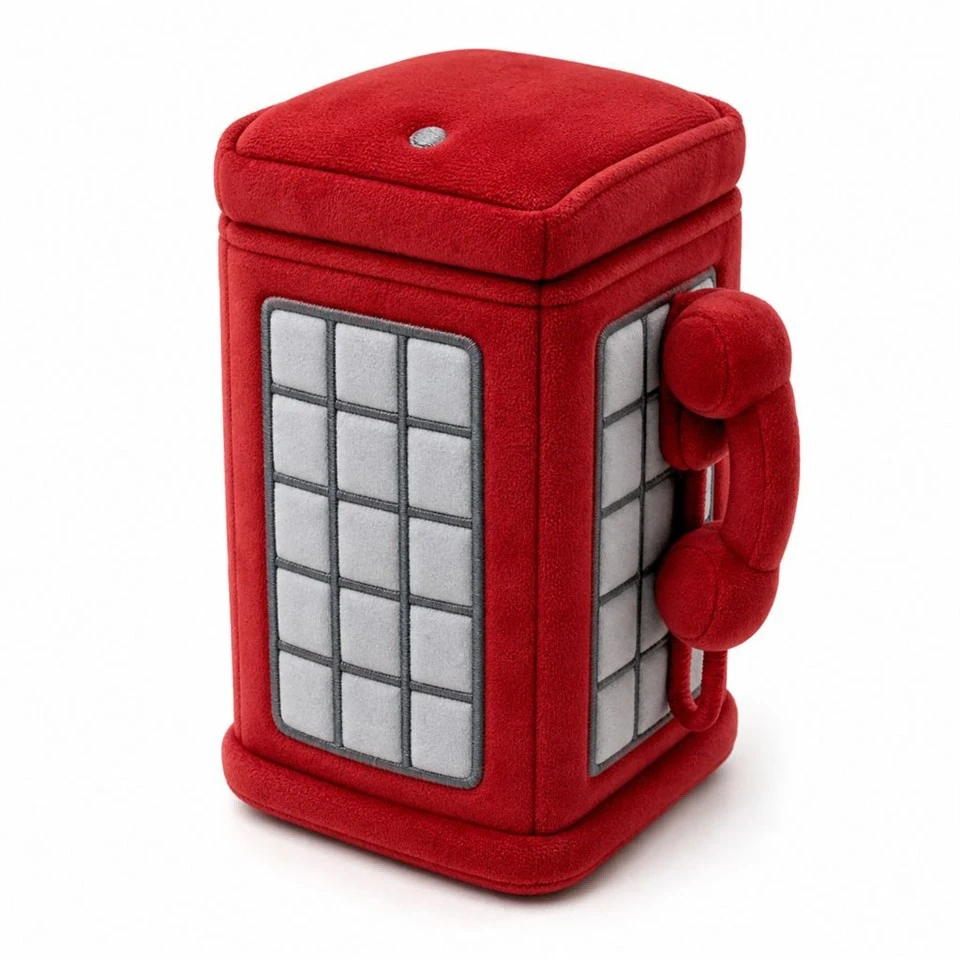
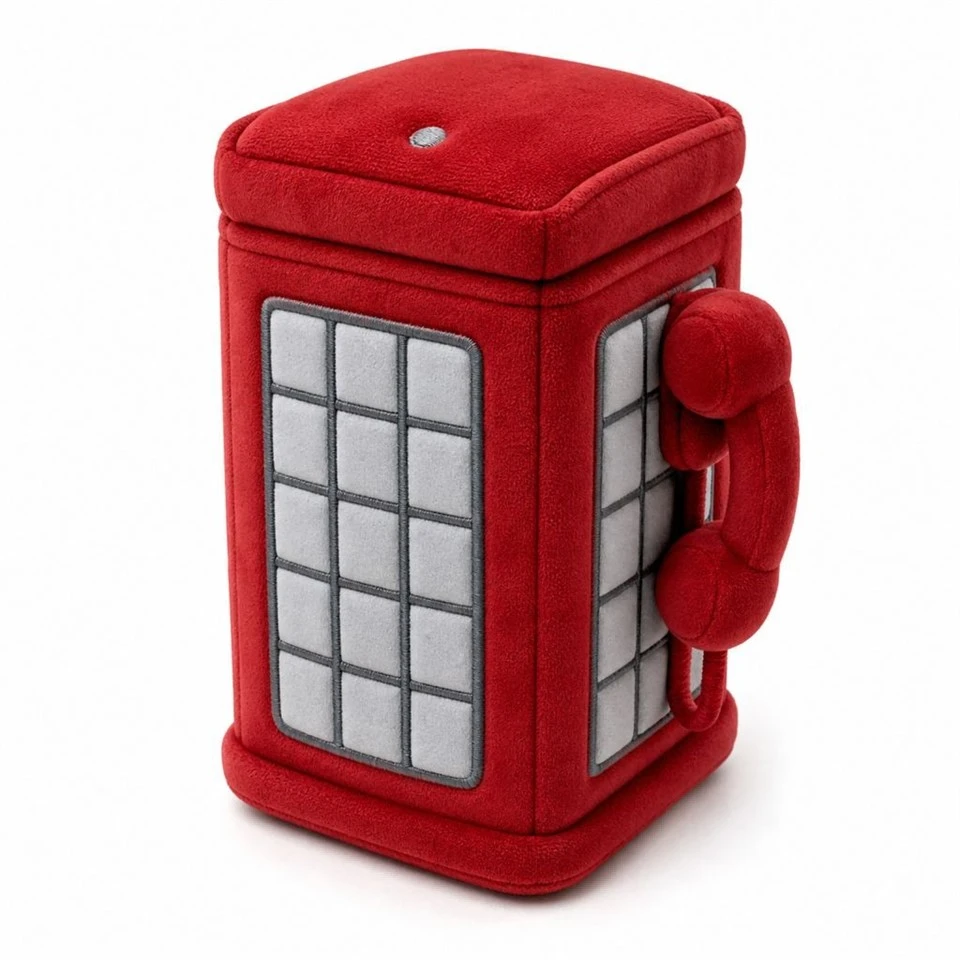
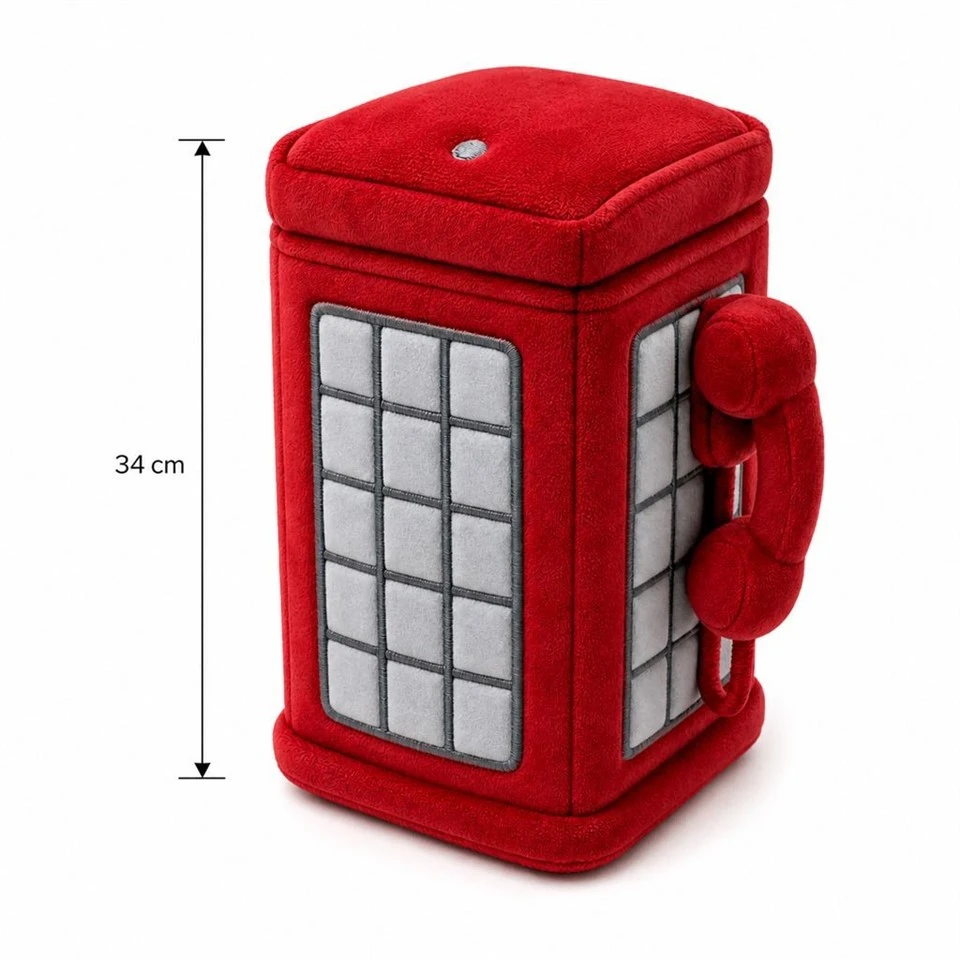
The red rectangular body, pale window grid and attached handset give this vintage telephone booth plush an unusually clear identity. Buyers should first review the outline at thumbnail size, because novelty designs often lose their character when reduced for marketplace listings. The top-front view also reveals how the rounded roof, raised base and padded side walls balance a familiar architectural form with a soft-toy appearance. During sampling, compare the approved artwork with front, side and diagonal photographs rather than relying on one hero angle. This simple check catches leaning panels, an uneven handset and window grids that drift out of square before those differences are repeated in production.

Buyer check at this stage
Verify the visible construction, record the sample revision and keep every claim tied to the approved prototype and specification.
Front-view balance for a strong retail image
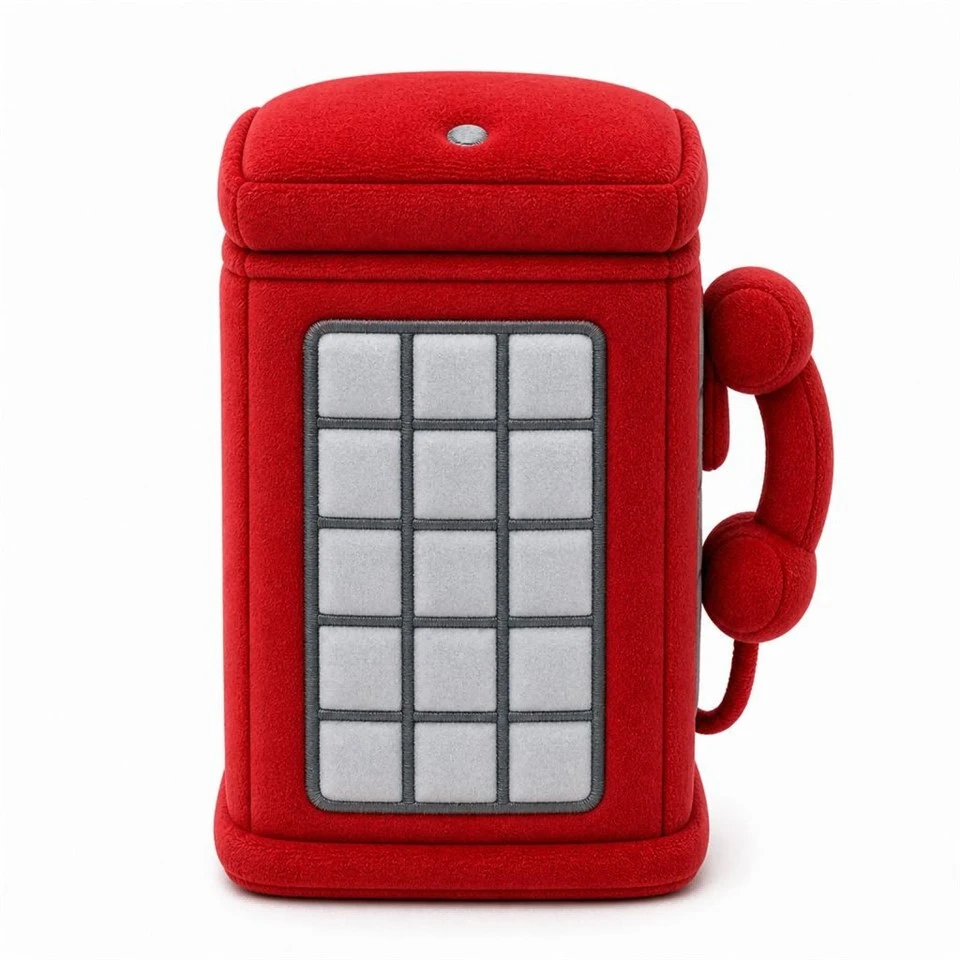
A clean front view is useful for confirming symmetry. The grey window panel should sit visually centered between the red borders, while the top button detail and lower base should align with the same vertical axis. For a custom landmark plush toy, millimetre-level specifications still need a realistic tolerance because soft filling changes shape, but the inspection standard can define what remains visually acceptable. Ask the sample team to photograph the plush standing freely, without hidden supports. If it only looks straight when propped up, pattern balance or filling distribution may need adjustment before packaging trials begin.
Buyer check at this stage
Verify the visible construction, record the sample revision and keep every claim tied to the approved prototype and specification.

Side profile and handset construction
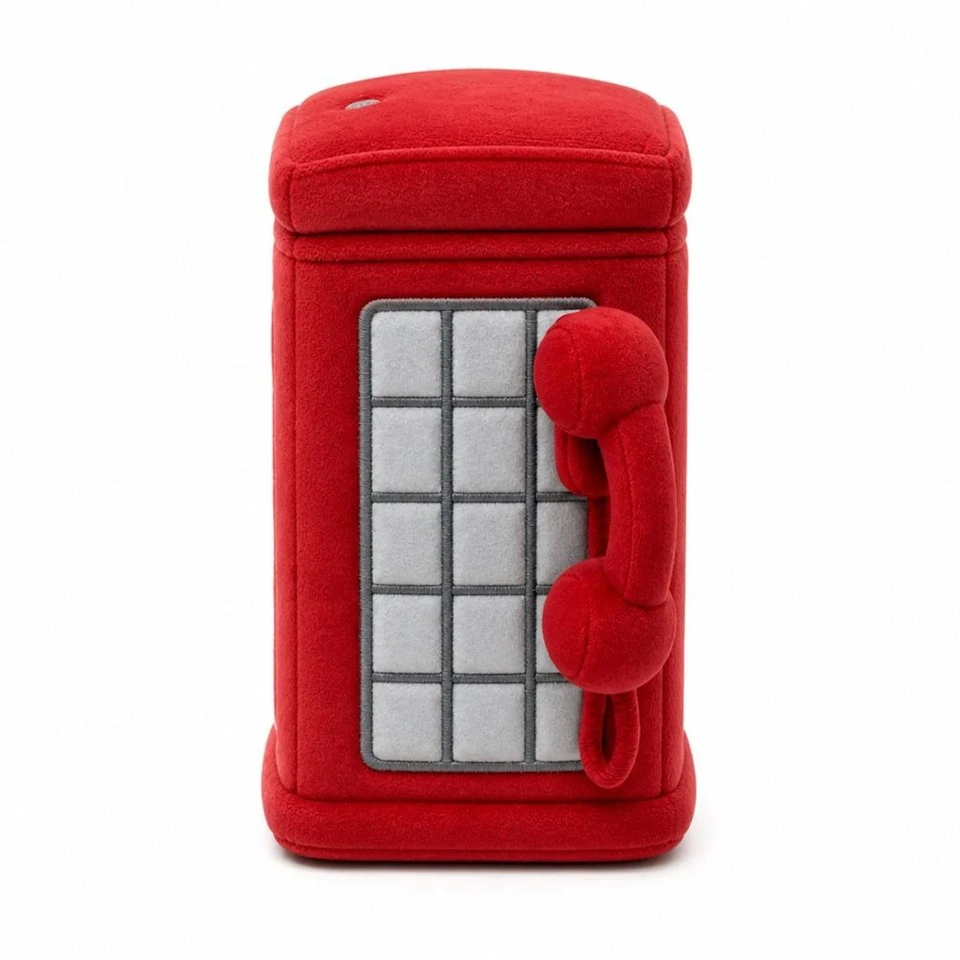
The side profile is where the telephone theme becomes more than a printed box. The padded handset projects from the body and creates both character and an additional construction challenge. An OEM plush manufacturer should review the handset attachment, cord interpretation, stitch access and pull direction as one system. Buyers can request a short handling video that shows the toy lifted, turned and gently compressed. The goal is not to claim a certified test result from an image; it is to identify stress points for the agreed safety and durability plan. The handset should also remain legible after normal packing pressure.

Buyer check at this stage
Verify the visible construction, record the sample revision and keep every claim tied to the approved prototype and specification.
Left and right consistency
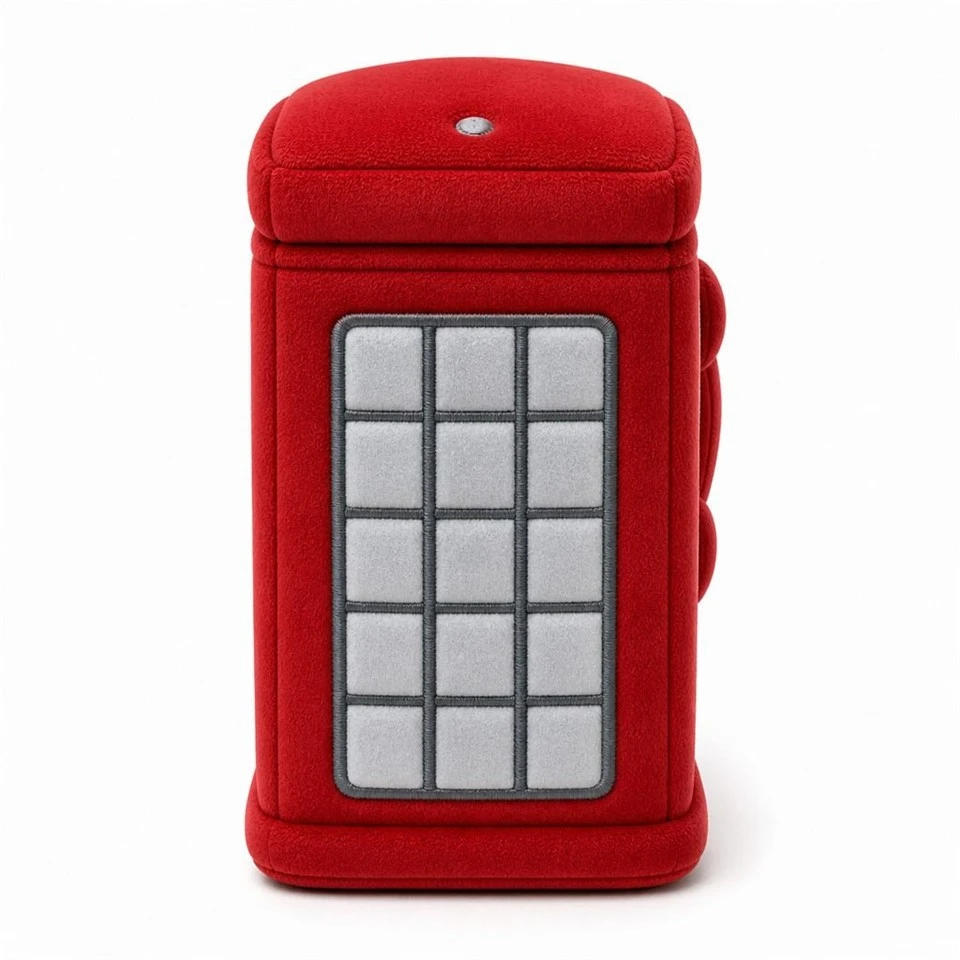
Opposite side views help the buyer separate intentional asymmetry from sampling error. On this design, the handset belongs to one side, but the main booth body should still keep matching edge thickness, roof curvature and base height. Add paired side photographs to the approval file and mark the exact sample revision. This gives pattern makers, QC staff and the brand team a shared reference. For private-label programs, also decide where a woven label, care label or small brand mark may sit without interrupting the iconic red-and-grey composition. Label placement should be approved on an actual sewn sample, not only on a flat drawing.
Buyer check at this stage
Verify the visible construction, record the sample revision and keep every claim tied to the approved prototype and specification.

A size reference that supports channel planning
The concept image shows a 34 cm height reference, but final dimensions must remain subject to the approved specification and physical sample. Buyers should evaluate height together with width, depth, net weight and packed volume because a tall rectangular plush behaves differently from a round character. Shelf depth, gift-box clearance and e-commerce carton efficiency can change the preferred proportion. Ask for a dimension sheet that identifies measurement points and whether figures are taken before or after packing recovery. A consistent method prevents teams from comparing unlike samples and gives packaging suppliers reliable inputs for an insert, window box or protective bag.

Buyer check at this stage
Verify the visible construction, record the sample revision and keep every claim tied to the approved prototype and specification.
Lifestyle context without unsupported feature claims
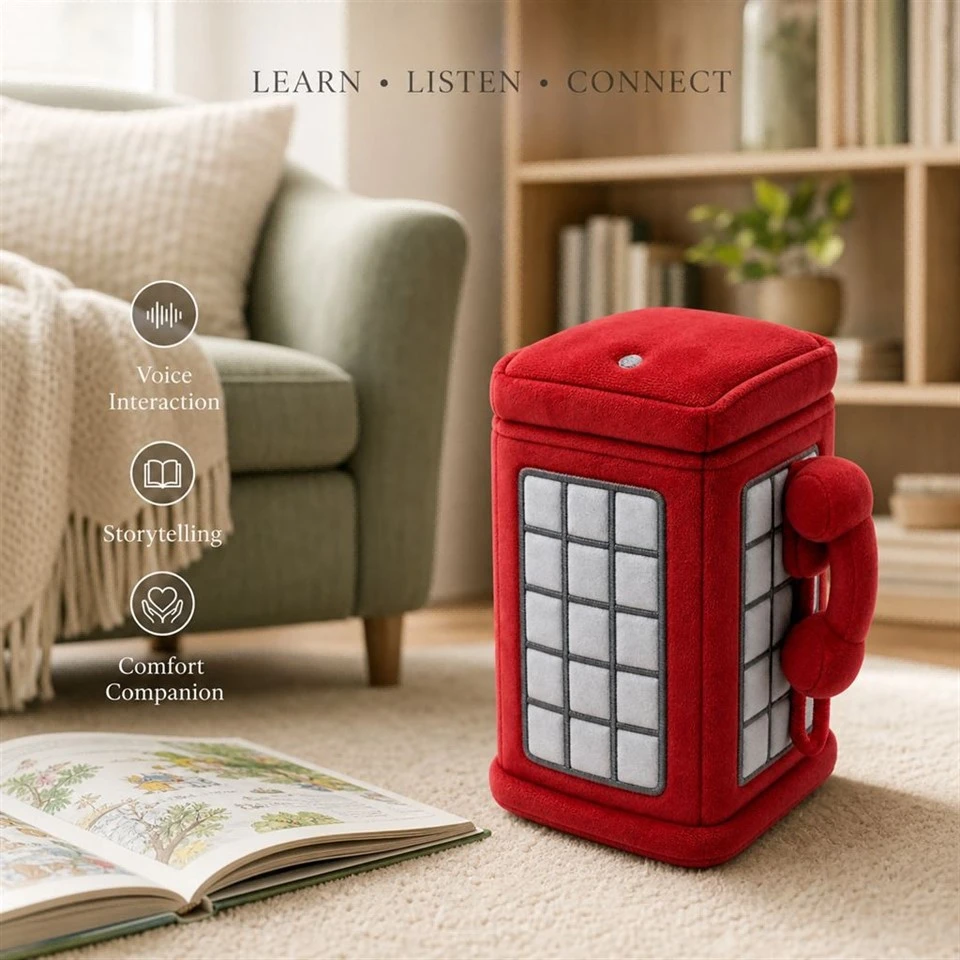
A room scene demonstrates scale, color impact and the way the product may sit within a reading corner, gift display or themed interior. It does not prove voice interaction, connectivity or any electronic capability. Those features, if requested, require a separate architecture, approved module specification and verified prototype. For the base plush program, the buyer can focus on tactile presence, stable posture and visual storytelling. The tall red booth works as a distinctive decorative soft toy and can support museum, travel, publishing or heritage-themed collections. Photography should clearly distinguish concept styling from tested product functions so retail copy stays accurate.
Buyer check at this stage
Verify the visible construction, record the sample revision and keep every claim tied to the approved prototype and specification.

Top panel, button detail and seam control
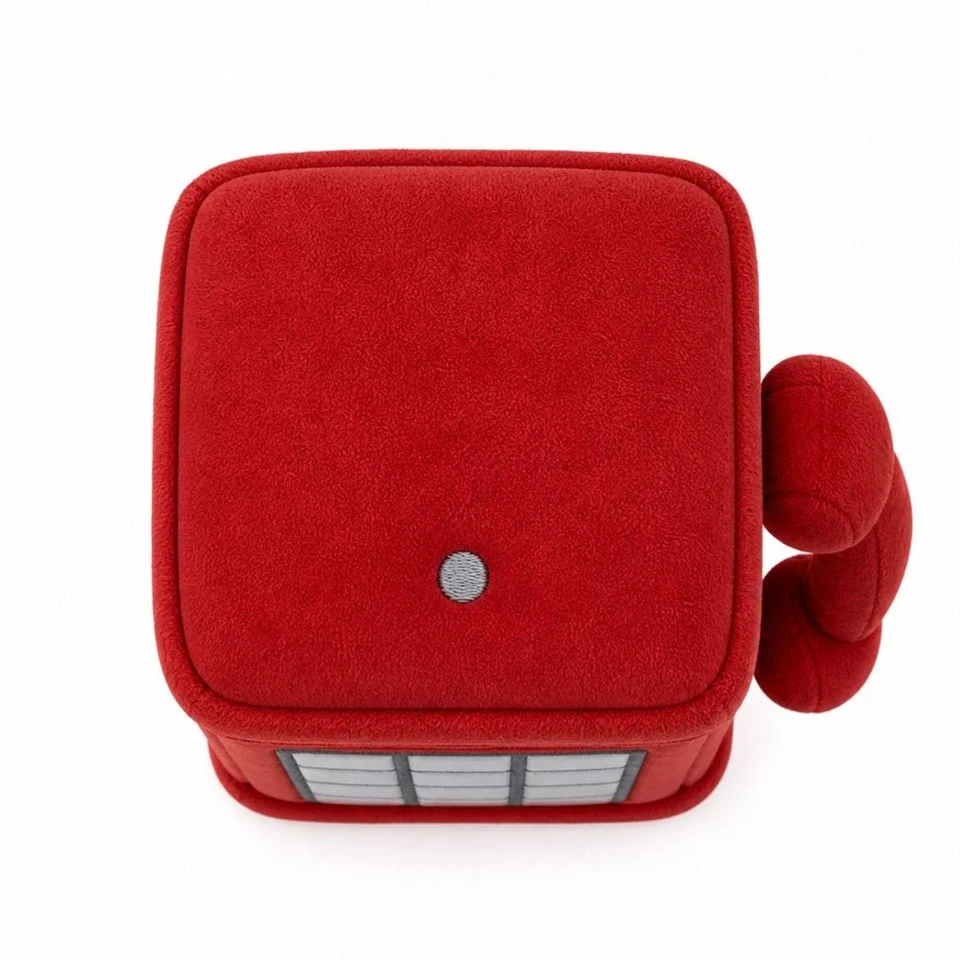
The top-down view exposes details that hero photography can hide. The roof panel should appear even, the central round accent should be securely constructed, and corner seams should meet without twisting. During a plush prototype review, photograph this view after the item has been unpacked and allowed to recover. Compare the result with the sealed sample and check whether the filling produces a flat, softly rounded or visibly distorted surface. Buyers should also define whether the top accent is embroidered, appliqued or built as another soft component. Each method changes appearance, handling and the appropriate inspection points.

Buyer check at this stage
Verify the visible construction, record the sample revision and keep every claim tied to the approved prototype and specification.
Back-view checks belong later in the review
The back image is deliberately reviewed after the main selling angles. It helps buyers inspect seam continuity, fabric shade consistency and the way the side handset attachment influences the rear silhouette. If access to an internal component is ever proposed, its location, closure method and safety requirements must be engineered and tested; the concept art alone is not evidence of such a feature. For a purely soft construction, the rear panel can remain visually quiet, which may suit licensed artwork, an embroidered message or a discreet care label. Any addition should be approved for legibility and seam compatibility.
Buyer check at this stage
Verify the visible construction, record the sample revision and keep every claim tied to the approved prototype and specification.

Three-view approval reduces interpretation gaps
Front, side and back views on one sheet make change discussions faster. Instead of writing that the booth should look "slightly narrower," teams can point to a specific panel and revision. A practical approval pack includes annotated images, material references, color targets, embroidery files, label artwork and a dated change log. This is especially useful when a custom plush supplier coordinates pattern, sewing, decoration and packaging with different specialists. The three-view sheet should never replace the physical sample, but it becomes a reliable communication bridge between the creative brief and factory execution.

Buyer check at this stage
Verify the visible construction, record the sample revision and keep every claim tied to the approved prototype and specification.
Packaging concept as a separate development track
The packaging visual illustrates a possible gift-box direction, not a confirmed packing specification. Before adopting it, buyers should choose the sales channel, required visibility, protection level, labeling content and carton constraints. A fitted tray may preserve the telephone-booth silhouette, while a simpler bag may reduce material and volume. The right answer depends on positioning and verified transport needs. Request a packed sample and examine window scuffing, handset compression, roof recovery and ease of removal. The product and packaging should be approved together because the customer receives the packed system, not an isolated plush sample.
Buyer check at this stage
Verify the visible construction, record the sample revision and keep every claim tied to the approved prototype and specification.

From creative brief to production-ready specification
Start with an artwork pack that identifies the non-negotiable cues: red body color, grey window grid, roof profile, raised base and handset position. Then define target dimensions, age grading, destination market, material preferences, decoration method, labeling and packaging. The supplier should convert those inputs into a pattern and bill of materials for review. If an audio or interactive concept is considered, create a separate functional specification covering activation, power, access, sound target, content ownership and adult controls. Do not let the visual phrase "smart plush" become an unsupported promise.
Sampling works best as a sequence of decisions rather than one broad approval. First check silhouette and proportion. Next review fabric, color and decoration. Then examine seam placement, filling and handset attachment. After that, test the packed presentation and any agreed functional prototype. Maintain a dated change log so a correction in one area does not silently reverse an earlier decision. A golden sample should represent the final approved combination, not a mixture of photographs from different revisions.
Quality planning for a rectangular plush form
Rectangular novelty plush has different risks from a conventional animal character. Window lines can magnify skew, corners may collapse, and uneven filling can make the body lean. An inspection plan can therefore include front-grid alignment, paired edge thickness, roof symmetry, base shape, handset position, seam security and recovery after packing. Acceptance criteria must be agreed for the project and supported by actual testing where required. Photographs are useful records, but they do not replace physical checks or third-party compliance work for the target market.
Ask the factory to identify critical-to-appearance points on the pattern and sewing instructions. Color approval should use the real fabric under consistent light because screen previews vary. Embroidery density, thread shade and border spacing should be checked on production material. Packaging trials should confirm that the booth stands correctly after unpacking and that the projecting handset is not permanently compressed. These steps reduce subjective debate during the pilot run.
OEM and ODM choices buyers should lock early
Customization may include scale, fabric hand feel, red and grey color targets, window-grid artwork, embroidery, labels, hangtags, packaging and a series plan built around other landmark shapes. Each choice affects sampling and should be prioritized. If the project budget is focused, preserve the silhouette and handset first; those features carry most of the recognition. More complex additions should earn their place through a defined user benefit and verified prototype rather than through a long feature list.
For related development thinking, review this smart plush product-development example. It shows how visual concepts and technical claims should be separated during evaluation. For current product visuals and project updates, buyers may also follow Joy Zhou on Instagram.
Frequently asked questions
Yes, these are typical design variables, but the final result depends on pattern feasibility, material selection and an approved sample. Provide artwork, target size, color references and the intended sales channel for evaluation.
Does the concept image prove that the plush has voice or AI functions?No. The images are appearance concepts. Audio, recording, connectivity or AI functions require a separate specification, selected hardware, firmware or content work, safety review and verified prototype.
What should be approved before asking for a quotation?Clarify the target size, audience, market, materials, decoration, packaging, quantity range and whether any electronic function is required. Missing information can make quotations difficult to compare.
How should buyers inspect the attached handset?Review its position from both sides, attachment method, seam access, recovery after compression and the pull directions expected during use. Formal test requirements should be agreed for the destination market.
Can custom packaging be developed with the plush?Yes. Choose the channel and protection goals first, then evaluate a packed sample for fit, scuffing, deformation, labeling and carton efficiency. The visual shown here is only a concept direction.
Is the 34 cm dimension final?No. It is shown in the supplied concept image and must be confirmed through the approved specification and physical sample. Width, depth and packed dimensions should be reviewed at the same time.
What files help the sampling team work accurately?Provide front, side and back artwork, color references, logo and label files, target measurements, packaging needs, destination market and a change log. Annotated photographs of each revision are also useful.
How can a buyer start a private-label project?Send the product brief, target market and required timeline to Joy. Contact Joy on WhatsApp: +86 13691793052 or e-mail xdt05@dtdianzi.com for a configuration review.
A practical next step
Use the visible booth details as the beginning of the brief, not as a substitute for engineering. Mark the silhouette, handset, window grid, roof, base, size and packaging decisions that matter to your collection. Then review one controlled prototype against those points before expanding the project. Clear evidence at each gate protects the brand, the supplier and the final customer.
Hot Tags: custom vintage telephone booth plush oem manufacturer, China, suppliers, manufacturers, factory, customized, wholesale, bulk, quotation, made in China